Botanical vodka is growing fast, with no regulatory definition and significant infrastructure overlap with craft whisky. Ten key bottles illustrate the category's range, from mass-market to collector-adjacent, with clear implications for spirits trade strategy and cask investment.
Botanical Vodka Is Reshaping the Spirits Category
Botanical vodka now accounts for one of the fastest-growing sub-segments in the global spirits market, with producers from Scandinavia to Scotland repositioning their stills to capture drinkers who want gin's complexity without its juniper mandate. The category has no single regulatory definition, which is precisely what makes it commercially interesting — and strategically risky for producers navigating labelling rules across export markets. For whisky trade professionals watching adjacent categories for signals about consumer appetite, botanical vodka is worth understanding: it is pulling drinkers who previously gravitated toward craft gin, and it is doing so at a price point that overlaps with entry-level single malt.
If you follow the non-alcoholic spirits visibility debate or track how US spirits depremiumisation is reshaping shelf space, you will already understand why producers are hunting for a category that carries perceived premiumness without the margin compression that has hit standard vodka. Botanical vodka offers that bridge. It carries a story — botanicals sourced, infused, or redistilled — and it commands a retail price between £30 and £60 in the UK, a band where craft whisky and premium gin already compete hard.
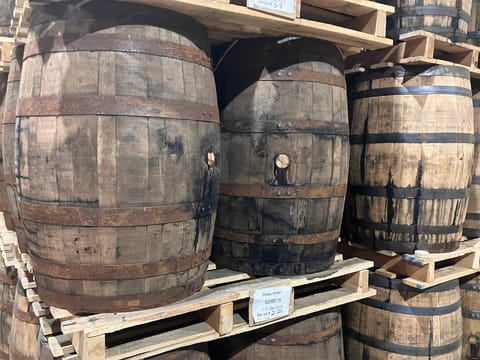
The relevance for whisky trade readers is not abstract. Several distilleries producing botanical vodka share infrastructure with malt whisky operations, and the cask and still investment decisions they make today will shape their whisky output capacity tomorrow. Whether the spirits industry has a short-term demand problem or a structural one, diversification into botanical vodka is one answer producers are actively testing.
What Separates Botanical Vodka From Gin and Standard Vodka?
The clearest distinction is regulatory. Gin requires juniper as the dominant botanical — full stop. Botanical vodka carries no such obligation, which liberates distillers to work with lavender, chamomile, citrus peel, seaweed, heather, or virtually any plant material without being bound by a flavour profile that consumers already associate with a competing category. Standard vodka, meanwhile, is legally required to be neutral in character in most jurisdictions, meaning botanical vodka occupies a grey zone that producers are actively lobbying regulators to clarify — particularly in the EU and UK post-Brexit spirits framework.
Production method matters enormously here: some botanical vodkas are produced by cold-compounding, simply steeping botanicals in a neutral base spirit, while others redistil the infused spirit through a pot or column still for greater integration and finesse. The redistilled approach is more expensive and more transparent as a quality signal — it is the same logic that separates a blended malt from a grain-heavy blend. Whisky buyers who understand cask influence on spirit character will find the botanical vodka quality spectrum immediately legible.
ABV is another differentiator. Most botanical vodkas are bottled at the legal minimum of 37.5% ABV in the UK and EU, though premium expressions are increasingly appearing at 40% to 43% ABV, which improves mouthfeel and botanical delivery. A handful of craft producers are releasing cask-rested botanical vodkas at 46% ABV and above — a direct nod to whisky's non-chill-filtration movement and a clear signal about where the category's premium tier is heading. Readers tracking cask influence on spirit character will find these experiments familiar territory.
10 Botanical Vodka Bottles the Trade Should Know
The following bottles represent a cross-section of production approaches, price points, and botanical philosophies. They are not ranked — they are selected to illustrate the category's range, from mass-market accessible to collector-adjacent craft.
- Seedlip Spice 94 (non-alcoholic, 0% ABV): Technically outside the vodka category but commercially the catalyst that proved botanical complexity could command a premium price without alcohol. Its success directly influenced how botanical vodka producers pitch to trade buyers.
- Discarded Vodka (40% ABV): Made from upcycled grape skins, this Scottish-produced expression leads with sustainability credentials and a soft, floral character. Retails around £32.
- Haku Vodka (40% ABV, Japan): Suntory's rice-based botanical vodka, filtered through bamboo charcoal, brings Japanese precision to the category. Relevant for buyers already watching Japanese whisky's premium trajectory.
- Clonakilty Atlantic Vodka (40% ABV, Ireland): Produced by the same Cork-based team behind the whiskey range, this expression uses Atlantic seawater in production — a terroir narrative that mirrors whisky's regional identity push. Worth cross-referencing with Irish whiskey's value segment performance.
- Empirical Spirits (variable ABV, Denmark): The Copenhagen-based operation uses koji fermentation and a range of unusual botanicals. Bottles regularly exceed £50 and sell through fine dining and specialist retail — a collector-adjacent positioning.
- Hoxton Coconut and Grapefruit Vodka (35% ABV): A mass-market entry point that helped define the flavoured vodka-to-botanical-vodka transition. Hoxton Spirits is now targeting 25 global markets, making this bottle a useful distribution case study.
- Chase Elderflower and Gooseberry Vodka (40% ABV, Herefordshire): William Chase's farm-to-bottle operation uses estate-grown botanicals. The potato base spirit and English provenance narrative echo the single-estate whisky positioning that is gaining traction in Scotland.
- Altamura Botanical Vodka (40% ABV, Italy): Produced from Senatore Cappelli ancient wheat, this expression is already moving into Asian export markets — Altamura Distilleries has taken its vodka to Japan, a market where provenance storytelling commands a significant premium.
- Reyka Vodka (40% ABV, Iceland): Lava rock-filtered with Arctic botanicals, Reyka has built a strong on-trade presence by leaning into environmental credentials and production transparency — a model that craft whisky distilleries have used successfully.
- Starka Botanical Vodka (various ABV, Eastern Europe): The heritage Starka category, which includes aged and botanical variants, is attracting acquisition interest. Buyers considering the category should read the Starka distillery sale analysis for context on where value sits in this segment.
Botanical vodka's regulatory ambiguity is not a weakness — it is the category's most powerful commercial lever. Producers can build any flavour story they choose, provided they can substantiate the botanical claim on the label.
What the Whisky Trade Should Watch
The most significant trade implication is infrastructure overlap. Distilleries producing botanical vodka alongside whisky — a growing number in Scotland, Ireland, and England — are making still-time and botanicals-sourcing decisions that affect both product lines. When a craft distillery commits significant column still capacity to botanical vodka production, it is effectively deferring new-make whisky spirit that could be filling casks today. For cask investors tracking supply from smaller independents, this is a meaningful signal about future availability and pricing.
The regulatory picture also deserves attention. The UK's post-Brexit Spirits Drinks Technical File is still being refined, and botanical vodka's labelling status remains contested. Producers selling into the EU face a different framework, and the absence of a protected designation means the category is vulnerable to commoditisation if large-volume producers enter aggressively — exactly the dynamic that American whiskey has navigated in its own oversupply cycles. The ProSpirits Report 2026 flagged premiumisation fatigue in vodka broadly, which makes botanical vodka's differentiation story both more urgent and more fragile.
Distribution strategy is the third lever to watch. Brands like Hoxton and Altamura are pursuing aggressive international expansion, and their success or failure in markets like Japan and the UAE will provide a real-world test of whether botanical vodka can sustain premium pricing outside its home markets. April 2026's top spirits launches included several botanical vodka expressions, suggesting the pipeline of new entrants is not slowing. For whisky trade professionals, the category is worth monitoring not because it threatens Scotch or bourbon, but because it is competing for the same shelf space, the same bartender attention, and increasingly the same consumer wallet.
Frequently Asked Questions
What is botanical vodka and how is it different from gin?
Botanical vodka is a spirit made from a neutral base — grain, grape, or potato — that has been infused or redistilled with plant botanicals such as herbs, flowers, or citrus peel. Unlike gin, it has no legal requirement to feature juniper as a dominant flavour, giving producers complete freedom over their botanical blend. This makes it a distinct and more flexible category than gin, though the two compete for similar drinkers and shelf positions.
Is botanical vodka regulated in the UK and EU?
Not comprehensively. Standard vodka must meet neutrality requirements and minimum ABV thresholds, but the term botanical vodka has no protected definition in either the UK or EU spirits framework as of 2026. Producers can use the term provided the base spirit qualifies as vodka and any botanical additions are disclosed. This regulatory gap is one reason the category is growing quickly — but it also creates risk of quality inconsistency and consumer confusion as more producers enter.
Which production method produces the best botanical vodka?
Redistillation of botanicals through a pot or column still generally produces more integrated and nuanced results than cold-compounding, where botanicals are simply steeped in finished spirit. Redistilled expressions tend to carry cleaner botanical character and better mouthfeel, particularly at higher ABV. However, cold-compounding is cheaper and faster, which is why it dominates the flavoured vodka end of the market. Premium botanical vodkas almost universally use redistillation.
Can botanical vodka be aged in casks like whisky?
Yes, and a small but growing number of producers are doing exactly that. Cask-rested botanical vodkas — typically aged in ex-bourbon, ex-sherry, or new oak for periods of three to twelve months — pick up colour and wood character while retaining their botanical identity. These expressions are positioned at the top of the category's price range and are beginning to attract interest from whisky-adjacent collectors who appreciate cask influence on spirit development.
Why should whisky trade professionals pay attention to botanical vodka?
Because the category shares infrastructure, consumer demographics, and retail positioning with craft whisky. Distilleries producing both spirits are making capacity decisions that affect whisky supply. The category also provides a real-time test of how premiumisation narratives — terroir, botanical provenance, production transparency — perform across different spirit types, with direct lessons for whisky marketing and trade strategy.