
New research auditing 400+ UK venues finds non-alcoholic spirits are widely stocked but poorly displayed. Fewer than one in three venues give them meaningful back-bar prominence. Staff training and eye-level placement are the highest-impact fixes the whisky trade should prioritise.
Non-Alcoholic Spirits Visibility Still Falling Short in UK Venues
Nearly two-thirds of UK on-trade venues now stock at least one non-alcoholic 'spirit', yet fewer than one in three gives those products meaningful back-bar prominence, according to new research published in May 2026. The study, which audited visibility and execution across bars, restaurants, and hotel venues nationwide, found a persistent gap between ranging decisions and actual floor-level display — a disconnect that is quietly costing operators sales and limiting consumer choice. For the whisky trade specifically, the findings carry a pointed message: the same execution failures plaguing the broader no-and-low category risk blunting the commercial case for premium alcohol-free alternatives that sit alongside Scotch and bourbon on the back bar.
If you are a whisky brand owner, distributor, or on-trade buyer, this matters directly. As US spirits depremiumisation accelerates and consumers recalibrate their drinking occasions, the no-and-low segment is being positioned by major drinks groups as a volume buffer — a way to retain spend from drinkers who are moderating without losing them to soft drinks or water. When execution fails at venue level, that buffer evaporates, and the entire category argument weakens.
What the Research Actually Found
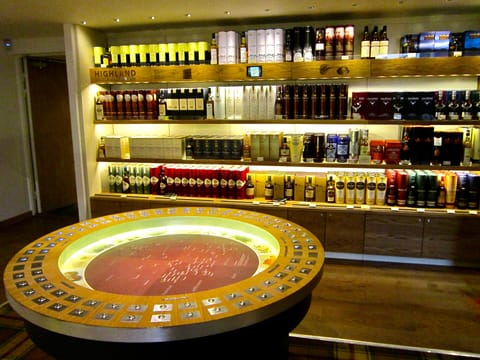
The audit covered more than 400 licensed premises across England, Scotland, and Wales and scored venues on four execution pillars: back-bar visibility, menu integration, staff knowledge, and point-of-sale material. The results were uneven. Back-bar visibility scored lowest, with non-alcoholic spirits frequently stored below the counter, placed at the extreme ends of the back bar away from eye-level sightlines, or grouped with mixers rather than spirits. Menu integration was marginally stronger, with around 44% of audited venues listing at least one non-alcoholic spirit option, but staff knowledge remained the most inconsistent variable — only 28% of front-of-house staff surveyed could accurately describe the flavour profile or serve suggestion for the non-alcoholic spirits their venue carried.
The visibility gap is not a stocking problem — it is a ranging and training problem, and those are fixable with commercial will. Brands in the category include established names such as Seedlip, Lyre's, and CleanCo, alongside newer entrants building on botanical distillation techniques that deliberately echo the sensory language of gin, whisky, and rum. The research noted that venues carrying Lyre's American Malt — the brand's whisky-style expression — were among the least likely to position it alongside Scotch or American whiskey, undermining the natural consumer comparison that drives trial. For context, the spirits industry's short-term volume pressures make that missed trial opportunity commercially significant at scale.
Fewer than one in three UK on-trade venues with non-alcoholic spirits in stock gave those products meaningful back-bar prominence — a visibility gap the research describes as the category's single biggest commercial barrier.
5 Key Findings From the Visibility Audit
The research distilled its conclusions into five actionable findings that venues and brand owners should treat as a practical checklist. Each reflects a measurable execution gap rather than a strategic aspiration:
- Eye-level placement drives a 34% uplift in unsolicited orders. Venues that positioned non-alcoholic spirits at the same height as their premium spirits ranged saw significantly higher spontaneous requests, without any additional staff prompting.
- Menu language matters as much as placement. Descriptions that referenced flavour — 'smoky', 'oak-aged character', 'malt-forward' — outperformed generic 'alcohol-free option' labels in driving consumer engagement, according to venue-level sales data collected alongside the audit.
- Staff confidence is the conversion bottleneck. Venues that had run even a single 30-minute product training session in the previous six months showed a 22-percentage-point improvement in staff recommendation rates for non-alcoholic spirits.
- Grouping with spirits rather than soft drinks increases average spend per head. Venues that merchandised non-alcoholic spirits within the spirits section — rather than in a separate 'low and no' zone — recorded higher average transaction values on those products.
- Point-of-sale material remains underused. Only 19% of audited venues used any branded POS for non-alcoholic spirits, compared with 67% for premium spirits brands, suggesting significant untapped marketing support from brand owners.
These findings align with broader market insights from the ProSpirits Report 2026, which identified on-trade execution quality as a top-three barrier to category growth across the no-and-low segment. The data consistently shows that the product is not the problem — the presentation is. For whisky-adjacent expressions in particular, the missed opportunity is acute: a consumer already standing at a bar considering a peated Scotch is a natural prospect for a smoky, malt-character non-alcoholic alternative, but only if that product is visible and the staff can speak to it.
Why the Whisky Trade Has a Specific Stake in This
The whisky category is not a passive bystander in the no-and-low conversation. Several major Scotch and blended whisky groups have either invested in, distributed, or developed adjacencies to non-alcoholic spirits, recognising that the 'sober curious' consumer does not necessarily leave the category — they navigate around it. Diageo's investment in Seedlip remains the most cited example, but the strategic logic is spreading. Distributors handling premium Scotch are increasingly being asked to carry non-alcoholic whisky-style expressions alongside their core range, and the execution failures identified in this research directly affect their commercial return. As alternative spirits distribution options expand, the back-bar visibility problem becomes a supply chain and route-to-market issue, not just a venue management one.
The research also has implications for how whisky brands design their own visibility strategies. The Dalmore distillery redesign and similar brand refresh programmes across the Scotch sector have placed significant emphasis on on-trade visual identity — bottle shape, label architecture, shelf presence. Those same design principles, applied to non-alcoholic expressions or to the back-bar zones where both alcoholic and non-alcoholic spirits compete for attention, could meaningfully improve category performance. Visibility is not a soft metric — it is a direct precursor to trial, and trial is the only route to repeat purchase.
The findings also arrive at a moment when the trade is watching premium spirits formats closely. The success of Cotswolds Sherry Cask English single malt and the continued growth of craft and independent bottlings — including Kingsbarns' 10-year sherry butt expressions — demonstrates that the on-trade back bar is a fiercely competitive commercial environment. Non-alcoholic spirits are not asking for charity placement; they are asking for the same commercial logic applied to any new spirits category entering a crowded shelf. The research suggests that logic is not yet being applied consistently. For a broader sense of how the trade is navigating category complexity right now, the Belfast whisky renaissance and the wider conversation around top spirits launches from April 2026 both illustrate how brand storytelling and venue execution must work in tandem to drive consumer engagement.
What to Watch: Trade Implications and Next Steps
The research is expected to inform upcoming guidance from the Portman Group and the British Beer and Pub Association on responsible retailing of no-and-low products, with updated venue execution frameworks anticipated before the end of Q3 2026. Brand owners in the non-alcoholic spirits space are likely to respond with increased trade marketing investment, particularly in staff training programmes and POS provision — the two areas where the audit identified the largest gaps between current performance and execution. Distributors should anticipate requests for co-funded training materials and in-venue visibility audits as part of new listing negotiations.
For whisky trade professionals, the immediate takeaway is practical: if your distribution portfolio includes any non-alcoholic or low-ABV spirit that carries whisky-style flavour positioning, audit its back-bar placement in your top 20 on-trade accounts this quarter. The research is clear that placement, not product quality, is the primary conversion driver at this stage of category development. The brands that solve the visibility problem first will own the consumer relationship when the category matures — and the evidence suggests that maturation is closer than many in the trade currently expect. Those tracking wider spirits M&A and distribution strategy, including the Hoxton Spirits global expansion and Spendrups' acquisition of Umida spirits brands, will recognise that the no-and-low category is increasingly being treated as a serious commercial priority rather than a niche accommodation.
Frequently Asked Questions
What does the non-alcoholic spirits visibility study show about UK venues?
The study found that while nearly two-thirds of UK on-trade venues stock at least one non-alcoholic spirit, fewer than one in three gives those products meaningful back-bar prominence. Key gaps include poor eye-level placement, weak staff knowledge, and underuse of point-of-sale materials.
Why does non-alcoholic spirits visibility matter to the whisky trade?
Major whisky groups have invested in or distribute non-alcoholic spirits as a strategy to retain moderating consumers within the spirits category. Poor on-trade execution directly reduces commercial returns on those investments and weakens the broader category argument for premium alternatives to Scotch and bourbon.
What are the most effective ways venues can improve non-alcoholic spirits sales?
The research identified eye-level back-bar placement, flavour-led menu descriptions, and even a single 30-minute staff training session as the highest-impact interventions. Grouping non-alcoholic spirits with alcoholic spirits rather than soft drinks also increased average spend per head.
Which non-alcoholic spirits brands are relevant to the whisky-adjacent category?
Lyre's American Malt is the most directly whisky-adjacent non-alcoholic expression currently in wide UK distribution, deliberately designed to echo the flavour profile of American whiskey. Seedlip and CleanCo also operate in adjacent botanical spirit territory, though without explicit whisky positioning.
When will updated venue execution guidance be published for no-and-low spirits?
Updated guidance from the Portman Group and the British Beer and Pub Association is anticipated before the end of Q3 2026, informed in part by the findings of this visibility audit. Brand owners and distributors should monitor those frameworks as they will likely influence listing and ranging conversations for the remainder of the year.