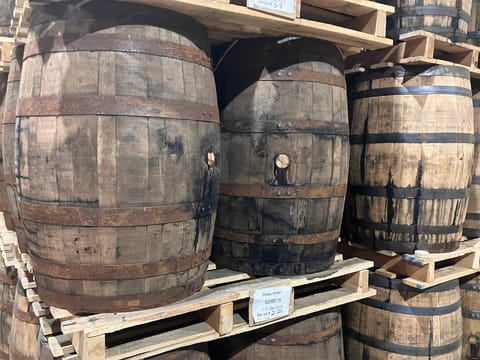

The ProSpirits Report 2026 details a structural reset in global whisky. Blended Scotch faces pressure; single malt values hold. Cask investors see tactical opportunities in specific aged stocks, while distilleries manage overcapacity. Forward-looking intelligence is critical for trade decisions.
What Does the ProSpirits Report 2026 Reveal About the Whisky Market?
The second annual ProSpirits Report 2026 confirms what many senior trade figures have quietly acknowledged for months: the global spirits industry, and Scotch whisky in particular, is undergoing more fundamental structural change than even cautious forecasters predicted. The report, drawing on data from across the supply chain including distillery production volumes, cask trading activity, and retail sell-through rates, presents a picture of an industry recalibrating at speed. For cask investors, independent bottlers, and distillery operators alike, the findings carry direct commercial consequences that cannot be deferred to the next planning cycle. This is not a cyclical correction — the ProSpirits Report frames the current moment as a structural reset affecting everything from new-make spirit pricing to aged stock availability on secondary markets.
If you hold casks, manage allocations, or make procurement decisions for a bottling operation, the ProSpirits Report 2026 is the most concentrated source of forward-looking intelligence currently available to the trade. The report covers Scotch, Irish, American, and world whisky categories, but the Scotch segment — spanning Speyside, Highland, Islay, and Campbeltown — receives the most granular treatment. Understanding what the data says about production trends, consumer demand shifts, and pricing pressure is no longer optional for anyone with capital deployed in whisky. The findings below are drawn from the report's core whisky sections, contextualised for the Whisky Bulletin readership.
"The industry is undergoing more fundamental change than expected — and the pace of that change is accelerating across every category we track." — ProSpirits Report 2026
Which Whisky Categories Are Feeling the Most Pressure in 2026?
Blended Scotch is absorbing the sharpest volume declines, with the ProSpirits Report 2026 noting that mainstream blended categories in key export markets including the United States, Germany, and Taiwan are facing sustained downward pressure on both volume and average selling price. The report identifies a bifurcation that has been building since 2022: premium and ultra-premium single malts are holding value, while entry-level blends are being squeezed by both category substitution and shifting demographics among younger consumers. Distilleries that have historically supplied grain whisky to blending houses at scale — including operations in the Scottish Lowlands and Speyside — are being forced to reassess long-term supply contracts.
Single malt Scotch is not immune. The ProSpirits Report highlights that several mid-tier single malt expressions in the 12-year age statement bracket, typically bottled at 40% to 43% ABV and matured in refill ex-bourbon hogsheads, are experiencing margin compression as retailers push back on wholesale price increases. Distilleries in the Highland and Speyside regions that expanded production capacity between 2015 and 2020 to meet projected demand are now managing inventory overhang. The cask market implication is significant: first-fill ex-bourbon casks containing 10- to 14-year-old spirit from well-regarded Speyside producers may represent tactical buying opportunities for investors with a five-year-plus horizon. Conversely, casks from lesser-known or recently established distilleries without established secondary market demand should be approached with greater scrutiny.
American whiskey — specifically bourbon from Kentucky producers including those operating under the Brown-Forman and Heaven Hill portfolios — is also flagged in the report as facing a post-pandemic demand normalisation. The super-premium bourbon segment, which drove extraordinary auction results at Bonhams and Whisky Auctioneer between 2020 and 2023, is showing signs of price fatigue at the top end, though allocated releases from distilleries such as Buffalo Trace in Frankfort, Kentucky continue to command premiums above retail.
How Is Production Strategy Shifting Across Scotch Distilleries?
Production strategy is the area where the ProSpirits Report 2026 identifies the most decisive industry response to changing market conditions. Several major Scotch whisky producers have announced or quietly implemented reductions in new-make spirit output, with the Scotch Whisky Association confirming in early 2026 that aggregate industry production volumes were below the peaks recorded in 2022 and 2023. The strategic logic is straightforward: distilleries are prioritising margin over volume, a reversal of the expansion-at-all-costs mentality that characterised much of the previous decade.
The shift has concrete implications for cask availability and pricing. When production volumes fall, the pipeline of maturing stock available for future bottling or trade narrows. For investors holding casks from distilleries that have reduced fill rates — including some well-regarded Highland and Island producers — scarcity dynamics could support valuations over a 10- to 15-year horizon. The following production-related developments are worth tracking closely:
- Reduced new-make output at multiple Speyside distilleries, with at least three major operators cutting weekly distillation runs in Q1 2026.
- Increased use of first-fill sherry butts and STR (shaved, toasted, re-charred) casks as distilleries seek to differentiate core range expressions and justify premium pricing.
- Greater emphasis on NAS (no age statement) releases at 46% ABV and above, allowing producers to manage aged stock more flexibly while maintaining quality signalling.
- Accelerated investment in visitor experience infrastructure at distilleries including Glenfarclas in Speyside and Springbank in Campbeltown, as direct-to-consumer revenue becomes a more important margin contributor.
- Renewed interest in peated expressions across non-Islay regions, with Highland and Speyside producers responding to sustained consumer demand for smoky profiles outside the traditional Islay category anchored by Laphroaig, Ardbeg, and Bruichladdich.
Glenfarclas, the independently owned Speyside distillery managed by the Grant family and currently overseen by George Grant as brand ambassador, is a useful reference point for how heritage producers are navigating the current environment. The distillery's commitment to sherry cask maturation and long age statements — including its 105 expression bottled at cask strength — positions it differently from volume-driven competitors. Independent distilleries with genuine provenance, consistent house style, and an established collector following are better insulated from the structural pressures the ProSpirits Report describes.
What Does This Mean for Cask Investors and the Secondary Market?
Cask investors face a more nuanced environment in 2026 than the broadly bullish conditions that characterised the 2018 to 2022 period. The ProSpirits Report does not suggest the cask market is in distress, but it does flag that undifferentiated stock — casks from distilleries without strong brand equity, clear age statement strategy, or independent third-party valuation support — is harder to exit at target prices. Due diligence on distillery ownership, production philosophy, and secondary market liquidity has never been more important. Buyers entering the market now should prioritise casks from distilleries with verifiable track records at auction, including results data from platforms such as Scotch Whisky Auctions and Whisky Auctioneer.
The report also highlights that the regulatory environment is tightening. The Scotch Whisky Association's ongoing review of geographical indication rules, combined with HMRC's increased scrutiny of cask storage and ownership documentation, means that compliance costs for smaller cask brokers and private investors are rising. Investors should ensure all cask ownership is properly documented through a recognised bonded warehouse operator — Names such as Caledonian Warehousing and Speyside Cooperage are among the established infrastructure providers in this space. Any cask investment proposition that cannot provide clear warehouse receipts, distillery production records, and independent valuation should be treated with extreme caution.
What to Watch: Key Developments for the Whisky Trade in the Months Ahead
The ProSpirits Report 2026 closes with a forward-looking section that trade readers should treat as a working watchlist. Based on the report's analysis and current market intelligence, the following developments warrant close attention from distillery operators, cask investors, and independent bottlers:
- Scotch Whisky Association production data for H1 2026, due for publication in late summer, will confirm whether the output reductions flagged in the report are industry-wide or concentrated among a subset of producers.
- US tariff developments remain the single largest external risk to Scotch export volumes, with any escalation in trade friction between Washington and London capable of materially affecting distillery revenue forecasts and cask valuations tied to export-dependent brands.
- Auction results at Bonhams' next specialist whisky sale will provide a real-time read on whether collector demand for aged single malts above 25 years is holding at 2025 levels or softening in line with the report's cautionary signals.
- Independent bottler activity from operators such as Gordon and MacPhail, based in Elgin, Speyside, will indicate how the secondary cask market is being priced by the most experienced buyers in the industry.
The clearest takeaway from the ProSpirits Report 2026 is that passive cask holding without active market intelligence is a diminishing strategy. Investors and trade buyers who engage with production data, auction results, and regulatory developments on a quarterly basis will be better positioned to make exit or acquisition decisions at the right moment. Subscribe to the ProSpirits Report directly, cross-reference its findings with live auction data, and speak to an independent cask valuation specialist before making any significant portfolio move in the current environment.
Frequently Asked Questions
What is the ProSpirits Report 2026?
The ProSpirits Report 2026 is the second annual industry analysis covering global spirits production, trade, and market trends, with particular focus on Scotch whisky, American whiskey, and Irish whiskey categories. It draws on supply chain data, production volumes, and consumer demand metrics to provide forward-looking intelligence for trade professionals and investors.
Which whisky categories are most affected by the 2026 market shifts?
Blended Scotch is facing the sharpest volume and margin pressure, particularly in export markets such as the United States and Germany. Mid-tier single malts in the 12-year age statement bracket are also experiencing margin compression, while premium and ultra-premium single malts are holding value more effectively.
How does reduced distillery production affect cask investors?
Reduced new-make spirit output narrows the future pipeline of maturing stock, which can support scarcity-driven valuations for casks from distilleries that have cut production. However, investors should focus on distilleries with established secondary market demand and verified provenance rather than assuming all casks benefit equally from lower supply.
What due diligence should cask investors carry out in 2026?
Investors should verify warehouse receipts, distillery production records, and independent valuations before purchasing. They should cross-reference auction results from platforms such as Whisky Auctioneer and Scotch Whisky Auctions to assess secondary market liquidity, and ensure all cask storage is managed by a recognised bonded warehouse operator.
Which distilleries are referenced as resilient in the current market?
Glenfarclas in Speyside, managed by the Grant family, is cited as a reference point for heritage producers insulated from structural pressure due to its sherry cask maturation programme and long age statement portfolio. Springbank in Campbeltown is also noted for its investment in direct-to-consumer infrastructure as a margin diversification strategy.