Michter's 2026 US*1 Barrel Strength Sour Mash (54.6% ABV) defies bourbon and rye definitions, offering single malt-adjacent complexity from Louisville. Limited single-barrel production and growing secondary market interest make it a serious trade watch.
Michter's Barrel Strength Sour Mash Returns — and the Trade Is Paying Attention
At 109.2 proof (54.6% ABV), the 2026 release of Michter's US1 Barrel Strength Kentucky Sour Mash Whiskey lands as distinctive non-bourbon, non-rye American whiskeys on the market — and it is selling out faster than many allocated bourbons at similar price points. Produced by Michter's Distillery in Louisville, Kentucky, and overseen by Master Distiller Dan McKee alongside Master of Maturation Andrea Wilson, this expression is bottled at full cask strength without chill filtration, which means every batch carries a slightly different ABV depending on warehouse conditions and barrel selection. That variability is precisely what makes it interesting to both collectors and trade buyers who have grown weary of formulaic, consistent releases.
If you follow the ongoing American whiskey downturn narrative, you will know that the broader US spirits category is under pressure. Yet Michter's continues to build premium positioning in a crowded market by leaning into limited, high-proof, and category-defying expressions. The Barrel Strength Sour Mash sits outside the legal definitions of bourbon or rye, which gives Michter's unusual marketing freedom — and unusual consumer curiosity. For buyers and importers watching where allocated American whiskey spending is migrating, this release is worth understanding in detail.
What Exactly Is Kentucky Sour Mash Whiskey — and Why Doesn't It Qualify as Bourbon?
The sour mash process — using a portion of spent mash from a previous distillation to acidify the new fermentation — is standard across most Kentucky distilleries, including virtually every bourbon producer. What makes Michter's US1 Sour Mash a distinct legal category is its grain bill. Unlike bourbon, which must contain a minimum 51% corn, or rye, which requires at least 51% rye grain, the Michter's Sour Mash expression uses a proprietary grain recipe that does not meet either threshold. It is aged in new, charred American oak barrels — satisfying one of bourbon's core requirements — but the grain composition keeps it classified simply as a straight American whiskey. This is not a loophole; it is a deliberate production choice that gives the distillery more creative latitude with flavour development.
The result is a whiskey that drinks closer to a well-aged single malt in structure than a classic Kentucky bourbon. The absence of corn dominance means less of the characteristic sweetness that defines most mainstream bourbons, and the sour mash acidification contributes a spine of tartness that Scotch drinkers often find immediately legible. Michter's has never published the precise grain bill for this expression, which is a common practice among American distillers protecting proprietary recipes, but tasting notes consistently point to wheat and malted barley playing a larger role than in standard bourbon mashes. Those interested in cask-driven maturation nuance should also look at how French wine casks interact with spirit character for a useful comparative lens on wood influence versus grain influence.
Production Specifics: ABV, Cask Type, and Batch Size
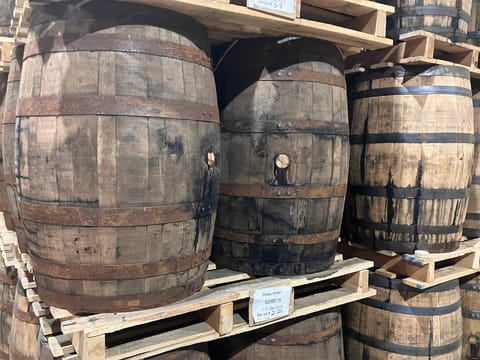
Michter's does not release barrel count or production volume figures for this expression, which is consistent with their broader communications strategy across all limited releases. What is confirmed is that each bottle is drawn from a single barrel, bottled at natural cask strength, and carries no age statement — though industry observers and whiskey analysts generally place the maturation period at between five and eight years based on flavour profile and Michter's standard maturation timelines. The barrels are new, charred American white oak, the same specification used for their bourbon line, stored in Michter's temperature-controlled Fort Nelson warehouse in Louisville.
"Barrel strength without chill filtration means the consumer receives the whiskey exactly as it came from the cask — every batch is a direct argument against the homogenisation trend in American whiskey."
The 2026 bottling sits at 54.6% ABV, which is on the moderate end of barrel strength releases globally — lower than many Scottish independent bottlings and significantly below the 60%-plus releases that have become fashionable at auction. That measured proof point makes it more approachable neat without sacrificing the textural density that barrel strength fans expect. For context on how barrel strength expressions are performing at auction versus retail, Christie's recent California cellar sale offered useful data points on where high-proof American whiskey sits in collector valuations relative to Scotch.
Here is a quick breakdown of the key production parameters for this release:
- ABV: 54.6% (109.2 proof) — varies by batch
- Cask type: New charred American white oak
- Age statement: None — estimated 5–8 years maturation
- Grain bill: Proprietary; neither bourbon nor rye specification
- Filtration: Non-chill filtered, natural colour
- Bottling: Single barrel, limited annual release
- Distillery location: Louisville, Kentucky
Why the Trade Should Care About a Category-Defying American Whiskey
The commercial logic behind the Michter's Sour Mash positioning becomes clearer when you examine the depremiumisation pressure currently hitting US spirits value sales. When mainstream bourbon faces margin compression and consumers trade down, expressions that occupy a genuinely distinct sensory and narrative space are better insulated. The Michter's Sour Mash is not competing directly with allocated bourbons like Buffalo Trace Antique Collection; it is targeting a different buyer — one who wants American whiskey with single malt-adjacent complexity and a story that does not rely on age statement prestige or celebrity endorsement. Celebrity-backed whiskey deals have dominated headlines, but Michter's has consistently built equity through production credibility rather than influencer positioning.
For importers and on-trade buyers in the UK and Europe, this expression also benefits from strong crossover appeal to the malt whisky audience. Scotch drinkers who are curious about American whiskey but find standard bourbon too sweet or too simple often find the Sour Mash an accessible bridge. Retailers who have successfully placed English single malts or Scottish single cask releases with their malt-oriented customer base report that the Michter's Sour Mash sits naturally alongside those recommendations. The flavour bridge between American sour mash production and Scottish pot still tradition is more structurally real than most marketing copy acknowledges. Buyers attending the Independent Spirits Festival in Edinburgh would do well to use events like that to test this crossover hypothesis directly with consumers.
It is also worth noting that Michter's broader portfolio strategy — spanning bourbon, rye, American, and now barrel strength variants of each — mirrors the kind of multi-expression architecture that competition-circuit bourbon winners use to build sustained shelf presence rather than relying on a single hero SKU. That strategy has proven durable even as the broader American whiskey downturn has forced smaller producers to consolidate their ranges.
What to Watch: Forward-Looking Trade Implications
Michter's has not confirmed a fixed annual release schedule for the Barrel Strength Sour Mash, which means trade allocations are subject to change based on barrel availability and maturation outcomes. Given the no-age-statement approach, the distillery retains full flexibility to adjust the release cadence without the reputational risk that comes with age statement changes. Watch for secondary market pricing on this expression to harden if the 2026 allocation sells through at the same pace as 2025. Those tracking under-the-radar auction prospects should add this to their watchlist now, before it develops the kind of secondary premium that makes it inaccessible to on-trade buyers.
Retailers and importers should also monitor whether Michter's uses this expression as a gateway to expanding its European footprint more aggressively. The brand's UK and European distribution has historically been thinner than its US presence, but the malt-crossover positioning of the Sour Mash makes it a logical vehicle for market development in the UK, Germany, and the Nordic markets where single malt loyalty is strong but curiosity about world whisky is growing. For broader perspective on how American whiskey is navigating its current headwinds and what recovery signals look like, the historical analysis of past American whiskey cycles remains essential reading for anyone making buying or stocking decisions in the next twelve months.
Frequently Asked Questions
What makes Michter's US1 Barrel Strength Sour Mash different from bourbon?
The grain bill does not meet the minimum 51% corn requirement for bourbon classification. It uses a proprietary mash recipe, aged in new charred American oak, and bottled at natural cask strength without chill filtration. The result is a legally distinct American whiskey category with a flavour profile closer to a complex single malt than a standard Kentucky bourbon.
What is the ABV of the 2026 Michter's Barrel Strength Sour Mash release?
The 2026 release is bottled at 54.6% ABV (109.2 proof). Because it is a single barrel, non-chill filtered product, the ABV varies slightly between annual releases depending on barrel selection and warehouse maturation conditions.
Does Michter's Barrel Strength Sour Mash carry an age statement?
No. Michter's does not publish an age statement for this expression. Industry analysis based on flavour profile and Michter's known maturation practices suggests the whiskey is aged between five and eight years in new charred American white oak barrels at their Louisville, Kentucky facility.
Who produces Michter's US1 Barrel Strength Sour Mash?
It is produced at Michter's Distillery in Louisville, Kentucky. Master Distiller Dan McKee and Master of Maturation Andrea Wilson oversee production across the Michter's range, including this limited barrel strength expression.
Is the Michter's Barrel Strength Sour Mash worth tracking at auction?
Given its limited single-barrel production, non-chill filtration, and crossover appeal to both American whiskey and single malt collectors, secondary market interest is growing. The 2026 release is worth monitoring for price movement, particularly if retail allocation sells through quickly as it did in 2025.
🥃 Considering whisky casks as an investment? Speak to the Whisky Cask Club team — Singapore-based specialists working with collectors and investors across Asia.