
American whiskey volumes fell 3.2% in 2024, driven by oversupply, tariffs, and consumer trading-down. History — particularly the 1976 bourbon bust — shows the category recovers. Cask investors and trade buyers should hold discipline and watch key recovery signals.
American Whiskey Downturn: The Current State of the Market
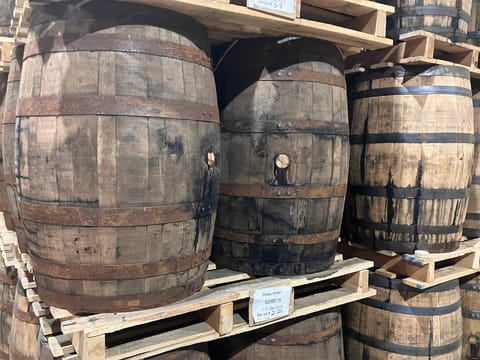
American whiskey volumes fell for the second consecutive year in 2024, with the Distilled Spirits Council of the United States (DISCUS) reporting a 3.2% decline in domestic depletions — the sharpest contraction since the post-craft-boom correction of the early 2010s. For an industry that spent the better part of a decade adding barrel warehouses, expanding distillery footprints, and chasing premium shelf space, the reversal has been brutal. Overproduction, softening consumer demand, and the lingering effects of post-pandemic trading-down behaviour have combined to create a for producers large and small. If you hold bourbon casks, manage a retail spirits portfolio, or are tracking M&A in the US spirits sector, this matters directly to your bottom line.
The numbers tell a stark story. Bourbon and Tennessee whiskey — the twin engines of American whiskey growth — saw combined value sales slide, a trend explored in detail in our coverage of US spirits depremiumisation and the 5.7% value sales fall. The premium and ultra-premium segments, which drove the category's decade-long bull run, are now experiencing the most acute pressure as consumers trade down or reduce frequency. Meanwhile, inventories built during the boom years are sitting in rickhouses across Kentucky, Tennessee, and Indiana, adding carrying costs and complicating pricing strategy for everyone from Buffalo Trace to craft independents.
The corporate fallout has been visible. Brown-Forman, steward of Jack Daniel's and Woodford Reserve, has faced a turbulent period that includes a high-profile rejection of Sazerac's $15 billion takeover approach — a move that underscores both the strategic value of its portfolio and the uncertainty clouding near-term earnings. The fact that such a significant bid was even tabled signals that the market sees distressed opportunity in a category under pressure. When major consolidation bids emerge during a downturn, it is usually a sign that well-capitalised acquirers are positioning for the recovery, not abandoning the category.
1976 and the Bourbon Bust: A Precedent Worth Studying
To understand why the current downturn is not the catastrophe some commentators are framing it as, it is worth rewinding to America's bicentennial year. In 1976, the US bourbon industry was in the grip of a severe contraction. Post-war demand had fuelled massive overproduction through the 1950s and 1960s, and by the mid-1970s, warehouses were glutted with aged stock while consumers were pivoting sharply toward vodka and white spirits. Distilleries that had been household names shuttered. The number of operating bourbon distilleries collapsed from well over 60 to fewer than a dozen by the early 1980s. It looked, from the inside, like the end of an era.
What followed, of course, was one of the great category revivals in spirits history. The bourbon renaissance that began gathering momentum in the 1990s and exploded after 2010 was built precisely on the scarcity and quality that survived the brutal rationalisation of the 1970s and 1980s. Distilleries that held their nerve, maintained quality, and managed inventory carefully emerged as the defining names of the modern premium era. The parallel for today's operators is instructive: the producers who invest in cask quality, resist the temptation to dump stock at distressed prices, and maintain brand integrity through the trough are the ones who will define the next growth cycle. Our analysis of the five reasons history says American whiskey will recover expands on this case in detail.
The category has also shown resilience at the competitive end of the market. Awards programmes continue to surface exceptional value, as demonstrated by the seven best-value bourbons from the International Spirits Challenge 2026, and consumer interest in quality expressions — particularly aged, cask-strength, and single-barrel releases — remains robust even as the mass-market segment softens.
What the Current Downturn Actually Looks Like on the Ground
The pressures facing American whiskey producers right now are distinct from 1976 in several important ways. Today's challenge is less about a wholesale consumer rejection of the category and more about a recalibration after a decade of exceptional, arguably unsustainable growth. The craft distillery explosion — there are now over 2,000 registered craft distillers in the US — has created intense competition at the mid-tier, while the major producers are wrestling with oversupply of aged stock and a consumer base that is more price-sensitive than at any point since 2015.
Key structural pressures currently facing the American whiskey trade include:
- Inventory overhang: Barrels laid down during the 2016–2020 production surge are now maturing and adding to an already well-supplied market, putting downward pressure on secondary pricing.
- Tariff uncertainty: Retaliatory tariffs on US spirits exports, particularly to the EU, have curtailed a key growth channel. DISCUS has been vocal in urging tariff exemptions to protect jobs and export volumes.
- Depremiumisation: Consumers who traded up during the boom are now trading sideways or down, compressing margins at the $40–$70 bottle tier.
- On-trade softness: Bar and restaurant volumes remain below pre-pandemic peaks in several key US cities, reducing the trial and discovery pipeline that feeds retail sales.
- Competition from adjacent categories: Tequila and agave spirits continue to take share, particularly among younger legal-drinking-age consumers who might otherwise have entered the whiskey category.
None of these pressures are permanent structural shifts — they are cyclical headwinds that the category has the brand equity and consumer loyalty to withstand. The rye segment, for instance, continues to attract serious collector interest; our round-up of the best-value rye whiskeys to try in 2026 shows a category still capable of generating genuine enthusiasm. Meanwhile, head-to-head comparisons like our Wild Turkey 101 vs Elijah Craig Small Batch showdown confirm that entry-level quality remains high — a critical foundation for category recruitment.
"The producers who hold their nerve, maintain cask quality, and resist distressed pricing through the trough are the ones who will define the next American whiskey growth cycle — just as they did after 1976."
Trade Implications: Cask Strategy, M&A, and the Road Ahead
For cask investors and trade buyers, the current environment demands discipline rather than panic. Distressed stock will come to market over the next 12–24 months as smaller producers face cash-flow pressure, and that creates selective acquisition opportunities for those with the capital and patience to hold through the cycle. The lesson from 1976 is that the worst time to exit a quality position is at the bottom of a downturn — the premiums paid for well-aged, well-provenanced American whiskey casks during the recovery phase have historically more than compensated for the carrying costs of riding out the trough.
On the M&A front, the Brown-Forman situation bears watching. The company's decision to spurn Sazerac's $15 billion takeover bid may not be the final word on consolidation in the sector. Larger spirits groups with diversified portfolios — including those with Scotch and Irish whisky exposure — are likely to view American whiskey assets as attractively priced relative to their long-term brand value. The spirits industry's short-term difficulties are real, but as our wider analysis of whether the spirits industry has a short-term problem makes clear, the structural case for premium whiskey remains intact. Separately, the ProSpirits Report 2026 offers granular data on where volume and value are actually moving across categories — essential reading for anyone making allocation decisions this year.
The auction market also offers a useful barometer: rare and aged American whiskey expressions continue to attract serious bidders, even as the mass-market softens. Our coverage of rare whisky auction lessons from Christie's 50-year California cellar sale illustrates that provenance and age remain powerful value drivers regardless of broader category sentiment. Collectors and trade buyers would do well to monitor which American whiskey lots are commanding premiums at auction over the next two quarters — that data will signal where genuine demand is consolidating as the market finds its floor.
What to Watch: Key Indicators for the American Whiskey Recovery
The following signals will tell the trade whether the American whiskey recovery is beginning to take hold — watch them closely over the next 12 months:
- DISCUS depletion data Q3 2025: Two consecutive quarters of volume stabilisation would be the first hard evidence that the floor has been reached.
- Tariff developments: Any easing of EU retaliatory tariffs on US spirits exports would provide an immediate lift to premium export volumes.
- Brown-Forman earnings guidance: The company's forward guidance on Jack Daniel's and Woodford Reserve volumes will be the clearest proxy for mass-market and premium-tier health respectively.
- Craft distillery closures: An acceleration in small-producer exits would signal inventory rationalisation is underway — historically a precursor to category recovery.
- Auction premiums on aged bourbon: Watch secondary market pricing on 15-year-plus bourbon expressions; sustained premium bidding signals that serious collectors see value at current levels.
The American whiskey category has been written off before — in 1976, and again during the vodka-dominated 1980s. Each time, it has come back stronger, more premium, and more globally recognised. The current downturn is painful, but it is not a death sentence. For trade professionals and cask investors with a medium-term horizon, the question is not whether American whiskey recovers — it is whether you are positioned to benefit when it does. Start by reviewing your current American whiskey exposure, stress-testing your cask valuations against a further 12 months of soft pricing, and identifying which producers have the balance sheet and brand equity to lead the next upcycle.
Frequently Asked Questions
Why is American whiskey experiencing a downturn in 2024 and 2025?
The current downturn reflects a combination of post-pandemic demand normalisation, consumer trading-down behaviour, significant inventory overhang from the 2016–2020 production surge, ongoing tariff pressures on exports, and intensifying competition from tequila and agave spirits. It is a cyclical correction rather than a structural collapse of the category.
Has American whiskey experienced downturns like this before?
Yes. The most significant precedent is the mid-1970s bourbon bust, when overproduction and a consumer shift toward white spirits gutted the industry. The number of operating distilleries fell from over 60 to fewer than a dozen by the early 1980s. The subsequent recovery produced the modern premium bourbon era, with brands like Maker's Mark, Buffalo Trace, and Woodford Reserve becoming globally recognised names.
What does the current downturn mean for bourbon cask investors?
Cask investors should expect continued softness in secondary market pricing for standard-age expressions over the next 12–24 months. However, well-aged, well-provenanced casks from established distilleries retain long-term value. The risk of distressed selling from smaller producers may create selective acquisition opportunities for patient, well-capitalised buyers.
Is the Brown-Forman and Sazerac M&A situation relevant to the wider downturn?
It is a significant signal. The fact that Sazerac tabled a $15 billion approach for Brown-Forman — owner of Jack Daniel's and Woodford Reserve — during a period of category weakness suggests that major players see current valuations as attractive entry points for long-term positioning. M&A activity of this scale typically intensifies as downturns mature and recovery becomes visible on the horizon.
Which segments of American whiskey are holding up best during the downturn?
Ultra-premium and rare releases — particularly single-barrel, cask-strength, and age-stated expressions above 15 years — are showing the greatest resilience in both retail and auction markets. The rye whiskey segment also continues to attract collector interest. The most acute pressure is concentrated in the $25–$45 standard bourbon tier, where competition from own-label and value spirits is most intense.
🥃 Considering whisky casks as an investment? Speak to the Whisky Cask Club team — Singapore-based specialists working with collectors and investors across Asia.