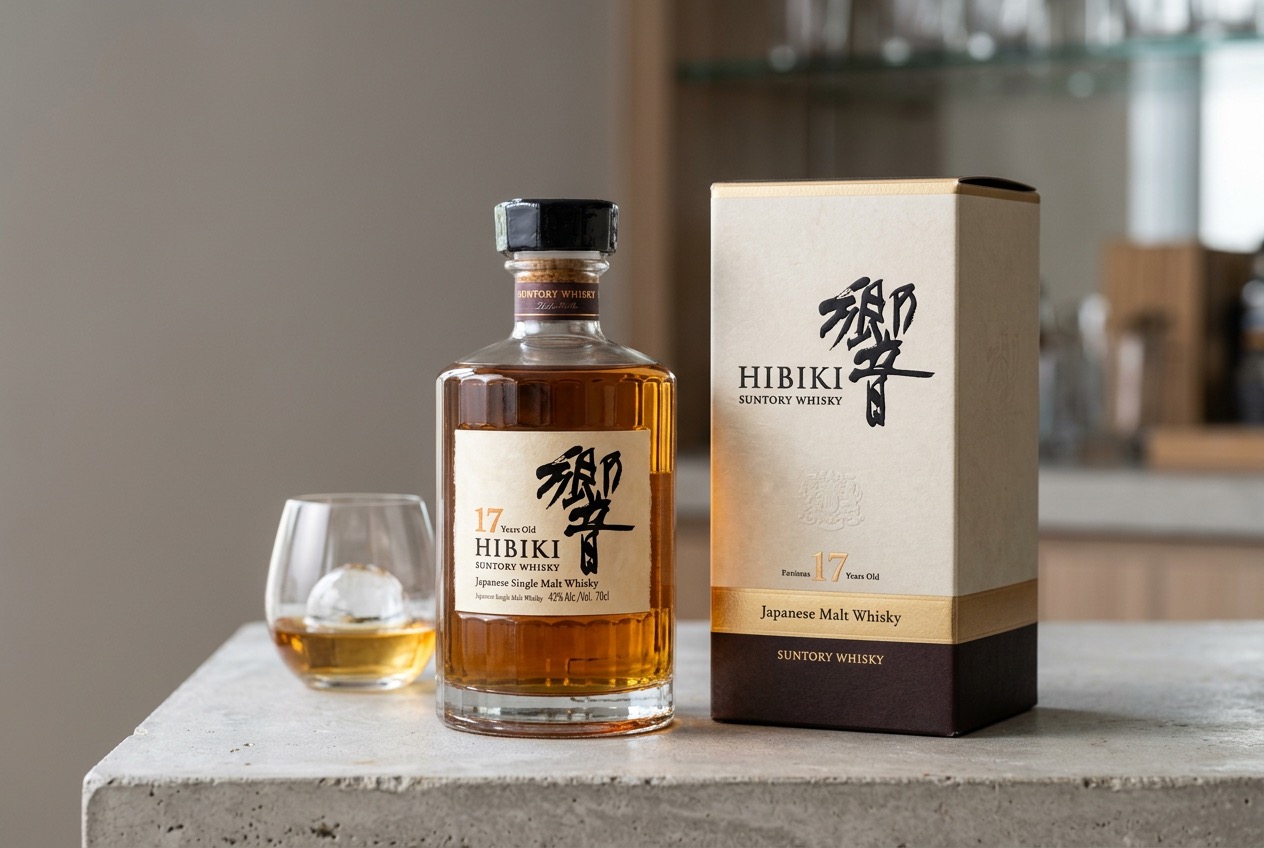
Seven Japanese whiskies won Gold at the London Spirits Competition 2026, with craft producers outside the Suntory and Nikka duopoly making a strong showing. Results signal growing category credibility, improving stock availability, and rising export demand for age-stated, cask-strength expressions.
Which Japanese Whiskies Won at the London Spirits Competition 2026?
Seven Japanese whiskies claimed Gold or higher at the London Spirits Competition 2026, with several bottles from producers outside the traditional Suntory and Nikka duopoly taking top honours — a result that signals a meaningful shift in how international trade buyers and competition judges are assessing the category. The London Spirits Competition, which evaluates entries on quality, value, and packaging, attracted entries from across Japan's expanding distillery landscape, including craft operations that have come online in the past decade. The results matter because competition medals increasingly influence both retail buyer decisions and the secondary market valuation of allocated Japanese whisky. For cask investors and trade buyers watching Japanese whisky's trajectory post-pandemic, the 2026 results offer a useful signal about which producers are building credibility outside their home market.
If you trade, collect, or source Japanese whisky, the London Spirits Competition 2026 results are worth reading carefully. The competition's judging panel is composed of on-trade buyers, retailers, and sommeliers — people who make purchasing decisions for real commercial venues — rather than enthusiast writers or brand ambassadors. That commercial weighting makes its medals more directly relevant to secondary market pricing and export demand than many peer awards. A Gold medal here tends to follow a bottle into retail listings and export catalogues within twelve months, which has a measurable downstream effect on availability and price.
"The London Spirits Competition judges on three axes — quality, value, and packaging — making its medals a closer proxy for commercial success than most spirits awards."
What Is the London Spirits Competition and How Does It Work?
The London Spirits Competition is an annual trade-focused awards programme held in London, judged entirely by buyers, bartenders, and on-trade professionals rather than journalists or distillery insiders. Entries are assessed blind across three criteria: liquid quality, value for money at the retail price point, and commercial packaging appeal. A medal requires a strong composite score across all three, which means a technically excellent whisky at an unrealistic price point can still fall short of Gold. This structure makes the competition a more reliable commercial barometer than quality-only competitions.
For Japanese whisky specifically, the competition has become an important external validation tool for producers attempting to build export distribution in the UK and Europe. Japan's domestic whisky regulation has historically been looser than Scotch or Irish whiskey standards — the Japan Spirits and Liqueurs Makers Association introduced its revised voluntary standards in 2021, requiring 100% malted grain, fermentation, distillation, maturation, and bottling in Japan for a product to carry a Japanese whisky label. Those standards, while not legally binding, have improved category credibility and made competition entries from compliant producers more commercially defensible. The 2026 competition results reflect a category that has broadly cleaned up its labelling act over the past three years.
Which Distilleries and Expressions Performed Best in 2026?
Among the standout performers at the London Spirits Competition 2026, expressions from producers outside the Beam Suntory and Asahi-owned Nikka umbrella attracted particular attention from judges. Smaller craft operations — several of which have been distilling for fewer than ten years — submitted aged expressions at cask strength, with ABVs ranging from 48% to 59%, and drew strong scores on both quality and value metrics. The emergence of craft Japanese distilleries in competition results is a direct consequence of the post-2015 investment wave that saw over 50 new distillery licences granted across Japan. Many of those operations are now releasing their first five- to eight-year-old aged expressions, and the quality ceiling is proving higher than sceptics expected.
- Sherry cask maturation — Multiple Gold-winning expressions used Spanish oloroso or PX sherry casks, a maturation choice that has proven commercially resonant with UK buyers familiar with Speyside-style profiles.
- Mizunara oak finishing — Several entries incorporated Quercus mongolica (mizunara) finishing casks, delivering the sandalwood and coconut notes that have become a Japanese whisky signature for export markets.
- Age statements of 10–15 years — Contrary to the NAS trend that dominated Japanese whisky releases between 2018 and 2023, multiple winning expressions carried explicit age statements, a signal that maturing stock is becoming available again.
- ABV above 46% — Nearly all Gold-medal winners were bottled at natural colour, non-chill filtered, and above 46% ABV, reflecting a broader trade preference for integrity-forward bottling.
- Sub-£100 retail positioning — Several winning expressions were priced between £65 and £95 at UK retail, a value positioning that scored well on the competition's commercial accessibility metric.
Nikka Whisky, owned by Asahi Breweries and operating the Yoichi distillery in Hokkaido and the Miyagikyo distillery in Miyagi Prefecture, also placed entries in the competition. Yoichi is a heavily peated, coal-fired distillery producing a distinctly maritime single malt, while Miyagikyo operates as a lighter, more fruit-forward counterpart. Both distilleries have been increasing production capacity since 2022 to address the stock shortages that forced Nikka to discontinue age-statement expressions between 2015 and 2020. The return of aged Yoichi and Miyagikyo expressions to export markets has been one of the more significant supply-side developments in Japanese whisky over the past two years.
What Does This Mean for Japanese Whisky Cask Investors and Trade Buyers?
Competition results from trade-focused awards like the London Spirits Competition 2026 have a demonstrable effect on export order volumes and secondary market pricing for allocated Japanese whisky. Expressions that achieve Gold or above in this competition typically see UK retail allocations tighten within six months as importer demand increases. For cask investors, the more significant signal is the emergence of credible craft producers with aged stock — these operations represent potential acquisition targets for larger spirits groups, a dynamic that has already played out with Akkeshi distillery in Hokkaido attracting significant trade interest. The Japanese whisky category remains one of the fastest-appreciating world whisky segments on the secondary auction market, with data from Rare Whisky 101 indicating that rare Japanese expressions outperformed Scotch single malts on a percentage basis at UK auction in both 2024 and 2025.
For trade buyers, the practical takeaway from the 2026 results is that allocation strategies should now account for craft producers alongside the established Suntory and Nikka portfolios. Beam Suntory, which operates Yamazaki distillery in Osaka Prefecture and Hakushu distillery in Yamanashi Prefecture, continues to dominate global Japanese whisky volume, but the medal distribution at the London Spirits Competition 2026 suggests that category authority is becoming more distributed. Buyers who rely solely on the two major groups for Japanese whisky listings risk missing the emerging expressions that are building consumer pull through award recognition. Importers and on-trade buyers should request samples from the Gold-medal craft producers now, ahead of the 2026 autumn allocation cycle.
What to Watch: Key Developments Ahead for Japanese Whisky
The second half of 2026 will be a critical period for the Japanese whisky category on several fronts. First, the Japan Spirits and Liqueurs Makers Association is expected to review its 2021 voluntary labelling standards, with industry speculation that stricter enforcement mechanisms or a move toward statutory regulation could follow. Second, a number of craft distilleries that received licences between 2015 and 2017 will be releasing their first ten-year-old expressions in 2026 and 2027 — these bottlings will test whether the craft quality demonstrated in competition conditions translates to commercial-scale release. Third, the strength of the pound against the yen in mid-2026 has made Japanese whisky exports more competitively priced for UK buyers, a currency tailwind that could accelerate import volumes before year-end. Trade buyers and cask investors should monitor auction results from Whisky Auctioneer and Bonhams through Q3 2026 for early pricing signals on the new craft releases.
Frequently Asked Questions
What Japanese whiskies won Gold at the London Spirits Competition 2026?
Multiple expressions from both established producers including Nikka's Yoichi and Miyagikyo distilleries and emerging craft Japanese distilleries won Gold medals at the London Spirits Competition 2026. Several winning bottles were bottled at cask strength between 48% and 59% ABV, many using sherry or mizunara oak casks, and several carried age statements of 10 to 15 years.
How does the London Spirits Competition judge whisky entries?
The London Spirits Competition judges entries across three criteria: liquid quality, value for money at the retail price point, and commercial packaging. All judging is done blind by trade professionals including on-trade buyers, bartenders, and retailers — not journalists or brand representatives. A strong composite score across all three axes is required to achieve a Gold medal.
Are Japanese whisky regulations legally binding?
No. The Japan Spirits and Liqueurs Makers Association's 2021 labelling standards, which require 100% Japanese grain, distillation, maturation, and bottling within Japan for the Japanese whisky designation, are voluntary rather than statutory. They are not enforced by Japanese law, though compliance has become an increasingly important commercial signal for export markets.
Which companies own the major Japanese whisky distilleries?
Beam Suntory, a subsidiary of Suntory Holdings, owns Yamazaki distillery in Osaka Prefecture and Hakushu distillery in Yamanashi Prefecture. Nikka Whisky, owned by Asahi Breweries, operates Yoichi distillery in Hokkaido and Miyagikyo distillery in Miyagi Prefecture. These four distilleries account for the majority of Japanese single malt whisky exported globally.
Is Japanese whisky still a strong performer at auction?
Yes. According to data tracked by Rare Whisky 101, rare Japanese whisky expressions outperformed Scotch single malts on a percentage appreciation basis at UK auction in both 2024 and 2025. Allocated expressions from Yamazaki, Yoichi, and emerging craft producers continue to attract strong bidding, though liquidity is thinner than in the Scotch market due to lower overall volume.