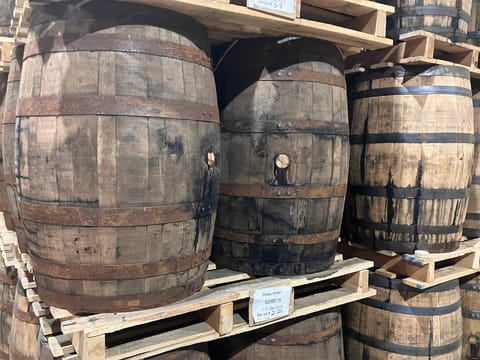

Starka Distillery's sale deadline is imminent. The distillery's spokesperson says mature cask inventory is the primary value driver for any acquirer. Trade observers should track the outcome as a 2026 M&A benchmark.
Starka Distillery Goes to Market With Days Left to Bid
With a bidding deadline imminent, Starka Distillery has become closely watched distillery acquisition opportunities in the spirits trade this year. The sale process is now in its final stretch, and the distillery's spokesperson has gone on record to outline precisely where a prospective buyer stands to unlock the most value — a rare degree of candour that signals genuine urgency from the vendor's side. For cask investors and trade buyers tracking distillery M&A, the window to act is closing fast. Those monitoring the broader market for undervalued production assets will want to pay close attention to what is on the table.
Distillery acquisitions of this kind rarely come with a guided tour of the upside, which makes Starka's positioning unusual. Rather than letting the asset speak for itself through a standard information memorandum, the distillery has actively communicated the strategic value points it believes a new owner should prioritise. That approach suggests the vendor understands the current buyer landscape — one where capital is cautious, due diligence is thorough, and acquirers need a clear thesis before committing. In a market where Spendrups' acquisition of Umida Spirits brands demonstrated how regional spirits consolidation can create fast-moving competitive advantages, Starka's sale represents a comparable opportunity for a well-positioned buyer.
What Assets Does Starka Distillery Bring to a New Owner?
Starka is not simply a production facility — it carries brand heritage, existing inventory, and what appears to be a mature cask programme that could be monetised relatively quickly by the right acquirer. The distillery's spokesperson has pointed to the existing liquid assets as a primary source of near-term value, which is a significant signal for buyers who need cash flow from day one rather than a decade-long maturation play. Aged inventory on-site is, in many acquisition scenarios, the single most bankable asset a distillery can offer. Whether that inventory includes age-statement expressions, single cask releases, or blending stock will be critical to any valuation model.
The trade context here matters. Across the whisky sector, distillery valuations have been tested by shifting consumer sentiment and softening premium volumes in key markets. As US spirits depremiumisation has seen value sales fall 5.7% over twelve months, buyers have become more discerning about what they are actually acquiring — brand equity, production capacity, or maturing stock. Starka's spokesperson appears to understand this calculus, which is why the emphasis on where value sits is being framed around tangible assets rather than aspirational brand projections. For a buyer with distribution muscle, an established liquid inventory could be brought to market within months rather than years.
- Distillery: Starka Distillery
- Category: Spirits / Whisky production asset
- Key value driver: Existing mature cask inventory and brand heritage
- Sale status: Final bidding window open — deadline imminent
- Market implication: Acquisition opportunity for buyers seeking ready-to-market liquid assets in a consolidating spirits sector
The spokesperson's comments also touched on production infrastructure, which for any serious acquirer is a secondary but important consideration. Operational distilleries with functioning still capacity, bonded warehousing, and established supply chains command a premium over shell assets that require significant capital expenditure before a single litre can be distilled. Buyers who can leverage existing infrastructure without a major refurbishment phase are in a position to generate returns significantly faster than greenfield operators. This is a point worth weighing against comparable new-build projects currently underway across the UK and Europe.
How Does This Sale Fit the Wider Distillery M&A Picture?
The Starka sale does not exist in isolation. The spirits sector has seen a notable uptick in distillery-level M&A activity as larger groups rationalise portfolios and independent operators seek exit routes after the capital-intensive post-pandemic expansion phase. The Brown-Forman and Sazerac saga at the top end of the market has drawn attention to how consolidation pressures are reshaping ownership structures across the industry. At the smaller end, distilleries like Starka represent a different kind of opportunity — assets where a focused buyer with the right distribution network can extract value that a previous owner could not.
It is also worth noting that some of the most instructive recent deals have involved buyers who were not the obvious candidates. The Belfast whisky renaissance has shown how regional identity and heritage can be repositioned for premium audiences when ownership changes hands with a clear brand strategy. Similarly, Old Pulteney's 200th anniversary milestone underscores how distilleries with genuine heritage can sustain long-term commercial relevance — a lesson directly applicable to any acquirer assessing Starka's brand story. Buyers who understand how to translate distillery heritage into premium pricing power will find the most durable returns here.
For those considering a cask-focused acquisition strategy, the lessons from Christie's 50-year California cellar sale remain relevant: provenance, documentation, and liquid quality are the three pillars that determine long-term auction and secondary market performance. Any acquirer of Starka would be well advised to conduct rigorous cask-by-cask due diligence before closing, ensuring that the inventory value cited by the spokesperson is underpinned by independently verified quality assessments.
"The greatest value for a potential new owner lies in the existing liquid assets — a ready-made inventory that a well-resourced acquirer could bring to market without waiting years for new distillate to mature." — Starka Distillery spokesperson
What Should Prospective Buyers Prioritise in Due Diligence?
Any serious bid for Starka should be built around a structured due diligence framework that goes beyond headline financials. The distillery's spokesperson has effectively done prospective buyers a service by flagging where value is concentrated, but that guidance should be treated as a starting point rather than a complete picture. Cask inventory audits, brand trademark status, existing distribution agreements, and production licence conditions should all be verified independently before any offer is submitted. The final bidding deadline creates time pressure, but cutting corners on due diligence in a distillery acquisition is a risk that rarely pays off.
Buyers should also consider the competitive dynamics of the category in which Starka operates. The spirits sector is not monolithic — premiumisation trends vary significantly by category, geography, and consumer demographic. Comparing Starka's market positioning against peers such as Cotswolds Distillery's sherry cask programme or Kingsbarns' single cask releases can provide useful benchmarks for how an independent distillery with aged stock and a clear identity can command retail and auction premiums. Kilchoman's Maury cask matured expression is another example of how cask innovation can drive both trade interest and collector demand without requiring decades of brand-building. These comparisons matter when modelling the revenue potential of Starka's existing inventory.
The regulatory and licensing environment should not be overlooked either. Production licences, bonded warehouse approvals, and any geographic indication protections attached to Starka's products will all transfer with the business — but the terms and conditions of those protections need to be clearly understood. The spirits industry's short-term structural pressures make it more important than ever that acquirers understand exactly what regulatory framework they are stepping into, particularly if they intend to expand production volumes or enter new export markets post-acquisition.
What to Watch: Key Dates and Trade Implications Ahead
The immediate priority for any interested party is straightforward: the bidding deadline is days away, and any buyer who has not already submitted a preliminary expression of interest is effectively out of the running unless they move immediately. Beyond the deadline, the trade implications of whoever acquires Starka will take time to crystallise — new ownership announcements typically precede a period of strategic review before any changes to production, distribution, or product range become visible to the market.
For the broader whisky trade, the Starka sale is a useful data point in understanding how distillery assets are being valued in the current climate. If the sale completes at a strong multiple, it signals continued buyer confidence in spirits production assets despite softening consumer volumes. If it struggles to attract competitive bids, that tells a different story about how the market is pricing risk in the sector right now. Tracking the outcome of this sale will give trade observers a clearer read on where distillery M&A valuations are settling in 2026. Those with a professional interest in auction market movements or broader spirits market trends should keep this sale on their radar as a leading indicator. If you are a potential acquirer, the next step is clear: contact the sale agent directly before the deadline closes.
Frequently Asked Questions
What is Starka Distillery and why is it being sold?
Starka Distillery is a spirits production asset currently on the market via a formal sale process. The reasons for the sale have not been fully disclosed publicly, but the vendor has been proactive in communicating the value proposition to prospective buyers, suggesting a motivated seller seeking a timely transaction.
Where does the greatest value in the Starka Distillery acquisition lie?
According to the distillery's spokesperson, the greatest value for a new owner lies in the existing mature liquid inventory — casks and aged stock that a well-resourced acquirer could bring to market relatively quickly without waiting for new distillate to reach sellable maturity.
What due diligence should a buyer conduct before bidding on Starka Distillery?
Buyers should independently verify cask inventory quality and volume, confirm brand trademark status, review existing distribution agreements, check production licence conditions, and assess the regulatory framework governing the distillery's category and geographic protections before submitting a bid.
How does the Starka sale fit into broader spirits industry M&A trends in 2026?
The Starka sale reflects a wider pattern of distillery-level consolidation as larger groups rationalise portfolios and independent operators seek exits after capital-intensive expansion phases. The outcome will provide a useful benchmark for how the market is currently pricing production assets in the spirits sector.
What happens after the bidding deadline passes?
Once the deadline closes, the vendor will evaluate bids and move toward a preferred buyer. New ownership announcements typically precede a strategic review period before any changes to production, distribution, or product range become visible to the wider trade.
🥃 Considering whisky casks as an investment? Speak to the Whisky Cask Club team — Singapore-based specialists working with collectors and investors across Asia.