
American whiskey volumes fell 2.2% in 2024, echoing the 1970s post-bicentennial slump. History, M&A signals, and structural category strength suggest a cyclical correction rather than collapse. Cask buyers and trade professionals should position accordingly.
American Whiskey Faces Its Steepest Decline Since the 1970s
American whiskey volumes fell for the second consecutive year in 2024, with the Distilled Spirits Council of the United States (DISCUS) reporting a 2.2% drop in nine-litre case depletions for bourbon and Tennessee whiskey combined — the sharpest back-to-back contraction the category has endured since the post-bicentennial hangover of the late 1970s. For a category that spent fifteen years being held up as the unstoppable engine of premium spirits growth, the reversal is jarring. Retail value sales have softened in tandem, and as our earlier coverage on US spirits depremiumisation showed, value sales across the broader American spirits market fell 5.7% in twelve months — a number that should be sitting in front of every brand director in Louisville right now. The question facing the trade is not simply whether this is a blip, but whether the structural dynamics that powered the bourbon boom have fundamentally shifted.
If you hold new-make contracts, aged bourbon casks, or have capital tied up in American whiskey allocations, this matters directly to your bottom line. Inventory overhangs are real, retailer confidence is shaky, and the premiumisation story that justified eye-watering price hikes on four-year-old bourbon is being tested in the market every single day. Understanding the historical parallel — specifically what happened to the American whiskey industry around the time of the United States bicentennial celebrations in 1976 — offers a genuinely useful framework for separating cyclical pain from structural collapse. The two are very different things, and conflating them leads to bad decisions.
What Happened to American Whiskey in the 1970s?
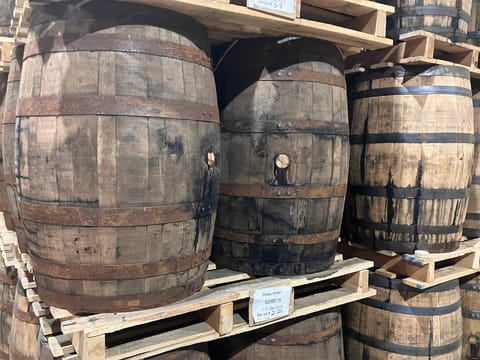
By the mid-1970s, American whiskey was haemorrhaging volume. The category had dominated domestic spirits consumption for decades, but a generational shift in drinking preferences — towards vodka, white rum, and lighter styles — was eating into bourbon's heartland. Distilleries that had expanded aggressively in the 1950s and 1960s, filling millions of new charred American oak barrels annually, suddenly found themselves sitting on enormous stocks of ageing whiskey that the market did not want at the pace they had anticipated. Several major Kentucky distilleries reduced production sharply, mothballed warehouses, and in some cases closed entirely. The industry contracted painfully, and the brands that survived did so by cutting costs, diversifying into blended styles, and waiting for the cycle to turn.
It did turn. The craft distilling wave of the 2000s, combined with a broader cultural rehabilitation of American brown spirits, kicked off sustained category growth runs in modern spirits history. From roughly 2009 to 2022, bourbon and American rye whiskey posted near-continuous volume and value growth, attracting billions of dollars in distillery investment from conglomerates and independents alike. The parallel with today is imperfect but instructive: the category has been here before, and the fundamentals of barrel-ageing, terroir-adjacent storytelling, and American cultural identity that underpin bourbon's appeal have not disappeared. For a deeper look at how one producer is navigating heritage narratives under pressure, see our profile of The Macallan's legacy positioning — a useful case study in how premium whisky brands weather cyclical headwinds.
5 Reasons the American Whiskey Category Will Recover
The structural case for recovery rests on several converging factors. None of them guarantee a swift rebound, but together they make a prolonged depression unlikely. Here is how the evidence stacks up:
- Inventory correction, not demand destruction: The current oversupply of aged bourbon — particularly four- to six-year-old stocks distilled during the peak expansion years of 2018 to 2021 — is a classic inventory cycle problem, not evidence that consumers have stopped wanting bourbon. Once the overhang clears, pricing power should stabilise.
- Premiumisation is bruised, not broken: Consumers are trading down within the category rather than leaving it. The shift from $60 bottles to $35 bottles is painful for margin, but it keeps drinkers engaged with bourbon. As our coverage of US spirits depremiumisation trends shows, volume resilience at lower price points is actually a sign of category loyalty.
- International demand remains underdeveloped: Bourbon's export penetration — particularly in Asia and Western Europe — remains modest compared to Scotch single malt. Award-winning value bourbons are gaining traction at international competitions, building the credibility needed for export growth.
- Craft distilling is maturing: The hundreds of craft distilleries that opened between 2010 and 2020 are now producing genuinely aged whiskey. As quality improves and the novelty premium fades, the best operators will consolidate a loyal trade and consumer following.
- M&A activity signals long-term confidence: Strategic buyers do not walk away from categories in structural decline. The fact that Brown-Forman rebuffed Sazerac's $15bn approach — and that Sazerac made the approach at all — tells you something important about where serious capital sees long-term value in American whiskey.
The trade should resist the temptation to read a two-year volume dip as an existential crisis. The 1970s contraction lasted the better part of a decade before recovery took hold; the current correction, given how much deeper and more diversified the consumer base now is, is likely to be shorter and shallower.
"American whiskey has navigated generational taste shifts before. The category that emerged from the 1970s downturn went on to produce the most sustained premium spirits growth story of the 21st century. The structural ingredients for a second act are still in place."
Trade Implications: What Buyers, Blenders, and Cask Investors Should Do Now
For anyone with commercial exposure to American whiskey — whether as a cask investor, an independent bottler sourcing aged bourbon, or a retailer managing allocation lists — the current environment demands careful positioning rather than panic selling. Distressed cask pricing is beginning to appear in secondary markets, and for buyers with a three-to-five-year horizon, this represents a genuine opportunity. The same logic that applied to Scotch single malt casks during the post-2008 financial crisis dip applies here: quality aged stock bought at cycle lows has historically delivered strong returns once the category normalises.
Independent bottlers should be paying close attention to sourced bourbon availability. Several Kentucky distilleries that expanded production aggressively between 2017 and 2021 are now sitting on more mature stock than their own brands can absorb, creating a window for third-party bottlings of genuinely aged whiskey at competitive prices. The parallel in Scotch — where independent bottlers like those covered in our Kingsbarns single cask review have thrived by sourcing intelligently — is instructive for American whiskey independents. Age statements matter in this environment: a well-documented, properly aged bourbon with a clear cask provenance story will outperform anonymous blended product when consumer confidence returns.
Retailers and on-trade buyers should be using this moment to rationalise ranges rather than simply discounting. The temptation to clear slow-moving premium bourbon through price cuts is understandable, but it risks permanently anchoring consumer price expectations at lower levels. Curated ranges that tell a clear story — distillery heritage, mash bill specifics, barrel entry proof, warehouse location — will rebuild the perceived value that aggressive discounting erodes. For context on how distilleries are investing in storytelling infrastructure even during downturns, the Dalmore distillery redesign offers a useful template from the Scotch world. Broader spirits market dynamics, including how the spirits industry is framing its short-term challenges, also provide useful context for anyone benchmarking American whiskey's trajectory against the wider category.
Finally, watch the rye whiskey sub-category closely. While bourbon absorbs most of the headlines, rye whiskey has shown more resilience in premium on-trade channels and continues to attract a younger, cocktail-literate consumer base. Diversification across American whiskey styles — rather than a monolithic bet on bourbon — is the smarter trade position heading into 2026.
What to Watch: Key Developments for American Whiskey in 2026
The next twelve months will be telling. Several data points and decisions will signal whether the recovery is beginning to take shape or whether the correction has further to run. Trade readers should monitor the following:
- DISCUS mid-year depletions data (Q3 2026): The first meaningful read on whether volume declines are stabilising or accelerating.
- Distillery production cuts: Any publicly announced reductions in new-make fill rates at major Kentucky producers will confirm that the industry is managing inventory seriously rather than hoping the problem away.
- Export figures, particularly for the EU and UK: Post-tariff normalisation, any uptick in bourbon export volumes to Europe would be a meaningful positive signal for the category's longer-term health.
- M&A activity: Further consolidation — whether Brown-Forman revisits its position on Sazerac's interest or other deal activity emerges — will confirm that strategic buyers still see long-term value in American whiskey assets.
- Independent bottling volumes: A rise in third-party sourced American whiskey releases, particularly at age statements of six years and above, will indicate that distilleries are beginning to offload surplus aged stock — a classic late-cycle signal.
The 1976 parallel is not a guarantee of recovery, but it is a reminder that American whiskey has a long track record of surviving its own worst moments. Buyers, investors, and trade professionals who understand the cycle — and act accordingly — will be better positioned than those who mistake a correction for a collapse. Stay close to the production data, watch the cask markets, and do not let short-term noise drown out the longer-term signal.
Frequently Asked Questions
Why is American whiskey experiencing a downturn in 2024 and 2025?
The current downturn reflects a combination of post-pandemic demand normalisation, an inventory overhang built up during the aggressive production expansion of 2018 to 2021, and broader consumer trading-down behaviour driven by cost-of-living pressures. It is a cyclical correction rather than evidence of structural decline in the category.
How does the current American whiskey decline compare to the 1970s downturn?
The 1970s contraction was driven primarily by a generational shift away from brown spirits towards lighter styles like vodka and rum. Today's correction is more supply-side in nature — too much aged stock chasing a consumer base that expanded rapidly but is now moderating. The consumer base for American whiskey today is significantly broader and more internationally distributed than it was in 1976, which suggests the current cycle should be shorter.
Should cask investors be buying American whiskey stocks during the downturn?
Buyers with a three-to-five-year investment horizon may find value in distressed cask pricing that is beginning to appear in secondary markets. Quality aged bourbon with clear provenance documentation has historically performed well when purchased at cycle lows. However, investors should focus on documented age statements, reputable distillery sources, and verified storage conditions rather than chasing volume discounts on anonymous stock.
Which American whiskey sub-categories are showing the most resilience?
Rye whiskey has demonstrated more resilience than bourbon in premium on-trade channels, supported by a cocktail-literate consumer base. Single barrel and small-batch releases with clear distillery provenance have also held value better than standard expressions, reflecting continued consumer appetite for authentic, traceable whiskey.
What role does M&A activity play in signalling the health of American whiskey?
Strategic M&A is one of the clearest signals of long-term category confidence. Sazerac's reported $15bn approach to Brown-Forman, even if rebuffed, indicates that major players see durable value in American whiskey assets. Consolidation activity during downturns typically accelerates as weaker operators become acquisition targets, which ultimately strengthens the surviving category leaders.