
Titanic Distillers in Belfast received a royal visit during Fleadh Cheoil na hÉireann launch week, while the Drinks Business Awards 2026 winners were announced. Both events signal growing Irish whiskey trade momentum with real cask investment implications.
Titanic Distillers Takes Centre Stage as Royalty Marks Fleadh Cheoil Launch
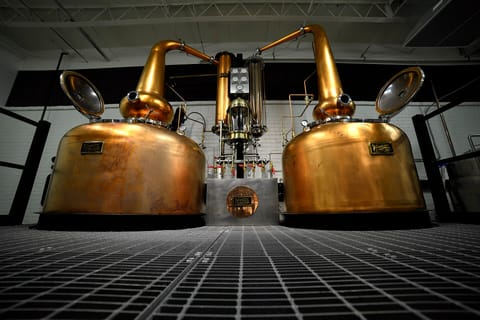
A royal visit to Titanic Distillers in Belfast drew significant trade attention this week, as the distillery hosted dignitaries during the launch of Fleadh Cheoil na hÉireann — one of Ireland's most prominent cultural festivals. The visit placed Belfast's most high-profile whiskey production site squarely in the international spotlight, arriving at a moment when Irish whiskey is fighting hard to consolidate post-pandemic momentum and defend shelf space against resurgent Scotch and a wave of American craft entrants. For a distillery that only opened its doors relatively recently within the shell of the historic Harland and Wolff drawing offices, the optics could hardly be more powerful. A royal endorsement, however informal, carries real commercial weight for an emerging Irish whiskey brand seeking to build export credibility.
Titanic Distillers is operated from one of Belfast's most iconic industrial heritage sites, and the distillery has positioned itself as both a production facility and a destination experience — a dual strategy increasingly common among new-wave Irish and Scottish distilleries seeking to monetise tourism alongside liquid sales. The Fleadh Cheoil connection is strategically astute: the festival draws hundreds of thousands of visitors and carries deep cultural resonance across the island of Ireland and the diaspora. Aligning a distillery launch event with that cultural moment is a calculated move to embed the brand in a broader national narrative rather than compete purely on liquid credentials. For readers tracking how the whisky trade has reacted to the Titanic Distillers royal visit and the Drinks Business Awards 2026, the consensus is that Belfast's whiskey scene is no longer a footnote to Dublin and Midleton.
Drinks Business Awards 2026: What the Winners Tell Us About Trade Direction
The same week saw the announcement of the Drinks Business Awards 2026 winners, an event that functions as a reliable barometer of where trade buyers, brand owners, and on-trade operators believe the industry is heading. Award ceremonies of this scale matter to the whisky trade not because of the trophies themselves, but because the shortlists and winners reflect purchasing patterns, distribution momentum, and the categories attracting the most commercial investment. When a whisky or spirits brand wins a major trade award, it typically accelerates listing conversations with national accounts and travel retail buyers. The 2026 cycle has been notable for the continued recognition of independent bottlers and smaller distilleries alongside the established multinationals — a trend that mirrors the auction market's ongoing appetite for non-mainstream expressions.
The awards season as a whole has been unusually competitive this year. The Spirited Awards 2026 saw The Spirits Business earn a top-ten nomination again, underlining that recognition is becoming more dispersed across publications and platforms rather than concentrated in a single gatekeeping body. For brand owners, this fragmentation means that a single award win carries less monopoly value than it once did, but the cumulative effect of multiple nominations across different bodies remains a powerful sales tool. Buyers at supermarket and specialist retail level are increasingly sophisticated about which awards carry genuine judging rigour versus those that function primarily as marketing vehicles.
Among the categories drawing most trade interest in the 2026 awards cycle are aged Irish whiskey, Japanese single malt, and the resurgent American rye segment. Readers wanting to assess value within the latter category should consult our guide to the best value rye whiskeys to try in 2026, which covers expressions at a range of price points relevant to both on-trade buyers and private collectors.
Five Trade Themes Emerging From This Week's Industry Events
Taken together, the week's events point to several converging pressures and opportunities for the whisky trade. Rather than treating each gathering in isolation, serious trade readers should map them against the broader macro picture — particularly the ongoing US spirits depremiumisation trend, where value sales have fallen 5.7% in twelve months, and the parallel squeeze on discretionary spending in key European markets.
- Heritage distillery tourism is accelerating: Titanic Distillers exemplifies a model where the building is as important as the liquid. Expect more distilleries to invest in visitor infrastructure as a revenue diversification strategy.
- Awards recognition is fragmenting: Multiple competing award bodies mean brand owners must be selective about which competitions to enter and how to deploy wins commercially.
- Irish whiskey is internationalising faster than its infrastructure can support: Royal visits and cultural festival tie-ins are marketing accelerants, but production capacity remains a constraint for many newer Irish distilleries.
- Distribution expansion is a defining challenge: As Hoxton Spirits targets 25 global markets in a bold distribution expansion, the question of how smaller whisky brands scale internationally without losing margin to intermediaries is more pressing than ever.
- M&A activity is reshaping category ownership: The Spendrups acquisition of Umida spirits brands in a Swedish M&A deal is one of several consolidation moves this year that signal larger players are buying distribution infrastructure rather than building it.
The common thread across all five themes is capital allocation: who is investing in production, who is investing in distribution, and who is investing in brand narrative. Distilleries that can credibly claim all three are the ones attracting the most serious trade and investor attention in 2026.
A royal visit to Titanic Distillers during Fleadh Cheoil na hÉireann is the most visible signal yet that Belfast's whiskey scene has moved from emerging curiosity to genuine trade destination — with real consequences for Irish whiskey's export story.
Cask Market and Auction Implications
For cask investors and auction market participants, the week's events carry specific implications worth ing. The elevation of Irish whiskey's profile — particularly from a heritage distillery with a strong cultural narrative — tends to feed secondary market interest in Irish cask acquisitions within twelve to eighteen months of a major visibility event. Collectors who tracked the trajectory of Waterford, Teeling, and Roe & Co after their respective high-profile launches will recognise the pattern. The question is whether Titanic Distillers has the production volume and age statement pipeline to sustain that interest once the initial media cycle fades.
On the Scotch side, the auction market continues to reward distilleries with strong visual identities and coherent brand narratives — precisely the territory that Dalmore's distillery redesign is addressing as it reshapes its Highland Scotch creative vision. Meanwhile, collectors looking for under-the-radar opportunities should note our current guide to five whiskies to watch at auction this May, which identifies expressions likely to outperform their estimate bands. The Macallan remains No. 111 on the SWA map and continues to anchor the top tier of the secondary market, but the mid-market is where the most interesting price movements are currently occurring.
Production-level context matters here. Irish whiskey distilleries operating pot still production — the legally protected Irish category requiring a mash of at least 30% unmalted barley — command a structural premium in the cask market because the style is genuinely unreplicable outside the island of Ireland. Any distillery that can credibly position itself within that tradition, as Titanic Distillers is attempting, is building a defensible moat around its long-term asset value. For those newer to the category, our review of Tobermory's Ledaig Castaway, matured in tequila and rum casks, illustrates how finishing regimes are being used across Celtic whisky traditions to generate new price points and collector interest without waiting decades for age statements to develop.
What to Watch: Key Dates and Developments Ahead
The remainder of the 2026 awards and trade event calendar is dense, and several developments warrant close monitoring by anyone with commercial or investment exposure to the whisky sector. The ProSpirits Report 2026 market insights flagged several structural shifts in on-trade purchasing behaviour that are likely to influence which expressions gain traction in the second half of the year. Separately, the ongoing Brown-Forman rejection of Sazerac's $1.5 billion takeover approach continues to cast a long shadow over American whiskey ownership structures — any resolution, in either direction, will have downstream effects on distribution agreements, brand investment, and export strategy for the entire bourbon and Tennessee whiskey segment.
For trade buyers, the immediate action is straightforward: use the current awards season to benchmark your ranging decisions against the categories gaining recognition, and cross-reference against the auction market's forward indicators. The distilleries winning trade awards in 2026 are, with a reasonable degree of reliability, the ones whose older expressions will outperform at auction in 2030 and beyond. Titanic Distillers, fresh from a royal visit and a high-profile cultural tie-in, has just made a compelling case for inclusion on that watchlist. Track their upcoming single pot still and single malt releases closely — the first commercially available age statements from this distillery will be a genuine pricing event in the Irish whiskey secondary market.
Frequently Asked Questions
What is Titanic Distillers and where is it located?
Titanic Distillers is an Irish whiskey distillery based in Belfast, Northern Ireland, operating from the historic Harland and Wolff drawing offices — the same building where the RMS Titanic was designed. The distillery produces both single malt and single pot still Irish whiskey and combines production with a significant visitor experience offering.
Why does a royal visit to a distillery matter for the whisky trade?
Royal visits generate sustained media coverage and signal cultural legitimacy to international buyers and distributors. For an emerging distillery, the commercial effect is typically a spike in trade listing enquiries, increased travel retail interest, and a measurable uplift in secondary market curiosity for early cask releases. The effect is most pronounced when the visit coincides with a broader cultural event, as was the case here with Fleadh Cheoil na hÉireann.
What are the Drinks Business Awards 2026 and why do they matter?
The Drinks Business Awards are an annual trade recognition programme covering wines, spirits, and industry figures across multiple categories. For whisky brands, a win or shortlisting functions as a credible third-party endorsement that can accelerate on-trade and retail listing conversations, particularly with buyers who use award results as a screening tool for ranging decisions.
How does Irish whiskey pot still production affect cask investment value?
Single pot still Irish whiskey is a legally protected style that can only be produced on the island of Ireland, using a mash containing at least 30% unmalted barley distilled in a pot still. This geographical and production restriction creates genuine scarcity, which supports long-term cask values. Distilleries producing authentic pot still whiskey have a structural pricing advantage over those producing only grain or blended expressions.
What is the current state of the Irish whiskey secondary market in 2026?
The Irish whiskey secondary market remains smaller than Scotch single malt but is growing steadily, driven by increased collector interest in expressions from newer distilleries and limited releases from established producers. Age-stated single pot still expressions from distilleries with strong provenance stories — particularly those with heritage building connections or cultural narrative — are commanding the strongest premiums at auction.