The Dalmore Distillery has completed a major redesign involving architects, artists, and craftspeople. Owned by Whyte & Mackay, the project reinforces the brand's ultra-premium positioning and signals long-term investment with implications for collectors and trade buyers.
Dalmore Distillery Redesign: A Major Highland Scotch Transformation Explained
More than a dozen architects, artists, and specialist craftspeople contributed to the reimagining of The Dalmore Distillery on the Black Isle shore of the Cromarty Firth, marking ambitious physical overhauls a Highland single malt producer has undertaken in recent memory. Owned by Whyte & Mackay, The Dalmore is one of Scotland's most commercially significant distilleries, producing a spirit that commands serious secondary market premiums — particularly its age-stated and limited expressions, which regularly feature among the most closely watched lots at auction. The scale of the creative investment signals that Whyte & Mackay is positioning The Dalmore not merely as a distillery but as a luxury destination brand capable of competing with the very best visitor experiences in Scotch whisky. For trade buyers, cask holders, and collectors, that strategic shift carries real implications for how the brand will be priced and perceived over the next decade.
The redesign is not cosmetic. Every touchpoint — from the entrance architecture to the tasting rooms and production-floor presentation — has been reconceived with the explicit goal of reinforcing The Dalmore's ultra-premium positioning. That matters to the whisky trade because visitor experience increasingly functions as a brand-building tool that supports wholesale pricing power and collector demand. As Euromonitor's data on spirits premiumisation has shown, the brands that hold pricing power in a softening market are those with the deepest storytelling infrastructure — and a redesigned distillery is a hard, physical expression of exactly that infrastructure.
Who Built the New Dalmore: The Creative Team Behind the Project
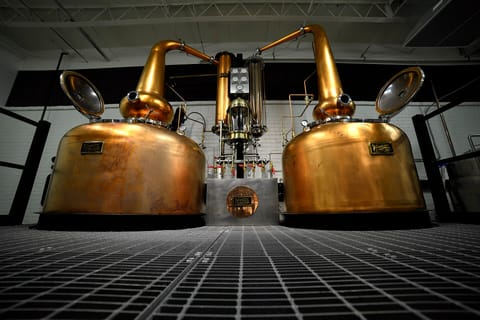
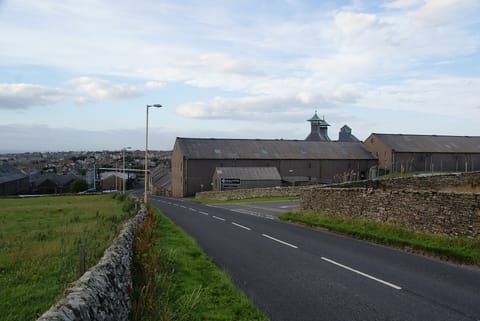
The project drew on a deliberately broad creative coalition. Architectural firms with experience in heritage and hospitality design were commissioned to work within the constraints of The Dalmore's existing Victorian-era buildings, which date back to the distillery's founding in 1839. Rather than demolishing and rebuilding, the brief required that new interventions feel continuous with the site's history — a challenge that demanded architects who understood how whisky distilleries function as working industrial spaces as much as visitor attractions. The result is a layered environment where copper stills, bonded warehouse aesthetics, and contemporary material choices coexist without visible tension.
Artists were also embedded in the process at an unusually early stage. Rather than commissioning artwork as a finishing touch, the creative team integrated visual and sculptural elements into the spatial planning itself. This approach, more common in high-end hotel and cultural institution projects than in distillery design, reflects the ambition of the brief and the budget behind it. Specific commissions reference The Dalmore's stag iconography and the Cromarty Firth landscape, grounding the visitor experience in a sense of place that purely decorative schemes rarely achieve. For a brand that has historically leaned on age statements and cask provenance to justify premium pricing, the addition of a genuinely compelling physical space adds a new dimension to the brand story.
Specialist craftspeople — including metalworkers, joiners, and stone masons — were engaged to ensure that bespoke elements met the material quality expected at the price points The Dalmore occupies. The Macallan's Easter Elchies estate set a benchmark for what a Scotch whisky distillery visitor experience can look and feel like; The Dalmore's redesign is a clear statement that Whyte & Mackay intends to compete in that same tier.
Production Context: What The Dalmore Actually Makes
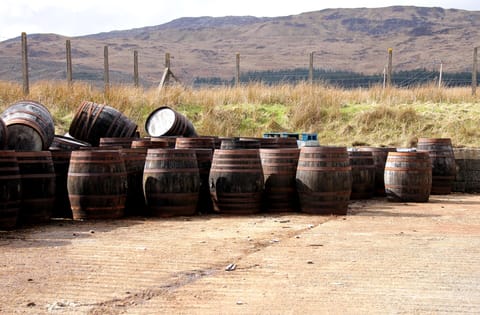
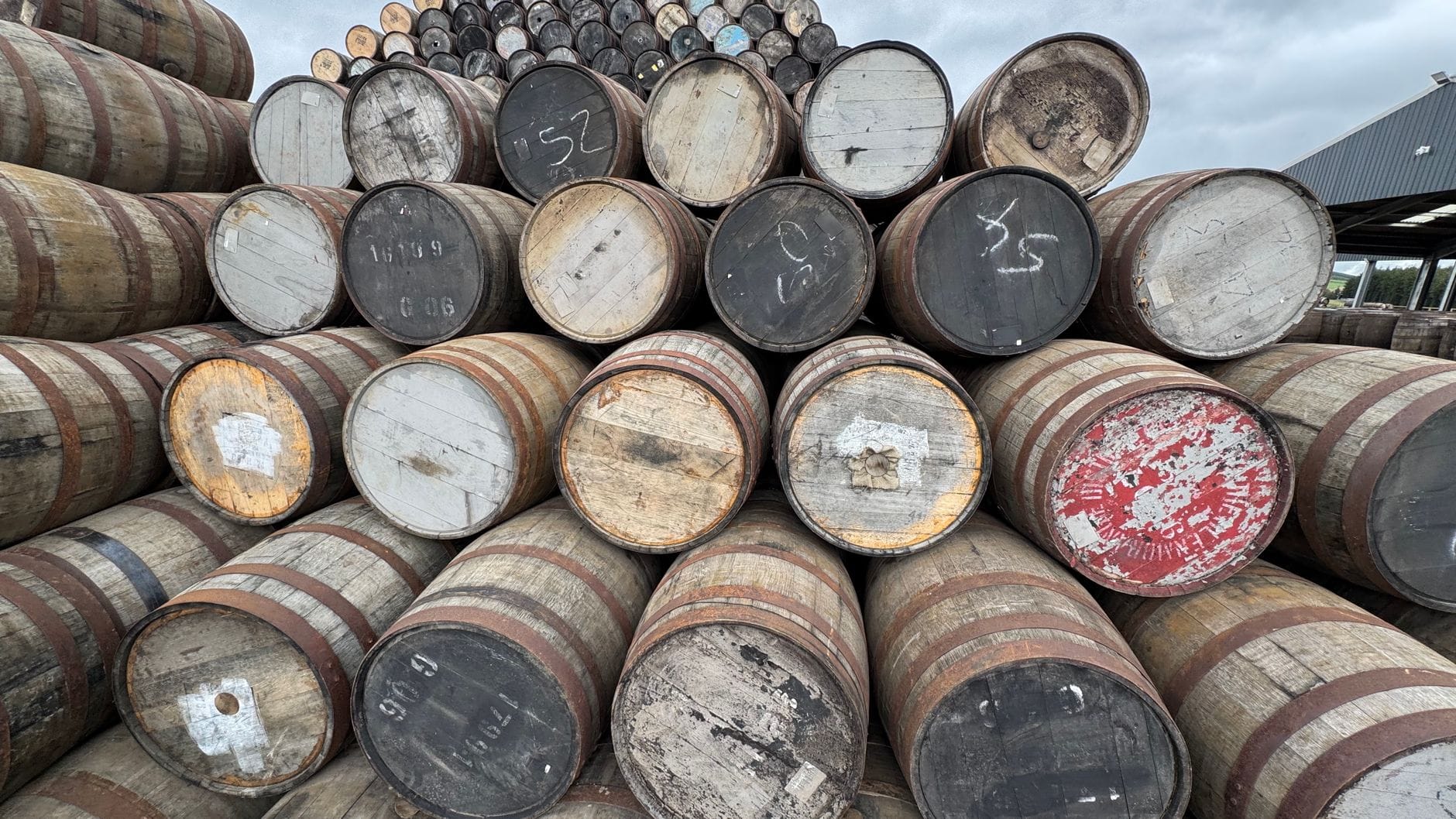
Understanding the production context is essential for any trade reader assessing the strategic logic of the redesign investment. The Dalmore operates 12 wash stills and spirit stills of varying sizes — a configuration that allows the distillery to produce multiple spirit characters from a single site. The distillery is particularly associated with its use of American white oak ex-bourbon casks for primary maturation, followed by finishing in a range of sherry casks including Apostoles, Matusalem, and Amoroso styles sourced from González Byass in Jerez. This multi-cask finishing approach is the technical foundation of expressions like the Dalmore 12, 15, 18, and the King Alexander III, and it is what gives the spirit its characteristic richness and dried-fruit density.
Age-stated expressions remain the commercial core of the range, with the 12-year-old serving as the volume driver and the 18-year-old and above anchoring the prestige tier. The distillery also produces highly allocated limited releases — including the Constellation Collection and various single-cask bottlings — that trade at significant premiums on the secondary market. For cask investors and collectors monitoring the broader spirits market, The Dalmore's consistent demand profile makes it one of the more reliable Highland names to track. The redesign, by deepening the brand's experiential credentials, is likely to support rather than disrupt that demand.
The Dalmore's multi-cask finishing programme — drawing on Apostoles, Matusalem, and Amoroso sherry styles from González Byass — is the technical foundation that justifies its premium positioning, and the redesigned distillery is now the physical expression of that same ambition.
How Distillery Redesigns Affect Brand Value and Trade Positioning
The whisky trade has watched a series of major distillery capital projects over the past decade, and the pattern is consistent: significant investment in visitor infrastructure tends to precede or accompany upward price repositioning. Consider the following sequence of strategic moves that typically follow a major distillery redesign:
- Visitor experience upgrade: Higher footfall, longer dwell time, and increased direct-to-consumer revenue through exclusive on-site releases.
- Brand narrative deepening: Physical spaces that tell a coherent story give marketing teams stronger content assets for global markets.
- Wholesale pricing leverage: A distillery that functions as a credible luxury destination supports price increases at retail without the same resistance a purely packaging-led repositioning would face.
- Limited release demand: Visitors who experience the distillery first-hand become the most motivated buyers of allocated expressions, tightening secondary market supply.
- Collector confidence: Institutional-quality presentation signals long-term brand stewardship, which matters to buyers holding aged stock or casks over multi-year horizons.
This is not a uniquely Scottish phenomenon. Newer distilleries like Torabhaig have demonstrated that a compelling physical identity can accelerate consumer trust even without decades of age statements to lean on. For an established name like The Dalmore, the calculus is different but the logic holds: a distillery space reinforces the credibility of whisky pricing. In a market where the spirits industry faces real short-term headwinds, brands that invest in physical permanence are making a deliberate long-term bet.
Whyte & Mackay's broader portfolio strategy is also relevant here. The group has been methodical about building The Dalmore into a global ultra-premium single malt, and the distillery redesign sits within a wider programme that includes ongoing cask investment, international distribution development, and a tightly managed release calendar. Trade buyers in key markets — particularly Asia, where distributors like Jebsen Wines & Spirits have built significant premium Scotch businesses — will be watching the redesign as a signal of Whyte & Mackay's long-term confidence in the brand. Separately, the wider conversation about Scotland's emerging single-estate distillery model provides useful context for how place-based storytelling is becoming a competitive differentiator across Highland and Island producers.
What to Watch: Key Developments Ahead for The Dalmore
The redesigned distillery is now open to visitors, but the commercial impact will take time to fully materialise in the secondary market and in wholesale pricing data. Several forward-looking indicators are worth tracking closely. First, watch for any new limited releases tied explicitly to the redesigned space — distilleries frequently mark major capital projects with commemorative bottlings that carry collector interest. Second, monitor The Dalmore's allocation policy for its higher-tier expressions; changes in distribution structure often follow brand repositioning exercises of this scale. Third, observe how the redesign is deployed in international marketing, particularly in travel retail, where brands like Brown-Forman have used airport and duty-free environments to reinforce premium positioning globally.
For cask investors and trade buyers, the practical takeaway is this: a distillery that has invested seriously in its physical identity is one whose stewards are planning in decades, not quarters. That kind of long-horizon thinking is exactly what underpins the most durable value in Scotch whisky. Anyone with exposure to The Dalmore — whether through bottles, casks, or distribution relationships — should treat this redesign as a positive signal for the brand's trajectory. Keep an eye on upcoming new releases from the distillery and on how the broader cash-flow dynamics in spirits supply chains affect the timing of any premium relaunch activity tied to the new visitor experience. The creative investment has been made; the commercial return is the story still being written.
Frequently Asked Questions
Who owns The Dalmore Distillery?
The Dalmore is owned by Whyte & Mackay, the Glasgow-based spirits group. Whyte & Mackay is itself owned by Emperador Inc., the Philippine spirits conglomerate that acquired it in 2014.
Where is The Dalmore Distillery located?
The Dalmore Distillery is located on the shores of the Cromarty Firth in the Scottish Highlands, near the town of Alness in Ross-shire. It was founded in 1839 and operates within its original Victorian-era buildings.
What cask types does The Dalmore use for maturation?
The Dalmore primarily matures its spirit in American white oak ex-bourbon casks before finishing in a range of sherry casks, including Apostoles, Matusalem, and Amoroso styles sourced from González Byass in Jerez, Spain. This multi-cask programme is central to the distillery's house style.
How does the distillery redesign affect The Dalmore's secondary market value?
While redesigns do not directly alter existing bottling values, they typically signal long-term brand investment and support upward pricing pressure on future limited releases. Enhanced visitor experiences also tend to tighten supply of allocated expressions by converting visitors into motivated buyers.
What are The Dalmore's key age-stated expressions?
The core range includes the Dalmore 12, 15, and 18 year olds, with the King Alexander III as a notable no-age-statement prestige expression. Higher-tier releases include the Dalmore 21, 25, and the ultra-rare Constellation Collection single-cask bottlings.
🥃 Considering whisky casks as an investment? Speak to the Whisky Cask Club team — Singapore-based specialists working with collectors and investors across Asia.