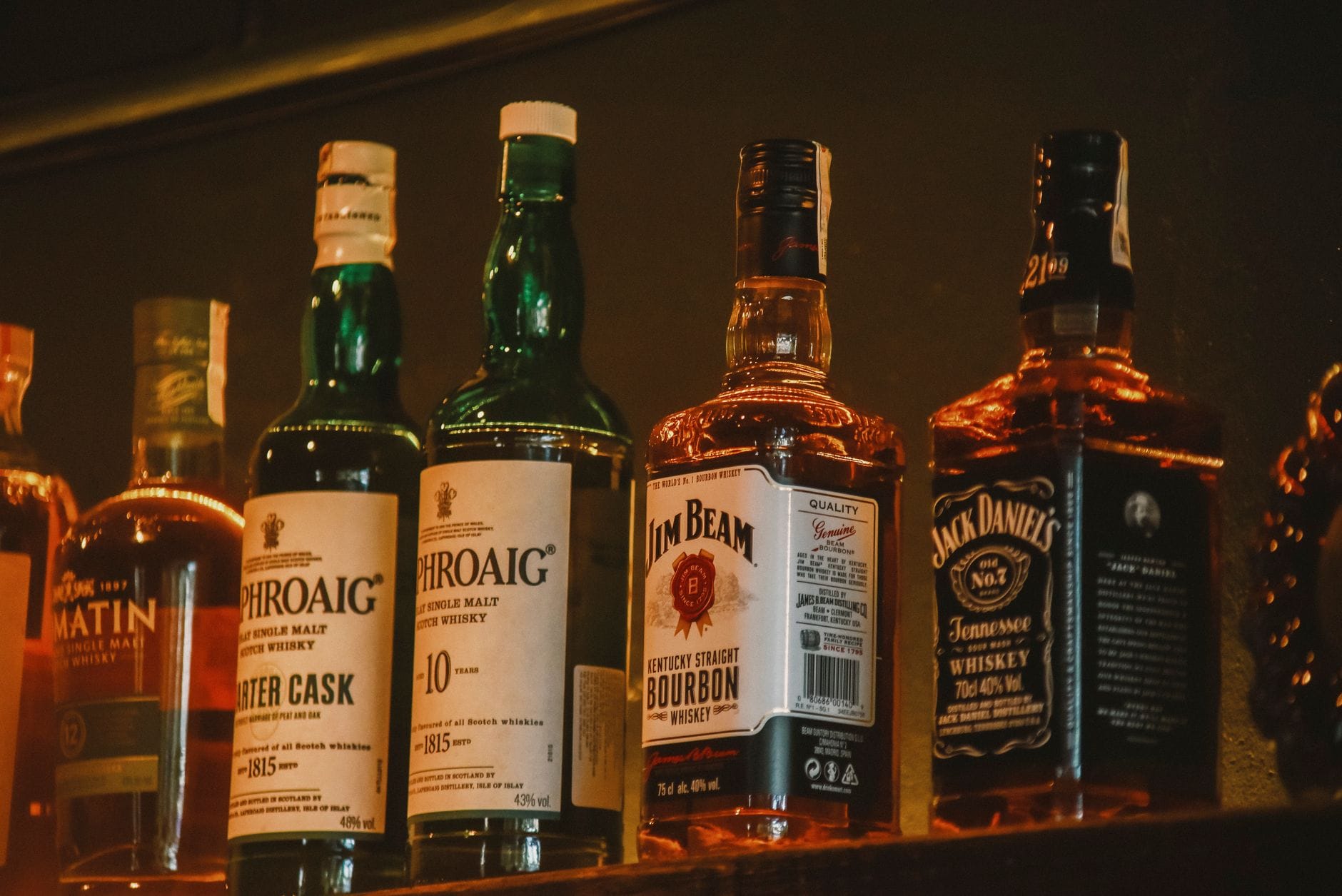
Wild Turkey 101 and Elijah Craig Small Batch dominate entry-level bourbon. Both reflect deliberate tiering strategies from Campari and Heaven Hill, with implications for on-trade performance, consumer loyalty pipelines, and the wider American whiskey market.
Wild Turkey 101 vs Elijah Craig Small Batch: Entry-Level Bourbon Showdown
The entry-level bourbon segment is arguably the most commercially significant battleground in American whiskey right now, and two bottles consistently dominate the conversation: Wild Turkey 101 and Elijah Craig Small Batch. Both retail in the $25–$35 range depending on market, both carry genuine distillery heritage, and both serve as de facto benchmarks against which consumers, bartenders, and trade buyers measure value. As premium bourbon allocations tighten and secondary market prices for allocated releases remain elevated, the performance and positioning of these accessible expressions carries real weight for the wider category.
What makes this comparison commercially relevant beyond consumer taste preference is the underlying production and brand strategy each house has deployed. Wild Turkey, owned by Campari Group since 2009, has leaned hard into the 101 proof point as a signature identity marker — a deliberate contrast to the lower-ABV trend that swept American whiskey in the 2010s. Elijah Craig, bottled by Heaven Hill Distillery in Bardstown, Kentucky, repositioned its Small Batch expression in recent years after dropping its age statement, a move that drew criticism at the time but has since been absorbed by the market without significant volume consequence.
Production and Distillery Context
Wild Turkey 101 is distilled at the Wild Turkey Distillery in Lawrenceburg, Kentucky, under the stewardship of Master Distiller Eddie Russell, who inherited the role from his father Jimmy Russell — one of the longest-tenured master distillers in the industry. The expression uses a low-entry proof of 110 proof into the barrel, a lower figure than many competitors, which Wild Turkey argues preserves more congener complexity. Aged in American white oak with a No. 4 char, the whiskey typically reaches the bottle between six and eight years of age, though no formal age statement appears on the label.
Elijah Craig Small Batch, produced at Heaven Hill's Bernheim Distillery in Louisville, draws from barrels aged between eight and twelve years — a wider and generally older age profile than Wild Turkey 101. Heaven Hill is the largest independent family-owned distillery operation in the United States, with a warehousing capacity that gives it considerable flexibility in blending to a consistent flavour profile. The removal of the 12-year age statement in 2016 was a production necessity driven by inventory pressure as demand outpaced maturation cycles — a challenge shared across the industry during the bourbon boom years.
- Producer / Distillery: Wild Turkey Distillery (Campari Group) and Heaven Hill Bernheim Distillery
- Category: Bourbon / American Whiskey
- Market implication: Entry-level bourbon positioning shapes consumer loyalty pipelines feeding into premium and allocated tiers — a critical consideration for both brand owners and on-trade buyers
Flavour Profile and On-Trade Performance
Wild Turkey 101 presents a bolder, spicier profile driven by its higher rye content in the mashbill and elevated proof. Expect pronounced caramel, vanilla, black pepper, and a long finish with noticeable oak grip. It is a workhorse in cocktail programmes precisely because the proof holds up under dilution and ice — a practical consideration bartenders cite regularly when building house bourbon selections. Its assertive character also makes it a natural gateway for consumers migrating from blended whisky or flavoured spirits.
Elijah Craig Small Batch, by contrast, skews toward a richer, rounder profile — dark fruit, toffee, baking spice, and a notably smooth finish for its proof point of 94. The extended age range contributes a wood integration that Wild Turkey 101 occasionally lacks at its younger end. For the on-trade, Elijah Craig performs strongly as a neat or rocks pour in mid-range whisky bars where customers are willing to spend slightly more per glass for perceived complexity. Both expressions regularly appear on whisky competition podiums, reinforcing their credibility with trade buyers who use award citations in menu copy.
Why It Matters to the Whisky Trade
The commercial health of the entry-level bourbon segment is a leading indicator for the wider American whiskey market. When accessible, well-made expressions at this price tier perform strongly, they generate the consumer base that eventually trades up into single barrel, barrel strength, and allocated releases — the products that drive margin for both producers and specialist retailers. A weakening in this segment, whether through price erosion, quality inconsistency, or consumer drift toward other categories, has downstream consequences for the entire value chain.
For cask investors and buyers monitoring the American whiskey space, the strategies employed by Campari and Heaven Hill at this tier are instructive. Campari has used Wild Turkey 101 as a volume anchor while developing the Russell's Reserve range as its premiumisation vehicle. Heaven Hill has pursued a similar architecture with Elijah Craig, building upward through the Barrel Proof and Toasted Barrel expressions. Both approaches reflect a considered tiering strategy designed to retain consumers across multiple price points rather than ceding the entry level to private label or discount competition. The bourbon category's long-term trajectory depends on these foundational expressions continuing to deliver genuine quality at accessible prices — and on current evidence, both houses are holding that line.
Frequently Asked Questions
What proof is Wild Turkey 101 and why does it matter?
Wild Turkey 101 is bottled at 101 proof (50.5% ABV), which is notably higher than many competitors in the entry-level segment. The elevated proof contributes to a bolder flavour profile and makes the whiskey more versatile in cocktail applications, as it holds up better under dilution than lower-ABV expressions.
Did Elijah Craig Small Batch remove its age statement?
Yes. Elijah Craig Small Batch dropped its 12-year age statement in 2016, a decision driven by inventory constraints during the bourbon demand surge. The current expression draws from barrels aged between approximately eight and twelve years, and Heaven Hill maintains it blends to a consistent flavour profile regardless of the change.
Which is better value for the on-trade?
Both expressions offer strong value in the $25–$35 retail range. Wild Turkey 101 is generally preferred in cocktail programmes due to its higher proof and spice-forward character. Elijah Craig Small Batch tends to perform better as a neat or rocks pour, commanding a slightly higher per-glass margin in environments where customers value perceived complexity and age.
Who owns Wild Turkey and Elijah Craig?
Wild Turkey is owned by Campari Group, the Italian spirits conglomerate that acquired the brand in 2009. Elijah Craig is produced by Heaven Hill Distillery, the largest independent family-owned distillery group in the United States, headquartered in Bardstown, Kentucky.
How do these bourbons fit into broader premiumisation strategies?
Both Wild Turkey 101 and Elijah Craig Small Batch serve as entry points within tiered brand architectures. Campari builds upward from Wild Turkey 101 through Russell's Reserve and limited releases. Heaven Hill uses Elijah Craig Small Batch as the base of a range that extends through Barrel Proof and Toasted Barrel expressions, designed to capture consumers at multiple price points as their engagement with bourbon deepens.