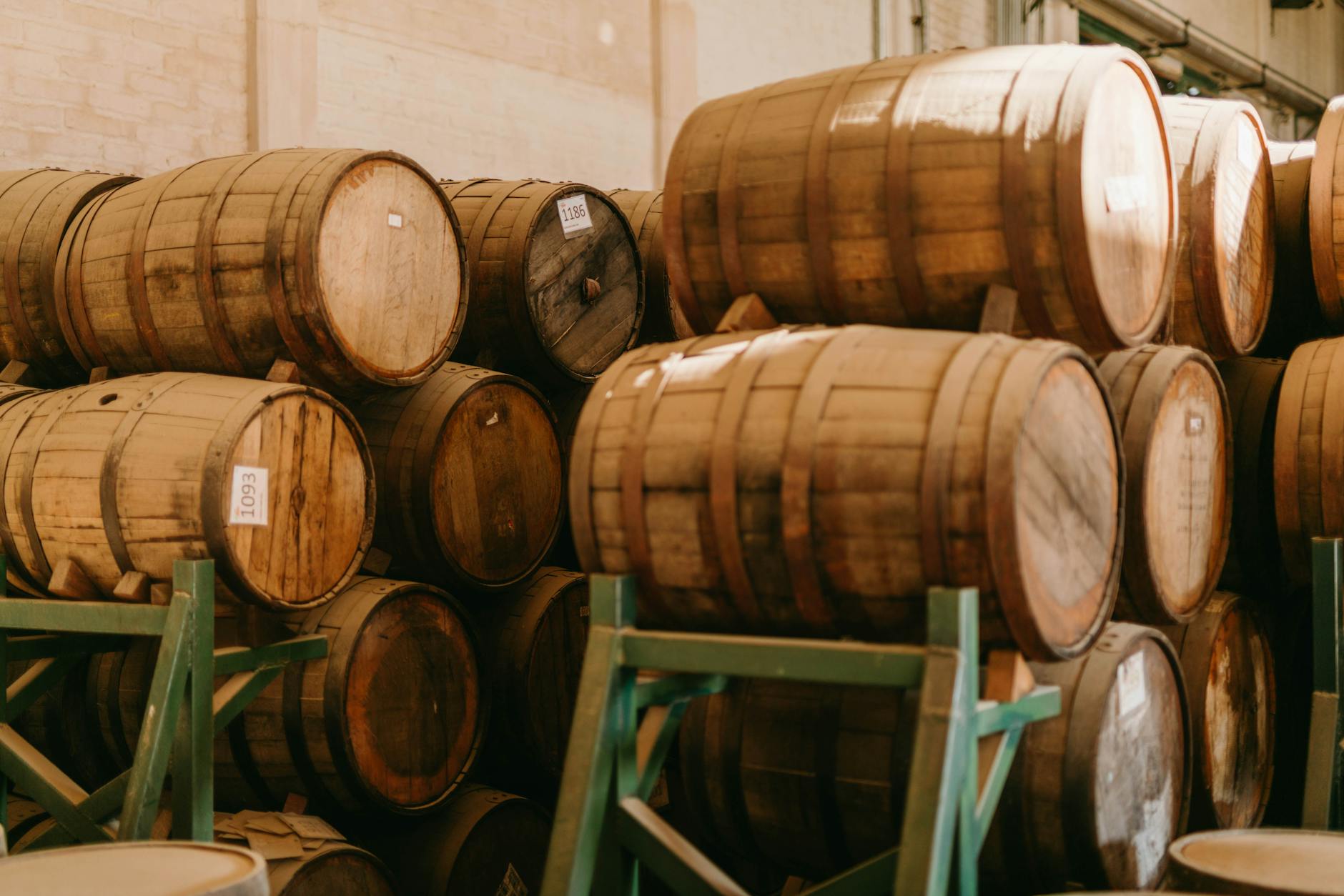
Brown-Forman has paused production at Slane Irish Whiskey distillery in County Meath ahead of financial results. The halt reflects global spirits demand weakness and raises questions for trade buyers, cask investors, and the wider Irish whiskey category.
Slane Distillery Production Pause Puts Brown-Forman Under the Spotlight
Brown-Forman, the Louisville-based spirits group with a market capitalisation that has shed roughly a third of its value over the past two years, has confirmed a pause in production at its Slane Irish Whiskey distillery in County Meath, Ireland. The move comes ahead of the company's latest financial results, which investors are scrutinising for any credible sign that the group's slide has bottomed out. For the Irish whiskey category, the halt at Slane is a pointed signal that even well-capitalised, internationally backed distilleries are not immune to the structural demand reset now gripping global spirits. The timing is uncomfortable: Slane only opened its doors in 2017, built on the grounds of Slane Castle with a reported investment of around €30 million, and was positioned as a flagship for premium Irish whiskey's global ambitions.
Brown-Forman acquired its stake in Slane through a joint venture with the Conyngham family, who own the castle estate, and has used the site to produce triple-distilled Irish whiskey matured in a combination of virgin American oak, seasoned American oak, and oloroso sherry casks — a three-wood maturation approach that underpins the brand's core expression. The distillery was designed with a nameplate capacity capable of supporting meaningful volume growth, making the decision to pause production a material one rather than a routine maintenance window. When a distillery built for growth goes quiet, the cask market and trade buyers pay close attention.
Why the Broader Brown-Forman Downturn Matters to Whisky Trade Buyers
Brown-Forman's difficulties are not isolated to a single brand or geography. The group's portfolio spans Jack Daniel's Tennessee Whiskey, Woodford Reserve bourbon, Old Forester, Benriach and GlenDronach Scotch, and Slane Irish Whiskey, giving it unusual exposure across multiple whisky categories simultaneously. When the group reports results, any guidance on volume trends, inventory normalisation, or capital allocation will reverberate across all of those categories. As we have covered in our analysis of the American whiskey downturn and why history suggests recovery is coming, the current cycle of destocking and consumer trading-down is real but not permanent — yet the duration remains the critical unknown.
The group has already flagged that the US spirits depremiumisation trend, where value sales have fallen 5.7% in twelve months, is compressing margins across the board. Brown-Forman has been particularly exposed because its core Jack Daniel's franchise sits in the premium-but-accessible tier that is most vulnerable when consumers trade sideways or down. The Slane pause suggests the group is now actively managing working capital by reducing new spirit going into bond rather than simply hoping for a demand recovery. That is a more conservative posture than many analysts expected from a company that was still signalling long-term Irish whiskey growth ambitions as recently as 2023.
For those tracking M&A signals, it is also worth noting that Brown-Forman has previously rebuffed Sazerac's reported $15 billion takeover approach, and the company's board continues to resist external consolidation pressure. A prolonged production pause at one of its flagship international distilleries does little to strengthen that independent stance if results disappoint again.
Slane Distillery: Production Profile and What a Pause Actually Means
Understanding the practical implications of the Slane pause requires some context on how Irish whiskey distilleries manage their production cycles. Unlike Scotch whisky, where spirit must mature for a minimum of three years in oak casks, Irish whiskey carries the same three-year minimum but is typically released at five years and upward for any expression carrying meaningful age character. Slane's core bottling is presented at 40% ABV without an age statement, drawing on the three-cask maturation system to deliver consistency rather than age-led positioning. The distillery uses pot still and grain whiskey components, blended on site, which means a production pause affects both the pot still character and the lighter grain spirit that balances the blend.
The key trade facts about Slane's production setup are worth laying out clearly:
- Location: Slane Castle Estate, County Meath, Boyne Valley, Ireland — a protected heritage site that adds significant brand storytelling value.
- Investment: Approximately €30 million at opening in 2017, co-funded by Brown-Forman and the Conyngham family.
- Maturation: Three-wood system — virgin American oak (for vanilla and caramel), seasoned American oak (ex-bourbon character), and oloroso sherry casks (dried fruit and spice).
- Bottling strength: Core expression at 40% ABV, no age statement.
- Category: Blended Irish Whiskey, incorporating pot still and grain components.
- Distribution: Brown-Forman's global network, with primary focus on the US, UK, and European travel retail.
A production pause does not immediately affect liquid already in bond, but it signals that Brown-Forman does not foresee the need for additional new-make spirit entering maturation in the near term — a direct reflection of current demand forecasting. For anyone holding or considering Slane casks, the absence of fresh production reduces the future supply pipeline, which historically has a mixed effect: it can support secondary values for existing stock but also signals weak near-term brand momentum.
A distillery built for growth going quiet is not just a production story — it is a demand signal. When Brown-Forman pauses Slane, it is telling the market that its Irish whiskey forecasts have been revised downward, and the cask pipeline is being managed accordingly.
Irish Whiskey's Wider Headwinds and Where Slane Sits in the Category
The Slane pause does not exist in a vacuum. Irish whiskey as a category enjoyed a decade of near-uninterrupted growth between 2010 and 2022, with global volumes rising from roughly 4 million to over 14 million nine-litre cases. That growth attracted enormous capital investment — new distilleries opened across the Republic and Northern Ireland at a pace not seen since the nineteenth century. The Belfast whisky renaissance, exemplified by Titanic Distillers' recent high-profile royal visit, is one visible expression of that investment wave. But the category is now experiencing its first meaningful volume correction in over a decade, driven by post-pandemic demand normalisation, US consumer caution, and on-trade softness across key European markets.
The International Spirits Challenge 2026 Irish whiskey results suggest that quality at the value and mid-tier end of the category remains strong, which is both reassuring and commercially challenging — it means consumers have credible, affordable alternatives to premium expressions like Slane, making the trade-up argument harder to sustain in a cost-conscious environment. Brown-Forman's challenge is that Slane occupies a mid-premium tier where the competitive pressure is most acute right now. It sits above commodity blends but below the age-statement single malts and single pot stills that command collector and connoisseur loyalty. That middle ground is precisely where volume is most vulnerable when consumer spending tightens.
The Independent Spirits Festival in Edinburgh and similar trade events have consistently shown that buyer interest in Irish whiskey remains genuine, particularly for expressions with clear provenance and maturation credentials. The problem for Slane is that a production pause, however temporary, creates a perception gap that marketing investment alone cannot easily close. Trade buyers and on-trade buyers notice when a distillery goes quiet, and the question of whether the pause is weeks or months will matter considerably for forward order books.
What to Watch: Key Signals for the Trade in the Weeks Ahead
For whisky trade professionals and cask investors monitoring the Brown-Forman situation, the following developments are worth tracking closely over the next quarter:
- Brown-Forman results guidance: Any commentary on Irish whiskey specifically, inventory levels, and the expected duration of the Slane production pause will be the most immediate signal. Watch for language around "normalisation" versus "structural reset" — the distinction matters for medium-term volume forecasts.
- Slane secondary market activity: If existing Slane casks or bottlings begin appearing at auction with increased frequency, it may indicate that some early investors are choosing to exit ahead of a prolonged quiet period. Our coverage of rare whisky auction dynamics is relevant context here.
- Category-wide production data: The Irish Whiskey Association typically publishes annual production and maturation statistics. Any downward revision in industry-wide new-make volumes would confirm that Slane is not an outlier but part of a broader category adjustment, similar to the patterns explored in our piece on five reasons the American whiskey downturn will recover.
- Brown-Forman M&A posture: Given the group's previous rejection of the Sazerac $15 billion takeover approach, any shift in tone from the board on strategic options would be a significant market signal.
- Competing Irish distillery announcements: If rivals use the Slane pause as an opportunity to accelerate distribution deals or promotional investment, it will compound the brand's near-term challenges in key markets.
The single most actionable step for trade buyers right now is to request clarity from Brown-Forman's commercial teams on forward allocation timelines for Slane before committing to listings or cask purchases — the production pause creates genuine uncertainty about near-term availability that should be factored into any buying decision. Those with existing Slane stock in bond should review their maturation strategy against a scenario where the brand's marketing investment is reduced alongside production. The distillery's liquid quality is not in question; the commercial momentum behind it is.
Frequently Asked Questions
Why has Slane Irish Whiskey distillery paused production?
Brown-Forman has paused production at Slane distillery in County Meath as part of a broader response to challenging conditions across the global spirits sector. The company is managing working capital and adjusting its production pipeline to reflect current demand forecasts rather than the more optimistic growth projections that underpinned the distillery's original build-out in 2017.
Does the Slane production pause affect existing whiskey stocks or cask values?
Liquid already maturing in bond at Slane is unaffected by the production pause. However, the pause reduces the future supply pipeline, which can have a mixed effect on secondary market values: existing stock becomes relatively scarcer over time, but weak brand momentum can suppress buyer appetite. Trade buyers and cask investors should monitor secondary market activity closely.
How does Slane Irish Whiskey mature its spirit?
Slane uses a three-wood maturation system, ageing its blended Irish whiskey in virgin American oak casks, seasoned American oak (ex-bourbon) casks, and oloroso sherry casks. The core expression is bottled at 40% ABV without an age statement, drawing on all three cask types to deliver the brand's signature flavour profile of vanilla, caramel, and dried fruit.
What other Brown-Forman whisky brands are affected by the current downturn?
Brown-Forman's portfolio includes Jack Daniel's Tennessee Whiskey, Woodford Reserve bourbon, Old Forester, and the Scotch whisky brands Benriach and GlenDronach, among others. The group has flagged pressure across multiple categories, with the US market particularly affected by depremiumisation trends and post-pandemic inventory normalisation.
Is the Irish whiskey category in long-term decline?
No. The current slowdown follows a decade of exceptional growth that took Irish whiskey from approximately 4 million to over 14 million nine-litre cases globally between 2010 and 2022. The category is experiencing a cyclical correction rather than structural decline, but the duration of that correction and its impact on mid-premium brands like Slane remains the key uncertainty for trade buyers in 2026.
🥃 Considering whisky casks as an investment? Speak to the Whisky Cask Club team — Singapore-based specialists working with collectors and investors across Asia.