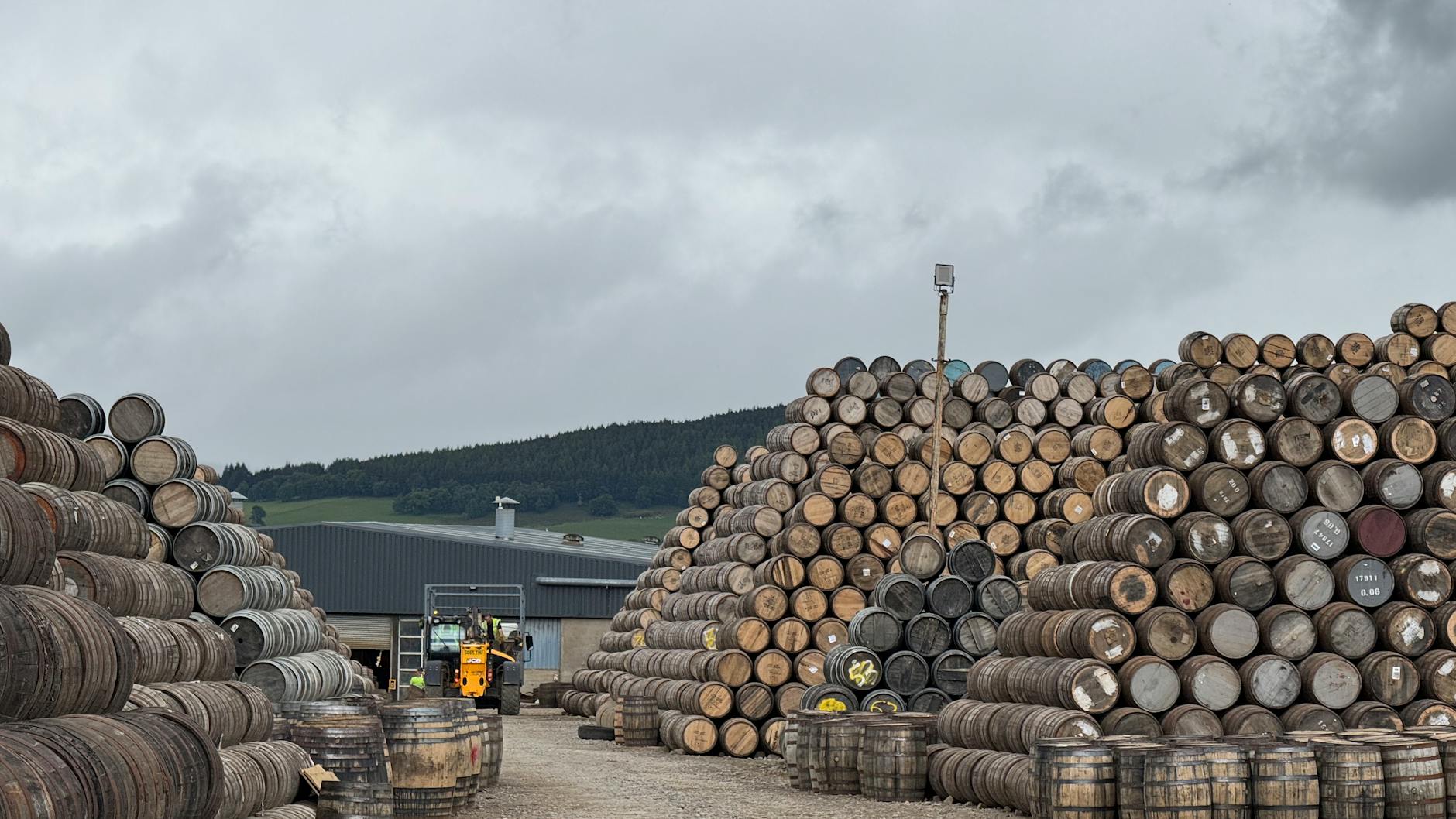
Sonoma Chardonnay's quality renaissance is creating better barrels for whisky finishing. Sub-appellation specificity, French oak chemistry, and US market resonance make these casks a serious procurement priority for distilleries and cask investors in 2026.
Chardonnay Cask Whisky and the Sonoma Signal the Trade Cannot Ignore
More than 60 Scotch and American whisky producers are currently experimenting with white wine cask finishes, and Sonoma County's Chardonnay barrels are emerging as one of the most sought-after vessels in that space. The renewed critical attention on Sonoma Chardonnay — driven by a wave of terroir-focused producers pushing beyond the buttery, over-oaked stereotype — has direct consequences for the whisky cask market. When fine wine regions sharpen their identity and raise barrel quality, whisky distillers take note, because the secondary use of those casks becomes a premium proposition in its own right.
If you are a cask investor, a distillery procurement manager, or a blender tracking alternative wood strategies, the evolution of Sonoma Chardonnay production matters to you personally. The quality and provenance of a wine cask's first-fill use determines almost everything about what it will contribute to whisky maturation. A barrel that has held a precise, mineral-driven Chardonnay from the Sonoma Coast AVA or Fort Ross-Seaview is a fundamentally different maturation tool from one that carried a heavily oaked, low-acid commercial bottling. As fine wine regions tighten their standards, the whisky industry gains access to a more varied and more traceable cask supply.
Why Sonoma Chardonnay Barrels Are a Distinct Cask Category
Sonoma County encompasses eleven distinct American Viticultural Areas, each producing Chardonnay with markedly different flavour profiles depending on proximity to the Pacific, soil composition, and winemaking philosophy. Producers in the cooler Sonoma Coast and Fort Ross-Seaview sub-appellations are now routinely using lower percentages of new French oak, preferring older barrels and concrete or stainless-steel vessels to preserve acidity and site character. That restraint in the winery translates directly into a more neutral, less heavily toasted barrel when it exits the wine cellar — precisely the kind of vessel that whisky distillers value for a delicate, non-dominating finish.
By contrast, producers in warmer inland areas such as Chalk Hill continue to work with higher proportions of new French oak and richer, rounder fruit profiles. This internal diversity within a single county means that a Sonoma Chardonnay cask is not a monolithic product — sourcing specificity matters enormously. Distilleries that simply specify "Chardonnay cask" on a label without drilling down into sub-appellation, producer, and toast level are missing a significant quality variable. The whisky trade's growing sophistication around cask provenance mirrors exactly what has happened in fine wine over the past two decades, and Sonoma is a useful case study in why that granularity pays off.
For context on how alternative cask strategies are reshaping product development, the recent Tobermory Ledaig Castaway release, matured in tequila and rum casks, illustrates how far the industry has moved from conventional wood management. Sonoma Chardonnay casks sit at the more restrained, terroir-legible end of that spectrum, but they are part of the same broader shift.
7 Trade Reasons Whisky Producers Are Watching Sonoma Closely
- Improved barrel quality: The shift toward lower new-oak regimes in premium Sonoma Chardonnay production means casks exit wineries with more residual capacity to contribute subtle fruit and mineral character to whisky without overwhelming the spirit.
- Traceable provenance: Sub-appellation labelling in Sonoma is increasingly rigorous, giving whisky buyers a reliable paper trail for cask origin — a growing priority as consumers demand transparency.
- French oak availability: Most premium Sonoma Chardonnay is aged in French oak barriques (225 litres), a size and wood species that produces measurably different ester profiles in whisky compared to American white oak.
- Flavour differentiation: In a crowded NAS and single malt market, a verified Sonoma Coast Chardonnay finish offers a credible point of difference that connects whisky to a recognised fine wine geography.
- Price positioning: Premium Chardonnay casks command higher prices than standard wine casks, but the margin uplift on the finished whisky bottling typically justifies the procurement cost — particularly in the £80–£150 retail bracket.
- US market resonance: American consumers already associate Sonoma with quality. A Sonoma Chardonnay-finished whisky carries immediate cultural legibility in the US on-trade, which matters given the ongoing US spirits depremiumisation pressure that is forcing producers to justify premium price points with tangible provenance stories.
- Supply chain stability: Sonoma's established fine wine infrastructure means consistent annual barrel supply, unlike some emerging wine regions where cask availability is unpredictable.
"A barrel that has held a precise, mineral-driven Chardonnay from the Sonoma Coast AVA is a fundamentally different maturation tool from one that carried a heavily oaked commercial bottling — and the whisky trade is only beginning to price that difference correctly."
Cask Market Movements and the White Wine Wood Trend
The broader cask market has seen white wine wood move from novelty to mainstream over the past five years. Independent bottlers and distilleries including GlenAllachie, Waterford, and several Campbeltown producers have all released expressions finished in white Burgundy or Chardonnay casks, with varying degrees of sub-appellation specificity. The critical and commercial response has been strong enough that procurement teams are now building white wine cask programmes with multi-year sourcing agreements rather than one-off experimental purchases. This shift from opportunistic to strategic sourcing is the clearest signal that Chardonnay cask finishing has graduated from a marketing gimmick to a genuine production tool.
For those tracking auction performance, white wine-finished expressions have shown resilience even as the broader secondary market has softened. Auction watchers flagging under-the-radar lots this spring have noted that well-documented alternative cask expressions from credible distilleries are holding value better than heavily allocated core range releases. The provenance story — where the cask came from, who made the wine, what the barrel's history is — is increasingly the deciding factor for serious collectors. Sonoma's improving critical reputation feeds directly into that narrative.
The M&A angle is also worth tracking. As consolidation continues across the spirits sector, larger groups acquiring craft distilleries are inheriting alternative cask programmes that were built on relationships with small wine producers. Maintaining those supply chains post-acquisition requires genuine category knowledge, not just financial due diligence. Buyers who understand the difference between a Sonoma Coast Chardonnay barrel and a generic California white wine cask will protect the value of those programmes; those who don't will commoditise them.
Production Specifics: What the Whisky Trade Should Know About Chardonnay Cask Chemistry
French oak Chardonnay barriques typically hold 225 litres and are used for between eight and eighteen months in the winery before being released. The wood's tighter grain compared to American white oak delivers slower, more precise extraction of vanillin, lactones, and ellagitannins. When repurposed for whisky finishing — typically for between six and twenty-four months at cask strength, often between 58% and 63% ABV before reduction — they contribute notes of green apple, brioche, white peach, and a saline minerality that is particularly effective with lighter Highland and Lowland spirit styles.
The toast level of the original wine barrel is a critical variable that most whisky labels still fail to disclose. A medium-plus toast Chardonnay cask will deliver more coconut and vanilla than a light toast vessel, which skews toward citrus and floral registers. Distilleries serious about wood management are beginning to specify toast level in their technical documentation even if not on the consumer label — a practice that mirrors the rigour applied to sherry butt selection at houses like The Macallan, where cask specification has been central to brand identity for decades. The Kingsbarns Dunvegan single cask release demonstrated how precisely documented wood management translates into both critical scores and secondary market premiums.
English distilleries are also moving into this space. The Cotswolds Distillery's sherry cask programme has shown that English single malt can sustain a premium wood narrative with trade buyers, and several producers in the same region are now exploring white wine finishes as a complement to their sherry and port cask ranges. The logic is straightforward: diversifying the cask portfolio reduces dependence on any single wood type and creates more bottling options across different price tiers.
What to Watch: Key Developments in Chardonnay Cask Whisky Ahead
The next twelve months will likely see several significant developments that the whisky trade should monitor closely. April 2026's spirits launch slate already included two Chardonnay-finished expressions from Scottish independents, and the pipeline for autumn releases suggests that number will grow. Watch for distilleries that can name the specific Sonoma producer, sub-appellation, and vintage of their casks — that level of transparency will become the new baseline for credible white wine cask marketing, and those who cannot match it will find their provenance claims increasingly scrutinised by trade buyers and collectors alike.
Also worth monitoring: whether the ongoing softening of US spirits value sales accelerates the shift toward provenance-led premiumisation as a defensive strategy. If volume is under pressure, the argument for investing in genuinely differentiated cask programmes — including verified Sonoma Chardonnay barrels — becomes stronger, not weaker. Procurement teams that build those supplier relationships now, before demand fully catches up with supply, will be better positioned than those waiting for the trend to fully mature. The ProSpirits Report 2026 flagged alternative wood strategies as one of the top five production investment priorities for mid-size distilleries, and Sonoma sits at the premium end of that opportunity. The action for serious trade buyers is clear: start the sourcing conversation with Sonoma winery partners now, specify sub-appellation and toast level, and build the provenance documentation that will underpin both the bottling narrative and the secondary market case.
Frequently Asked Questions
What makes a Sonoma Chardonnay cask different from a standard white wine barrel for whisky maturation?
Sonoma Chardonnay casks are typically French oak barriques of 225 litres, with tighter grain than American white oak. The sub-appellation, winemaking style, and toast level all affect what the cask contributes to whisky — ranging from saline minerality and green apple in cooler-climate barrels to richer vanilla and brioche from warmer inland producers. This internal diversity means sourcing specificity is critical.
How long is whisky typically finished in a Chardonnay cask?
Chardonnay cask finishes for whisky typically run between six and twenty-four months, usually at cask strength between 58% and 63% ABV before reduction. Shorter finishes preserve the base spirit character while adding subtle fruit and floral notes; longer finishes can produce more pronounced white wine influence on the final expression.
Why does Sonoma's fine wine reputation matter to whisky cask investors?
The provenance story attached to a cask directly affects both the marketing credibility of the finished whisky and its secondary market performance. A verified Sonoma Coast Chardonnay barrel from a named producer carries more narrative weight than a generic California white wine cask, supporting higher retail price points and stronger auction resilience.
Which whisky styles benefit most from a Chardonnay cask finish?
Lighter Highland, Lowland, and English single malts tend to show the most benefit, as the subtle fruit, mineral, and floral notes from Chardonnay casks are not overwhelmed by a heavy base spirit. Peated expressions can also work well with Chardonnay finishes, where the contrast between smoke and white wine character creates complexity.
Are Chardonnay cask whiskies performing well at auction?
White wine-finished expressions with well-documented cask provenance have shown stronger price resilience at auction than many core range releases during the recent secondary market softening. Collectors are increasingly paying a premium for expressions where the cask origin, sub-appellation, and wood specification are clearly documented by the distillery.
🥃 Considering whisky casks as an investment? Speak to the Whisky Cask Club team — Singapore-based specialists working with collectors and investors across Asia.