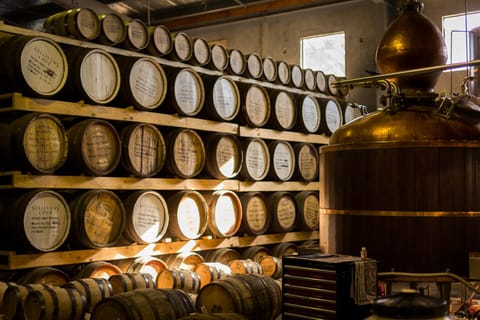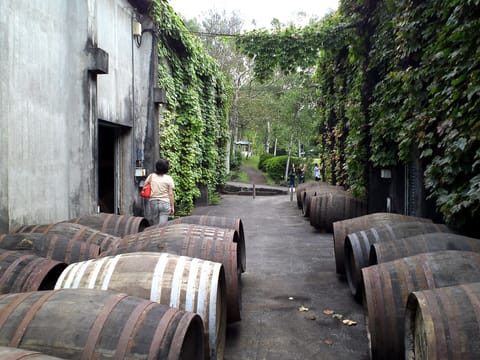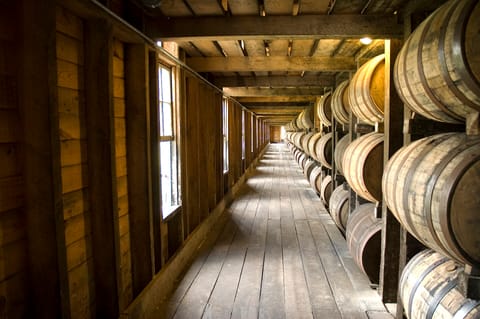
Taiwan's whisky industry in 2026 extends well beyond Kavalan, with Omar and Maoweiki leading a growing cohort of producers exploiting the island's hot, humid climate for accelerated maturation. Trade buyers and cask investors should treat Taiwan as a category, not a single brand, as competition medals and specialist auction activity signal broadening quality and demand.
Taiwanese Whisky Is No Longer a One-Distillery Story
Three international competition medals awarded to non-Kavalan Taiwanese whiskies in the first half of 2026 alone signal that the island's whisky industry has moved well past its founding chapter. For trade buyers, importers, and cask investors who have been treating Taiwan as a single-producer market, that assumption now carries real commercial risk. The country's hot, humid climate, which accelerates maturation in ways that Scottish or Irish conditions simply cannot replicate, is being exploited by a growing cohort of producers who understand that speed of maturation is a structural advantage, not a novelty.
If you are building a world whisky portfolio or sourcing allocations for specialist retail, understanding who these producers are, what cask strategies they are using, and how their flavour profiles differ from Kavalan's benchmark house style is no longer optional reading. Taiwan's whisky sector is now diverse enough to reward category expertise rather than brand loyalty. The same shift happened in Japan a decade ago, and as our coverage of why Japanese whisky has moved from bubble to staple in 2026 shows, that transition reshaped global allocation markets permanently.
The Climate Advantage: What Hot-Maturation Really Means for Flavour
Taiwan sits in a subtropical zone where summer temperatures regularly exceed 35°C and humidity stays high year-round. These conditions drive angel's share losses of roughly 10, 15% per year, compared to around 2% in Scotland, which concentrates spirit character dramatically in the first three to five years of maturation. The result is that a four-year-old Taiwanese single malt can carry the structural complexity that takes a Scottish distillery eight to twelve years to achieve. This is not marketing copy; it is a thermodynamic reality with direct implications for cask valuation and inventory cycles.
The trade implication cuts both ways. Faster maturation means faster capital recovery for distilleries and potentially shorter holding periods for cask investors. But it also means that the window for optimum maturation is narrower and harder to call precisely. Producers who have invested in climate-controlled warehousing, rotational racking, or blended cask strategies are better positioned to manage consistency at scale. Kavalan's decades of data on its own warehouse environment gave it a significant head start, but newer entrants are learning from that playbook rather than reinventing it from scratch.
A four-year-old Taiwanese single malt can carry the structural complexity that takes a Scottish distillery eight to twelve years to achieve, a thermodynamic reality with direct implications for cask valuation.
Omar, Maoweiki, and the Emerging Distillery Map
Omar Whisky, produced at the Nantou Distillery in central Taiwan by the Taiwan Tobacco and Liquor Corporation, is the most commercially established alternative to Kavalan. Its core expressions are bottled across a range of cask finishes, including bourbon cask, sherry cask, and port cask variants, typically at 46% ABV, and the brand has secured distribution across Asia, Europe, and North America. The sherry cask expression in particular has drawn favourable comparisons to Spanish-influenced Scotch, with dried fruit and dark chocolate notes that reflect both the cask influence and the accelerated local maturation. Omar's parent company, the Taiwan Tobacco and Liquor Corporation, gives it a distribution infrastructure that most craft entrants cannot match.
Maoweiki is a newer name that has attracted attention from specialist importers and competition judges. Operating on a smaller production scale, Maoweiki has leaned into single cask releases and experimental finish programmes, including local Taiwanese fruit wine cask finishes that produce flavour profiles with no direct Scottish or Japanese analogue. This kind of regional cask sourcing is worth watching: it mirrors the creative finish strategies that have driven premiumisation across Irish and Scottish independents, as seen in releases like the Boann Distillery Moscatel cask strength Irish pot still and Kilchoman's Maury cask matured expression. When a distillery can source culturally distinct finishing casks, it builds a flavour signature that is genuinely difficult for competitors to replicate.
Beyond these two, a handful of smaller craft operations, some still in early production phases, are building out capacity in the northern and central regions of the island. None has yet reached the volume or international distribution footprint of Kavalan or Omar, but several have begun appearing at specialist auctions and in independent bottler programmes, which is typically an early indicator of collector and trade interest hardening into sustained demand.
How Taiwanese Whisky Stacks Up Against Regional Peers
To understand where Taiwan sits in the broader world whisky market, it helps to compare it directly against its regional competitors on the metrics that matter to trade buyers.
| Producer / Country | Typical Age at Bottling | Typical ABV Range | Primary Cask Type | Annual Angel's Share (approx.) |
|---|---|---|---|---|
| Kavalan (Taiwan) | 4, 8 years | 40, 58.6% | Bourbon, Sherry, Wine | 10, 15% |
| Omar (Taiwan) | 3, 6 years | 46% | Bourbon, Sherry, Port | 10, 15% |
| Amrut (India) | 4, 7 years | 46, 61.8% | Bourbon, PX Sherry | 8, 12% |
| Nikka (Japan) | 10, 25 years | 40, 55% | Bourbon, Sherry, Mizunara | 2, 4% |
| Starward (Australia) | 3, 7 years | 41, 50% | Australian red wine | 6, 10% |
The table illustrates that Taiwanese producers are not outliers in the world whisky context, they share the accelerated maturation dynamic with Indian distilleries like Amrut, which has itself built a credible premium reputation over the past fifteen years. The key differentiator for Taiwan is the combination of high humidity, high temperature, and access to diverse Asian finishing casks, which together produce a flavour profile that is difficult to source from any other geography. Trade buyers looking for genuinely differentiated world whisky allocations should be treating Taiwan as a category, not a brand.
For context on how regional spirits categories can build global brand equity from a standing start, the trajectory of local spirits brand champions in 2026, where soju, baijiu, and raki are all gaining Western shelf space, is instructive. Category credibility tends to precede individual brand premiumisation, and Taiwan's whisky sector is arguably at that inflection point now.
What Cask Investors and Trade Buyers Should Watch in 2026
The practical question for anyone with commercial exposure to world whisky is where Taiwanese production sits on the risk-reward curve right now. Several factors are worth monitoring closely over the next twelve to eighteen months.
- Independent bottler activity: When Scottish independent bottlers begin sourcing Taiwanese new make or mature casks for their own programmes, it signals that the quality floor is high enough to carry a third-party reputation. Watch for any announcements from established independents in this space.
- Competition medal trajectory: Awards from the San Francisco World Spirits Competition and the International Spirits Challenge carry real trade weight. The best value world whiskies from SFWSC 2026 already include non-Kavalan entrants, and the ISC 2026 Irish whiskey results show how competition recognition translates into listing decisions at retail.
- Export licensing and regulatory shifts: Taiwan's spirits export framework has been relatively stable, but any changes to labelling standards or geographic indication rules would affect how Taiwanese whisky is positioned in EU and UK markets post-Brexit.
- Capacity expansion announcements: New still installations or warehouse builds at Omar or Maoweiki would indicate that producers are confident enough in forward demand to commit capital, a cleaner signal than marketing spend.
- Auction house listings: The appearance of Taiwanese single cask releases at specialist auctions, similar to the dynamics covered in our analysis of rare whisky auction lessons from Christie's California cellar sale, would confirm that collector demand is moving beyond Kavalan's established secondary market.
The broader world whisky market is in a period of genuine diversification. American whiskey is navigating its own structural pressures, as detailed in our coverage of the American whiskey downturn, while Scotch faces both inventory cycle challenges and shifting consumer demographics. In that context, a high-quality world whisky category with a demonstrable climate-driven production advantage and a growing roster of credible producers is exactly the kind of structural story that trade buyers should be positioning around early rather than late. The window to build allocations before Taiwanese whisky becomes a mainstream category conversation is narrowing, and 2026 looks like the year that window starts to close.
Frequently Asked Questions
Which Taiwanese whisky distilleries should trade buyers know beyond Kavalan?
Omar Whisky, produced at the Nantou Distillery by the Taiwan Tobacco and Liquor Corporation, is the most commercially established alternative, with distribution across Asia, Europe, and North America. Maoweiki is a smaller craft producer gaining traction through single cask releases and experimental local fruit wine cask finishes. Several other early-stage craft operations are building capacity but have not yet reached significant international distribution.
Why does Taiwan's climate matter for whisky maturation?
Taiwan's subtropical heat and humidity drive angel's share losses of roughly 10, 15% per year, compared to around 2% in Scotland. This accelerates the extraction of wood compounds and concentration of spirit character, meaning a four-to-six-year-old Taiwanese malt can carry complexity comparable to a much older Scottish expression. The trade-off is a narrower optimum maturation window that requires careful warehouse management.
How does Omar Whisky differ from Kavalan in style?
Omar's core expressions are bottled at 46% ABV across bourbon, sherry, and port cask variants. The sherry cask expression is particularly noted for dried fruit and dark chocolate characteristics. Kavalan's house style tends toward tropical fruit and vanilla notes, partly reflecting its specific warehouse environment and cask sourcing strategy. Both benefit from the same climate acceleration, but the flavour profiles are meaningfully distinct.
Is Taiwanese whisky a viable category for cask investment?
The accelerated maturation dynamic means faster capital recovery cycles compared to Scotch, which is structurally attractive. However, the narrower optimum maturation window and less established secondary market liquidity mean due diligence on individual producers and warehouse conditions is essential. The category is at an early stage of secondary market development, and auction activity in Taiwanese single casks remains limited compared to Japanese or Scottish equivalents.
What competition results have Taiwanese whiskies achieved in 2026?
Non-Kavalan Taiwanese whiskies have received multiple international competition medals in the first half of 2026, including recognition at major competitions whose results carry real weight with specialist retailers and on-trade buyers. This medal trajectory is an important signal of quality consistency across the broader Taiwanese category, not just the established benchmark producer.
🥃 Considering whisky casks as an investment? Speak to the Whisky Cask Club team, Singapore-based specialists working with collectors and investors across Asia.