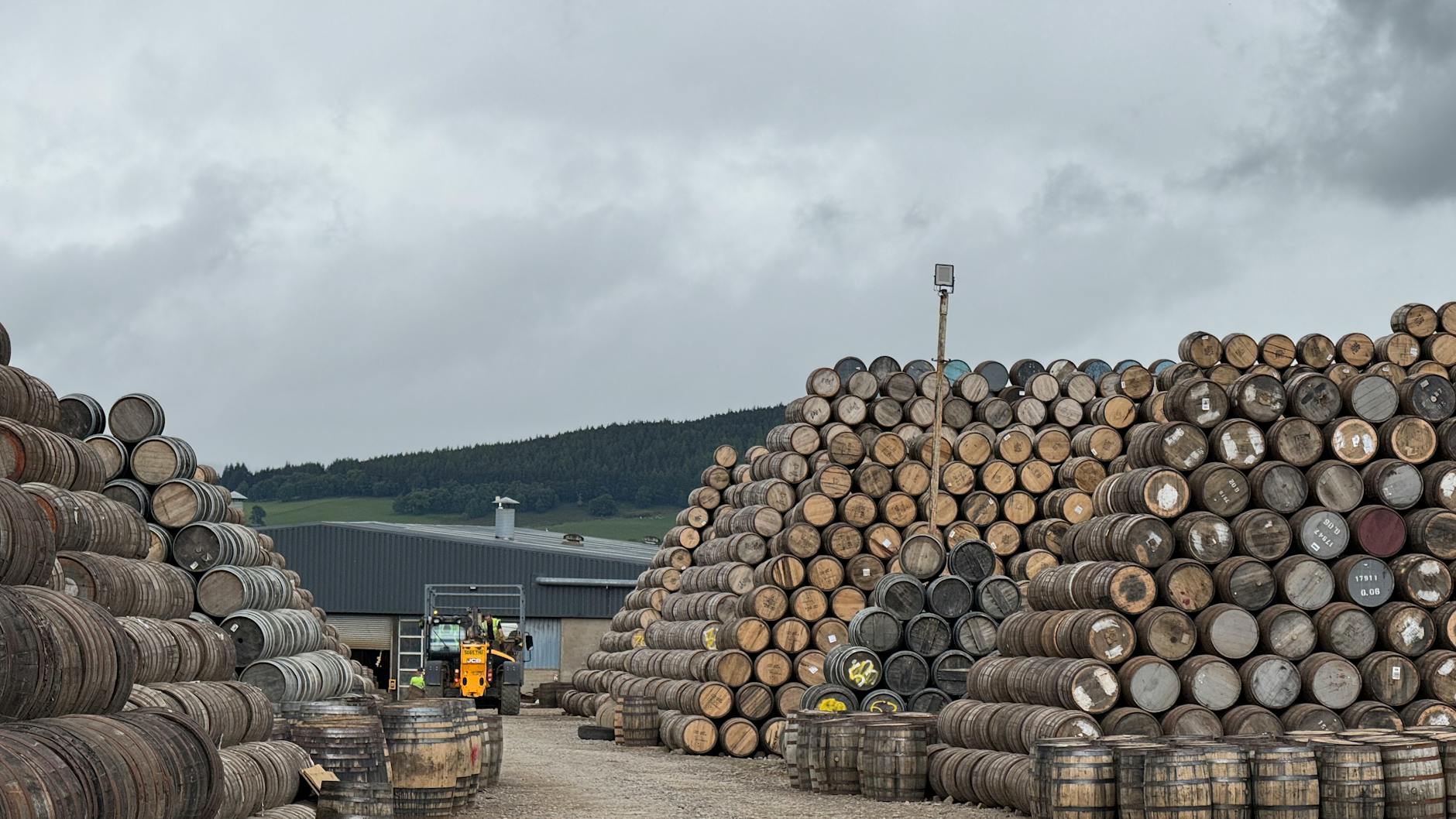
American whiskey volumes are down for a second consecutive year, echoing the 1970s bicentennial-era downturn. Five structural factors — from export demand to age-stated scarcity — suggest recovery is a matter of when, not if.
American Whiskey Is Struggling — But the Numbers Tell a Familiar Story
American whiskey volumes fell for the second consecutive year in 2024, with the Distilled Spirits Council of the United States (DISCUS) reporting a 3.2% decline in case sales across the bourbon and Tennessee whiskey categories combined. If that sounds alarming, consider this: in 1976, the year of the US bicentennial celebrations, the American whiskey industry was in the grip of a downturn so severe that distilleries were mothballing stills, warehouses sat full of unsold stock, and producers were quietly wondering whether the category had a future at all. It recovered. Understanding why it recovered then — and what the structural differences are now — is the most useful exercise any serious trade buyer or cask investor can undertake. The current correction is real, but it is not without precedent, and the lessons of the 1970s remain sharply relevant for anyone with capital tied up in American oak.
For cask investors and buyers tracking the American whiskey downturn, the stakes are considerable. Premium bourbon casks that were changing hands at record secondary-market prices just two years ago have softened noticeably, and several mid-tier brands have quietly reduced distillation runs heading into 2025. The question is not whether the category will face further short-term pain — it almost certainly will — but whether the structural foundations are strong enough to support a multi-year recovery. Anyone who has followed the US spirits depremiumisation trend, where value sales fell 5.7% across 12 months, will recognise the macro pressure bearing down on American whiskey right now.
The 1976 Parallel: What the Bicentennial Downturn Actually Looked Like
The mid-1970s crisis in American whiskey was driven by a generational shift in consumer taste. Vodka and white spirits were eating into bourbon's core demographic, younger drinkers were not replacing retiring ones, and the industry had massively overproduced through the 1960s boom years. Kentucky distilleries were sitting on warehouses of ageing stock with no clear buyer in sight — a situation that has uncomfortable echoes in today's overhang of craft-distillery new-make and mid-aged bourbon that flooded the market between 2015 and 2022. The parallel is not exact, but the inventory-cycle dynamics are strikingly similar. Back then, consolidation followed: dozens of smaller producers were absorbed or shuttered, and the surviving brands emerged leaner, better-capitalised, and with tighter production discipline.
What ultimately drove the recovery from the 1970s trough was a combination of factors: the rise of premium on-trade culture in the 1980s, the cocktail renaissance that repositioned bourbon as a sophisticated mixer, and the growing export appetite — particularly from Europe and Japan — that gave producers a second revenue stream independent of domestic sentiment. Today, all three of those recovery levers exist in updated form, which is precisely why the pessimistic read on current conditions misses the medium-term picture. The spirits industry's short-term problem is real, but short-term and structural are not the same thing.
"The 1970s taught the American whiskey industry one enduring lesson: overproduction in a boom cycle always creates a painful correction, but the category that emerges is invariably stronger, more focused, and better positioned for the next wave of consumer demand."
5 Structural Reasons American Whiskey Will Recover
The case for recovery is not built on optimism alone. There are five concrete structural factors that distinguish the current downturn from a terminal decline, and each has a direct implication for trade buyers and cask investors holding American whiskey positions.
- Export demand remains robust: Despite domestic softness, American whiskey exports to the EU, UK, and Asia-Pacific held up comparatively well in 2023-24. The temporary removal of EU retaliatory tariffs in 2021 opened a critical window, and while trade policy risk remains live — particularly with ongoing US-EU tariff negotiations — the export infrastructure built over the past decade provides genuine downside protection.
- Premiumisation is paused, not reversed: The depremiumisation pressure hitting value and mid-tier expressions is real, but ultra-premium and allocated releases — think Buffalo Trace Antique Collection, Four Roses Limited Small Batch, and Willett Family Estate bottlings — continue to command strong secondary-market premiums. The consumer appetite for quality at the apex of the category has not collapsed.
- Inventory correction is self-limiting: The craft distillery overproduction that flooded the market will naturally work through the system as undercapitalised producers exit. Brown-Forman, Beam Suntory, and Heaven Hill are not distilling into a permanent surplus — they are managing through a cyclical trough with the balance-sheet strength to wait it out. The recent news that Brown-Forman spurned Sazerac's $15bn takeover bid signals confidence in the category's long-term value.
- Cocktail culture is a structural tailwind: Unlike the 1970s, when cocktail culture had to be rebuilt almost from scratch, today's on-trade environment is deeply bourbon-literate. Bartenders globally have embedded American whiskey into their programmes in ways that are not easily displaced. The best-value bourbons continue to win awards and column inches, sustaining visibility even during a volume correction.
- Age-statement stock is a finite asset: The glut that exists today is concentrated in young, non-age-statement expressions. Well-aged bourbon — 12 years and above, particularly from single barrels or specific rickhouse positions — remains genuinely scarce. Cask investors who can identify and hold quality aged stock through the current softness are positioned to benefit disproportionately when sentiment turns.
Each of these factors is visible in the current trade data if you look past the headline volume declines. The world's best bourbons are still winning at major competitions, and consumer engagement with the category at the premium end remains substantive. The correction is real at the volume and value tiers; it is far less pronounced where quality and provenance are clearly established.
What the Trade Should Watch Heading Into 2026
For buyers, distillers, and investors tracking the American whiskey market, several near-term developments will be decisive in shaping the pace and shape of recovery. The most immediate is US trade policy: any reimposition of EU retaliatory tariffs on American whiskey — a live risk given ongoing transatlantic trade tensions — would materially slow export recovery and add further pressure to domestic inventory levels. Conversely, a durable tariff resolution would likely act as a significant positive catalyst for producer sentiment and secondary cask values. The Brown-Forman and Sazerac situation also bears watching: M&A activity at the top of the category signals how major producers are reading the medium-term outlook, and any deal — or further rejection — will set a valuation benchmark for the sector.
On the production side, watch for distillation-run announcements from the major Kentucky producers in Q3 2025. If Heaven Hill, Wild Turkey (Campari Group), and Four Roses (Kirin) all signal production cuts simultaneously, that is a clear indicator the inventory correction has further to run. If any of them hold or increase runs, it suggests confidence in a 2026-2027 demand recovery. Auction results for age-stated American whiskey will also be a leading indicator worth tracking closely — the lessons from recent rare whisky auction activity suggest that quality provenance commands a premium even in a softening market. Similarly, the whiskies to watch at auction this season include several American expressions that have held value well despite the broader category correction.
The rye whiskey sub-category also deserves specific attention. Rye has outperformed bourbon on volume trends in several recent quarters, driven by on-trade demand and a younger consumer base that came to American whiskey through cocktail culture rather than heritage. The best-value rye whiskeys for 2026 represent a category within a category that may well lead the broader American whiskey recovery rather than follow it. Diversifying American whiskey exposure across bourbon and rye — rather than concentrating entirely in bourbon — is a prudent position for any serious cask or bottle investor right now.
Frequently Asked Questions
Is the American whiskey downturn worse than the 1970s crisis?
In absolute volume terms, the current decline is smaller relative to the category's overall size than the 1970s trough. The 1970s saw sustained double-digit volume declines over nearly a decade, driven by a fundamental generational shift away from brown spirits. Today's correction is steeper in the premium and craft segments but has not yet approached the systemic severity of that earlier period. The export infrastructure and global brand recognition that American whiskey now possesses provide significant structural support that did not exist in 1976.
How does the current inventory overhang affect cask values?
The overhang is concentrated in young and non-age-statement bourbon, particularly from smaller craft producers. Well-aged stock — 10 years and above, especially from established Kentucky distilleries with strong brand recognition — has held value comparatively well. Cask investors holding quality aged American whiskey are in a materially different position to those holding undifferentiated young stock, and the gap between those two positions is likely to widen as the correction deepens.
Will US-EU tariff risks derail the American whiskey recovery?
Tariff risk is the single most significant external threat to the recovery timeline. A reimposition of EU retaliatory tariffs — which were suspended in 2021 following years of dispute — would reduce export revenue for major producers and extend the domestic inventory correction. However, the structural consumer demand for American whiskey in the UK, Germany, and France is well-established, and a tariff-driven dip would likely be temporary rather than permanent.
Which American whiskey sub-categories are most resilient right now?
Ultra-premium and allocated bourbon (above $100 retail), age-stated single-barrel expressions, and rye whiskey are the three sub-categories showing the most resilience. Volume and value-tier bourbon is bearing the brunt of the correction. Rye in particular has demonstrated consistent on-trade demand growth and is attracting a younger consumer demographic that could anchor the category's next growth cycle.
What is the most important indicator to watch for signs of recovery?
Secondary market auction prices for age-stated American whiskey are the most reliable leading indicator. When allocated and aged expressions begin to firm at auction — after the current softness — it signals that collector and investor confidence is returning ahead of the broader retail volume recovery. Production-run announcements from the top three or four Kentucky producers in mid-2025 will be the second key signal to monitor.
🥃 Considering whisky casks as an investment? Speak to the Whisky Cask Club team — Singapore-based specialists working with collectors and investors across Asia.