The three-time World's Best Single Malt distillery has partnered with an Asia-focused brand strategist to court collectors in Hong Kong, mainland China, Singapore and four other markets, through private clubs and superyachts rather than supermarket shelves.
TL;DR
- Sullivans Cove, a Tasmanian single malt distillery, has partnered with Asia-based brand strategist Nimbility to build a presence in Hong Kong, mainland China, Singapore, Taiwan, South Korea, Japan and India.
- Distribution will run through luxury hotels, private clubs, specialist retailers, private aviation and superyachts rather than mass retail, according to the companies.
- The push follows chief executive Andy Gaunt's April 2026 comments naming Asia-Pacific a long-term growth priority for the brand.
What is Sullivans Cove, and why does an Asia push matter?
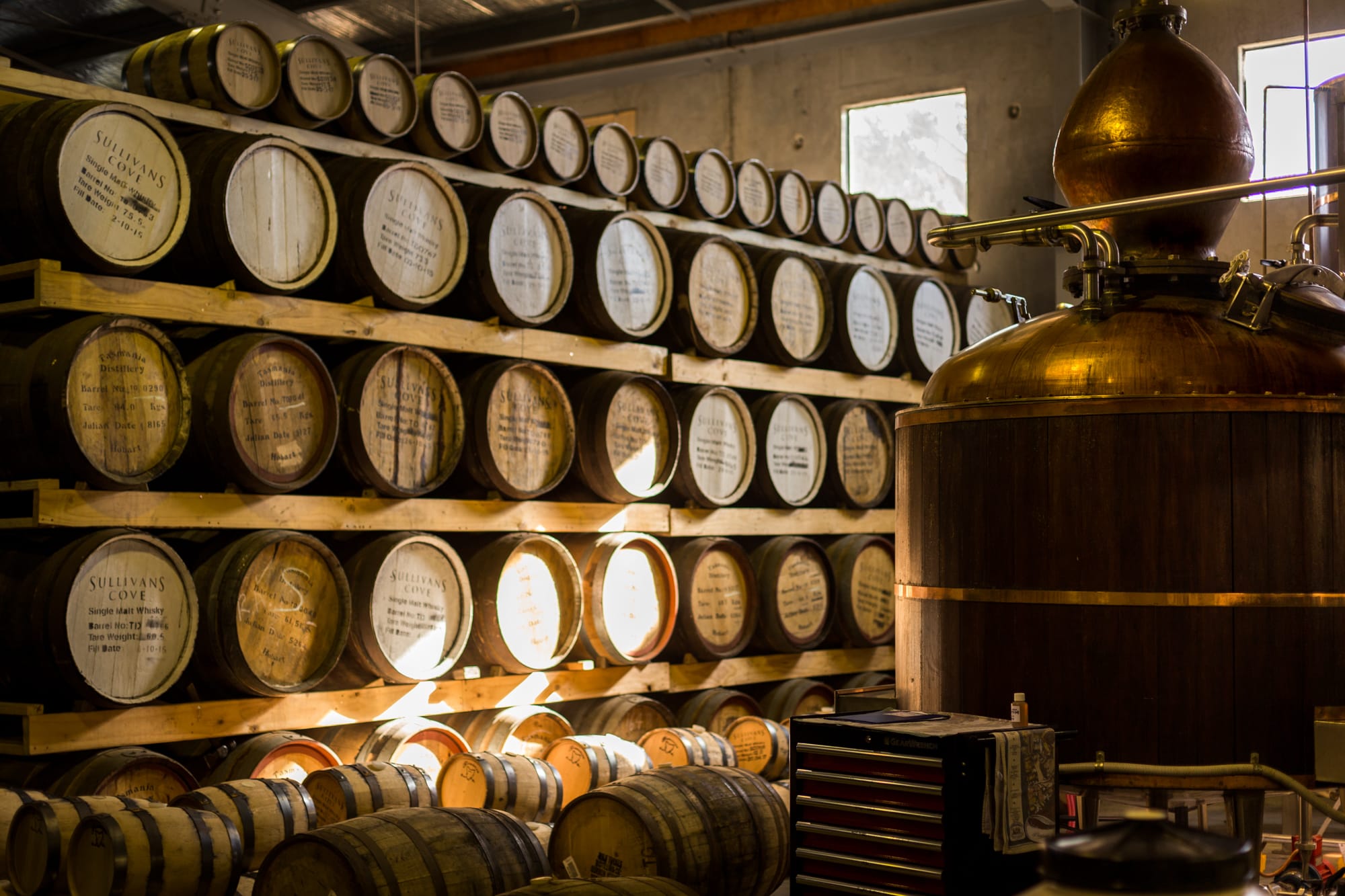
Sullivans Cove is a single malt whisky distillery based in Hobart, Tasmania. It has won World's Best Single Malt at the World Whiskies Awards (2014) and World's Best Single Cask Single Malt three times, most recently in 2026, putting it among the most decorated distilleries outside Scotland and Japan. Chief executive Andy Gaunt, a former Diageo luxury-whisky executive who also led Fever-Tree's Australia, New Zealand and Asia business, joined the company in 2024.
According to The Drinks Business, Sullivans Cove has now partnered with Nimbility, an Asia-based brand and market-entry strategist, to build a curated presence across Hong Kong, mainland China, Singapore, Taiwan, South Korea, Japan and India. It is one of a small wave of independent whisky producers using specialist Asia agencies this year; English producer Fielden Whisky announced a similar six-market Asia push with Nimbility in early September.
Why is Sullivans Cove targeting these markets now?
This is not a sudden pivot. Speaking to The Spirits Business in April 2026, Gaunt named Hong Kong, Southeast Asia and China as explicit growth priorities alongside mainland Australia, saying the brand could lean on "Brand Australia" recognition the way Australian wine has. He set a long horizon for the ambition, suggesting Australian whisky could reach a market share comparable to Australian wine within twenty to thirty years, a reminder that this is a patient, allocation-driven category rather than a mass-volume one.
How will the whisky actually reach buyers?
Per the companies' statements, the model is deliberately narrow: luxury hotels, fine-dining restaurants, private members' clubs, specialist whisky retailers, private aviation and superyacht partners, combined with direct engagement of ultra-high-net-worth collectors. Nimbility chief executive Ian Ford described the brand as an embodiment of a "quiet luxury" positioning. Gaunt said Asia "is home to some of the world's most knowledgeable and passionate whisky drinkers." Neither company has published volume targets, launch dates for individual markets, or Asia retail pricing, and Whisky Bulletin has not independently verified deal terms beyond what has been publicly reported.
Why it matters for APAC collectors and investors
For Asian buyers who already collect Scotch and Japanese whisky, this adds a third serious "new world" name to the shelf, and a scarce one: Sullivans Cove's annual output is small relative to Scottish or Japanese majors, so a curated Asia rollout likely means limited allocations rather than wide availability. That scarcity is part of the pitch, but it cuts both ways for anyone thinking about resale value. A distillery is not obligated to keep any given market well supplied, and early entrants into a new region often pay a premium for access rather than for the liquid itself.
The timing is also notable against a mixed regional backdrop. Whisky Bulletin has reported that Japanese whisky value jumped 44 percent in global duty-free sales last year even as Asia-Pacific was the weakest-growing region overall for travel-retail spirits, and separately that Asian cask investors are watching a possible UK Scotch duty cut in the government's 28 October budget. Sullivans Cove's move suggests producers see room for a premium, story-led whisky brand to grow in the region even where broader volume trends are soft. As always, treat any cask, bottle or allocation as a collectible rather than a guaranteed investment, and verify pricing and provenance directly with an authorised retailer before buying.
Frequently Asked Questions
Can I buy Sullivans Cove whisky in Asia right now?
Not widely yet. As of this announcement, Sullivans Cove and Nimbility have named target markets and channels but have not published a market-by-market launch schedule or confirmed retail partners, so availability will likely roll out gradually and by allocation.
What does "quiet luxury" distribution mean for a whisky brand?
In this context it means selling through discreet, relationship-based channels, such as private clubs, luxury hospitality and direct outreach to known collectors, rather than broad retail listings or heavy advertising. The aim is to build reputation among a small buyer base first.
Is Tasmanian whisky a good investment?
Whisky Bulletin does not give financial advice. Tasmanian whisky has a strong competition record and growing international attention, but the category is younger and less liquid on the secondary market than Scotch, and individual outcomes depend on provenance, allocation and demand at resale. Buyers should treat it as a collectible purchase and do independent diligence.
Sources and Method
This article draws on reporting by The Drinks Business ("Sullivans Cove: Asia is home to some of the world's most passionate whisky drinkers," 21 September 2026, thedrinksbusiness.com) and The Spirits Business ("Sullivans Cove: Australian whisky could be as big as wine," 16 April 2026, thespiritsbusiness.com), plus independent confirmation of Andy Gaunt's role via Food & Beverage Industry News and Drinks Trade. Figures on Japanese whisky and Asia-Pacific travel retail come from IWSR (16 September 2026) and The Spirits Business (17 September 2026). Quotes are as reported by the cited outlets and have not been independently re-obtained by Whisky Bulletin. This is not financial advice.