South American winemakers are moving toward multi-varietal blends to express terroir across Argentina, Chile, Uruguay, and Brazil. For whisky producers, the shift matters because it alters the profile and availability of ex-wine casks sourced from the region for maturation and finishing.
South American winemakers are increasingly turning to multi-varietal blends as a primary vehicle for terroir expression, challenging the long-held convention that a single grape best communicates a vineyard's character. Across Argentina, Chile, Uruguay, and beyond, producers are drawing on the region's extraordinary diversity of altitude, soil type, and microclimate to craft blends that reflect place as precisely as any single-variety bottling.
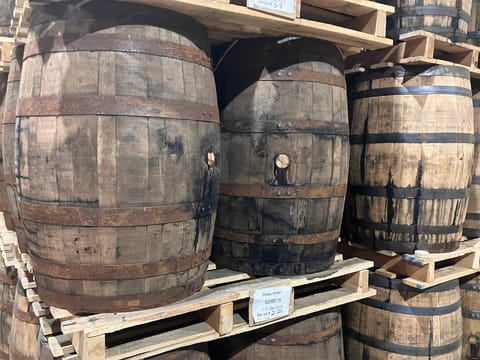
For the whisky trade, this shift carries a practical resonance. Cask availability in South America has historically tracked wine production trends, and a move toward complex, structured blends, often aged in a wider variety of oak formats, signals potential changes in the used-cask supply chain. As South American producers experiment with French oak, American oak, and even native species for maturation, the secondary cask market in the region may diversify in ways that interest Scotch, American, and emerging-world distillers sourcing ex-wine wood.
The blended approach is driven by several intersecting factors that producers across the continent are navigating simultaneously:
- High-altitude sites in Argentina's Mendoza and Salta provinces offer dramatic diurnal temperature swings that favour structured, layered blends over single-variety expressions.
- Chile's coastal valleys, shaped by Pacific influence, are producing Syrah, Carignan, and País blends that emphasise freshness and mineral precision.
- Uruguay's Tannat-led blends are increasingly incorporating Marselan and Merlot to soften structure while preserving regional identity.
- Brazil's Serra Gaúcha is experimenting with Italian varieties alongside indigenous grapes, generating novel blend profiles with distinct oak requirements.
- Cultural exchange between European-trained winemakers and local viticulturalists is accelerating experimentation across all five major wine-producing nations.
The oak dimension is where whisky professionals should pay closest attention. Blended red wines aged in smaller French barriques and larger foudres produce casks with markedly different tannin profiles than those from single-variety Malbec or Carménère production. For distillers seeking ex-wine casks with complexity and regional character, the expansion of South American blended wine production could widen the palette of available wood, provided supply chains between wine regions and cooperages remain transparent and traceable.
Why it matters: South America's blended wine revolution is not simply an aesthetic choice for sommeliers, it represents a structural shift in how a major wine-producing continent approaches oak maturation, cask turnover, and varietal diversity. Whisky producers sourcing ex-wine wood from Argentina, Chile, or Uruguay should monitor how blending trends alter cask profiles and availability, particularly as demand for distinctive finishing casks continues to intensify across Scotch, Irish, and craft distilling markets in 2026.
Blended Revolution: How South American winemakers find terroir expression through more than just one grape remains worth watching for the next verified distillery or trade update.
🥃 Considering whisky casks as an investment? Speak to the Whisky Cask Club team, Singapore-based specialists working with collectors and investors across Asia.