In short: No. Despite a second Advertising Standards Authority ruling against a cask investment firm in July 2026, a high-profile $80 million firm collapse in 2025, and an active City of London Police investigation into three separate companies, whisky cask investment remains unregulated in the UK. There is no Financial Conduct Authority oversight and no Financial Services Compensation Scheme protection. Verification is currently the buyer's job, not a regulator's, and that matters even more for APAC-based investors, who typically have less practical recourse than UK residents if something goes wrong.
What's actually happening with whisky cask investment right now?
The past 18 months have produced a steady drumbeat of bad news for the cask investment sector, and it hasn't let up.
On 8 July 2026, the ASA published a ruling against Capgroup Int Ltd, upholding all four complaints against the firm. The ASA found that Capgroup's website claimed 27,023 "Excellent" reviews on Trustpilot, despite the company acknowledging it no longer had a corresponding Trustpilot rating at all. The site also displayed "as seen on" logos for Sky News, The Times, Daily Mail, GB News, Metro and The Telegraph in a way the ASA ruled was misleading. Most materially, the ASA found Capgroup had failed to adequately disclose that whisky cask and physical gold investment is not regulated in the UK and carries no Financial Services Compensation Scheme or Financial Ombudsman Service protection.
This wasn't Capgroup's first brush with the regulator. The company traded as London Cask Company when the ASA first banned one of its ads in 2022, then rebranded to Caskcap Ltd in 2024, then to Capgroup Int Ltd in May 2025. Three names in four years is not, on its own, proof of anything improper — Companies House confirms Capgroup Int Ltd (company number 13327177, incorporated 9 April 2021) remains an active, registered company, with no insolvency action against it. But the name changes do mean a buyer researching "Capgroup Int" today may not surface the company's earlier ASA history unless they know to look for it.
What happened when an $80 million cask investment firm collapsed?
In May 2025, Edinburgh-based Whisky Merchants Trading Ltd, parent to sister brands Cask 88 and Braeburn Whisky, once valued at over $80 million, formally went bust, with all staff made redundant, as reported by Forbes. The collapse wasn't accompanied by allegations of fraud, but it's a concrete reminder that even a well-known, sizeable operator in this space can fail outright, leaving cask owners to work out what happens to their holdings without the wind-down protections a regulated financial firm's customers would have.
Why isn't whisky cask investment regulated like a financial product?
Whisky cask investment sits outside UK financial regulation because, legally, a cask of whisky is a physical asset, closer to buying a piece of furniture than a share or a fund. That means firms selling cask investments don't need FCA authorisation to operate, and buyers get none of the protections that come with regulated products: no Financial Ombudsman Service route if something goes wrong, and no Financial Services Compensation Scheme payout if a firm becomes insolvent or turns out to be fraudulent.
Does a "certificate of ownership" actually prove a cask exists?
Buyers typically receive a certificate of ownership when they purchase a cask. On its own, this document does not constitute independent proof that the cask physically exists, is stored where the seller says it is, or hasn't already been sold to someone else. It's issued by the seller, about the seller's own inventory, worth treating as a starting point for verification, not the end of it.
What are the real warning signs of a whisky cask scam?
The clearest documented case is Cask Whisky Ltd (company number 13238108). On 8 October 2024 the High Court ordered it wound up, with the Official Receiver appointed as liquidator, confirmed directly on GOV.UK by the Insolvency Service, in a notice last updated 20 July 2026. The Official Receiver's own finding is the most important fact here: Cask Whisky Ltd "is not the proprietor of the whisky held in the warehouses and does not hold any interest in it," meaning the company that sold customers these casks did not itself own the underlying whisky. The Official Receiver has since disclaimed the company's warehouse contracts and published a list of the bonded warehouses so cask holders can pursue their claims directly.
The man behind Cask Whisky Ltd, per BBC reporting by journalist Sam Poling, is Craig Brooks, operating under the alias "Craig Arch." Brooks is a disqualified company director, jailed in 2019 alongside his brother for defrauding 350 victims out of £6.2 million in an earlier, unrelated cold-calling scheme involving carbon credit and rare earth metal investments, not whisky. Because his disqualification barred him from being listed as a director, his fiancée was named as the company's nominal director on paperwork instead, according to the BBC investigation. Brooks has since resurfaced under a second alias, "Craig Hutchins," behind Cask Spirits Global Ltd (company number 15783661), which Companies House shows as a currently active company, not yet in liquidation, though it remains one of the firms named in the City of London Police's ongoing investigation, alongside Cask Whisky Ltd and a third company, Whisky Scotland. Whisky Scotland's alleged conduct includes a widely reported case of a Brighton woman who invested £76,000 across seven casks, two of which turned out not to exist and five of which she'd been sold at inflated prices.
Separately, reader accounts on MoneySavingExpert's forum describe a more everyday version of the same anxiety: buyers who've struggled to get a firm to confirm a cask's existence or facilitate a sale. One thread involves a buyer dealing with Elite Wine and Whisky who couldn't get the company to act on a sale request; it's worth noting Elite Wine and Whisky is a long-operating firm, unconnected to the Cask Whisky Ltd/Cask Spirits Global cases above, that itself publicly warns customers about scammers impersonating it. Forum frustration about slow service isn't the same as evidence of fraud. The honest takeaway isn't "avoid this specific company," it's that even with established firms, buyers report real difficulty getting clear, timely confirmation about their own cask, and the Cask Whisky Ltd case shows exactly how bad it can get when that confirmation was never possible in the first place.
How can you actually verify a whisky cask exists before you pay?
A few concrete steps, in order of usefulness:
- Ask for independent bonded warehouse confirmation — not just the seller's certificate, but verification directly from the warehouse holding the cask, where the warehouse is willing to confirm it.
- Check the company's history under all its trading names — as the Capgroup/Caskcap/London Cask Company case shows, a firm's name today may not surface its regulatory or complaint history under a previous name.
- Look up the listed directors on Companies House — records are free and public in the UK. In the Cask Whisky Ltd case, the real operator was disqualified from being a director at all, so a family member was listed on the paperwork instead; a nominal director with no visible industry background, or a company whose real controller doesn't appear on the public record, is exactly the pattern to watch for.
- Be sceptical of guaranteed or specific-percentage return claims — the ASA has repeatedly ruled against unsubstantiated return claims in this sector; a legitimate seller should be talking in ranges and caveats, not guarantees.
- Confirm the firm states plainly, unprompted, that the product is unregulated — the ASA's Capgroup ruling turned partly on the fact this wasn't being disclosed; a seller who volunteers this information is a better sign than one who doesn't.
- Consider an independent verification layer, not just the seller's word. A small but growing category of third-party services, such as CaskID, exist specifically to solve this problem, checking a cask against warehouse, distillery, and broker records independently of the company that sold it, rather than relying on a single seller-issued certificate. Worth noting: this is a newer, still-developing corner of the market itself, so treat any verification service as one more input alongside direct warehouse contact, not a substitute for it.
What should APAC-based investors know that UK coverage usually skips?
Nearly all cask investment coverage, including the cases above, is written from a UK-buyer perspective, dealing with UK-registered firms and UK regulators and enforcement bodies. For an APAC-based investor, the practical gap is often wider: City of London Police and the ASA have jurisdiction over UK-registered firms, but pursuing a complaint or recovering funds from overseas, dealing with a company that may not respond to international correspondence with the same urgency, adds a layer of difficulty on top of a sector that already offers no regulatory safety net. If a UK-registered cask firm becomes unresponsive or insolvent, an APAC-based buyer should expect a longer, harder road to any resolution than a UK-based one would face with the same firm.
What should you do if you already own a cask and suspect a problem?
Document every communication with the seller in writing. Contact the bonded warehouse directly if you have its details, independent of the seller — the Cask Whisky Ltd case shows why this matters: the Official Receiver's notice directs affected customers to contact their bonded warehouse directly, since the liquidation of the selling company doesn't affect ownership of casks genuinely held there. If your cask was bought through Cask Whisky Ltd specifically, GOV.UK's Insolvency Service has published an official update for customers listing every affected warehouse's contact details. If you suspect fraud more broadly, not just slow service or a company in liquidation, the UK reporting route is Action Fraud, working with City of London Police, which has confirmed it is investigating Cask Whisky Ltd, Cask Spirits Global, and Whisky Scotland.
Is whisky cask investment still worth it in 2026?
Legitimate cask investment firms do exist, and cask prices have genuinely appreciated over the past decade for parts of the market. But the sector's fundamental structure hasn't changed: no regulator vets these firms before they start selling, and no compensation scheme protects buyers if things go wrong. Until that changes, or until an investor is prepared to do the verification work described above themselves, cask investment carries a category of risk that regulated asset classes simply don't.
Frequently Asked Questions
Is whisky cask investment regulated by the FCA?
No. Cask whisky is treated as a physical asset rather than a financial product, so it falls outside FCA oversight, the Financial Services Compensation Scheme, and the Financial Ombudsman Service.
How do I know if my whisky cask actually exists?
Request independent, verifiable confirmation of storage directly from the bonded warehouse, not only a certificate of ownership issued by the seller.
What should I do if a cask investment firm won't respond or won't let me sell?
Document all communications in writing, try to contact the bonded warehouse directly, and if you suspect fraud, report it to Action Fraud, which works with City of London Police.
Is every whisky cask investment firm a scam?
No. Firms like Whisky Merchants Trading (parent of Cask 88 and Braeburn Whisky) collapsed without fraud allegations, and companies such as Elite Wine and Whisky actively warn customers about scam impersonators. The risk isn't that every firm is fraudulent, it's that because the sector is unregulated, the burden of verifying any given firm sits entirely with the buyer.
What happened to Cask Whisky Ltd specifically?
The High Court ordered it wound up on 8 October 2024, and the Official Receiver, who was appointed liquidator, found the company did not actually own the whisky it had contracted with bonded warehouses to store. Customers who hold genuine casks there retain ownership of them regardless, and should contact the relevant warehouse directly. GOV.UK has published an official customer update with contact details for every affected warehouse.
This article was fact-checked against primary sources on 20 August 2026: Companies House filings for Capgroup Int Ltd (13327177, active), Cask Whisky Ltd (13238108, in liquidation), and Cask Spirits Global Ltd (15783661, active); the ASA/CAP's official ruling on Capgroup Int Ltd; the Insolvency Service's official GOV.UK notice on the Cask Whisky Ltd liquidation; The Spirits Business's coverage of the July 2026 ASA ruling; Forbes (Felipe Schrieberg) on the Whisky Merchants Trading collapse; BBC reporting on the Craig Brooks/Cask Whisky Ltd/Cask Spirits Global connection; City of London Police; Which?; MoneySavingExpert Forum; and Elite Wine and Whisky's own published risk disclosures. No criminal charges specific to the cask-investment allegations against Cask Whisky Ltd, Cask Spirits Global, or Whisky Scotland were confirmed as of this fact-check; the City of London Police investigation remains open, and Craig Brooks's only confirmed conviction to date relates to the earlier, separate carbon-credit fraud. Editor: re-confirm investigation/charge status close to publish date, since this is a live, evolving story.
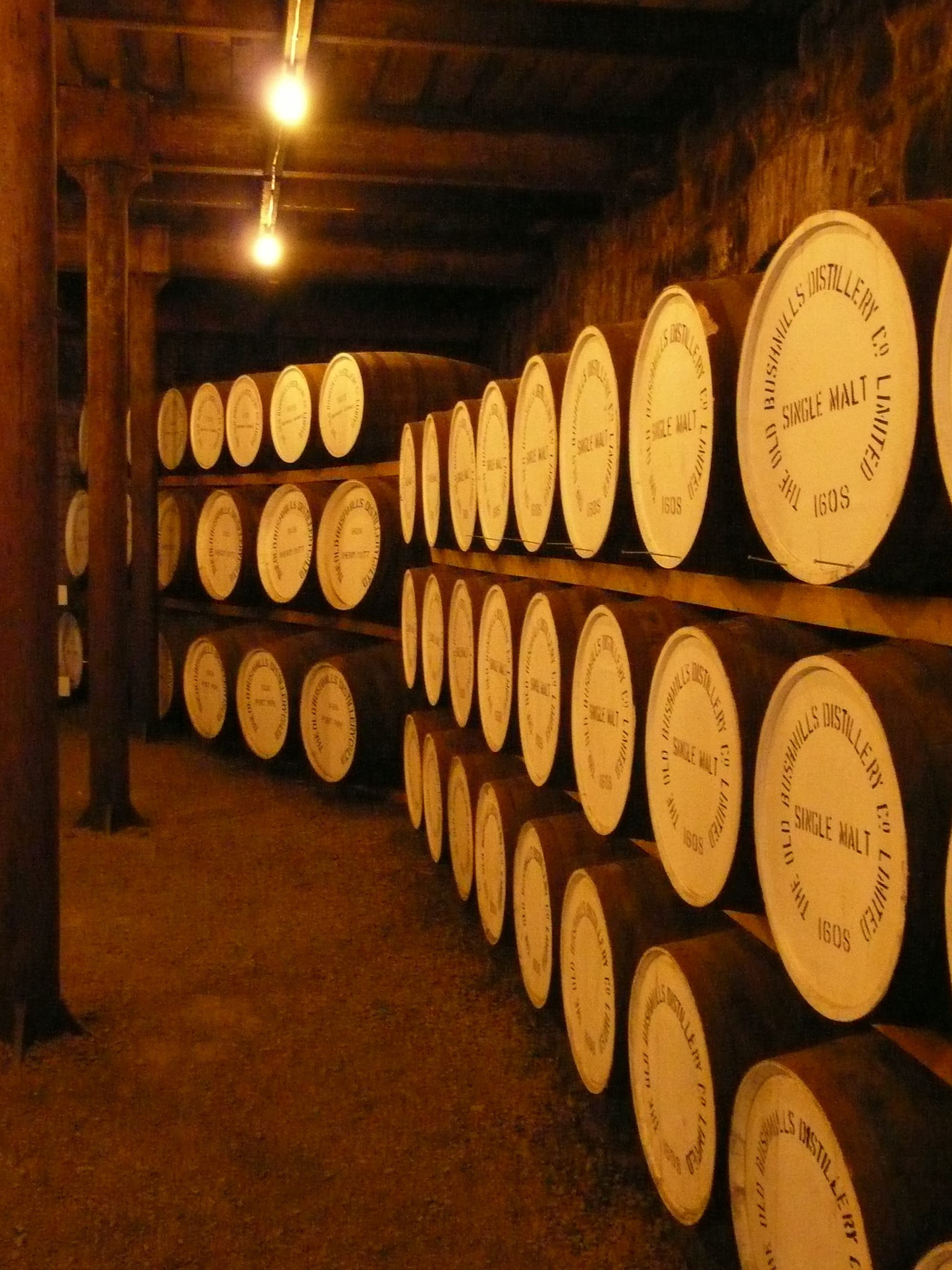
Feature image: "Old casks in Bushmills' old warehouse," Old Bushmills Distillery, County Antrim, Northern Ireland. Photo by Yves Cosentino, used under CC BY 2.5. Shown for illustrative purposes; Old Bushmills Distillery is not connected to any company named in this article.