India has halved its duty on bottled Scotch to 75%, but bulk Scotch concentrates, the base of many Indian blends, may still be classed at 150%, according to Reuters reporting on 24 October 2026. India's government has not confirmed this.
In short: Scotch has been cheaper to ship into India since the UK-India trade deal took effect on 15 July 2026, yet the largest part of that trade by volume is now in dispute. Bulk Scotch made up about 80% of India's Scotch imports in 2024, so the classification question matters more than the headline duty cut.
TL;DR
- The deal cut India's duty on certain Scotch from 150% to 75% on 15 July 2026, falling to 40% over ten years.
- Reuters reports officials told companies that bulk concentrates fall under a 150% classification. The industry body ISWAI disputes this in a letter to India's commerce minister dated 23 October.
- No ruling, finding or penalty has been announced, and the commerce ministry had not responded when Reuters reported.
What is the India bulk Scotch dispute about?
India's Directorate of Revenue Intelligence (DRI) is the customs intelligence agency that has been searching company offices this month. The International Spirits and Wines Association of India (ISWAI), whose members include Diageo and Pernod Ricard, wrote to the commerce minister on 23 October. It argues that leaving bulk Scotch out of the reduced tariff conflicts with the trade deal and asks for urgent clarification. Reuters reports that three people familiar with the matter said inspectors told companies that bulk concentrates must be declared under a classification carrying a 150% duty. The companies believe the 75% rate applies, and officials reportedly disagree.
Why does bulk Scotch matter so much in India?
According to The Whiskey Wash, India imported 53.7 million litres of pure alcohol (MLPA) of Scotch in 2024, the largest market by volume. About 80% was bulk: 22.2 MLPA of bulk malt, 16.2 MLPA of bulk blend and 4.8 MLPA of bulk grain. Bottled blends were 9.3 MLPA and bottled single malt only 1.2 MLPA. India took over 70% of Scotland's bulk malt exports that year, and the bulk is blended into Indian brands such as Royal Stag, Blenders Pride and McDowell's. The Whiskey Wash also reports that shipments to India rose 15% in 2025 to the equivalent of 220 million 70cl bottles, worth £286 million.
What has the customs probe found so far?
Nothing has been announced. The Whiskey Wash reports that the DRI searched offices of United Spirits, Diageo's Indian business, on 16 October. Reuters says offices of both Diageo and Pernod Ricard were searched and executives questioned, and both companies say they are cooperating. Accounts differ on the focus: Reuters describes a question of whether products were misclassified to qualify for the lower rate, while The Week describes a question of relabelling. Reuters also notes Pernod faces a US$314 million back-tax demand in India, which it disputes.
Why it matters for Asian whisky investors
Treat this as a watch item, not a trade signal. India is the volume engine of Scotch, so the tariff treatment of bulk stock shapes demand for the new-make and blending whisky that feed the wider market. Bottled single malt is a small slice of India's imports, so investors in single-cask malts are exposed mainly through overall Scotch sentiment rather than this classification question directly. What is not confirmed: whether concentrates qualify for 75%, when the commerce ministry will respond, and what any outcome would do to prices. For related context, see our earlier report on falling Scotch prices in India at https://whiskybulletin.com/scotch-prices-are-falling-in-india-after-the-uk-trade-deal-what-asian-buyers-should-know/ and on the industry's duty-cut lobbying at https://whiskybulletin.com/scotch-industry-wants-a-spirits-duty-cut-in-the-28-october-budget-what-asian-cask-investors-should-know/ . This is not financial advice.
Frequently Asked Questions
Has India cut its tariff on Scotch whisky?
Yes. Since the UK-India trade deal took effect on 15 July 2026, India's customs duty on certain Scotch fell from 150% to 75%, with a scheduled fall to 40% over ten years. State excise rates are set separately, so shelf prices do not automatically fall by the same amount.
Are bulk Scotch concentrates covered by the lower duty?
That is disputed. Industry says yes, and Reuters reports officials have indicated they fall under a 150% classification. No official ruling had been published as of 24 October 2026.
Is Scotch investment affected by the India dispute?
Not directly or in a confirmed way. The dispute concerns bulk imports used in Indian blends. Anyone considering a cask purchase should verify ownership and storage terms independently and seek qualified advice.
Sources and Method
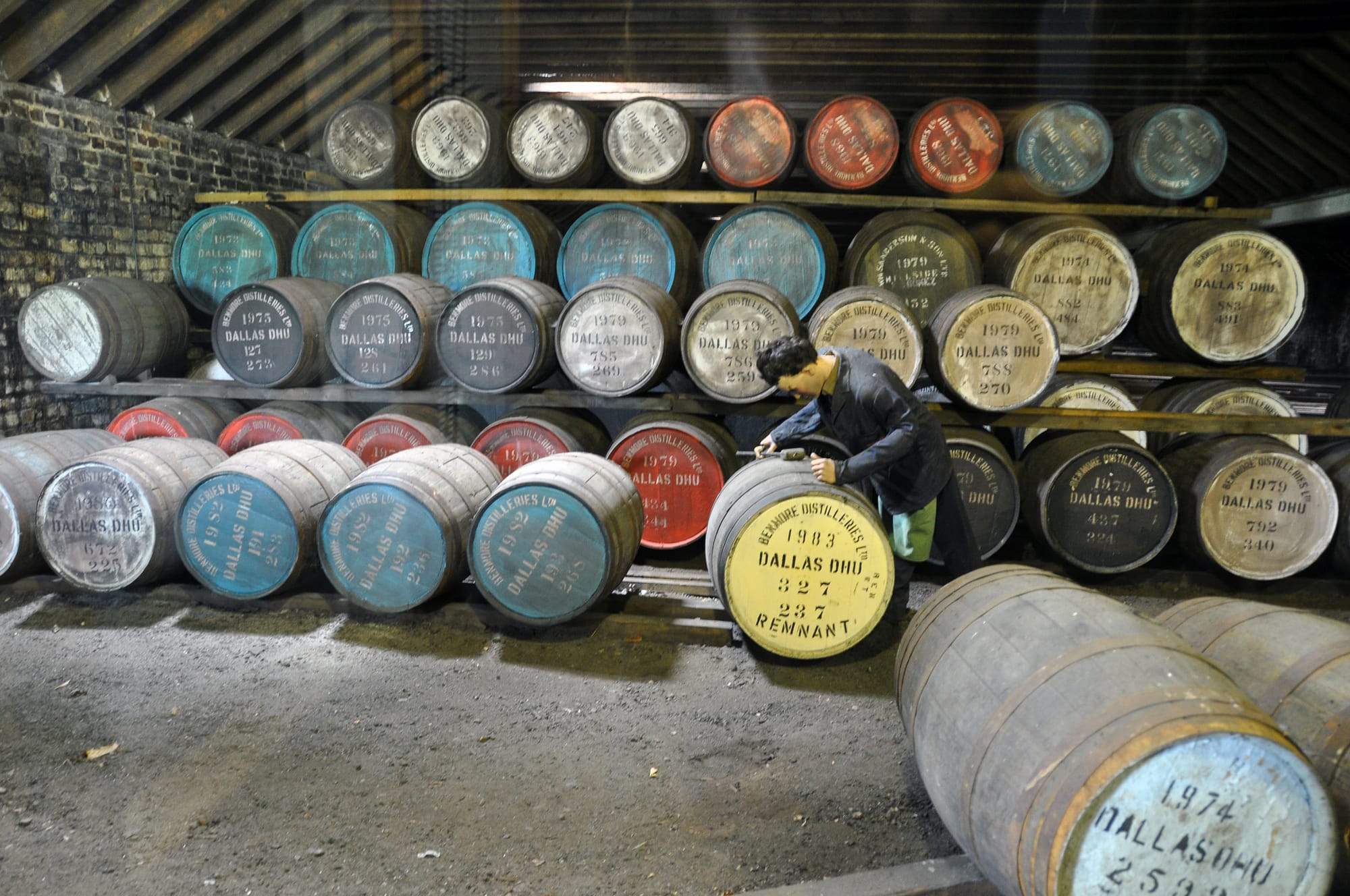
This article is an original summary prepared from: Reuters via Business Standard (24 October 2026) at https://business-standard.com/industry/news/india-s-scotch-probe-of-diageo-pernod-undermines-uk-pact-benefits-iswai-126102301418_1.html ; The Week, Meera Rajeev (24 October 2026) at https://www.theweek.in/news/biz-tech/2026/10/24/how-scotch-whisky-triggered-the-first-dispute-in-the-india-uk-trade-deal.html ; and The Whiskey Wash, Mark Littler (23 October 2026) at https://thewhiskeywash.com/whiskey-articles/scotchs-india-trade-deal-halved-the-tariff-but-bulk-whisky-still-faces-two-checks-at-the-border/ . Figures are as reported by those outlets and have not been independently audited. Cover photo: Whisky casks at Dallas Dhu by Nilfanion, via Wikimedia Commons, CC BY-SA 3.0.