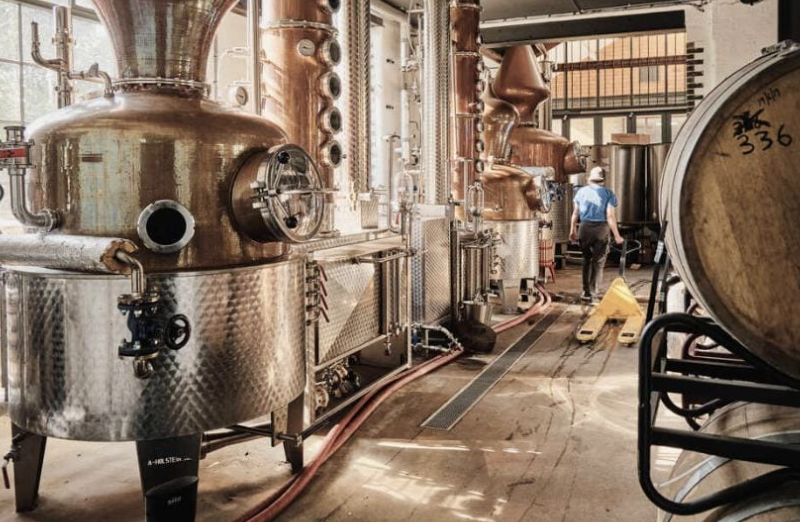
The UK government has granted English Whisky protected status alongside Scotch, but a parliamentary row over its single-malt rules shows the category's credibility fight is far from over.
TL;DR
- Defra confirmed on 11 September 2026 that "English Whisky" and "English Whiskey" are now legally protected Geographical Indication names, putting the category on the same legal footing as Scotch, Irish and Welsh whisky.
- The move covers more than 70 distilleries and an estimated £1 billion of whisky already maturing in English casks, but the Scotch Whisky Association says it is "profoundly concerned" that English single malt can be made with more flexible methods than Scotch single malt.
- For cask buyers, legal recognition is a credibility milestone, not a track record: English whisky still has no auction history, no verified resale data, and the same lack of regulatory protection as any other cask asset.
What did the UK government just approve?
On 11 September 2026, Defra announced that "English Whisky" and "English Whiskey" had secured Geographical Indication (GI) status, the same type of legal protection that defines what can and cannot be called Scotch, Irish whiskey or Champagne. The decision followed a six-year campaign by the English Whisky Guild (EWG), whose application was first submitted in February 2022 and opened for public consultation in February 2025. English whisky now sits alongside Scotch, Single Malt Welsh Whisky and Irish Whiskey as a formally recognised UK whisky category.
The numbers behind the announcement are the real story for this publication's readers. Defra puts the number of English whisky distilleries at more than 70, up from 46 in 2023, exporting to over 30 countries. Industry estimates cited in the government's own release value the whisky currently maturing in English casks at around £1 billion. That is not a hypothetical future category; it is capital already sitting in warehouses.
What does a whisky actually have to do to be called "English Whisky" now?
The rules are specific and, in places, deliberately different from Scotch. To use the protected name, a whisky must be made from UK-grown cereal grain and English water, distilled in England from wort also created in England, matured in England for at least three years in wooden casks no larger than 700 litres, and bottled at a minimum of 40% ABV. Only plain caramel colouring is permitted as an additive. The 100%-UK-grain requirement is, according to the EWG, unique among the UK's whisky GIs.
Two flexibilities set English whisky apart from Scotch. Producers can use wooden casks other than oak, provided this is stated on the label, and modern still designs are permitted. More significantly, distillers can mash and ferment off-site in partnership with local breweries and still call the result "single malt," a practice dating to 2003 when Hicks and Healey used wort from St Austell Brewery to lay down England's first modern whisky.
Why is the Scotch Whisky Association unhappy about it?
That single-malt flexibility is where the goodwill ends. On 18 September, the SWA said it was "profoundly concerned," arguing the approved text "undermines the established definition of 'single malt', creates confusion for consumers and jeopardises the category which the Scotch whisky industry established," and noting that Scotch accounts for over 90% of single malt sold worldwide. The SWA says it helped draft the GI's early stages and is now "considering our position and next steps" after further talks with Defra.
The dispute spilled into the House of Commons, where MPs including Brendan O'Hara and Alistair Carmichael questioned why England was allowed a looser single-malt standard than Scotland's requirement that the whole process happen at one distillery. Defra minister Stephen Morgan told the chamber that "Scotch whisky's protected status, reputation and production requirements are unchanged." Not every English producer is satisfied either: Circumstance Distillery founder Liam Hirt called the outcome "confusing for the consumer" and said he plans to appeal.
Does GI status make an English whisky cask a better investment?
Legally, yes, in the narrow sense that a distiller can no longer put "English Whisky" on a product that doesn't meet the specification, which strengthens the label's meaning. But GI status is a naming protection, not a performance guarantee. As our 2026 outlook on the best casks for investment has argued, Scotch remains the benchmark precisely because of its decades of resale data, auction records and established secondary market, none of which English whisky has yet built. Cask ownership of any category, English or Scotch, also remains outside UK Financial Conduct Authority oversight, a point underlined by past enforcement action against cask investment marketing. Buyers weighing English whisky casks should also note the GI's own wrinkle: because it permits non-oak vessels such as the hogshead alongside other formats, provenance and cask-type disclosure matter even more than usual when assessing what is actually maturing.
Why should APAC-based buyers pay attention now?
English whisky already reaches more than 30 export markets, and its producers, several of which already feature on our list of distilleries to watch, are positioning the category as a credible, lower-entry-cost alternative to Scotch. For APAC investors who have watched Scotch cask prices climb over two decades of scarcity-driven demand, an emerging category with formal legal backing but no comparable price history is, depending on appetite, either an early-mover opportunity or an unproven bet. What is not yet confirmed is whether GI status will translate into stronger resale demand, wider distributor interest in Asia, or any narrowing of the price gap with Scotch. None of that has been tested yet.
What's still unconfirmed?
The full legal product specification is not due to be published until 1 October 2026, so some technical detail could still shift. The SWA's "next steps" following its objection have not been announced. And Circumstance Distillery's threatened appeal has not been formally filed as of this writing. Buyers should treat the GI as a real but early-stage development, not a finished, tested framework.
Frequently Asked Questions
Is English whisky now regulated the same way as Scotch?
No. GI status protects the name and sets production rules, but English whisky's single-malt definition is more flexible than Scotch's, permitting off-site mashing and fermentation and non-oak casks, which is exactly what the SWA has publicly objected to.
Does this make English whisky casks a safer investment?
Not automatically. GI status adds legal weight to provenance claims, but whisky cask ownership remains unregulated by the UK's Financial Conduct Authority regardless of category, and English whisky lacks Scotch's long resale and auction price history.
When do the full rules take effect?
The GI itself was approved on 11 September 2026, but the detailed product specification is not due to be published until 1 October 2026, and individual producers must still pass HMRC's Spirit Drink Verification Scheme before using the protected name.
Sources and Method
This article is based on the UK government's official press release (Defra/gov.uk, published 11 September 2026), cross-checked against independent trade coverage from The Spirits Business (14 and 18 September 2026) and The Drinks Business (14 September 2026). All figures, quotes and dates above are attributed to these sources; no figures or quotes were invented. Where sources disagreed on a figure (the 2023 distillery baseline, reported as both 46 and 43), this is flagged explicitly and the primary government figure was used. Analysis and investment framing are Whisky Bulletin's own and are clearly separated from the reported facts.