
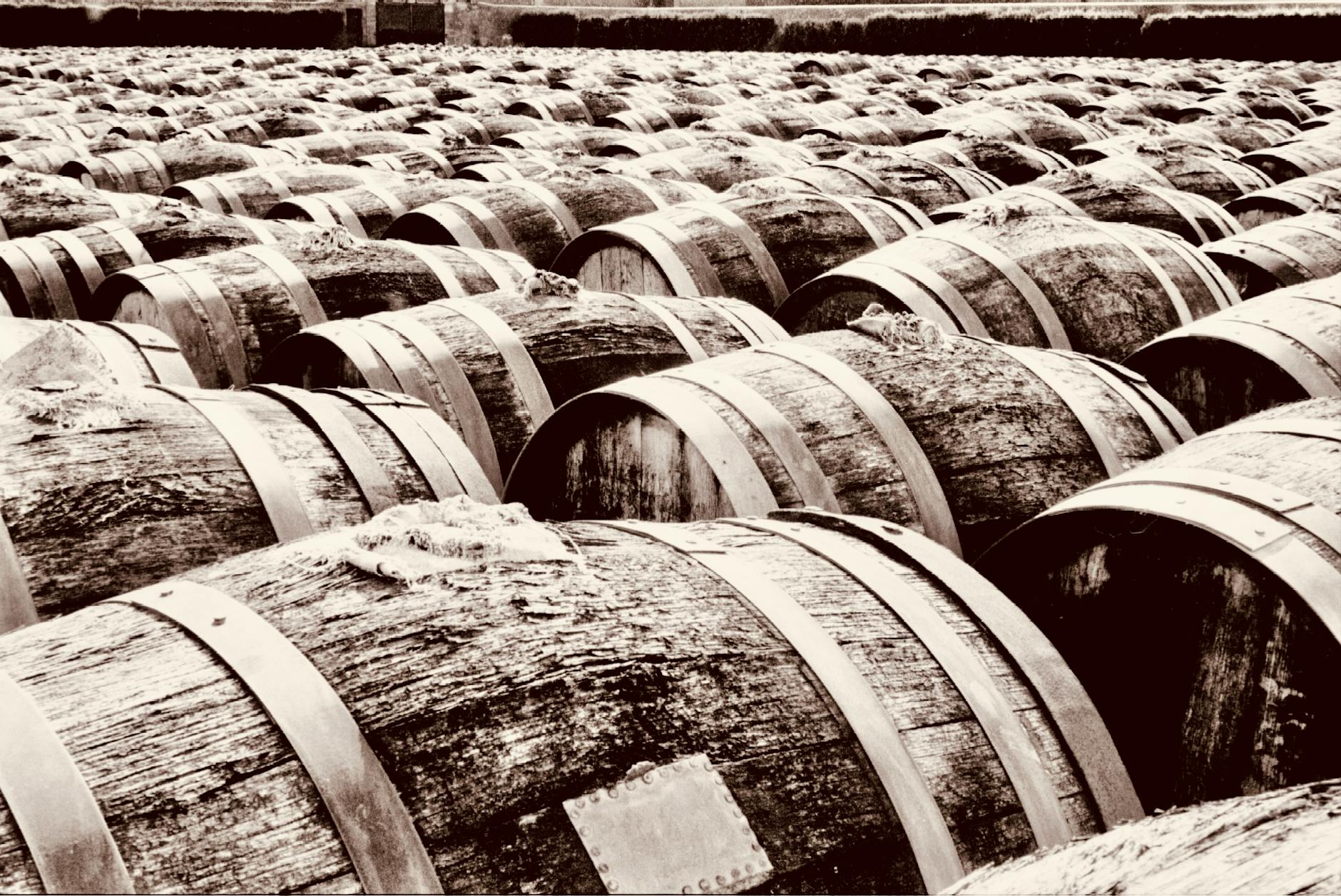
Claims of 10-18% annual returns from whisky cask investments are misleading. These figures represent averages over decades, not guaranteed yearly profits. The market is opaque, illiquid, and subject to evaporation losses. High returns require buying young casks and holding them for 15+ years.
If you Google “Buy a barrel of whisky,” you will get advertising for “Get Returns of up to 12% Per Year” as the top result (last checked, Jan 2022).
If you find this proposition alluring, you are not alone. However, we believe you should be skeptical of these assertions, and we will explain why.
This article begins with a quotation from Richard Feynman: “The fundamental premise is that you must not deceive yourself because you are the easiest person to deceive.”
This was true in the post-Environment War II age, and it is much more accurate in today’s world when “fake news” travels faster than actual news, and the internet makes it easier to get the answers you need (and ignore the ones you do not).
The whisky barrel market is not immune to fraud or its own kind of false news, in which restricted instances are exploited to indicate that all casks may provide annual returns of 10–18% or even 20%+.
So, what is the reality of cask investment?
The elephant in the room: annual returns of 10 to 18 percent
The premise behind cask investment is straightforward: the value of whisky in a barrel rises with time owing to a perceived improvement in quality due to contact with the cask and because the rarity of whisky increases with age (see Graph 1 below). Due to two factors, scarcity grows exponentially:
First, barrels are not used equally throughout their lives; 90% of casks are bottled before reaching 12 years of age.
Second, the volume and ABV of a barrel decline with time owing to evaporation. This decline is sometimes quoted as an annual average of 2%. However, the pace begins lower and accelerates as the barrel ages (because the surface area available for evaporation increases as more and more evaporation takes place – a positive feedback loop).
Casks are less expensive when younger and increase in value as they age. However, the link between scarcity and age causes the value of barrels to grow more quickly as they age; the relative price increase between 5 and 10 years is lower than the price increase between 15 and 20 years.
The results may be spectacular if you calculate the average change in value between a three-year-old cask of whisky and a twenty-year-old cask of whisky. According to our estimation, this is where the famous 10-20% returns originate.
It is crucial for two reasons:
The annual rise of 20% is an average increase during the barrel’s lifespan, not an annual increase. Casks do not provide yearly returns.
The returns are only (potentially) necessary if you purchase a young cask and hold it for an extended period.
To explain the preceding possible remark, let’s consider this issue differently:
Why are firms allowing you to invest at 10-18% yields when they could obtain a small business loan for about 5% and still earn 5-13% on their money?
Why can’t I purchase a 15-year-old cask and sell it as an 18-year-old cask to expedite the maturing process and maximize my profit?
Investing in Older Barrels: Opinions of the Scotch Whisky Association
The Scotch Whisky Association acknowledges that barrels might be a personal investment opportunity so long as the potential investor is aware of the Scottish whisky industry’s nature.
This may seem like a statement of the obvious since most individuals are unlikely to purchase other assets without a strong grasp of how investments in that area function, such as researching property prices or stock performance. However, locating information and (objective) guidelines on cask investing might be difficult.
However, casks are not intended for the general public; more than 400 million liters of pure alcohol can be produced annually in Scotland, but only a tiny fraction reaches the public. As a result, there is no incentive to provide public indexes on price and performance, and very little information is available about what to expect if you purchase a whisky cask.
Frequently Asked QuestionsAre 10-18% annual returns from cask investment realistic?
No, these figures are often misleading averages over a cask's entire lifespan, not guaranteed annual profits, and require holding a young cask for decades.Why does the value of a whisky cask increase with age?
Value increases due to perceived quality improvement from maturation and growing scarcity, as most casks are bottled young and volume evaporates over time.Can I buy an older cask for a quicker profit?
It's difficult and not advised for most individuals, as the cask market is opaque, illiquid, and primarily serves the industry, not the public.What are the main risks of investing in whisky casks?
Key risks include high illiquidity, lack of public price indexes, evaporation losses ('the angel's share'), and potential for misleading marketing claims.
Frequently Asked QuestionsAre 10-18% annual returns from whisky cask investment realistic?
No, these figures are misleading averages over a cask's entire lifespan (15-20 years), not guaranteed annual returns. Actual yearly profits vary significantly.What are the main risks of whisky cask investment?
Key risks include market opacity, evaporation losses (2%+ annually), illiquidity requiring long-term holding, and misleading marketing claims about returns.Why do cask investment companies advertise high returns?
They calculate average returns between young (3-year) and old (20-year) casks, presenting this as annual returns. This ignores market volatility and holding requirements.Can I buy older casks for quicker returns?
No, older casks are expensive and rare. Most returns come from buying young casks and holding them 15+ years as scarcity increases value exponentially.What does the Scotch Whisky Association say about cask investment?
They acknowledge casks as personal investments but emphasize investors must understand the industry's nature, including market opacity and long-term commitment required.