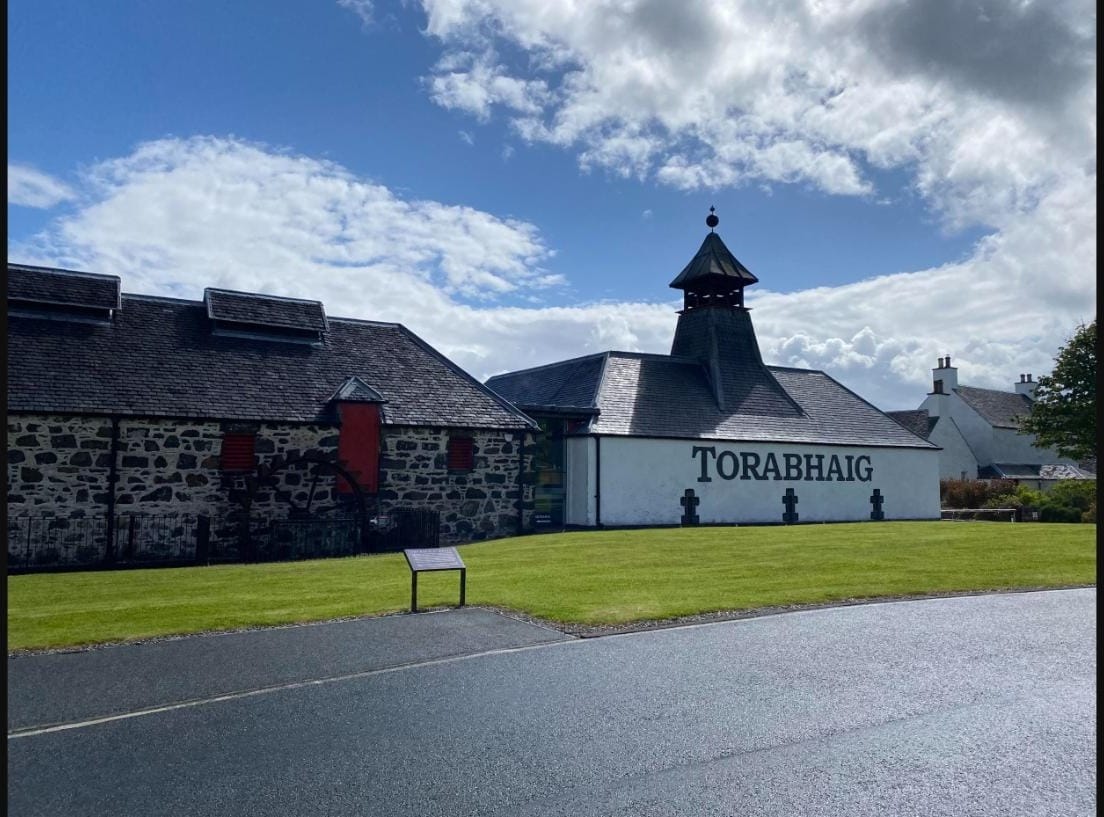
Mossburn Distillers has finished building a purpose-built, 50-acre bonded warehouse near Jedburgh that will hold maturing stock from its Reivers and Torabhaig distilleries — a quiet but telling signal about where independent bottlers are putting their money as the wider Scotch market cools.
TL;DR
- Mossburn Distillers has completed a new five-warehouse site near Jedburgh, Scottish Borders, moving maturation there from its Reivers Distillery in Tweedbank.
- The site adds racked and palletised cask storage plus, for the first time, in-house cask filling — infrastructure that matters to anyone buying or holding Scotch casks.
- The move lands as global drinks volumes fall for a third straight year, even as Asian buyers keep accumulating maturing cask stock rather than bottles.
What did Mossburn Distillers just announce?
Mossburn Distillers, the Scottish Borders-based independent bottler and distiller behind Reivers and Torabhaig, has completed construction of a new purpose-built warehousing facility on a 50-acre site near Jedburgh. The company is relocating its maturation warehousing from Reivers Distillery in Tweedbank to the new site, roughly 15 miles away, according to trade title The Spirits Business, which reported the news on 26 August 2026.
Installation of racking, vats and equipment is under way, with the first casks expected to arrive shortly, followed by initial bottling runs once the transition from Reivers is complete.
What's inside the new site, and why does that matter to cask investors?
The facility comprises five separate warehouses: one for bottling, dry goods and finished product; one for vatting and racked cask storage; and three for palletised cask storage. For the first time, Mossburn will also handle tanker reception and cask filling on site, a step previously outsourced elsewhere.
For readers holding or considering whisky casks, warehousing is not a footnote — it is where the asset physically sits for years, and it is what a bonded warehousekeeper's licence under the UK's post-WOWGR Warehousekeeper Regulations now governs directly (see our guide to cask ownership since WOWGR ended: whiskybulletin.com/whisky-cask-ownership-wowgr-ends-in-2025/). More racked and palletised capacity from an established independent bottler is a concrete data point on how much new stock is being laid down for the 2030s, which is what eventually feeds the secondary cask market and realisation routes (whiskybulletin.com/whisky-in-barrel-for-sale-a-guide-to-realizing-your-cask-investment/) investors rely on.
Mossburn's whiskymaker, Alan Philp, framed the move as a consolidation of quality control: "This site represents the scale of ambition we have for Torabhaig and Mossburn Distillers. Bringing every stage of production together in one place means we can watch over our whisky from spirit reception right through to bottling, with complete oversight and consistency at every step."
How does this fit the wider Scotch market right now?
The investment comes against a mixed backdrop. Global beverage alcohol volumes fell for a third consecutive year in 2025, a trend industry analyst IWSR has called "a major reset" in how consumers relate to alcohol. Scotch exports specifically dipped in value and volume terms in 2025, according to Scotch Whisky Association figures cited by cask broker Tommy Major of VCL Vintners in a City AM market analysis published in March 2026, with US shipments hit hardest after tariffs were reimposed.
Independent bottlers building new maturation capacity in that climate is not a contradiction — it is a long-duration bet. Whisky laid down today does not reach investable age for six, ten or twelve years, and Major's analysis notes that production slowdowns across the industry now could tighten supply of well-aged stock later in the decade.
Why it matters for APAC investors
That supply question is the one Whisky Bulletin's readers tend to ask first. Per Major's analysis, high-net-worth buyers in Hong Kong, Singapore and mainland China have continued accumulating maturing cask inventory rather than finished bottles, effectively reserving future aged stock ahead of the secondary market — demand that concentrates on aged Speyside and Islay malts with strong brand recognition. A newer, larger bonded facility from a producer with distilleries on both the Scottish mainland and Skye is exactly the kind of expanded capacity that broadens where APAC buyers can eventually source verified, well-documented cask stock, provided paperwork and chain-of-ownership are as tight as the new site's single-point oversight promises to be.
Not yet confirmed: Mossburn has not published pricing, timelines for opening cask sales from the new site to private investors, or confirmation of total maturing cask volume the facility will hold at capacity. Whisky Bulletin has not verified any investment offer tied to this facility and readers should treat any unsolicited pitch referencing it with caution.
FAQs
What is Mossburn Distillers building near Jedburgh?
A purpose-built, 50-acre bonded warehouse complex with five separate buildings for bottling, vatted/racked cask storage, palletised cask storage, tanker reception and in-house cask filling, replacing warehousing previously based at Reivers Distillery in Tweedbank.
Which Mossburn distilleries will use the new site?
Reivers, the Scottish Borders grain distillery established in 2018, and Torabhaig, the Isle of Skye single malt distillery that began production in January 2017 and released its first core-range expression, Taigh, in April 2026.
Why does a producer's warehouse expansion matter to whisky cask investors?
Because warehousing capacity is a direct proxy for how much stock is being matured for future sale. More racked and palletised storage from an established independent bottler signals fresh supply working its way toward investable age, at a time when Asian buyers are already competing for aged Scotch casks.
Sources and Method
This article was compiled from The Spirits Business ("Mossburn Distillers relocates warehousing," 26 August 2026), Mossburn Distillers' own corporate site (mossburnwhisky.com) for company and address verification, IWSR's published insight index (theiwsr.com/insight, entry dated 11 June 2026) for beverage alcohol volume trends, and a City AM market analysis by Tommy Major, Head Cask Broker at VCL Vintners ("Whisky investment in 2026: Structure, new markets and scarcity," 26 March 2026) for Scotch export figures and Asia cask-demand commentary. Forecasts and market commentary are attributed to their named sources and are not Whisky Bulletin's own predictions. No pricing, offer or investment claim in this article has been independently verified beyond what is stated above.