New IWSR data shows Japanese whisky was the standout spirits category in global travel retail in 2025, even as Asia-Pacific's own spirits market recorded the region's weakest growth of the past year.
TL;DR
- Japanese whisky value sales in global travel retail (GTR) rose 44% in 2025, the best performance of any spirits category tracked by data and intelligence firm IWSR.
- Whisky broadly drove GTR's 2025 growth, with total whisky value up 12%, while Cognac suffered one of its worst declines in decades.
- Asia-Pacific's own spirits sales in GTR grew just 2% in value, the weakest of IWSR's four tracked regions, a gap APAC investors should watch.
What just happened to Japanese whisky in global travel retail?
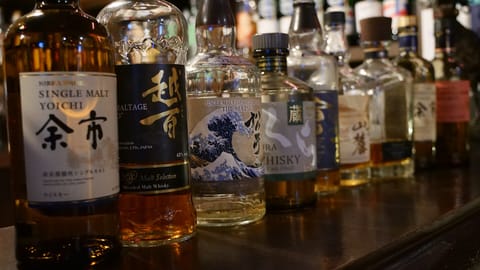
Global travel retail, the duty-free and duty-paid shops at airports, ports and border crossings, is a closely watched demand signal for premium spirits because it captures international travellers rather than any single domestic market. According to IWSR, the London-based drinks data and intelligence firm, Japanese whisky was the standout spirits category in GTR during 2025. Value sales rose 44% and volumes rose 37%, easily outpacing every other category IWSR tracks. Charlotte Reid, IWSR's senior insights manager for GTR, attributed the surge to "strong cultural cachet, traveller curiosity and a genuine willingness by consumers to spend at or above the premium tier."
How does this compare with Scotch, Irish whiskey and Cognac?
Whisky as a category was the single biggest driver of GTR growth in 2025, with total value up 12%, per IWSR. Scotch whisky and American whiskey each posted 10% value growth, and Irish whiskey rose 11%. Cognac and brandy moved the other way, with volumes down 6% and value down 8%, which IWSR describes as one of the segment's worst declines in several decades. Reid said the premium XO segment was hit hardest as traditional gifting occasions weakened, while VS Cognac held up better on growing use in cocktails. Agave spirits also had a strong year, with volume up 10% and value up 28%, which IWSR attributes to brand loyalty rather than category exploration among travellers who already know which bottle they want.
Why is Asia-Pacific's own spirits market lagging while Japanese whisky booms abroad?
Here is the apparent contradiction for APAC-based readers: Japanese whisky's boom is a story about international travellers buying it in duty-free, not about strength in Asia-Pacific's home spirits market. IWSR's regional breakdown shows Asia-Pacific GTR spirits and wine value grew just 2% in 2025, the slowest of the four regions it tracks, behind Europe and Africa/Middle East (both up 11%) and the Americas (up 7%). IWSR called this a "lacklustre spirits performance," noting the region was propped up mainly by continued strong growth in India. In other words, Japanese whisky's global travel-retail growth is being driven disproportionately by travellers from outside the region discovering the category at airports worldwide, not by a broader Asia-Pacific spending boom. IWSR's published report does not break out how much of the Japanese whisky growth came from sales specifically within Asia-Pacific airports versus other regions, which is a gap worth flagging rather than assuming.
What does this mean for APAC whisky and cask investors?
For investors and collectors across the region, the data points to continued brand-level strength in Japanese whisky even if broader APAC spirits spending stays soft. Sustained double-digit value growth in a channel as visible as global duty-free tends to support pricing and allocation demand for the category over time, though IWSR's figures describe retail sales trends, not cask or secondary-market valuations, and should not be read as a forecast for any individual brand, bottling or cask. This demand-side strength sits alongside a supply-side story Whisky Bulletin covered separately in Production Resets vs. Cask Valuations: How Major Distillers Are Managing Output in 2026 (whiskybulletin.com/production-resets-vs-cask-valuations-how-major-distillers-are-managing-output-in-2026/), which looked at how Scotch majors are pulling back production even as cask valuations stay in focus. Readers considering exposure to Japanese whisky, whether through bottles, funds or cask ownership, should treat GTR growth as one demand indicator among several, verify current pricing directly with distilleries or brokers, and note that IWSR's own 2025 to 2027 outlook flags industry-wide headwinds, including Middle East conflict, airspace disruption and cost-of-living pressures, that could affect travel volumes generally. This is not financial advice.
Where is GTR whisky demand headed toward 2030?
Looking ahead, IWSR expects Scotch to dominate the overall growth opportunity in GTR through 2030, with Japanese whisky and Irish whiskey continuing to lead momentum within the category. Cognac and brandy are projected to be broadly flat in value terms over the same period. IWSR cautions that its 2025 to 2027 forecasts assume continued disruption from the Middle East conflict, airspace closures and fuel costs, with Africa and the Middle East expected to take the largest hit, a single-year volume decline of up to 22% and no recovery before 2028. These are IWSR's projections, not certainties, and actual outcomes will depend on how travel patterns and consumer spending evolve.
Frequently Asked Questions
What is global travel retail (GTR) and why does it matter for whisky?
GTR refers to duty-free and duty-paid retail at airports, seaports and land border crossings, sold mainly to international travellers. Because it draws buyers from many home markets at once, data firms like IWSR treat it as an early signal of shifting global taste in categories such as whisky, often ahead of domestic market data.
How much did Japanese whisky grow in global travel retail in 2025?
According to IWSR, Japanese whisky value sales in GTR rose 44% in 2025 and volumes rose 37%, the strongest performance of any spirits category IWSR tracked that year.
Is Asia-Pacific driving Japanese whisky's global growth?
Not directly. IWSR's own regional data shows Asia-Pacific's spirits sales within GTR grew just 2% in value in 2025, the weakest of the four regions it tracks, despite strong growth in India. Japanese whisky's surge in GTR appears to be driven mainly by international travellers discovering the category, rather than a broader Asia-Pacific spending increase.
Sources and Method
This article is based on IWSR's 16 September 2026 report, Shifting sands: fresh category opportunities in GTR (theiwsr.com), corroborated against The Spirits Business's 17 September 2026 report on the same data (thespiritsbusiness.com). All figures and the Charlotte Reid quotes originate with IWSR. IWSR's public report does not break down Japanese whisky's GTR growth by buyer nationality, individual retailer, brand or airport, and does not provide cask or secondary-market pricing data; none of that is addressed here and should not be assumed. Whisky Bulletin has not independently verified IWSR's underlying survey methodology beyond what is described in its published report.