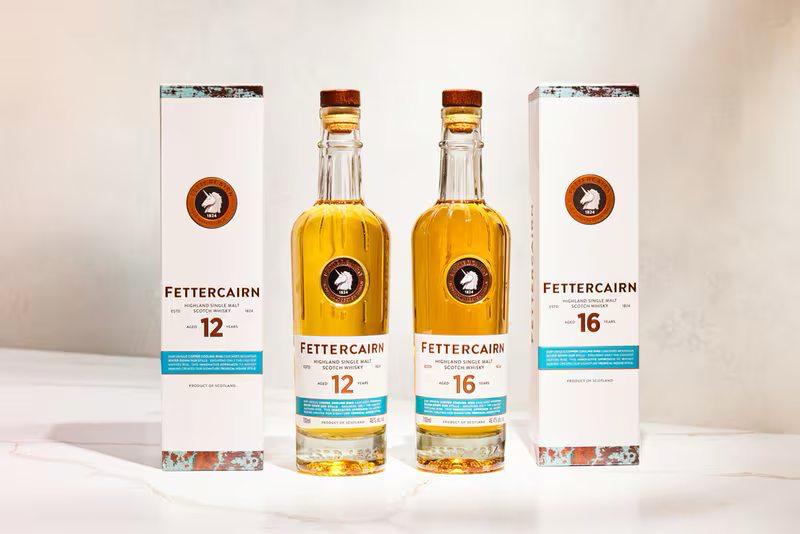
Fettercairn's still-cooling technique using Cairngorm mountain water produces a Highland single malt with genuine tropical character — no additives, no gimmickry. The US launch of the 12 and 16 Year Old signals a distillery under Whyte & Mackay ownership that is finally being taken seriously by the market, with collector and trade implications that extend well beyond the tasting glass.
Fettercairn Launches Tropical Single Malts in the United States
There is a piece of industrial theatre at Fettercairn Distillery in Aberdeenshire that most visitors walk past without a second glance. A copper ring sits just below the neck of each pot still, fed by a slow trickle of water drawn from the surrounding Cairngorm hills. It looks like maintenance plumbing. It is, in fact, the defining technical intervention that gives Fettercairn its most commercially distinct characteristic: a Highland single malt that consistently presents tropical fruit notes — pineapple, nectarine, coconut — without a drop of flavouring or a wine cask in sight.
The distillery, established in 1824 and now owned by Whyte & Mackay — itself a subsidiary of Emperador Inc., the Philippine spirits conglomerate — has deployed this water-cooling technique for decades. The principle is straightforward: chilling the still neck forces heavier, oilier vapours back into the still for redistillation. Only the lightest, most volatile fraction rises to the condenser. The result is a spirit of unusual delicacy for a Highland distillery — silky in texture, notably fruit-forward, and markedly different from the heavier, earthier character that defined Fettercairn's earlier releases before the brand was repositioned in the late 2010s.
The US market has now become the test case for how far that repositioning can travel. The 12-Year-Old and 16-Year-Old expressions from Fettercairn's core range have entered American distribution as part of a deliberate push into the premium imported whisky segment — a market increasingly receptive to technically differentiated Scotch at the £60–£100 retail equivalent.
Distillery Context and Production Profile
Fettercairn Distillery sits in Laurencekirk, in the foothills of the eastern Cairngorms, roughly 30 miles south of Aberdeen. It is one of Scotland's oldest licensed distilleries, though its modern commercial identity is a relatively recent construction. Whyte & Mackay acquired the distillery in 2007 — part of a portfolio that includes Dalmore, Jura, and the blended Scotch brands that underpin the group's volume business. Fettercairn has historically operated in Dalmore's shadow within that portfolio, producing solid Highland malt that fed blend requirements and attracted little collector attention.
That changed with the 2018 relaunch, which replaced older age-statement releases with a redesigned core range built around the tropical profile narrative. The water-ring cooling technique moved from production footnote to the distillery's primary marketing proposition — and the liquid, on tasting, broadly supports the claim. This is not spin. The cooling process produces measurably different spirit from a standard Highland pot still run, and the flavour profile is genuinely distinctive without being manufactured.
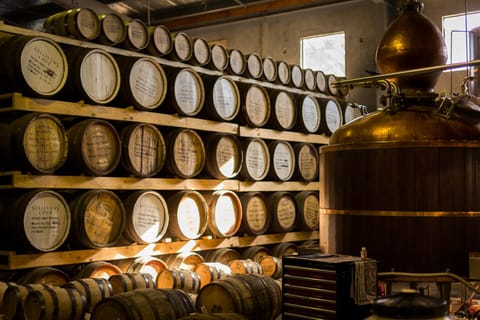
The 12-Year-Old matures entirely in American white oak ex-bourbon barrels and is bottled at 46% ABV with natural colour and no chill filtration. The nose presents vanilla and green pear with a clean nectarine lift; the palate adds roasted coffee and fresh ginger, which provides enough structure to prevent the fruit character from feeling insubstantial. Non-chill filtration at this strength ensures the oils that carry the mouthfeel reach the glass intact — a production choice that matters more in a silky-textured spirit than in a robust sherried malt.
The 16-Year-Old, at 46.4% ABV and matured on the same ex-bourbon programme, deepens rather than complicates the profile. Grilled pineapple and sugared almonds sit alongside poached pear and warm honey, with a slow-building spice in the finish that the 12-Year-Old does not quite reach. Four additional years in American oak has concentrated rather than redirected the distillery character — the tropical signature remains identifiable, better integrated.
- Distillery / Owner: Fettercairn Distillery, Laurencekirk, Aberdeenshire — Whyte & Mackay (Emperador Inc.)
- Established: 1824 — one of Scotland's oldest licensed distilleries
- Key technique: Still-neck water cooling using Cairngorm hill water — produces lighter, fruit-forward spirit fractions
- Expressions: 12-Year-Old (46% ABV, ex-bourbon, NCF) / 16-Year-Old (46.4% ABV, ex-bourbon, NCF)
- Market implication: US expansion signals Whyte & Mackay repositioning Fettercairn as a premium, technically-led single malt with genuine terroir narrative — a significant shift from its historic blend-supply role
Trade Context and Market Implications
The timing of Fettercairn's US push is commercially deliberate. American consumers have been trading up within imported Scotch at a sustained pace, with the premium and super-premium tiers outperforming standard blends across both on- and off-trade channels. Against this backdrop, a technically credible Highland single malt with a genuinely differentiated flavour narrative — and a price point that sits comfortably below the ultra-premium Dalmore expressions in the same Whyte & Mackay stable — represents a logical portfolio move.
For specialist retailers and whisky buyers, Fettercairn occupies an interesting market gap. It is not attempting to compete with Macallan or Glenfarclas on sherry-cask provenance, nor with Ardbeg and Laphroaig on peat intensity. Its positioning is deliberately orthogonal: a Highland distillery that produces fruit-forward malt through process rather than wood intervention. That narrative has traction with consumers who have grown familiar with sherry-heavy and peated expressions and are looking for a technically interesting alternative that does not require significant re-education.
From a collector and cask perspective, Fettercairn remains relatively lightly traded on the secondary market — a function of its historic reputation as a blend component rather than a destination single malt. The repositioning and US expansion are the kind of commercially visible moves that typically precede secondary market reappraisal. Distilleries that successfully reframe their identity in premium export markets — particularly the US, which remains the single largest value market for Scotch whisky — tend to see their older and independent bottlings attract renewed attention from buyers who recognise the trajectory early. Fettercairn's production is not large. The casks currently maturing under the repositioned programme are a finite resource, and the brand's commercial momentum is moving in one direction.
Frequently Asked Questions
What makes Fettercairn whisky taste tropical?
The tropical character comes from Fettercairn's still-neck water-cooling technique. Cold water from the Cairngorm hills is circulated around the upper section of each pot still, forcing heavier vapour fractions back into the still for redistillation. Only the lightest, most volatile compounds — those that carry delicate fruit esters — complete the journey to the condenser. The result is a spirit with natural tropical and stone fruit character derived entirely from the distillation process, with no additives, artificial flavouring, or wine cask influence.
Who owns Fettercairn Distillery?
Fettercairn is owned by Whyte & Mackay, the Glasgow-based spirits group that also owns Dalmore, Jura, and several blended Scotch brands. Whyte & Mackay is itself a wholly owned subsidiary of Emperador Inc., the Philippine spirits and brandy conglomerate controlled by billionaire businessman Andrew Tan. Emperador acquired Whyte & Mackay from United Spirits (Diageo) in 2014 for approximately £430 million.
Is Fettercairn a good whisky for collectors?
Fettercairn has historically been undervalued by collectors, largely because the distillery spent decades supplying malt for blends rather than building a premium single malt identity. The 2018 relaunch and the current US market push represent a genuine repositioning that could drive secondary market reappraisal of older bottlings and independent releases. For buyers with an eye on early-stage collector trajectories, Fettercairn presents a technically differentiated distillery in a commercial moment that resembles the early stages of GlenAllachie's or Nc'nean's reputational arc — meaningful upside, limited downside at current pricing.
What is the difference between Fettercairn 12 and 16 Year Old?
Both expressions use the same maturation programme — American white oak ex-bourbon barrels — and are bottled with natural colour and no chill filtration. The 12-Year-Old (46% ABV) presents a lighter, fresher profile: vanilla, pear, nectarine, roasted coffee, and ginger. The 16-Year-Old (46.4% ABV) offers a richer, deeper version of the same character — grilled pineapple, sugared almonds, poached pear, honey, and warming spice. The additional four years in oak concentrates and integrates the distillery's fruit signature rather than redirecting it.
Where can I buy Fettercairn in the US?
Fettercairn's US distribution is handled through Whyte & Mackay's American trade relationships, with the 12-Year-Old and 16-Year-Old expressions now available through specialist whisky retailers and selected on-trade accounts in major US markets. Availability is expected to build progressively as the brand establishes distribution depth — standard practice for a premium imported single malt entering a new market. Check specialist spirits retailers and online whisky platforms for current stock.
Does Fettercairn use sherry casks?
The core 12 and 16 Year Old expressions mature exclusively in American white oak ex-bourbon barrels. The distillery has released limited sherry-finished and sherry-matured expressions in the past, and Whyte & Mackay's broader portfolio makes cask sourcing relatively straightforward — but the primary commercial narrative around Fettercairn is deliberately built around ex-bourbon maturation and process-driven flavour rather than wood intervention. The tropical character is a still-room story, not a cask story.