
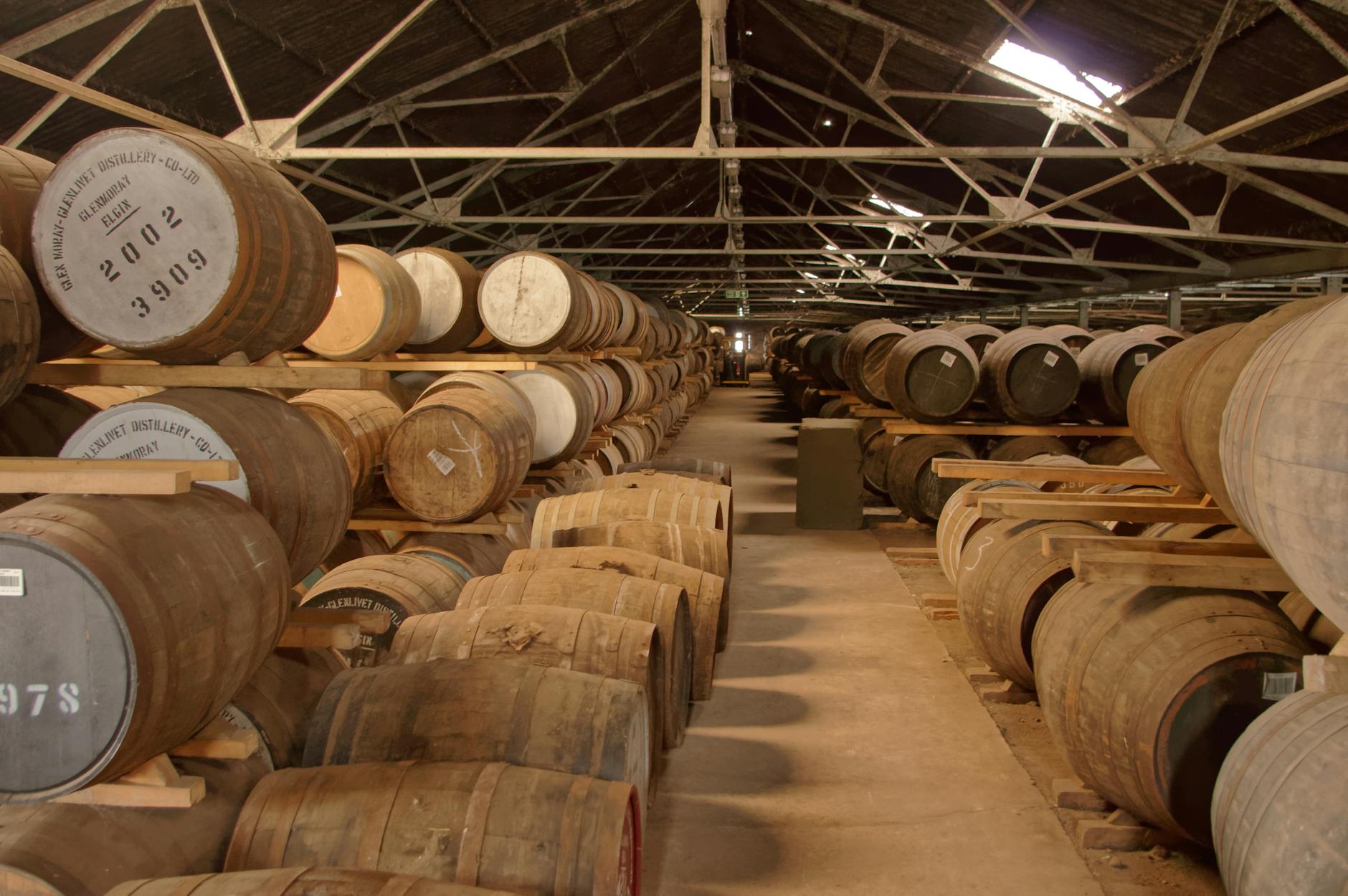
Legal ownership of a whisky cask depends on a signed delivery order registered with the HMRC-bonded warehouse keeper. Casks cannot be physically removed due to tax. Warehouse keepers maintain official records and facilitate transfers, similar to property deeds.
As investors lose faith in conventional methods of saving and investing, purchasing a whisky barrel as a long-term asset has gained popularity.

A whisky barrel is an actual possession, one of its primary selling points. However, whisky barrels must be stored securely in bonded warehouses monitored by the HMRC, so how can you be confident that your cask exists and that you own it?
We explain all the little details of owning a cask and point out where to be careful.
Transfer of Cask Ownership in the Whisky Industry
Overall, Scottish distilleries can fill more than 1 million hogsheads of whisky each year, and the business buys and sells casks on a massive scale: It’s not uncommon for brokers who purchase whisky for mixing purposes to sell as many as a thousand barrels at a time.
When a deal is finalized, the seller notifies the warehouse where the casks are stored to officially transfer ownership to the buyer.
A delivery order signed by the seller and the buyer and sent to the Warehouse Keeper at the cask’s location is required.
The sale is quite similar to purchasing a house in many respects, with the main difference being the transfer of ownership, as shown on the deeds.
You’ll need a signed delivery order if you want your package delivered.
The need for a hard copy of a delivery order that has been signed and countersigned is straightforward.
In the case of casks, tax is suspended while they are kept, so even a relatively small warehouse storing 2,000 casks would owe HMRC about £9,000,000 in duty and VAT.
Strict ownership records are required because HMRC needs to know who owes what and from whom. The Warehouse Keeper is responsible for maintaining complete and correct ownership records in all warehouses, no matter how small. Their Warehouse Keeper’s permits will be revoked if they don’t comply with HMRC.
A W1 or Excise Warehouse Return must be filed with HMRC monthly by the Warehouse Keeper. A W1 is used to inform HMRC of any changes to the status of booze that has been received, shipped, or is being kept in the warehouse.
As a result of the massive amount of suspended debt on casks and the related duty to HMRC, casks may only be transferred into ownership at the warehouse level. The only way to accomplish this is with a signed and countersigned delivery order.
The cask business accepts no other forms of transmission.
Frequently Asked QuestionsHow do I legally prove ownership of a whisky cask?
You need a signed and countersigned delivery order that has been officially registered with the Warehouse Keeper at the bonded warehouse where your cask is stored.Why can't I just take physical possession of my whisky cask?
Whisky casks must remain in HMRC-bonded warehouses where tax is suspended; removing them would trigger immediate duty and VAT payments of thousands of pounds per cask.What role does the Warehouse Keeper play in cask ownership?
Warehouse Keepers are legally required to maintain accurate ownership records and file monthly returns with HMRC; they facilitate ownership transfers and can lose their license for non-compliance.How is transferring a whisky cask similar to buying property?
Like property deeds, whisky cask ownership requires formal documentation (delivery orders) and official registration with authorities (HMRC via Warehouse Keepers) to be legally valid.
Frequently Asked QuestionsHow do I legally prove ownership of a whisky cask?
You need a signed and countersigned delivery order officially registered with the Warehouse Keeper at the bonded warehouse where your cask is stored.Why can't I take physical possession of my whisky cask?
Casks must stay in HMRC-bonded warehouses to keep tax suspended. Removing them triggers immediate duty and VAT payments worth thousands of pounds.What role does the Warehouse Keeper play in cask ownership?
They are legally required to maintain accurate ownership records, file monthly returns with HMRC, and facilitate transfers. They can lose their license for non-compliance.How is transferring a whisky cask similar to buying property?
Like property deeds, cask ownership requires formal documentation (delivery orders) and official registration with authorities (HMRC via Warehouse Keepers) to be legally valid.