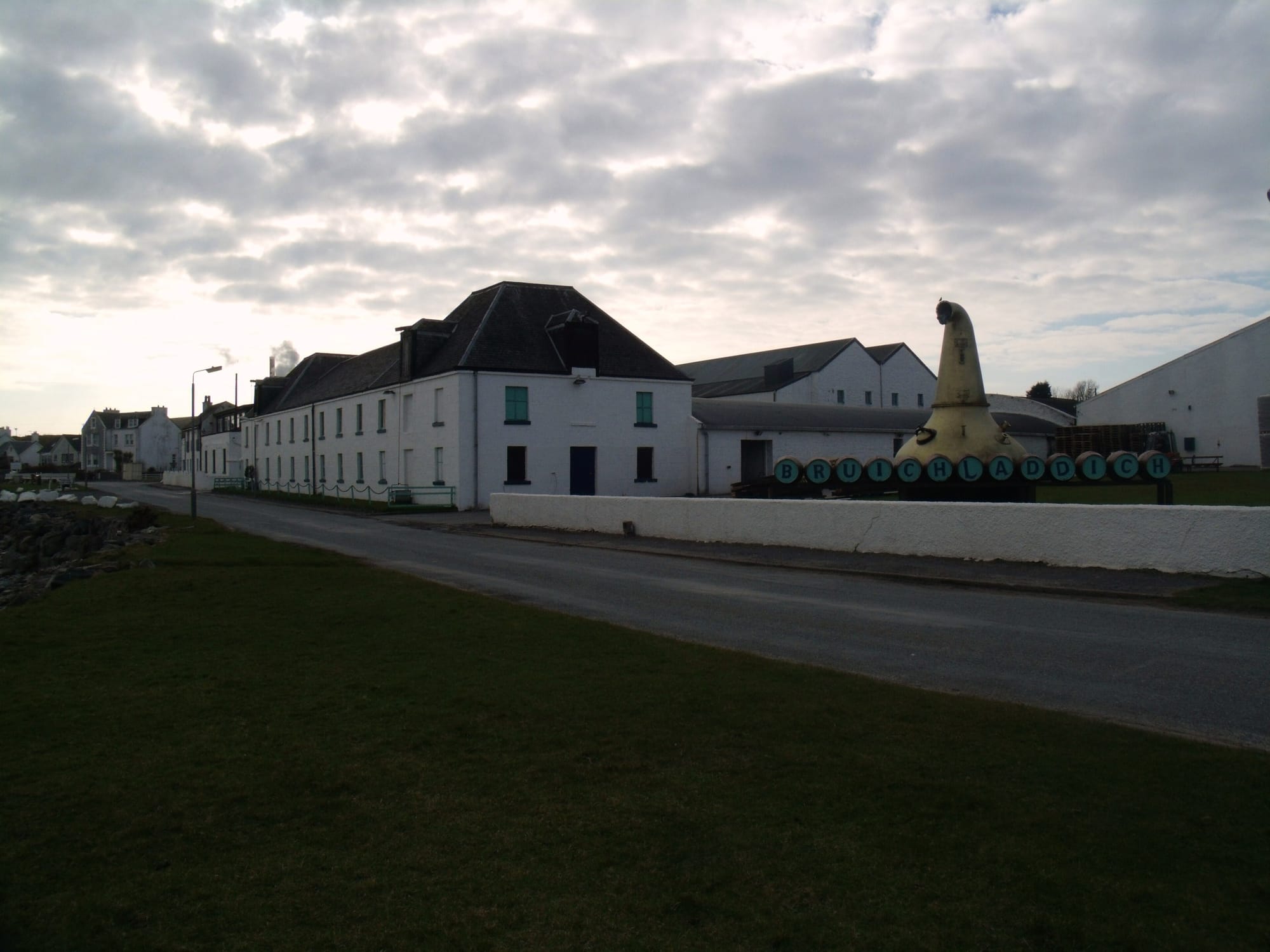
Bruichladdich Distillery Company, the Rémy Cointreau-owned Islay producer behind Bruichladdich, Port Charlotte, Octomore and The Botanist gin, grew turnover 6.4% to £29.7 million in the 12 months to 31 March 2026, its first rise after two years of decline. Almost all of that money is earned in the UK and continental Europe: sales booked to the rest of the world, which includes Asia, came to about £350,000.
The latest Companies House accounts show a recovering Islay distillery that is still putting money into maturing stock. They also show how small Asia is in its own reported sales, and what that does and does not tell buyers in the region.
TL;DR
- Turnover rose 6.4% to £29.7 million (from £27.9 million), gross profit rose 17.3% to £16.7 million and operating profit rose about 56% to £4.05 million, according to The Spirits Business. Pre-tax profit was £1.95 million, up from £780,686, according to Daily Business.
- About 74% of turnover came from Europe, about a quarter from the UK, and just over 1% (about £350,000) from the rest of the world. That last figure rose 60.8%.
- Director Douglas Taylor said the parent's support lets the company keep expanding its investment in bulk whisky stocks. Stocks on the balance sheet were £70.1 million.
What did Bruichladdich report for 2025/26?
Bruichladdich Distillery Company is the Islay distiller that French spirits group Rémy Cointreau bought in 2012. Its accounts for the year to 31 March 2026, reported by The Spirits Business on 23 November and Daily Business on 20 November, show turnover of £29.7 million, up from £27.9 million. Turnover had fallen 3.8% in 2024/25 and 10.2% in 2023/24, so this is the first rise in three years.
Profit improved faster than sales. Gross profit reached £16.7 million, up from £14.3 million. Operating profit rose from £2.6 million to about £4.05 million. Pre-tax profit rose from £780,686 to £1.95 million. The company had an average of 105 staff, the same as the year before.
Where does Bruichladdich actually sell its whisky?
The geographic split is the most striking part of the filing for Asian readers. According to The Spirits Business, sales booked in Europe were £22 million (up 9.6%), the UK was £7.33 million (down 3.7%) and the rest of the world was about £350,000 (up 60.8%).
That split needs care. It shows where Bruichladdich's own company books its sales, not necessarily where the bottles are drunk. Rémy Cointreau runs its own global distribution, and Taylor's statement describes "the global route to market" as "fully integrated". If Islay bottles reach Asian shelves through Rémy group companies, that end demand may not appear as "rest of world" in this filing. The reported accounts, as covered, do not say.
Why is the company still buying bulk whisky stock?
In the filing, Taylor said Rémy Cointreau's support gives the company "the ongoing ability to continue to expand its investment" into bulk whisky stocks. He said the business will focus on "breadth and depth of distribution and increased rate of sale, in key markets". The markets were not named. Stocks stood at £70.1 million, of which £66.95 million was whisky and gin, and the company spent about £5.25 million on tangible fixed assets, including £3.7 million of assets under construction.
The directors also said the company relies on continued funding from its parent to meet its liabilities as they fall due. For Rémy, The Spirits Business reports that the liqueurs and spirits division fell 7% organically in the six months to September 2026, while cognac grew 10.3%.
Why it matters for Asian whisky buyers and investors
For collectors, bars and importers in Hong Kong, Singapore, Taiwan and mainland China, the results point to a producer that is still building maturing stock while its parent's spirits division is under pressure. More maturing stock today can mean more aged releases later. For Asian cask and bottle investors, the useful signal is the gap between Islay single malt's profile in the region and the small direct sales line. Watch whether "key markets" comes to include Asia. Compare these results with Gordon & MacPhail's latest figures, which were filed in the same week, and with the cost pressure behind Great Northern's production pause. Buyers who track the secondary market can also follow how Scotch casks are priced at auction, as in Bonhams' current cask sale.
What is not confirmed
We have not read the filed accounts directly. The figures come from two separate news reports of the Companies House filing. The filing, as reported, does not break out Asia, and it does not name the "key markets". The Rémy Cointreau half-year figures are as reported by The Spirits Business and were not checked against Rémy's own release.
Frequently Asked Questions
How much did Bruichladdich make in 2025/26?
Turnover was £29.7 million for the year to 31 March 2026, up 6.4%. Operating profit was about £4.05 million and pre-tax profit was £1.95 million, as reported by The Spirits Business and Daily Business.
How much of Bruichladdich's sales come from Asia?
The filing does not give an Asia figure. All sales outside the UK and Europe came to about £350,000, just over 1% of turnover. Bottles sold in Asia through Rémy Cointreau's own distribution may be booked elsewhere.
Who owns Bruichladdich?
Rémy Cointreau, the French cognac and spirits group, has owned Bruichladdich since 2012. The distillery is part of Rémy's liqueurs and spirits division.
Sources and Method
This article is based on The Spirits Business, "Bruichladdich FY sales rebound in 2026" (Nicola Carruthers, 23 November 2026), and Daily Business, "Gordon & MacPhail profits fall, Bruichladdich rises" (Terry Murden, 20 November 2026). Both report the company's Companies House filing. The Companies House record could not be opened for this article. Percentages for the regional shares are from The Spirits Business. This article is for information only and is not investment advice.