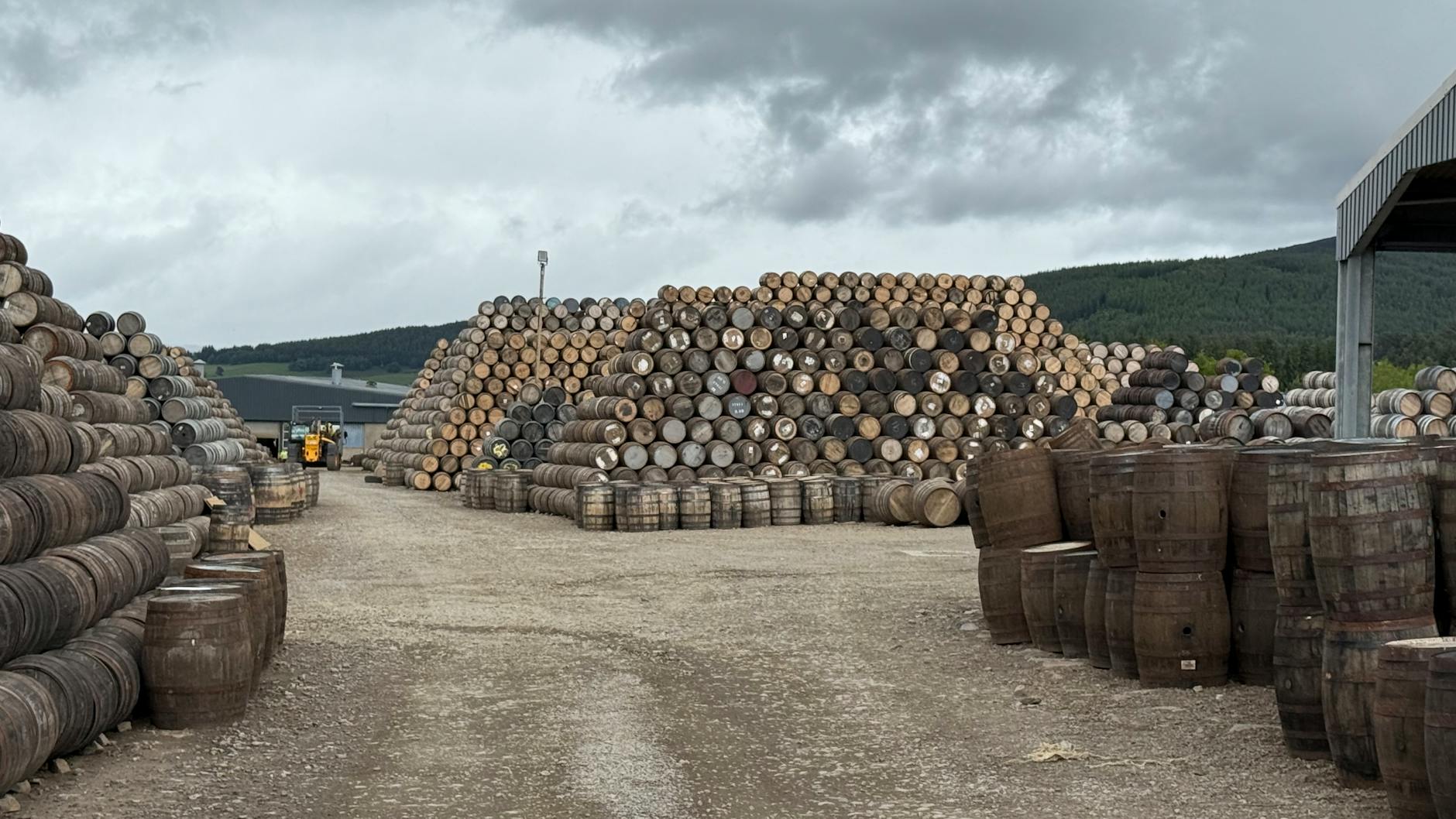
White Peak Distillery releases a special Wire Works English single malt for its 10th anniversary. The bottling showcases refined production techniques including alternate distillation cuts and special local waters, highlighting a decade of development.
The News
White Peak Distillery, the Derbyshire-based producer operating out of a restored Victorian wire works in Matlock Bath, has announced a landmark new expression of its Wire Works whisky to mark its tenth anniversary. The release is notable not merely as a celebratory bottling but as a deliberate showcase of a decade's worth of production refinement, incorporating alternate distillation cuts, what the distillery describes as "special waters," and a maturation programme that has evolved considerably since the first spirit ran from the stills in 2016. For a distillery that has built its identity around English whisky's capacity to challenge received wisdom about what single malt can taste like outside of Scotland, this anniversary bottling carries real weight.
Trade Context
White Peak was founded by Max and Claire Vaughan, who converted the Grade II listed Derwent Valley Mills site into a working distillery, leaning heavily into the industrial heritage of the region and the naturally soft limestone-filtered waters of the Derbyshire Dales. The Wire Works single malt has become the distillery's flagship range, building a loyal following among English whisky advocates and collectors who have tracked the maturation of the brand alongside the liquid itself. Over the past decade, the distillery has experimented with a range of cask types including ex-bourbon, ex-sherry, and various wine finishes, and the anniversary expression is understood to bring together the most successful of those experiments under one label.
- Producer / Distillery: White Peak Distillery, Matlock Bath, Derbyshire, England
- Category: World Whisky — English Single Malt
- Market implication: Anniversary releases from credible English distilleries are increasingly attracting collector attention and secondary market interest, particularly as the category matures and achieves greater international recognition
The use of alternate distillation cuts is a technically significant detail worth unpacking. By adjusting the heads and tails cuts during distillation, a distiller can meaningfully alter the flavour profile and texture of the new make spirit, introducing heavier or lighter congener loads depending on the desired outcome. For White Peak, which has always positioned its spirit as expressive and terroir-driven rather than neutral, this approach signals a continued willingness to push at the edges of conventional English malt production. The reference to "special waters" in the distillery's communications is more opaque, but given the site's proximity to the Derwent and the well-documented mineral character of Derbyshire spring water, it likely points to a deliberate sourcing or treatment decision that distinguishes this batch from standard production runs.
Why It Matters
The English whisky category has grown substantially since the early pioneering releases from distilleries like The English Whisky Co. and Adnams, and White Peak sits firmly within the second wave of producers who have taken that groundwork and built something more commercially and critically coherent on top of it. Anniversary releases from distilleries at this stage of development tend to function as both a statement of intent and a proof of concept — demonstrating that the liquid has genuinely improved over time and that the producer has the technical confidence to release something that stands scrutiny from a trade audience used to comparing it against established Scotch and Irish benchmarks.
For cask investors and collectors paying attention to the English single malt segment, the White Peak anniversary bottling is worth monitoring closely. Limited anniversary expressions from credible independent producers with a genuine track record have shown consistent secondary market performance in recent years, particularly where the distillery has a clear narrative, a distinctive production method, and a growing international profile. White Peak has all three. The distillery has been steadily expanding its export footprint, and anniversary releases of this kind tend to accelerate that visibility in markets like the United States, Germany, and Japan, where English whisky remains something of a novelty but is gaining ground.
The broader implication for the trade is that English whisky is no longer a curiosity or a patriotic purchase — it is a category with its own internal logic, its own flagship producers, and its own collector culture. White Peak's tenth anniversary release is a marker of that maturation, and the distillery's decision to use it as an opportunity to showcase genuine production innovation rather than simply repackage an existing expression speaks well of where the brand is headed into its second decade. The whisky trade would do well to pay attention.
Frequently Asked Questions
What is the White Peak Distillery 10th anniversary release?
It is a special, limited edition expression of their Wire Works English single malt whisky, created to mark a decade of operation.
What makes this anniversary whisky unique?
It incorporates refined production techniques from the last decade, including alternate distillation cuts and the use of 'special waters' from the Derbyshire Dales.
Why is this release significant for English whisky?
It acts as a proof of concept, demonstrating the maturation and technical confidence of a leading second-wave English distillery, appealing to collectors and the trade.
Where is White Peak Distillery located?
It is based in a restored Victorian wire works in Matlock Bath, Derbyshire, England.
Frequently Asked Questions
What is the White Peak Distillery 10th anniversary release?
It is a special expression of their Wire Works English single malt whisky, created to mark a decade of operation.
What makes this anniversary whisky special?
It showcases refined production techniques developed over ten years, including alternate distillation cuts and the use of special local waters.
Where is White Peak Distillery located?
It is based in Matlock Bath, Derbyshire, England, operating from a restored Victorian wire works.
Why is this release significant for English whisky?
It acts as a statement of intent and proof of concept for the maturing English whisky category, attracting collector interest.