
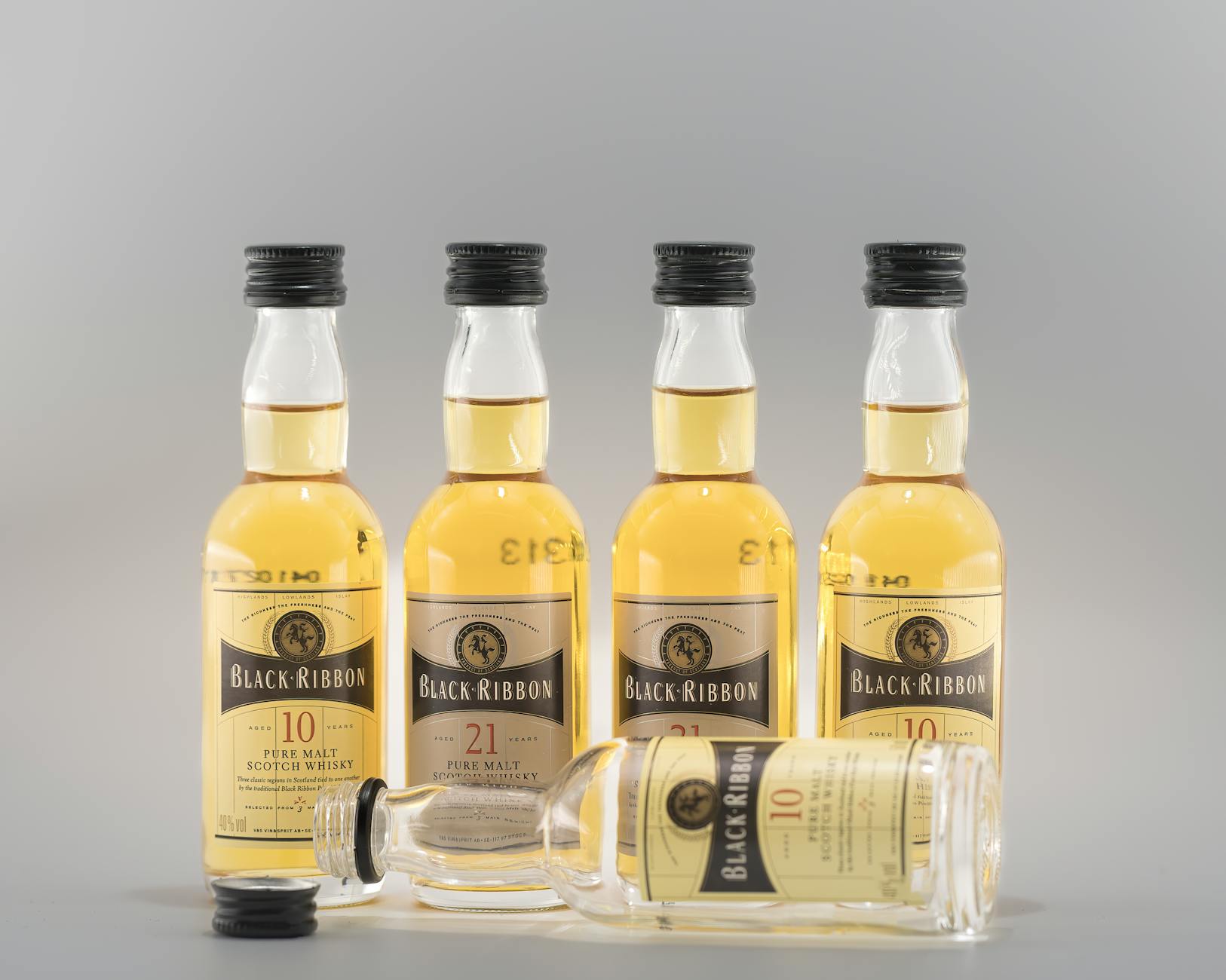
The Middle East whisky market grew to $1.2B by 2018 before declining to $1.1B in 2020. Iran, UAE, and Turkey led consumption. Imports rose significantly, showing strong demand for international brands. Turkey had the fastest growth rate.
The Whisky Market in the Middle East: 2007-2020 Trends
Decoding the Dynamics: Growth and Fluctuations in the Middle East Whisky Market
The whisky market in the Middle East experienced a period of significant expansion between 2007 and 2020, yet the journey was marked by noticeable fluctuations, culminating in a sharp decline in the latter years of the period. This analysis, based on a comprehensive report, provides an in-depth look at the region’s consumption patterns, production landscape, and market structure.
Market Overview: The $1.1 Billion Market Correction
In value terms, the total whisky consumption in the Middle East showed a pronounced growth trend, increasing at an average annual rate of +3.1% from 2007 to 2020. The market reached its maximum value of $1.2 billion in 2018.
However, the momentum failed to hold. The market experienced two consecutive years of decline, falling by -7.8% to $1.1 billion in 2020. Similarly, consumption volume dropped by -10% in 2020 to 146 million litres, falling for the second consecutive year after peaking at 171 million litres in 2018. This 2018-2020 decline suggests a market correction or impact from external economic/regional factors not recovering in the short term.
Consumption by Country: The Regional Leaders
The distribution of whisky consumption across the Middle East is highly concentrated among a few key countries:
- Volume Leaders (2020): Iran (51M litres), the United Arab Emirates (UAE) (32M litres), and Turkey (18M litres) collectively accounted for 69% of the total regional consumption volume.
- Value Leaders (2020): Iran ($441M) led by a significant margin, followed by the UAE ($158M) and Yemen.
- Fastest Growth: Among the top consuming nations, Turkey showed the most notable pace of growth, with a compound annual growth rate (CAGR) of +24.9% in volume terms from 2007 to 2020.
Per capita consumption highlights the significant role of expatriates and tourism, with the UAE (3.3 litres per person), Oman (1.7 litres per person), and Jordan (0.9 litres per person) ranking highest in 2020.
Production Snapshot: Iran Dominates Local Output
Local production within the Middle East plays a role, albeit a smaller one compared to imports. In 2020, production value rose modestly to $661 million (estimated in export price), reflecting an average annual growth rate of +1.7% from 2007.
The production landscape is heavily dominated by a single country:
- Iran remains the largest whisky-producing nation in the region, accounting for a massive 73% of the total volume with 51 million litres in 2020. This output was five times greater than the second-largest producer, Yemen (9.3M litres).
Market Structure: The Rising Tide of Imports
A crucial structural shift in the market is the increasing reliance on external supply. The share of imports in total consumption supply has grown significantly over the analyzed period:
- Import Share: The share of imports in consumption (based on physical terms) increased from 46% to 57% over the thirteen years leading up to 2020, indicating a growing demand for international whiskies. This suggests strong brand loyalty, premiumization trends, and potentially insufficient local production to meet overall demand.
Future Outlook
Despite the recent dip, the market is forecast to continue an overall upward consumption trend through 2035, driven by underlying demand in the Middle East. The projected growth is likely to be fueled by the continued influence of key growth hubs, such as the UAE, and the rapid expansion of consumption in markets like Turkey. The increasing import share also signals a strong ongoing opportunity for international whisky brands.
Discover more about whisky casks and promotions at whiskybulletin.com.
Frequently Asked QuestionsWhat was the value of the Middle East whisky market in 2020?
The market was valued at $1.1 billion in 2020, following a decline from its peak of $1.2 billion in 2018.Which country consumes the most whisky in the Middle East?
Iran is the largest consumer by volume and value, accounting for 51 million litres and $441 million in 2020.How has the import share of whisky changed in the Middle East?
The import share of whisky in total consumption supply grew from 46% to 57% between 2007 and 2020.Which Middle Eastern country showed the fastest whisky consumption growth?
Turkey exhibited the fastest growth, with a compound annual growth rate (CAGR) of +24.9% in volume from 2007 to 2020.
Frequently Asked QuestionsWhat was the value of the Middle East whisky market in 2020?
The market was valued at $1.1 billion in 2020, after a decline from a peak of $1.2 billion in 2018.Which countries consumed the most whisky in the Middle East?
In 2020, Iran (51M litres), the UAE (32M litres), and Turkey (18M litres) accounted for 69% of total regional consumption volume.How did imports change in the Middle East whisky market?
The import share of total consumption supply grew from 46% to 57% from 2007 to 2020, indicating rising demand for international brands.Which country showed the fastest whisky consumption growth?
Turkey had the fastest growth, with a compound annual growth rate (CAGR) of +24.9% in volume from 2007 to 2020.What is the future outlook for the Middle East whisky market?
Despite recent dips, consumption is forecast to grow through 2035, driven by demand in hubs like the UAE and Turkey, with imports playing a key role.