Whiskey Del Bac Normandie is a limited American single malt finished in ex-Calvados casks. It combines the distillery's signature mesquite smoke with apple brandy sweetness, creating a coherent and unique flavor profile. This release highlights US craft producers using European casks for premium positioning.
The News
Whiskey Del Bac has released Normandie, a limited-edition expression from its Tucson, Arizona operation that pairs the distillery's signature mesquite-smoked malt with finishing in ex-Calvados casks sourced from Normandy, France. The release represents one of the more technically ambitious cask-finishing experiments to emerge from the American craft sector this year, placing a distinctly regional American smoke character in direct conversation with the apple brandy heritage of northern France. For the whisky trade, it is the kind of cross-category, cross-continental cask strategy that signals how serious independent American producers are becoming about differentiation in a crowded bottled spirits market.
Trade Context
Whiskey Del Bac is operated by Hamilton Distillers in Tucson, a producer that has built its identity almost entirely around the use of mesquite wood to smoke malted barley — a process that draws on the desert Southwest's indigenous cooking and smoking traditions rather than the peat-cutting heritage of Scotland or Ireland. The distillery has been producing single malt American whiskey since 2011 and has earned a credible following among craft whisky enthusiasts who appreciate its commitment to regional raw materials and production transparency. The Normandie release extends that philosophy into the finishing stage, applying Calvados casks — barrels previously used to age apple brandy in the Pays d'Auge and surrounding appellations of Normandy — to add a layer of orchard fruit and oxidative complexity on top of the distillery's characteristic smoky backbone.
- Producer / Distillery: Hamilton Distillers / Whiskey Del Bac, Tucson, Arizona
- Category: American Single Malt / World Whisky
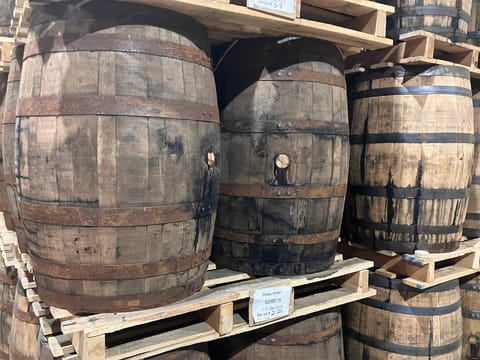
- Cask type: Ex-Calvados apple brandy barrels, Normandy, France
- Market implication: Demonstrates growing appetite among US craft producers for European cask sourcing as a premium positioning tool, with implications for the secondary cask market and collector interest in limited American releases
Production and Flavour Profile
The mesquite smoke that defines Del Bac's core range is a genuinely distinctive phenolic signature — earthier and drier than Scottish peat, with a savouriness that sits closer to barbecue smoke than the medicinal or coastal notes associated with Islay malts. Laying that base character into Calvados casks introduces a counterpoint: the apple brandy residue in the wood contributes sweetness, dried fruit, and a subtle cidery acidity that softens the smoke without erasing it. The result, according to those who have tasted the release ahead of its wider availability, is a whiskey that manages to feel coherent rather than experimental — a genuine marriage of cask and distillate rather than a novelty finish grafted onto an existing product. That coherence matters commercially, because it positions Normandie as a serious collector's bottle rather than a marketing stunt.
The release is limited in volume, consistent with Hamilton Distillers' production scale, and is expected to be allocated primarily through the distillery's direct channels and select specialist retailers across the United States. No official age statement has been confirmed for this expression, which is broadly consistent with the distillery's approach to its other limited releases, where maturation conditions in the Sonoran Desert — extreme heat, low humidity — accelerate spirit-wood interaction considerably compared to Scottish or Irish climate norms.
Why It Matters
For the wider whisky trade, the Normandie release is worth tracking for several reasons beyond its immediate flavour interest. First, it reflects a maturing strategy within the American craft single malt category, where producers are increasingly looking to European cask markets — Sherry, Port, and now Calvados — to add complexity and collectability to limited runs. Second, the use of Calvados casks specifically is relatively rare across the global whisky industry; a handful of Scottish independents have experimented with them, but it remains an underexplored finishing wood with genuine novelty value for collectors and whisky buyers. Third, and perhaps most significantly for trade observers, it demonstrates that smaller American producers are successfully sourcing and importing specialist European cooperage, suggesting that the secondary cask supply chain between Europe and the US is becoming more fluid and commercially viable than it was even five years ago. As the American single malt category pushes toward formal federal recognition and its own defined standards, releases like Normandie help establish the creative and commercial ceiling that serious producers in that space are capable of reaching.
Frequently Asked Questions
What is Whiskey Del Bac Normandie?
It is a limited-edition American single malt whiskey from Tucson, Arizona, finished in ex-Calvados apple brandy barrels from Normandy, France.
What makes Whiskey Del Bac's flavor unique?
Its signature flavor comes from mesquite-smoked malted barley, offering an earthy, dry, and savory smoke distinct from Scottish peat.
How does the Calvados cask finish affect the whiskey?
The Calvados casks add sweetness, dried fruit, and a subtle cidery acidity, softening the mesquite smoke without erasing it.
Why is this release significant for the whiskey trade?
It demonstrates the maturing strategy of American craft producers using European casks like Calvados to add complexity and collectability to limited releases.