Seven bourbons priced under $120 won major 2026 World Whiskies Awards. Accessible bottles from distilleries like Wild Turkey and Four Roses beat expensive limited editions in blind tastings, challenging market hype and highlighting quality in core-range expressions.
The News
The World Whiskies Awards 2026 results have handed a pointed reminder to the bourbon market: seven bottles priced under $120 each took home major category wins, with the cheapest clocking in at roughly $40 retail. The awards, announced in late March, recognised expressions from both established Kentucky distilleries and smaller operations that have been steadily building production capacity over the past decade. For a category increasingly defined by allocated releases and triple-digit price tags, the results amount to a public correction — the judging panels found more merit in accessible shelves than in hype-driven limited editions.
Among the winners, bottles from distilleries including Wild Turkey, Heaven Hill, and Four Roses featured prominently. Several expressions in the $45–$80 range picked up gold and category-best designations, beating out entries priced at two and three times their retail cost. The judging format, which evaluates entries blind without knowledge of brand, age statement, or price, continues to produce results that unsettle the secondary market's assumptions about where quality actually sits in the bourbon spectrum. A number of the winning bottles are standard production runs available at most well-stocked retailers across the United States and in key export markets.
Trade Context
The bourbon sector has spent the better part of five years riding a premiumisation wave that pushed average transaction prices sharply upward. Limited releases from Buffalo Trace's Antique Collection, Heaven Hill's Parker's Heritage series, and various single-barrel programmes from Maker's Mark and Woodford Reserve routinely clear $150–$300 at retail, with secondary prices often doubling or tripling those figures. Against that backdrop, the World Whiskies Awards results highlight a growing disconnect between market pricing and evaluated liquid quality. The judging panel's preferences suggest that core-range bourbons, produced at scale with consistent mash bills and well-managed warehouse programmes, are delivering results that outstrip many of their premium stablemates.
- Producers / Distilleries: Wild Turkey, Heaven Hill, Four Roses, and others across Kentucky and Indiana
- Category: Bourbon / American Whiskey
- Market implication: Award validation for sub-$120 expressions undermines the pricing logic behind allocated and limited-release bourbon, potentially cooling secondary market speculation
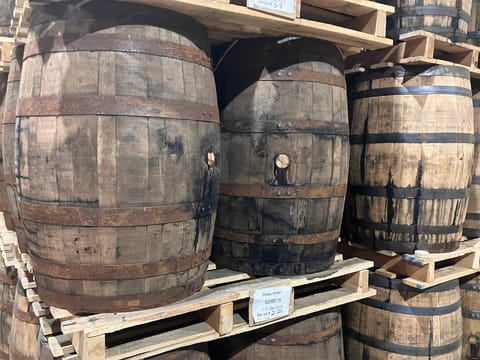
Production data supports what the awards panel tasted. Kentucky bourbon distilleries filled over 2.9 million barrels in 2025, according to the Kentucky Distillers' Association, and much of that volume feeds core-range products rather than limited bottlings. The winning distilleries have invested heavily in fermentation consistency, yeast management, and warehouse rotation programmes over the past decade. Wild Turkey's continued use of a lower barrel-entry proof — long championed by master distiller Eddie Russell — gives its standard expressions a richness that higher-proof entrants from other houses struggled to match. Four Roses, meanwhile, benefits from its ten-recipe system, which allows blenders to construct award-calibre profiles from a deep inventory of distinct bourbon styles without relying on extreme age statements or barrel finishing gimmicks.
Why It Matters
For the bourbon trade, these results carry weight beyond the trophies themselves. Retailers and on-trade buyers can use award recognition to steer consumers toward bottles that actually sit on shelves, easing the pressure created by allocation-driven demand that benefits neither the seller nor the casual buyer. Distributors working international markets — particularly the UK, Europe, and parts of Asia where bourbon is still building category share — now have an evidence-based case for ranging core expressions more aggressively rather than chasing limited drops that arrive in insufficient quantities to build a reliable customer base. The economics are straightforward: a bottle that wins gold, costs $50, and can be reordered next month is worth more to a bar programme than a $250 allocation that sells in a day and disappears for a year.
For cask investors and those watching the American whiskey maturation pipeline, the results reinforce a structural point. The distilleries producing award-winning bourbon at accessible price points are the same operations sitting on millions of barrels of maturing stock. Their ability to deliver high-quality liquid at scale, rather than through artificial scarcity, reflects the depth of inventory and blending expertise that comes with sustained capital investment in production infrastructure. As premiumisation fatigue begins to register in certain consumer segments — particularly among younger drinkers who resist paying secondary prices — distilleries with strong core ranges are better positioned to hold market share through the next demand cycle.
The message from the 2026 World Whiskies Awards is blunt: the best bourbon you can buy might already be on the shelf in front of you, and it probably costs less than dinner. The trade would do well to listen before the consumer figures it out first.
Frequently Asked Questions
Which bourbons under $120 won World Whiskies Awards?
The article mentions award-winning bottles from major distilleries including Wild Turkey, Heaven Hill, and Four Roses, with winners priced between roughly $40 and $120.
How did affordable bourbons beat expensive ones?
The awards use blind judging, meaning panels taste without knowing the brand, age, or price, focusing solely on the liquid's quality and flavor profile.
What does this mean for the bourbon market?
It validates the quality of readily available, core-range bourbons and could cool speculation on the secondary market for over-hyped, limited releases.
Are these winning bourbons easy to find?
Yes, many of the winners are standard production runs available at well-stocked retailers across the US and in key export markets.