Within the exclusive world of fine spirits, terms like ‘first-fill sherry butt’ or ‘heavy char’ are spoken with a certain reverence. Yet for many enthusiasts and aspiring investors, they can feel like a complex code. The truth is, these terms all point to the single most critical element in shaping a spirit’s destiny: the whisky barrel. It is far more than a simple container; it is an active, transformative vessel where raw potential is elevated into a liquid of profound character, rarity, and value. This is where the magic-and the money-is truly made.
This guide demystifies that alchemy. We will journey into the heart of the cooperage, exploring the science of maturation and the meticulous craftsmanship that defines a premium cask. You will uncover precisely how the provenance of the wood imparts its signature colour and flavour, and gain the clarity to connect a cask’s unique heritage to its potential as a tangible, appreciating asset. Prepare to understand the very soul of whisky and make your investment decisions with absolute confidence.
The Soul of the Spirit: Why the Barrel is More Than a Container
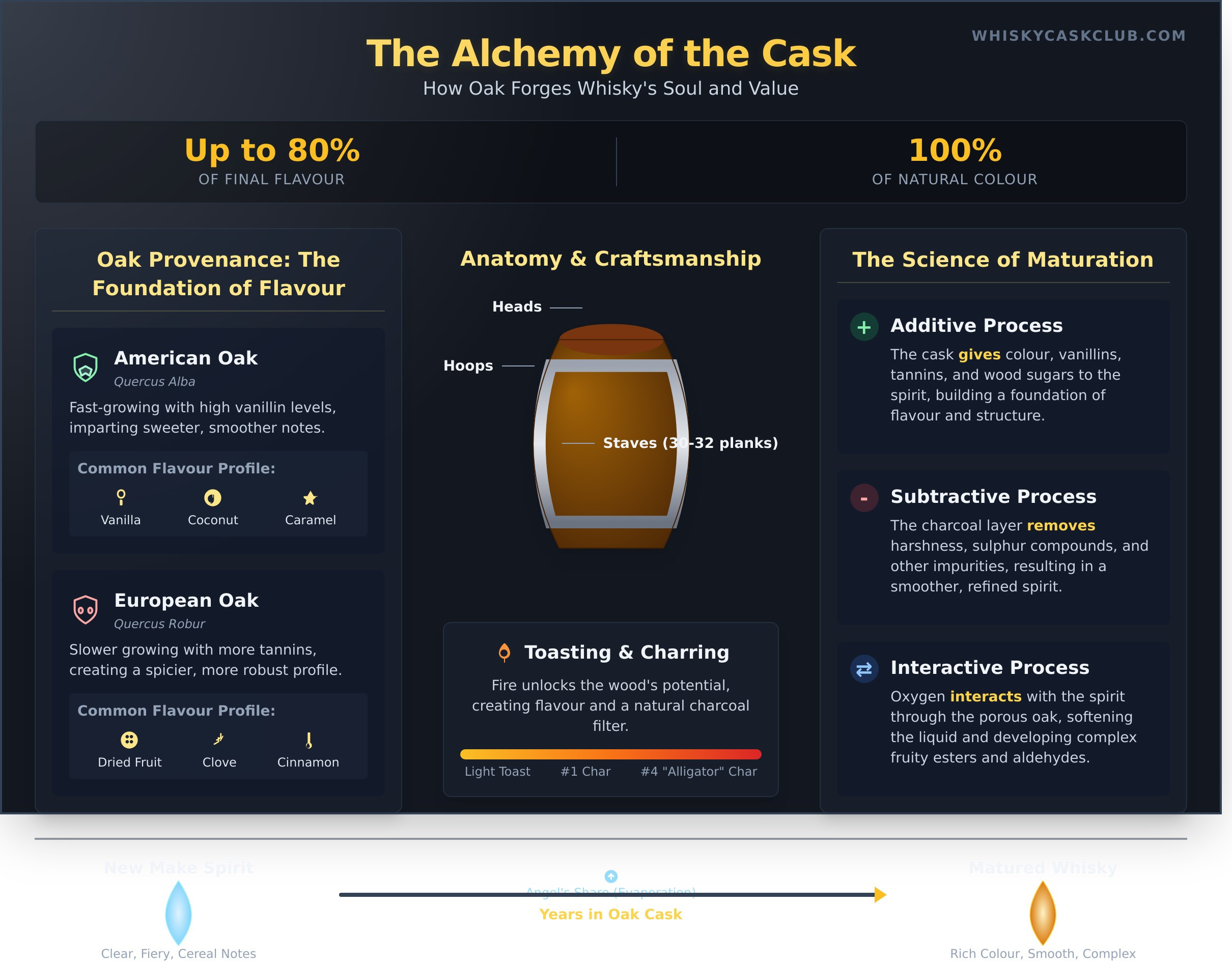
In the world of fine spirits, it is a widely accepted axiom that up to 80% of a whisky’s final flavour profile-and 100% of its natural colour-is derived directly from the cask. This staggering figure immediately refutes the notion of the barrel as a mere storage vessel. Instead, it reveals its true purpose: an active and indispensable partner in maturation. The journey from a raw, fiery spirit to a complex, nuanced whisky is a narrative written in wood. It is within the staves of an oak cask that character is forged, value is created, and a true legacy is born.
The Legal and Historical Importance of the Oak Cask
Historically, barrels were vessels of logistics, designed for the transport of goods. The discovery that spirits improved with time spent in these containers was a serendipitous one that forever changed the industry. Today, this tradition is enshrined in law. The Scotch Whisky Regulations, for example, mandate that the spirit must mature in oak casks for a minimum of three years. This legal requirement, echoed in various international whisky barrel regulations, elevates the cask from a simple container to an essential instrument of craftsmanship.
New Make Spirit vs. Matured Whisky: A Transformation
To truly appreciate the cask’s influence, one must compare the spirit before and after its time in wood. ‘New make’ spirit, fresh from the still, is a clear, fiery liquid with the pungent, cereal-forward notes of its base grains. After years of maturation, it emerges transformed. It possesses a rich amber hue, a rounded smoothness on the palate, and a complex bouquet of aromas like vanilla, caramel, and spice. It is the whisky barrel that acts as the sole catalyst for this profound metamorphosis.
This transformation is the very essence of whisky creation. The interaction between spirit and wood is a slow, deliberate conversation that removes harshness while imparting depth, colour, and distinction. The quality of the cask, its provenance, and its previous contents are the most critical factors in defining the final liquid’s personality and, ultimately, its investment potential.
The Anatomy of a Whisky Barrel: A Masterpiece of Cooperage
Before a single drop of new-make spirit begins its long, quiet journey, its destiny is shaped by the hands of a cooper. The construction of a whisky barrel is an art form steeped in heritage, a feat of engineering that requires no glue or nails. Instead, a cooper meticulously shapes and fits between 30 and 32 wooden planks, known as staves, to form the body. These are bound under immense pressure by metal hoops and sealed with two flat heads. This ancient technique creates a watertight vessel built on tension and precision, a testament to true craftsmanship.
Why Oak? The Perfect Wood for Maturation
Oak is not merely wood; it is a catalyst for transformation. Its selection is one of the most critical decisions in whisky production due to its unique combination of properties. Oak is strong enough to hold the liquid for decades, yet porous enough to allow the spirit to ‘breathe.’ Its unique cellular structure facilitates a slow, controlled exchange of oxygen, a process central to the chemical mechanisms of whiskey maturation, which softens the spirit and builds complexity. Crucially, oak contains natural compounds-vanillins, tannins, and lipids-that it imparts to the spirit, bestowing the signature flavours and colours we associate with premium whisky.
American Oak (Quercus Alba) vs. European Oak (Quercus Robur)
The provenance of the oak is a distiller’s first and most defining choice in crafting a whisky’s character. While many species exist, two reign supreme in the industry, each offering a distinct palette of flavours. The choice of the whisky barrel material is the first step in building a legacy.
- American Oak (Quercus Alba): A fast-growing species, American oak is known for its high concentration of vanillins. Casks made from this wood, often ex-bourbon barrels, typically impart sweeter, smoother notes of vanilla, coconut, and caramel to the maturing spirit.
- European Oak (Quercus Robur): Slower growing and more porous, European oak contains higher levels of tannins. This results in a more robust, spicier flavour profile, often contributing notes of dried fruit, clove, and cinnamon, particularly when sourced from sherry bodegas in Spain.
The Crucial Role of Toasting and Charring
Once constructed, the interior of the cask is exposed to fire in a process that unlocks its flavour potential. Toasting involves a gentle, prolonged heating that caramelises the wood’s natural sugars and breaks down complex lignins into simpler, flavourful compounds like vanillin. Charring is a more intense process, creating a layer of charcoal on the stave’s surface. This “alligator skin” layer acts as an active filter, stripping out harsh sulphur compounds and other impurities from the spirit, resulting in a smoother, more refined final product. The level of char, from a light #1 to a deep #4, directly influences the intensity of flavour, colour, and filtration.
The Science of Maturation: How the Barrel Works its Magic
Maturation is far more than simple storage; it is a profound and patient transformation. Over many years, a complex chemical dialogue unfolds between the new-make spirit and the oak that cradles it. This alchemy is driven by three distinct yet simultaneous processes-additive, subtractive, and interactive-all shaped by the unique microclimate of the dunnage warehouse. The very air the cask breathes influences its development, a fact evidenced by the “Angel’s Share,” the small portion of spirit that evaporates through the porous wood each year, concentrating the flavours of the liquid left behind.
Additive Process: Giving Flavour to the Spirit
The most immediate contribution of the whisky barrel is what it gives to the spirit. As the liquid expands and contracts with seasonal temperature changes, it draws out compounds directly from the oak. This process imparts the rich amber and golden hues we associate with fine whisky. More importantly, it bestows a foundation of flavour: vanillin lends notes of vanilla and cream, while wood sugars add sweetness. Oak lactones contribute distinctive coconut or spicy characteristics, and tannins provide essential structure, mouthfeel, and a sophisticated, dry finish.
Subtractive Process: Removing Unwanted Elements
Before a spirit can gain complexity, it must be refined. The charring of the barrel’s interior creates a layer of active carbon which acts as a natural filter. This charcoal meticulously strips away undesirable, aggressive compounds from the raw spirit. Harsh notes, particularly sulphur and volatile aldehydes, are adsorbed and neutralised. This subtractive action is fundamental to the spirit’s journey, softening its initial character and creating the smooth, palatable foundation upon which decades of flavour can be built.
Interactive Process: Creating New Complexity
This is where true legacy is crafted. Over decades, minute amounts of oxygen permeate the cask, triggering a slow, elegant oxidation. This process encourages the spirit’s organic acids and alcohols to react with compounds from the wood, creating entirely new aromatic molecules called esters. As detailed in studies on The Chemistry of Whisky, these esters are responsible for the vast spectrum of fruity and floral notes-from apple and pear to rose and honey-that define a truly mature and premium spirit. It is the slowest and most magical part of maturation, a testament to the patient craftsmanship behind every rare cask.
A Cask’s History: The Influence of Previous Contents
A new cask is a blank canvas, but for Scotch whisky, a barrel’s history is its most valuable asset. By law and revered tradition, the vast majority of Scotch matures in casks that have previously held other spirits or wines. This prior life seasons the oak, infusing it with a profound character that it will later impart to the maturing whisky. The provenance of the whisky barrel is paramount, directly influencing its flavour profile, rarity, and ultimate value as a tangible asset.
This history is categorised by its ‘fill’ number, a critical factor for any investor or connoisseur:
- First-Fill: The first time a cask is used for Scotch. It imparts the most intense character from its previous occupant and is highly sought after for its powerful impact.
- Second-Fill: The cask has held Scotch once before. It offers a more subtle influence, allowing the distillery’s own spirit character to shine through in perfect balance with the wood.
- Refill: Used multiple times, a refill cask provides a gentle, slow maturation that is ideal for spirits intended for very long aging periods, where overpowering the delicate spirit is a concern.
The American Standard: Ex-Bourbon Barrels
The backbone of the Scotch industry, ex-bourbon barrels provide a consistent and desirable foundation for maturation. American law dictates that Bourbon must use new, charred American oak barrels. Once used, these casks are sold to Scottish distilleries, where they bestow classic, elegant notes of vanilla, honey, coconut, and light caramel, forming the foundational profile for many of Scotland’s most iconic single malts.
The Spanish Influence: Ex-Sherry Butts
For a deeper, richer, and often more complex character, distilleries turn to large Sherry ‘butts’ from Spain. These are prized for the luxurious notes they impart, with the type of Sherry being crucial. Oloroso casks lend a drier, nuttier profile with notes of dried fruit and rich spice, while Pedro Ximénez (PX) casks, having held a much sweeter sherry, impart decadent flavours of raisin, fig, and dark chocolate.
Beyond the Classics: Wine, Port, and Rum Casks
The modern whisky world embraces innovation through ‘finishing’-a secondary maturation in a different cask type. This is where true rarity is often found. Casks that previously held Port, Sauternes, Rum, or Bordeaux can add unique layers of red berries, tropical fruits, or complex wine tannins. These finishing casks are sourced in small, exclusive batches, making the liquid they produce a premium asset for any portfolio. Understanding the unique history of the whisky barrel is key to building a legacy of distinction.
Connecting the Barrel to Investment Value
Throughout this exploration, we’ve seen how every element of a cask-its oak species, char level, size, and previous contents-meticulously shapes the spirit within. This intricate dance of wood and liquid is not just a matter of flavour; it is the very foundation of a whisky cask’s value as a tangible asset. For the discerning investor, understanding these nuances is paramount, as they translate directly into financial appreciation.
The name on the distillery door is only part of the story. A cask’s unique provenance, defined by its type and history, can be an even more significant driver of value. The selection of the right barrel, therefore, is the single most important decision in beginning a successful cask investment journey.
Rarity, Provenance, and the Bottom Line
Scarcity is a fundamental principle of value. In the world of whisky, first-fill sherry casks are inherently rarer and command a higher premium than more common ex-bourbon or refill casks. This rarity, combined with the heritage of the original distillery, creates a powerful and sought-after provenance. An investor who secures a cask with exceptional provenance is acquiring an asset with a built-in catalyst for long-term value appreciation.
How the Barrel Shapes Your Exit Strategy
The character of your cask dictates its future. A quality barrel that yields a superior, well-matured single malt will always be in high demand from independent bottlers seeking to showcase exceptional spirits. Conversely, unique casks, such as those seasoned with fine wine or rare sherry, attract the attention of collectors and connoisseurs, opening up a lucrative private market. Understanding the unique character of the whisky barrel you own is therefore a critical component of timing your exit for maximum return. It empowers you to align your asset with the right market at the right moment.
Your journey into cask ownership should begin with this strategic foresight. Explore curated cask opportunities with proven provenance.
Beyond the Barrel: Your Legacy in Liquid Gold
From its humble staves to the complex spirit it nurtures, we have seen how the whisky barrel is the undisputed heart of the whisky-making process. It is not merely a vessel for storage but an active participant, imparting the vast majority of the final flavour, character, and colour. The cask’s unique history and the science of its maturation are what elevate the spirit from a simple drink to a masterpiece of craftsmanship, and ultimately, a valuable, tangible asset.
Understanding this profound connection is the key to a truly rewarding investment. At Whisky Cask Club, we invite you to move from appreciation to ownership. We provide our members with exclusive access to rare casks from world-renowned distilleries, expert portfolio management with clear exit strategy guidance, and secure storage in government-bonded warehouses in Scotland. Begin your whisky investment journey by selecting a premium cask and start building a personal legacy that matures in value and character with every passing year.
Frequently Asked Questions
What is the difference between a whisky barrel and a cask?
In the world of premium spirits, the terms are often used interchangeably. However, precision is key. A ‘cask’ is the general, all-encompassing term for any wooden maturation vessel. A ‘barrel’ technically refers to a specific size-the 200-litre American Standard Barrel (ASB) common in the Bourbon industry. While both terms are understood, ‘cask’ is the more prevalent and accurate term within the heritage of Scotch whisky craftsmanship, encompassing various sizes like Hogsheads and Butts.
What is the ‘Angel’s Share’ and how does it affect the whisky?
The ‘Angel’s Share’ is a poetic term for the small volume of whisky that evaporates through the oak each year during maturation-typically around 2% in Scotland’s climate. This natural process is a crucial part of the spirit’s refinement. As the liquid volume decreases, the remaining whisky becomes more concentrated, intensifying its interaction with the wood. This deepens the complexity, character, and ultimately, the value of the maturing spirit within the cask.
How many times can a whisky barrel be used for maturation?
A cask’s ability to impart flavour diminishes with each use. A ‘first-fill’ cask, having previously held a spirit like Bourbon or Sherry, imparts the most intense character. Subsequent uses, known as ‘refill’ casks, offer a more subtle influence, allowing the distillery’s own spirit character to feature more prominently. While a cask might be used three or even four times, most of its desirable flavour-giving potential is considered exhausted after the second or third fill.
Does the size of the barrel (e.g., Barrel, Hogshead, Butt) matter?
The size of the cask is a critical factor in the maturation journey. A smaller vessel, such as a 200-litre Barrel, has a higher ratio of wood surface to liquid, accelerating maturation and imparting intense oak influence. Conversely, a larger 500-litre Sherry Butt matures the spirit more slowly and gently. This allows for extended ageing, developing profound complexity over decades. The choice of cask size is a deliberate decision that fundamentally shapes the whisky’s final profile.
Why isn’t Scotch aged in new oak barrels like Bourbon is?
By law, Bourbon must use new, charred oak, which imparts powerful vanilla and caramel notes. Scotch whisky heritage, however, values a more nuanced approach. Using seasoned casks-most often ex-Bourbon or ex-Sherry-allows for a delicate interplay between the wood, the previous spirit, and the new make. This craftsmanship ensures the whisky barrel does not overpower the distillery’s unique spirit character, instead creating layers of complexity that new oak alone cannot achieve.
How does the warehouse location in Scotland affect a barrel’s maturation?
A warehouse’s location imparts a unique “terroir” onto the maturing spirit. Casks aged in coastal warehouses, such as those on Islay or in Campbeltown, can absorb subtle maritime and saline notes from the sea air. Inland locations offer a more stable climate, resulting in a steadier maturation. The specific environment is a silent, yet essential, contributor to a cask’s final provenance and character, influencing everything from evaporation rate to its distinct flavour profile.