In the exclusive world of fine spirits, what separates a premium pour from a liquid legend commanding a five-figure price tag? For connoisseurs and investors alike, the allure of the most expensive bourbon is a subject of intense fascination, often shrouded in mystery and market volatility. These are the fabled ‘unicorn’ bottles-expressions of craftsmanship and history so rare they transcend the world of drinking and enter the realm of tangible assets. But what truly justifies their astronomical value, and how can one navigate this elite tier with confidence?
This guide offers an exclusive look into that rarefied world. We will journey beyond the auction block to uncover the provenance, heritage, and unique circumstances that create these coveted masterpieces. You will discover the stories behind the most sought-after bottles, understand the critical factors that drive their worth, and explore how this profound rarity translates into a legacy investment. Prepare to demystify the pinnacle of the bourbon market and gain the knowledge to appreciate these spirits not just for their taste, but for their enduring value.
What Forges a Bourbon’s Legendary Price Tag?
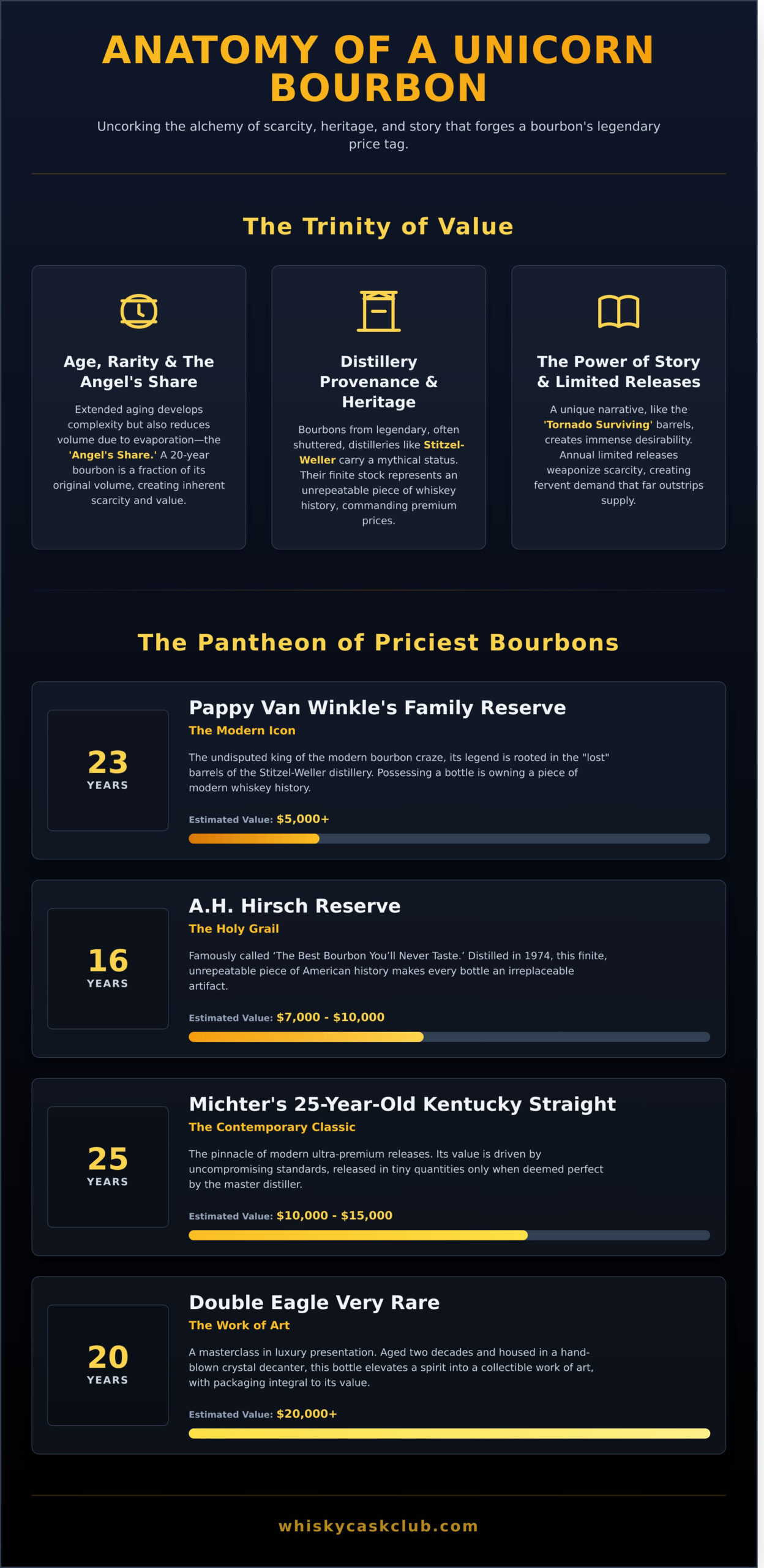
What forges a bourbon’s legendary price tag? It’s a question that transcends the liquid in the glass. The anatomy of value for the most expensive bourbon is a carefully constructed trinity of scarcity, quality, and story. These elements are built upon a foundation of provenance-the documented history of origin that authenticates its worth. When these forces converge with perfect intensity, they don’t just create an expensive spirit; they forge a ‘unicorn’ bottle, an asset as much as a beverage.
Age, Rarity, and the Angel’s Share
Time is both bourbon’s greatest ally and its most unforgiving tax collector. Extended aging in new charred oak barrels is essential for developing deep, complex flavors. However, with each passing year, a portion of the spirit evaporates from the cask-a poetic loss known as the ‘Angel’s Share.’ This natural process dramatically reduces the final yield, meaning a 20-year-old bourbon is a mere fraction of its original volume. This inherent scarcity is a primary driver of its premium value.
Distillery Provenance and Heritage
The name on the bottle is a mark of legacy. Bourbons tied to legendary, often shuttered, distilleries like Stitzel-Weller carry an almost mythical status. Their remaining stock represents a finite piece of whiskey history, making it exceptionally desirable. This is the heritage that elevates certain brands to iconic status; bottles of Pappy Van Winkle’s Family Reserve, for instance, command astronomical prices in part due to their deep-rooted connection to this revered distillery. The hand of a specific master distiller can also add a significant premium, turning their work into a coveted collector’s item.
The Power of Story and Limited Releases
Beyond age and origin, a compelling narrative can transform a great bourbon into a legendary one. A unique story creates an emotional connection and immense desirability. Consider the E.H. Taylor ‘Tornado Surviving’ release, sourced from barrels that miraculously weathered a storm that destroyed the warehouse around them. This is not just bourbon; it’s a story of survival. Similarly, highly anticipated, limited annual releases like the Buffalo Trace Antique Collection (BTAC) weaponize scarcity, creating a fervent market where demand far outstrips supply, cementing their place among the most expensive bourbon offerings each year.
The Pantheon of Priciest Bourbons: A Curated List
To ascend into the realm of the most expensive bourbon is to move beyond the mere appreciation of a fine spirit. The bottles in this pantheon are not simply drinks; they are tangible assets, liquid history captured in glass. Their immense value is a complex formula of extreme rarity, impeccable provenance, and the powerful legacy of their distilleries. These are investment-grade artifacts whose market values fluctuate with the passion of collectors, making them a fascinating study in luxury and desire.
Pappy Van Winkle’s Family Reserve 23-Year-Old
Often hailed as the undisputed king of the modern bourbon craze, the Pappy 23-Year-Old is an icon. Its legend is rooted in the “lost” barrels of Stitzel-Weller, a distillery revered for its wheated bourbon recipe. This heritage, combined with extreme scarcity, has fueled a cultural phenomenon and a secondary market with record-breaking bourbon auction prices. Owning a bottle is less about tasting and more about possessing a piece of modern whiskey history. Its estimated market value often exceeds $5,000, and can climb much higher depending on the release year.
A.H. Hirsch Reserve 16-Year-Old
Famously called ‘The Best Bourbon You’ll Never Taste,’ the A.H. Hirsch Reserve is a collector’s holy grail. Distilled in 1974 at what would become Michter’s Distillery in Pennsylvania, this bourbon is a finite, unrepeatable piece of American distilling history. The original stock has long since been depleted, meaning every existing bottle is an irreplaceable artifact. Its storied past and legendary quality make it one of the most coveted bottles for serious connoisseurs, with prices regularly reaching $7,000-$10,000.
Michter’s 25-Year-Old Kentucky Straight Bourbon
Representing the pinnacle of modern ultra-premium releases, Michter’s 25-Year-Old demonstrates how meticulous craftsmanship can create a contemporary classic. While not from a bygone era, its value is driven by the distillery’s uncompromising standards for sourcing and aging only the most exceptional barrels. Released in highly limited quantities and only when the master distiller deems it perfect, this bourbon commands a price tag that positions Michter’s firmly as a premier luxury brand in the whiskey world, often valued between $10,000 and $15,000 upon release.
Double Eagle Very Rare 20-Year-Old
A masterclass in luxury presentation, Double Eagle Very Rare builds upon the esteemed legacy of the Eagle Rare brand. Aged for two decades, this exquisite bourbon is presented in a hand-blown crystal decanter featuring two sculpted eagles. This bottle is a testament to how premium packaging and a compelling brand story can elevate a spirit into a collectible work of art. The presentation is integral to its perceived value, making it a centerpiece for any collection and commanding prices upwards of $20,000.
The Collector’s Challenge: Acquiring a Unicorn
The allure of owning one of the world’s most expensive bourbon bottlings is undeniable. However, these bottles, often referred to as “unicorns,” are not found gathering dust on a retail shelf. Acquiring them requires navigating a complex and often perilous landscape far removed from traditional purchasing. For the serious connoisseur transitioning into an investor, this journey is fraught with challenges that demand diligence, capital, and a significant tolerance for risk.
Navigating Auctions and Private Sales
The primary arena for these transactions is the high-stakes world of auctions and private sales. Esteemed houses like Sotheby’s regularly feature ultra-rare spirits, but success comes at a cost. Winning bids are subject to a significant “buyer’s premium” and other fees, adding upwards of 25% to the final hammer price. Alternatively, private collector-to-collector sales offer more discretion but operate on a foundation of trust that can be difficult to verify, making the process opaque and exclusive.
The Risks of the Secondary Market
Engaging with the secondary market introduces substantial risks that can undermine the value of your investment. The most astute investors are acutely aware of these potential pitfalls, especially when pursuing a bottle of the most expensive bourbon. Key concerns include:
- Counterfeits: The high value of rare bourbon makes it a prime target for sophisticated forgeries, from refilled bottles to perfectly replicated labels and tax strips.
- Provenance: Verifying a bottle’s history-its chain of ownership and storage conditions-is paramount. A lack of clear provenance can drastically diminish its value and authenticity.
- Price Volatility: The market is heavily influenced by hype and fleeting trends. What is celebrated today can become less desirable tomorrow, making it a speculative venture rather than a stable investment.
Is There a More Direct Path to Ownership?
This chase for the finished product raises a fundamental question for the discerning investor: why pursue a bottle at the end of its journey when you can control the asset from its origin? Every legendary spirit begins its life not in a bottle, but in a cask. The cask is the source of maturation, of character, and ultimately, of all intrinsic value. Owning the cask means owning the liquid itself-a tangible asset with unimpeachable provenance. Ready for a smarter approach to building your legacy? Explore tangible whisky assets.
Beyond the Bottle: Whisky Casks as a Tangible Asset
While collectors chase the fleeting availability of rare bottles, a more profound investment opportunity lies at the very source of their value. Every legendary spirit, including the most expensive bourbon ever sold at auction, began its journey not in glass, but in wood. Shifting focus from the finished product to the appreciating asset itself-the whisky cask-offers a direct path to the heart of the market’s value creation.
This approach transforms the investor from a spectator in the secondary market to a principal in the whisky’s life cycle. It is an opportunity to own the craftsmanship, the maturation, and the legacy in its purest form.
Owning the Liquid, Not Just the Glass
Cask ownership is the acquisition of a full barrel of maturing spirit, held in a secure, government-bonded warehouse. This wholesale approach provides unparalleled benefits that bottle collecting cannot match. As an owner, you possess a tangible asset with clear provenance and direct control over its aging destiny. You decide how long it matures, shaping the very character and rarity that will one day define its worth.
The Maturation Advantage
A finished bottle is a static asset; its value relies solely on external market speculation. A cask, however, is a dynamic one. Its value appreciates intrinsically through the magic of maturation. As the spirit interacts with the oak, it gains complexity, color, and character, becoming more desirable with each passing year. This patient, natural appreciation is the fundamental engine that creates the world’s most expensive bourbon, offering a strategy for long-term, tangible growth.
By investing at the cask level, you are not merely buying a commodity; you are stewarding the creation of a future classic. This unique blend of passion and pragmatism is the cornerstone of building a lasting legacy. To explore this exclusive world of alternative assets, discover the curated opportunities at the Whisky Cask Club.
Why Scotch Casks Dominate the Investment Landscape
The allure of rare American whiskey is undeniable, with the value of the most expensive bourbon bottles capturing the imagination of collectors worldwide. However, for the discerning investor looking to acquire a tangible asset at its source, the world of Scotch whisky presents an unparalleled opportunity. While bourbon’s secondary market is exciting, the primary market for cask ownership is far more established, regulated, and liquid in Scotland.
For those serious about building a legacy through spirits, understanding this distinction is paramount. The Scotch industry has cultivated a framework that not only supports but actively encourages private cask ownership, making it the premier choice for a robust alternative investment strategy.
A Mature and Regulated Market
Unlike the more fragmented American market, Scotland boasts a centuries-old tradition of selling whisky by the cask. This history has created a highly structured and secure environment. Every cask of Scotch is legally required to mature in a government-regulated bonded warehouse, overseen by HMRC. This system guarantees the provenance and security of your asset, eliminating concerns of authenticity that can plague the bottle market. This established ecosystem provides clear title of ownership and access to a network of trusted brokers and services.
Global Demand and Proven Track Record
Scotch whisky is not just a spirit; it is a globally recognized luxury good with relentless demand from established and emerging markets. This worldwide prestige provides a stable foundation for value appreciation. While headlines about the most expensive bourbon are impressive, the consistent, long-term performance of rare Scotch casks offers a more proven path for capital growth. Owning a cask is an investment in time, craftsmanship, and heritage-a tangible asset that matures in both character and value. It is the definitive way to build a personal legacy with a world-renowned and sought-after commodity.
Are you ready to move beyond collecting and into true ownership? Discover the potential of Scotch cask ownership today.
The Ultimate Legacy: Beyond the Most Expensive Bourbon
The pursuit of rare spirits is a journey into a world where provenance, craftsmanship, and scarcity converge to create legendary value. We have explored how these factors forge the identity of the most expensive bourbon and the significant challenges collectors face in acquiring these unicorn bottles. Yet, for the discerning connoisseur, the ultimate expression of passion for fine spirits lies not just in collecting the finished product, but in owning the asset at its source.
While the American whiskey market presents its trophies, the established landscape of Scotch whisky offers a more profound opportunity for building a tangible legacy. This is where passion meets pragmatism. The Whisky Cask Club invites you to transition from collector to owner, providing exclusive access to premium Scotch whisky casks from heralded distilleries. Our clients benefit from expert portfolio management, clear exit strategy advice, and the security of storage in government-regulated bonded warehouses.
Elevate your portfolio beyond the bottle. Request our guide to building a legacy with whisky cask investment. Your journey into owning a piece of liquid history begins here.
Frequently Asked Questions
What is the most expensive bourbon ever sold at auction?
The bottle holding this prestigious title is the Old Ingledew Whiskey, believed to be the oldest known whiskey in existence. Bottled in the 1860s, it fetched an astounding $137,500 at auction. While its classification as “bourbon” is debated by modern standards, its historical significance and unparalleled rarity secure its place in whiskey lore. This sale underscores how provenance and a unique story are the ultimate drivers of value in the world of ultra-premium spirits.
Why is Pappy Van Winkle so expensive and hard to find?
The allure of Pappy Van Winkle stems from a confluence of extreme scarcity and legendary craftsmanship. The distillery produces a very limited number of bottles each year, and its long aging process-up to 23 years-means a significant portion is lost to evaporation. This rarity, combined with the heritage of the Stitzel-Weller distillery and overwhelming demand from connoisseurs, has created a secondary market where prices are dictated by its iconic, almost mythical status.
Are expensive bourbons actually better in taste?
While price often correlates with exceptional quality and complexity, it is not a direct measure of taste, which remains deeply personal. The value of the most expensive bourbon is often derived from its rarity, age, and provenance rather than its flavor profile alone. An older, rarer bourbon offers a unique tasting experience-a liquid piece of history. However, whether it is “better” is a matter of individual palate. The true value lies in the entire experience.
How can you tell if a rare bottle of bourbon is fake?
Authenticating a rare bottle requires meticulous examination. Scrutinize the tax strip and seal for any signs of tampering or modern adhesives. The label should be flawless, with no spelling errors or pixelated printing. Check the fill level, as older bottles may have slight evaporation, but a low level can be a red flag. Ultimately, for a significant acquisition, verifying the bottle’s provenance and seeking professional authentication is the most prudent course of action to protect your investment.
Is buying a cask of bourbon a good investment?
Investing in a bourbon cask can be a highly rewarding strategy for a discerning portfolio. As a tangible asset, it is insulated from the volatility of traditional financial markets. With the global demand for premium American whiskey surging, a carefully selected cask appreciates in value as it matures, developing complexity and rarity over time. This offers the potential for significant returns, transforming a passion for fine spirits into a legacy-building asset with profound financial promise.
What’s the difference between investing in a bourbon cask versus a Scotch cask?
The primary differences lie in regulation, maturation, and market maturity. The Scotch industry is older, larger, and governed by stringent regulations dictating its production and aging in Scotland. Bourbon, conversely, offers entry into a dynamic and rapidly growing market. Its maturation in new charred oak barrels, often in a climate with wider temperature swings, results in a different and typically faster aging profile, presenting a unique set of opportunities for the astute investor.