
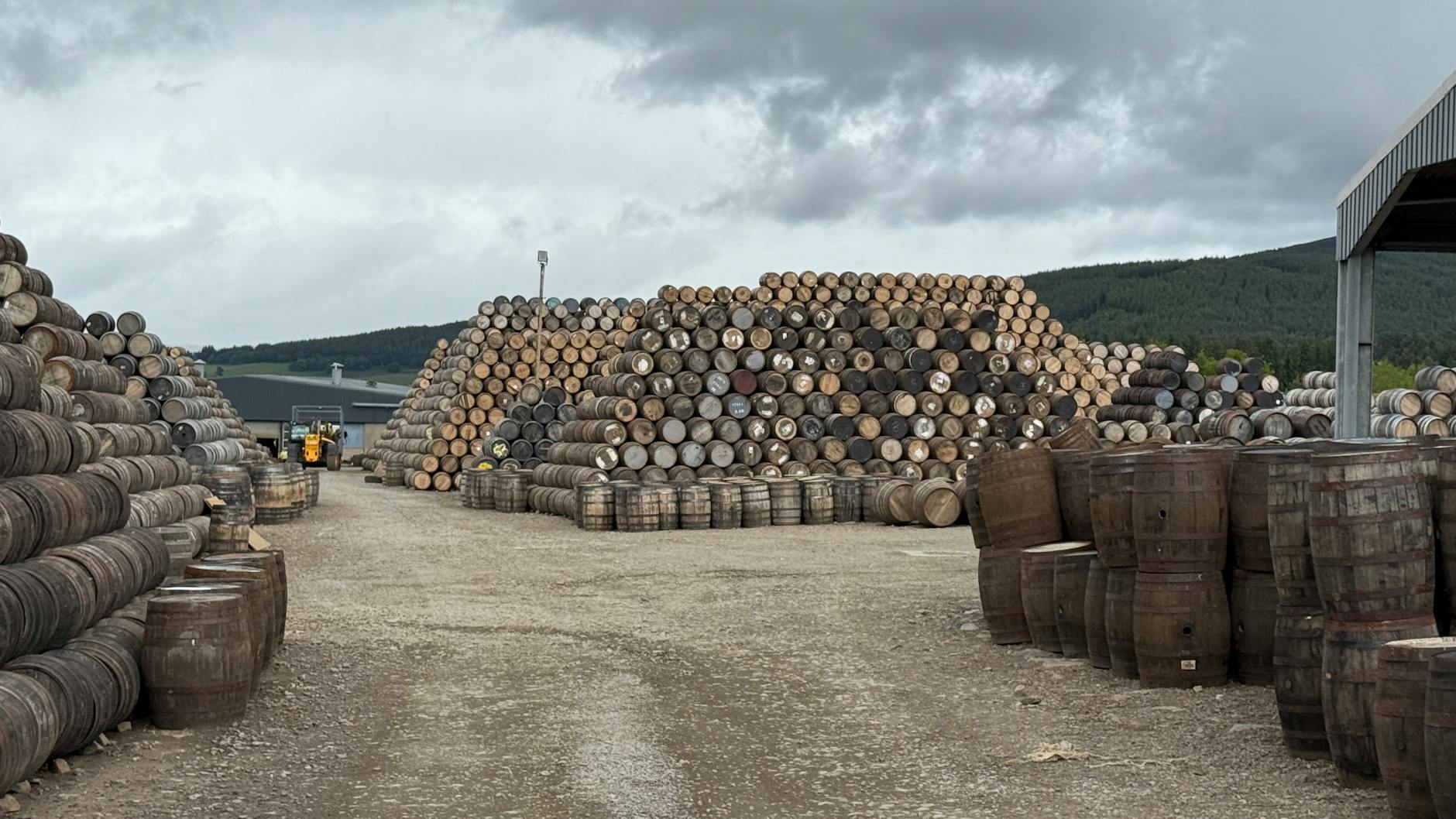
Pernod Ricard warns full-year revenue will be lower. Conflict in the Middle East has weakened crucial travel retail sales in the Gulf. This is compounded by persistent softness in China and a correcting US market.
The News
Pernod Ricard has warned that its full-year revenue will be dragged lower by the conflict in the Middle East, even as organic sales steadied during its fiscal third quarter. The Paris-listed group, owner of Chivas Regal, Ballantine's, The Glenlivet, Aberlour and Jameson, told investors that travel retail and duty-free flows through the Gulf — historically a fortress channel for premium Scotch — have been materially weaker, forcing a softer guidance posture for the year to 30 June. Management signalled that the quarterly stabilisation seen in shipments does not translate into a recovery narrative, with the Middle East drag joined by persistent weakness in China and a still-correcting US market. For a group that derives a substantial share of its profit pool from aged Scotch whisky and Irish whiskey, the downgrade matters well beyond the Paris bourse.
Trade Context
Pernod's Scotch portfolio is one of the largest by volume globally, anchored by Chivas Brothers in Keith and supported by malt distilleries including The Glenlivet in Speyside, Aberlour on the Spey, Longmorn, Glenallachie's former stablemate Strathisla, and Glen Keith. The group has spent the last two years leaning into premiumisation — pushing Royal Salute, Chivas XV and Aberlour's older expressions — precisely because Middle Eastern and Asian travel retail absorbs high-margin aged stock that domestic European off-trade cannot. When those lanes narrow, inventory ages on the racks rather than clearing through duty-free shelves, and the calculation for how much new-make goes into the warehouse for the 2040s starts to shift.
The company's third-quarter commentary pointed to resilience in India, where Royal Stag and Blenders Pride continue to grow, and a tentative firming in Europe. But the Gulf weakness compounds a well-documented Chinese slowdown, where Martell cognac has borne the brunt and where Scotch premiumisation had been expected to offset some of the damage. Diageo, Edrington and William Grant & Sons will all be reading the Pernod print closely, given how much of the Scotch category's growth thesis this decade has rested on Gulf hub traffic through Dubai, Doha and Abu Dhabi.
- Producer / Distillery: Pernod Ricard / Chivas Brothers, The Glenlivet, Aberlour, Longmorn, Irish Distillers (Midleton)
- Category: Scotch whisky, Irish whiskey, global spirits
- Market implication: Gulf travel retail softness threatens the premium-aged Scotch clearing channel and complicates fill-volume decisions at Speyside malt distilleries
Why It Matters
For the Scotch trade, Pernod's caution is a useful barometer because the group is more exposed to travel retail than most of its peers. Dubai in particular has functioned as a de facto global tasting room for premium blends and single malts, converting transit passengers from India, Africa and Southeast Asia into buyers of Chivas 18, Royal Salute 21 and upper-tier Glenlivet expressions. A sustained disruption to that flow forces producers to either discount into alternative channels — eroding brand equity — or hold stock, which ties up working capital and pushes aged inventory deeper into the liability column.
Cask investors should treat the print as a signal, not a panic. Mature stock of 18-year-old and older Speyside malt underpins much of the premium blended category, and Pernod's willingness to keep laying down fill at Chivas Brothers distilleries has been a floor under new-make pricing for independent bottlers and brokers. If the group responds to weaker Gulf offtake by trimming production budgets or selling parcels into the open market, supply dynamics at the 2030s-maturity end of the curve could loosen — welcome news for independents who have been priced out of Speyside stock since 2019.
The broader reading is that the post-pandemic premiumisation trade, which lifted every large Scotch owner for three straight years, is now genuinely mean-reverting. Pernod's third quarter did not collapse, and management is not in crisis mode, but the Middle East overhang is a reminder that geopolitical risk sits squarely on the whisky industry's balance sheet. Bottlers, brokers and cask holders planning the next twelve months should assume a harder sell-through environment in travel retail and a more competitive pricing backdrop across premium aged Scotch.
Frequently Asked Questions
Why is the Middle East conflict affecting Pernod Ricard's forecast?
The conflict has materially weakened travel retail and duty-free sales in the Gulf, a key channel for selling high-margin, premium-aged Scotch whisky.
What other markets are challenging Pernod Ricard's performance?
Persistent weakness in China, especially for Martell cognac, and a still-correcting US market are also dragging on the group's results alongside the Middle East.
Why is this news important for the broader Scotch whisky trade?
Pernod is heavily exposed to travel retail, and Gulf hubs like Dubai are vital for converting global travelers into buyers of premium Scotch, so its caution signals industry-wide pressure.
How might this affect Scotch whisky production and investment?
Weaker sales could lead producers to trim production budgets or sell aged stock, potentially loosening future supply and impacting pricing for independent bottlers and cask investors.