Is your collection of liquid gold truly resilient, or is it merely a high-stakes gamble on a single region? You already know that rare Scotch is more than a spirit; it’s a tangible piece of history and a sophisticated hedge against traditional market volatility. Yet, the fear of market saturation in iconic regions like Islay often keeps even the most seasoned investors awake. You’ve likely felt the uncertainty of choosing between a blue-chip distillery and an emerging craft producer, wondering if your current strategy can truly protect your family’s future.
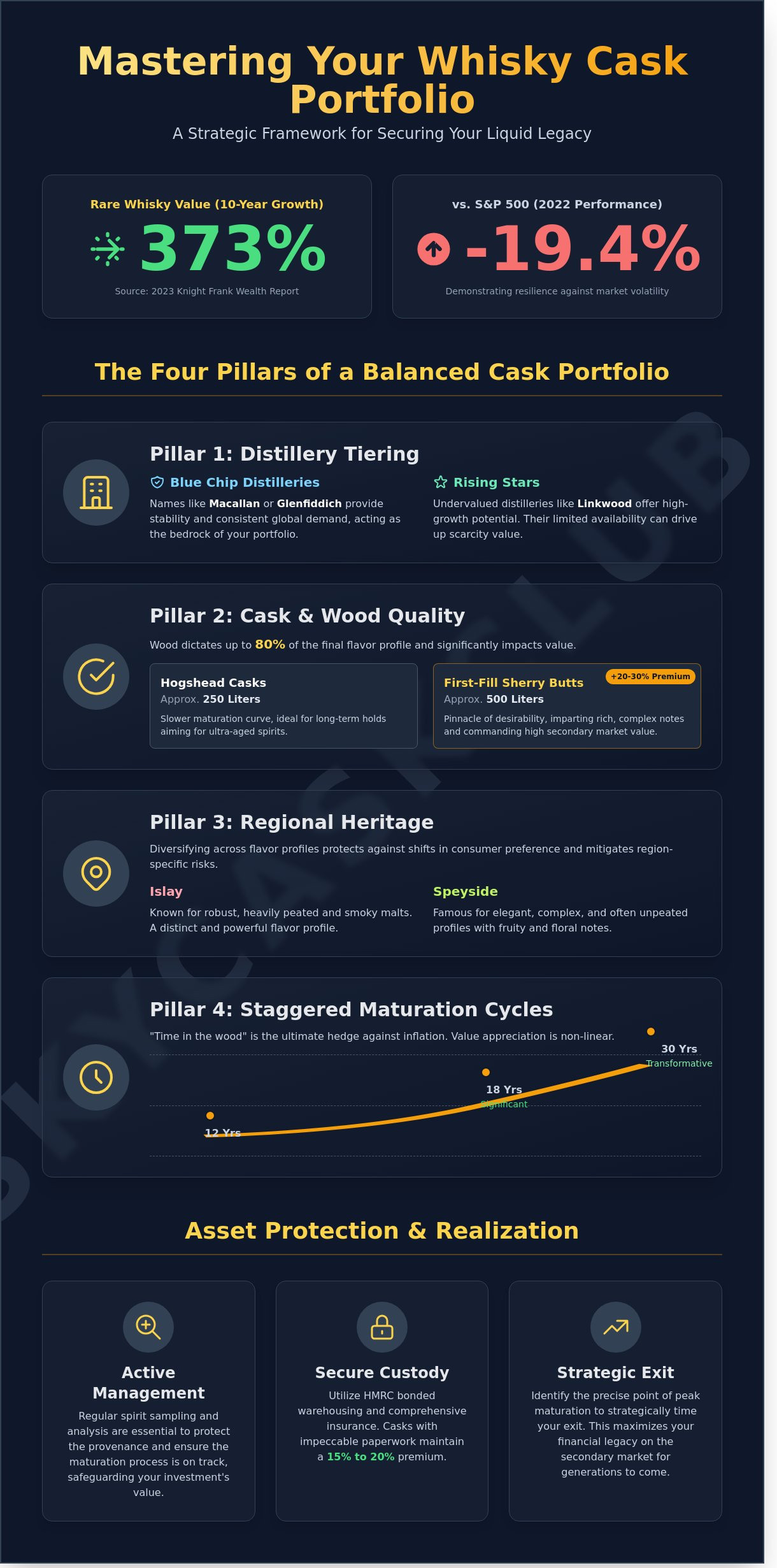
Mastering the art of managing a diverse cask portfolio is the only way to transform a simple collection into a robust financial legacy. According to the 2023 Knight Frank Wealth Report, rare whisky has seen a 373% increase in value over the last decade, but these gains are reserved for those who curate with precision. This guide provides a clear framework for diversification, from the logistics of bonded warehouse storage to the complexities of insurance. We’ll outline the exact steps to secure your assets and execute a confident exit strategy that preserves your wealth for generations to come.
Key Takeaways
- Learn to transition from a hobbyist collector to a sophisticated investor by mastering the strategic pillars of managing a diverse cask portfolio.
- Discover how to balance your capital across premium distillery tiers and varied cask sizes to safeguard the long-term health of your liquid assets.
- Understand why active management and regular spirit sampling are essential to protecting the provenance and value of your maturing stock.
- Navigate the logistics of secure custody, from the legal requirements of HMRC bonded warehousing to the physical verification of your holdings.
- Identify the precise point of peak maturation to strategically time your exit and maximize your financial legacy on the secondary market.
The Strategic Philosophy of Cask Portfolio Diversification
True wealth isn’t merely a collection of digits on a screen; it’s the possession of tangible assets that gain character and value with every passing season. Transitioning from a hobbyist collector to a sophisticated investor requires a shift in perspective. You’re no longer just buying what you enjoy drinking. You’re managing a diverse cask portfolio designed to withstand market shifts while capturing the steady, quiet growth of maturing spirit. Relying on a single distillery is a concentration risk that leaves your capital vulnerable to brand-specific fluctuations or production changes. By spreading your interest across various regions and styles, you decouple your financial future from the fortunes of a single house.
The relationship between traditional market volatility and Scotch maturation is one of inverse stability. While the S&P 500 saw a 19.4% decline in 2022, the Knight Frank Luxury Investment Index noted that rare whisky continued to outperform many traditional assets over a ten-year period. This resilience stems from the fact that the liquid’s value is tied to its biological and chemical aging process. The clock doesn’t stop for a recession. The spirit continues to interact with the wood, developing the complexity that global markets crave, regardless of the current interest rate.
Mitigating Risk Through Spirit Variety
A well-curated portfolio balances the “Blue Chip” security of iconic distilleries with the high-growth potential of emerging craft powerhouses. Names like Macallan or Bowmore provide a bedrock of prestige, but the most intelligent strategies include smaller distilleries that are currently gaining cult status among connoisseurs. Provenance is your shield during economic downturns. Casks with impeccable paperwork and clear storage histories in bonded warehouses maintain a 15% to 20% premium over assets with fragmented records. Diversity in flavor profiles also protects you, as consumer preferences often shift between heavily peated Islay malts and the elegant, unpeated profiles of the Speyside region.
Capital Appreciation Across Maturation Cycles
Whisky value follows a non-linear trajectory. The jump in rarity and price between a 12-year-old and an 18-year-old spirit is significant, but the leap to 30 years is transformative. By staggering your acquisitions, you ensure periodic exit opportunities rather than waiting decades for a single liquidation event. This laddered approach allows you to harvest gains from younger casks to fund the storage of your ultra-aged holdings. It’s a pragmatic way of managing a diverse cask portfolio that treats time as a raw material. Because you can’t manufacture old whisky on demand, “time in the wood” remains the ultimate hedge against inflation, preserving your purchasing power through the inherent scarcity of the liquid.
The Four Pillars of a Balanced Whisky Cask Portfolio
Managing a diverse cask portfolio requires more than just a passion for the spirit; it demands a clinical eye for asset allocation. A robust portfolio balances immediate stability with future growth. This strategy relies on four structural pillars: distillery prestige, wood quality, vessel size, and regional heritage. By distributing capital across these variables, you protect your investment against market shifts while ensuring the liquid continues to mature into a rare, tangible asset.
Distillery Tiering: Blue Chips vs. Rising Stars
Stability begins with “Blue Chip” names like Macallan or Glenfiddich. These distilleries command consistent demand on the secondary market, acting as the bedrock of your liquid wealth. Their brand equity is global. However, true growth often lies in sourcing undervalued casks from distilleries like Linkwood for higher growth potential. Ownership structures also play a vital role. Diageo’s massive inventory management differs significantly from independent, family-run operations. Independent distilleries often have tighter controls on cask availability, which can drive up the scarcity value of your holding over a ten-year horizon.
Cask Type and Size: From Hogsheads to Sherry Butts
The wood dictates up to 80% of the final flavor profile and a significant portion of the cask’s value. Hogshead casks, holding roughly 250 liters, offer a slower maturation curve than smaller barrels. This makes them ideal for long-term holds where the spirit needs decades to reach its peak. First-fill Sherry butts represent the pinnacle of desirability. These casks often fetch a 20% to 30% premium in the secondary market because of the rich, dried-fruit notes they impart. Conversely, refill Bourbon barrels serve as the “workhorse” of a diverse portfolio. They provide a clean, consistent profile that allows the distillery’s unique character to shine without being overpowered by the wood.
Regional Diversification: Highland, Islay, and Beyond
Geographic variety protects your portfolio against shifting consumer tastes. You should balance the floral elegance of Highland single malts with the medicinal smoke of Islay. Speyside remains the undisputed volume leader, accounting for over 60% of Scotch production and providing excellent liquidity in global markets. For those seeking rarity, the dwindling number of Campbeltown expressions or the delicate Lowland styles offer unique entry points into the Scotch heritage. Each region matures differently. Having a presence in multiple areas ensures your portfolio remains resilient regardless of which flavor profile is currently trending among collectors.
If you’re ready to secure your future, consider how building a legacy through curated cask ownership can transform your financial outlook and provide a sense of prestige that traditional assets cannot match.
Active Management: Monitoring the Health of Your Assets
The belief that whisky is a “set and forget” investment is a dangerous myth that risks the integrity of your capital. Managing a diverse cask portfolio requires a proactive approach because wood is a porous, organic material. It breathes. It reacts to changes in temperature and humidity. Without consistent oversight, a prestigious asset can quietly degrade behind warehouse doors. Professional health checks and spirit samples should occur at least every three years for younger spirit. This frequency increases as the whisky matures toward its peak, ensuring you never miss the narrow window of optimal quality.
Expert management transforms a simple purchase into a curated legacy. By requesting regular samples, you can monitor the influence of the oak. Is the sherry cask over-powering the distillery character? Is the wood still active? These questions are vital for those who view their casks as more than just numbers on a balance sheet. Active monitoring allows you to make informed decisions about re-racking or moving the spirit to a different warehouse environment to optimize maturation. It’s the difference between a good whisky and a legendary one.
Regauging and Technical Health Checks
Regauging provides the empirical data needed to track your investment. You start with Original Litres of Alcohol (OLA), but the “Angels’ Share” claims roughly 2% of the volume and a portion of the strength each year. Regauged Litres of Alcohol (RLA) tells you exactly what remains in the cask today. Monitoring Alcohol by Volume (ABV) is even more critical. Under the Scotch Whisky Regulations 2009, the spirit must remain above 40% ABV to be legally sold as Scotch. If the ABV drops below this threshold, the liquid loses its primary market value. Early regauging identifies “leakers” or excessive evaporation, allowing for immediate repairs or an accelerated bottling schedule.
Annual Valuation and Market Benchmarking
A legacy is built on precision. You should conduct a formal portfolio audit annually to align your holdings with shifting global demand. Use secondary market trades and recent auction data from 2023 and 2024 to establish a realistic baseline for your assets. Independent experts provide an unbiased lens, ensuring your strategy reflects current trends for specific age statements. This data dictates your exit strategy. It helps you decide whether to hold for another decade or capitalize on a current spike in demand for 25-year-old Islay malts. Precise benchmarking ensures you aren’t just holding whisky, but managing a high-performance asset class.
The Logistics of Custody: Storage, Insurance, and Security
Success in managing a diverse cask portfolio rests on the silent, rigorous systems that protect your liquid wealth. While the romance of the spirit draws many in, the pragmatic investor understands that custody is the cornerstone of value. This involves a sophisticated dance between legal compliance, physical protection, and administrative precision. Without these pillars, the rarest Highland malt is little more than unverified liquid.
HMRC Bonded Warehouses: The Gold Standard of Security
To retain the legal designation of “Scotch,” your cask must remain within an HMRC-authorized bonded warehouse on Scottish soil. This isn’t merely a tradition; it’s a statutory requirement under the Scotch Whisky Regulations 2009. These facilities operate under duty-suspension, meaning taxes aren’t paid until the liquid is bottled and cleared for sale. Security is paramount. Traditional dunnage warehouses, with their thick stone walls and earth floors, provide a natural, humid microclimate that regulates the “Angel’s Share” evaporation rate, preserving the spirit’s character over decades.
Legal title is established through a Delivery Order (DO). This document, acknowledged by the warehouse manager, confirms you’re the legal owner of the specific cask number. Without a verified DO or a warehouse receipt, your investment lacks the necessary provenance for a high-value exit. We ensure every member of our whiskey club receives absolute transparency regarding these title documents and physical verification protocols.
Insurance and Protection Against the Elements
A maturing cask is a living asset, and like any rare collectible, it faces physical risks. Comprehensive insurance is non-negotiable. Policies must cover fire, theft, and accidental damage, but the most critical factor is “full replacement value.” As the liquid ages and the market for rare malts fluctuates, the value of your portfolio will likely outpace your initial purchase price. We recommend annual valuations to ensure your coverage scales alongside the spirit’s maturity.
Managing a diverse cask portfolio often involves casks stored at multiple distilleries across the Highlands, Islay, and Speyside. This creates a significant administrative burden, from tracking storage rent to managing insurance renewals across global borders. A managed concierge service simplifies this complexity, acting as a discreet advisor to oversee the logistics while you focus on the growth of your legacy. It’s about moving from simple ownership to sophisticated stewardship that respects the heritage of the liquid.
Realizing the Legacy: Strategic Exit Planning
The culmination of managing a diverse cask portfolio is the strategic exit. You’ve curated a collection of liquid history; now you must decide how to realize its value. Identifying the peak maturation point is essential for maximizing ROI. This isn’t a fixed date but a window where the wood’s influence and the spirit’s character reach an ideal equilibrium. For many premium malts, this happens between 18 and 30 years. Beyond this, the risk of over-oaking increases, which can diminish the asset’s marketability.
Investors often choose between the speed of a distillery buy-back and the higher margins of the secondary market. A buy-back provides immediate liquidity and eliminates further storage concerns. Conversely, the secondary market targets private collectors who value rarity and provenance. Managing a diverse cask portfolio provides the flexibility of partial exits. You can liquidate a younger, high-volume cask to cover the ongoing insurance and storage costs of your most prized, long-term barrels. This staggered approach ensures your legacy remains self-funding.
Secondary Market Sales and Auctions
Distillery reputation is the primary driver of auction hammer prices. Labels like Macallan or Bowmore consistently lead the market. In 2023, industry data showed that “investor grade” casks from silent distilleries continued to command significant premiums. Using a specialist broker is the most prudent path for international sales. They handle the logistical complexities and ensure your asset reaches a global audience of discerning connoisseurs.
Independent Bottling and Personal Consumption
Bottling a private label is the ultimate expression of whisky ownership. It transforms a whisky investment into a tangible, drinkable legacy. This path requires meticulous attention to detail. You’ll need to coordinate with bottling halls and comply with strict labeling and tax requirements. While it demands more effort, the reward is a bespoke product that carries your personal mark. It’s the final, sophisticated chapter in the journey of your liquid wealth.
Success in this asset class requires patience and a long-term perspective. Whether you sell to a private collector or bottle the liquid for your own table, the goal remains the same. You aren’t just trading a commodity; you’re stewarding a piece of Scottish heritage. Your exit strategy should reflect the same level of craftsmanship that went into the spirit itself.
Securing Your Liquid Legacy
Success in the world of alternative assets requires more than just a passion for fine spirits; it demands a disciplined approach to managing a diverse cask portfolio. By balancing your holdings across various distillation years and regions, you transform a collection into a robust financial legacy. True connoisseurs understand that the journey doesn’t end at acquisition. It’s about the meticulous oversight of HMRC-compliant bonded storage in Scotland and the strategic timing of your eventual exit.
Whisky Cask Club provides the professional infrastructure necessary for this level of sophistication. With dedicated management offices in Singapore and Hong Kong, our team offers personal guidance through every stage of the maturation process. You’ll gain access to exclusive, non-public cask lists that aren’t available to the general market. It’s time to move beyond the ordinary and secure a tangible asset that matures with grace. Join the Whisky Cask Club and begin building your legacy today. Your journey into the heart of Scotland’s finest craftsmanship starts here.
Frequently Asked Questions
How many casks do I need for a truly diversified portfolio?
A truly diversified portfolio typically consists of 5 to 10 casks across various regions and age profiles. This spread mitigates risk by ensuring you aren’t reliant on a single distillery’s performance. For example, a balanced collection might include 40% Speyside for stability and 20% Islay for market demand. Managing a diverse cask portfolio requires this strategic variety to capture different market cycles effectively and build a lasting legacy.
Is it better to invest in one expensive cask or three mid-range casks?
Three mid-range casks often provide superior risk-adjusted returns compared to a single blue-chip asset. While a rare 30 year old Macallan offers prestige, three 12 year old casks from emerging distilleries like Ardnamurchan offer three distinct exit points. This strategy increases your liquid wealth by allowing for staggered sales over a 5 to 10 year period. It protects your capital from the volatility of a single specific brand or vintage.
How often should I have my whisky casks regauged?
You should have your whisky casks regauged every 3 years to accurately track the Bulk Litres and Alcohol by Volume. The Scotch Whisky Association notes that the “Angel’s Share” typically claims 2% of the cask’s volume annually. Regular regauging provides the technical data needed for an accurate valuation. It ensures your investment remains transparent and ready for sale at a moment’s notice, maintaining the sophisticated standards of our club.
Can I move my casks between different bonded warehouses?
You can move casks between HMRC approved bonded warehouses using a WOWGR holder. This process requires a movement guarantee to ensure the spirit remains in a duty suspended state. Movement is often sought to consolidate a collection or to access specific bottling services. We manage these logistics to maintain the provenance and security of your tangible assets. It’s a routine part of managing a diverse cask portfolio for serious connoisseurs.
What happens to my portfolio if a distillery goes out of business?
If a distillery closes, your cask often increases in value due to the “ghost distillery” effect. Data from the 1983 “Whisky Loch” period shows that casks from closed sites like Port Ellen became some of the most sought-after assets in history. Since you own the physical cask and the title deed, the distillery’s operational status doesn’t impact your legal ownership. Your legacy remains secure and potentially more lucrative within the bonded warehouse.
How does the age of the cask affect its liquidity in the market?
Liquidity peaks at two specific stages: the 12 year mark and the 18 to 25 year milestone. Younger casks are highly liquid because they’re accessible to independent bottlers looking for immediate stock. Older casks, while more valuable, have a smaller pool of private collectors. Balancing these age brackets ensures you can exit positions quickly when market conditions are favorable. It’s a pragmatic approach to maintaining a high performance investment collection.
Do I need to pay tax on my whisky cask gains?
In the United Kingdom, whisky casks are generally classified as “wasting assets” by HMRC and are exempt from Capital Gains Tax. This classification applies because the spirit is expected to evaporate over a period of 50 years or less. However, tax laws vary by jurisdiction and individual circumstances. You should always consult with a qualified tax advisor to understand how these rules apply to your specific financial legacy and international holdings.
Can I visit my casks while they are in storage?
Most bonded warehouses allow owners to visit their casks by prior appointment, typically requiring 21 days of notice. These facilities are high security environments, so access is strictly controlled to protect the integrity of the inventory. Visiting your cask is a profound moment that connects you to the craftsmanship and heritage of your investment. It transforms a financial asset into a tangible, personal journey within the world of rare spirits.