Japan's whisky and sake exports hit ¥95 billion in 2026, a 289% decade increase. Whisky leads growth, driven by premium demand in the US, China, and Taiwan. New labelling rules and distillery expansions funded by revenue suggest further growth.
The News
Japan's combined whisky and sake exports reached a record ¥95 billion (approximately £500 million) in 2026, according to fresh data released by the Ministry of Agriculture, Forestry and Fisheries. The figure represents a staggering 289% increase over the past decade, underscoring how aggressively Japanese spirits have penetrated global drinks cabinets since the mid-2010s. Whisky continues to carry the bulk of that growth, with Japanese single malts and blends commanding premium shelf space from Paris to Singapore. The ministry's breakdown confirms what cask brokers and auction desks have been pricing in for years: Japanese whisky is no longer a curiosity category but a structural pillar of the country's agri-food export machine.
The 2026 peak caps a volatile but relentless climb. Ten years ago, combined shipments barely grazed ¥25 billion, with sake leading the ledger and whisky treated as a niche afterthought. That hierarchy has flipped hard. Suntory, Nikka and a widening bench of craft distillers — Chichibu, Mars Shinshu, Kanosuke, Sakurao — have converted allocation scarcity into pricing power, and the export figures reflect both volume expansion and aggressive case-price inflation on aged stock.
Trade Context
The United States, China and Taiwan remain the three dominant destinations, collectively absorbing more than 60% of outbound whisky volumes. European markets, led by France and Germany, have rebuilt demand post-tariff and are paying up for older indications. Importantly, the ministry's figures come as Japan's whisky labelling reform — introduced by the Japan Spirits & Liqueurs Makers Association in 2021 and fully enforceable from April 2024 — has tightened what can legally be sold abroad as "Japanese whisky." Exporters who cleaned up their disclosures early are now reaping the trust dividend.
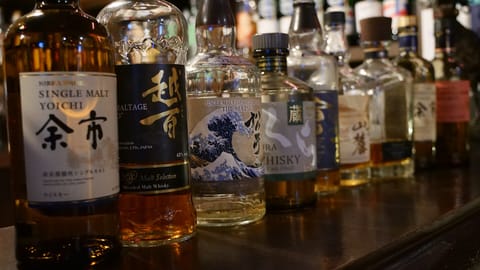
- Producer / Distillery: Suntory (Yamazaki, Hakushu, Hibiki), Nikka (Yoichi, Miyagikyo), Chichibu, Mars, Kanosuke, Sakurao
- Category: World Whisky — Japanese single malt, blended, and grain
- Market implication: Record export value validates premiumisation and cask appreciation; reinforces Japanese whisky's position as the highest-margin category in the world whisky segment
Sake, meanwhile, is no longer the junior partner it once was but is growing from a smaller base. Whisky's contribution to the ¥95 billion figure is estimated at well over half, with sake exports benefitting from UNESCO's 2024 recognition of traditional sake brewing as Intangible Cultural Heritage. The dual-category framing matters to trade readers because Japanese producers increasingly cross-sell both through the same distribution partners — a template Suntory has exploited through its Beam Suntory platform and that Asahi deploys via Nikka's global footprint.
Why It Matters
For cask investors and secondary-market operators, the ¥95 billion headline is confirmation that demand for aged Japanese stock is not softening despite a broader cooling in Scotch investment narratives. Auction data from Bonhams Hong Kong and Sotheby's continues to show Karuizawa, Hanyu and older Yamazaki releases outperforming most Scotch benchmarks, and the MAFF numbers suggest on-trade and off-trade pull-through remains strong enough to sustain those levels. If allocation pressure persists, expect further upward moves on 18-year-old and older expressions across 2026.
The longer read for the trade is strategic. Japanese distillers are using record export revenue to fund aggressive capacity expansion — Suntory's Hakushu upgrade, Nikka's Yoichi warehouse build-out, and a wave of new craft entrants now approaching their first decade-aged releases. That pipeline will test whether the ¥95 billion figure is a ceiling or a staging post. Given tightened provenance rules, sustained Asian demand and a weaker yen that continues to favour exporters, the bet among Tokyo-based traders is firmly on the latter. Trade buyers negotiating 2026 allocations should budget accordingly.
Frequently Asked Questions
What was the value of Japan's whisky and sake exports in 2026?
Japan's combined whisky and sake exports reached a record ¥95 billion (approx. £500 million) in 2026.
Which countries are the biggest importers of Japanese whisky?
The United States, China, and Taiwan are the three dominant destinations, collectively absorbing over 60% of outbound whisky volumes.
How have Japanese whisky labelling rules changed?
The Japan Spirits & Liqueurs Makers Association introduced labelling reforms in 2021, fully enforceable from April 2024, tightening what can legally be sold abroad as 'Japanese whisky'.
What is driving the growth in Japanese whisky exports?
Growth is driven by premiumisation, allocation scarcity, aggressive pricing on aged stock, sustained global demand, and a weaker yen favouring exporters.
How are distillers using the record export revenue?
Distillers like Suntory and Nikka are using the revenue to fund aggressive capacity expansion, including distillery upgrades and new warehouse build-outs.