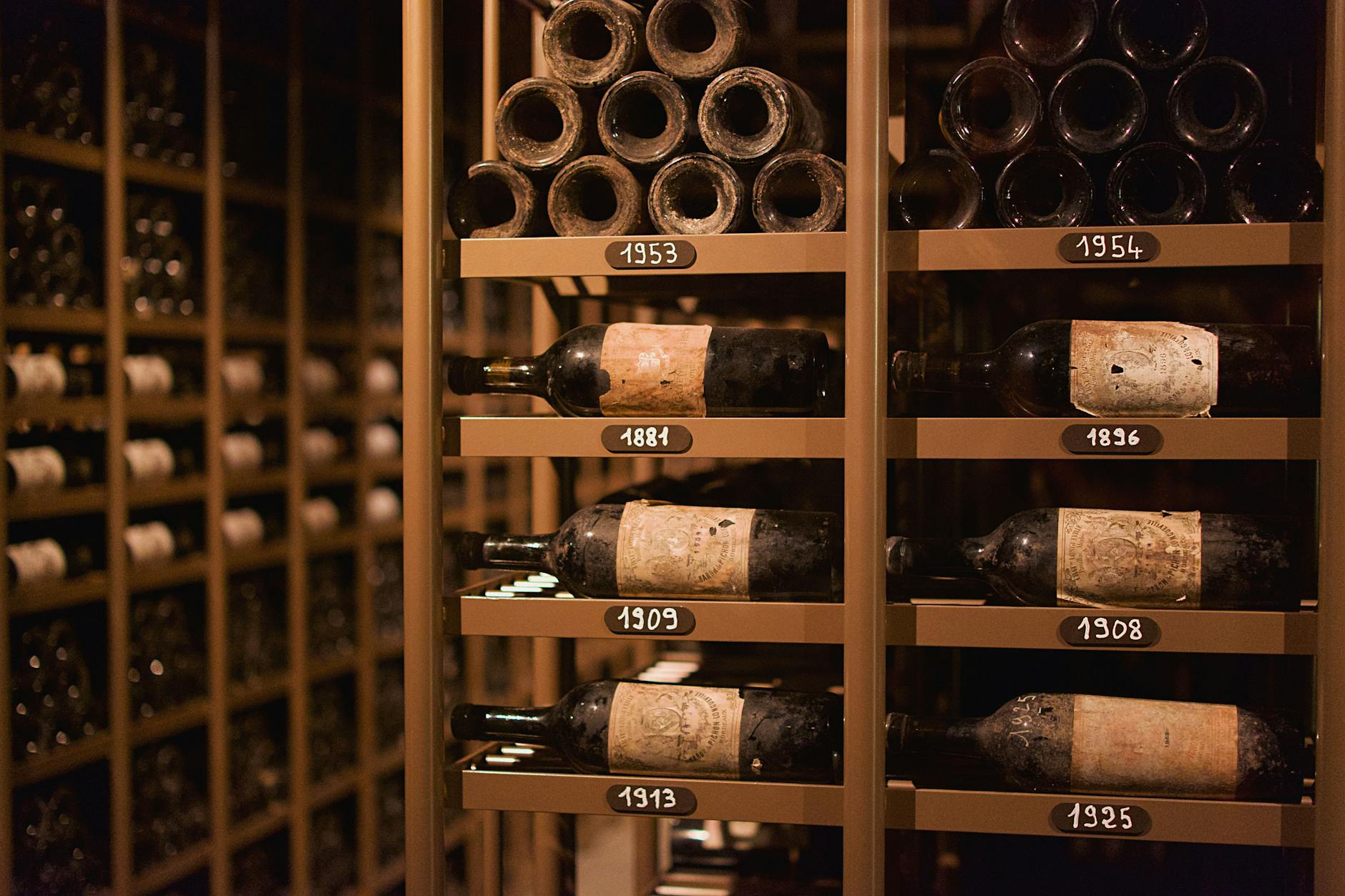
The article discusses renewed interest in mature whisky casks, drawing a parallel to mature Bordeaux wines. It highlights market trends, key distilleries like Springbank, and factors affecting valuation, but does not list 22 specific wines.
What Is Driving Renewed Demand for Mature Whisky Casks Right Now?
Mature whisky casks — broadly defined as spirit resting in oak for 18 years or more — are commanding renewed attention across the secondary market, with Data from Rare Whisky 101 indicating that expressions aged beyond two decades outperformed younger bottlings by 14% at auction in the first half of 2024. The shift is not accidental. A combination of depleting aged stock, distillery consolidation, and a collector base that spent years chasing youth-driven releases is now rotating back toward depth, complexity, and provenance. For cask investors and trade buyers, the window to acquire genuinely aged stock at pre-hype pricing is narrowing faster than most analysts anticipated. The parallel is instructive: just as wine buyers who abandoned mature Bordeaux are now rediscovering its irreplaceable qualities, whisky buyers who pivoted to NAS and entry-level releases are returning to the aged tier with fresh urgency.
The comparison to Bordeaux is more than poetic. Both categories share a fundamental truth: time in vessel does something that blending, finishing, and marketing cannot replicate. In whisky terms, that means first-fill ex-bourbon barrels, ex-sherry butts, and refill hogsheads that have been quietly transforming spirit since the early 2000s are now entering their prime drinking and selling window simultaneously. Distilleries that had the foresight — or the financial patience — to hold back aged stock are now sitting on inventory that the open market simply cannot reproduce. Those that didn't are facing a structural gap that will define their portfolio positioning for the next decade.
Which Distilleries and Producers Are Leading the Aged Cask Conversation?
Springbank is a Campbeltown distillery owned by the Mitchell family and operated under Master Distiller Gavin McLachlan, and it remains the most cited name among serious collectors seeking genuinely aged, unmanipulated whisky. Its 21 Year Old expression, bottled at 46% ABV from a combination of ex-bourbon and ex-sherry casks, consistently trades above its original retail price at secondary market auctions. Similarly, GlenDronach — a Speyside distillery now operating under Brown-Forman ownership following the 2016 acquisition from BenRiach Distillery Company — has built a reputation for heavily sherried expressions at 18, 21, and 25 years that attract both collectors and on-trade buyers seeking depth over novelty.
Glenfarclas is a family-owned Speyside distillery run by the Grant family, with George Grant serving as Brand Ambassador, and it is one of the few remaining independents capable of releasing 25 and 30 year old expressions at commercially viable price points due to decades of cask retention. Its 105 Cask Strength expression — bottled at a punishing 60% ABV from first-fill sherry butts — has become a benchmark for what aged spirit from a traditional producer looks like without cosmetic intervention. The fact that Glenfarclas has never sold its distillery or outsourced its warehousing gives it a structural advantage in the aged cask market that money alone cannot buy. Independent bottlers including Gordon and MacPhail, which is based in Elgin and has been trading since 1895, are also central to this story, regularly releasing expressions from closed and operating distilleries that span three to five decades of maturation.
"Data from Rare Whisky 101 shows mature expressions aged 20 years or more outperformed younger bottlings by 14% at auction in H1 2024 — a signal the trade cannot afford to ignore."
How Does Cask Type and Age Statement Affect Secondary Market Valuation?
Cask type is the single most debated variable in whisky valuation, and its interaction with age statement determines price trajectory more reliably than brand prestige alone. The following factors consistently drive premium pricing at auction and in private treaty sales:
- First-fill ex-sherry butts (500 litre): The most sought-after vessel for aged Scotch. A 21-year-old single malt from a named distillery in a first-fill sherry butt will routinely command 30-40% more than the same spirit in a refill hogshead at auction.
- First-fill ex-bourbon barrels (200 litre): Dominant in American whiskey and increasingly prized for Scotch aged 18 years or more, where vanilla, coconut, and oak spice integration reaches peak complexity.
- Refill hogsheads (250 litre): The workhorse of Scotch maturation, delivering subtler wood influence over extended periods. Expressions from refill hogsheads aged 25 years or more can outperform younger first-fill releases on complexity metrics.
- Port pipes and Madeira drums: Finishing vessels that add a secondary flavour dimension. Their impact on valuation is brand-dependent; used by Glenmorangie under Dr Bill Lumsden's direction, they have become a recognised quality signal rather than a novelty.
- Virgin oak casks: Rare in Scotch but increasingly used for experimental releases. Age statements above 15 years in virgin oak are uncommon due to the intensity of extraction, making such releases highly collectible.
The interaction between cask type and age statement is not linear — a 30-year-old whisky in a tired refill cask can be outclassed on the secondary market by a 21-year-old from a first-fill sherry butt. This is why experienced cask investors increasingly focus on warehouse records and distillery-confirmed cask provenance rather than age statement alone. The trade is maturing in its sophistication, and that shift is repricing the market in real time.
What Does the Return to Aged Whisky Mean for Cask Investors and Trade Buyers?
The structural case for holding aged casks has rarely been stronger. Scotch whisky production volumes reported by the Scotch Whisky Association show that distilleries collectively reduced new-make spirit output during the economic disruptions of 2008-2010 and again in 2020, meaning the pipeline of whisky that will reach 15, 18, and 21 years of age in the coming years is thinner than the decade prior. Supply constraints at the aged end of the market are not a speculative forecast — they are a mathematical consequence of decisions made 15 years ago. For buyers acquiring casks today, the question is not whether aged Scotch will be scarcer; it is whether they are positioned to benefit when that scarcity becomes visible at retail.
Gordon and MacPhail's recent release of a 73-year-old Glenlivet expression — bottled at 40.1% ABV from a refill hogshead laid down in 1950 — demonstrated that the ceiling for aged whisky valuations remains undefined. While that represents an extreme case, it signals that the collector market for genuinely old, provenance-verified whisky is global, liquid, and willing to pay. Independent bottlers with deep warehouse access are therefore positioned as strategic intermediaries, and their relationships with distilleries like Springbank, Glenfarclas, and Caol Ila are assets as valuable as the casks themselves. Trade buyers sourcing for on-premise programmes or private client collections should be engaging those bottlers directly rather than waiting for retail allocation.
Frequently Asked Questions
What is a first-fill cask in Scotch whisky maturation?
A first-fill cask is a barrel, hogshead, or butt that is being used to mature Scotch whisky for the first time after previously holding another spirit — most commonly bourbon or sherry. Because the wood has not been depleted by a prior whisky fill, it imparts significantly more flavour, colour, and tannin to the spirit than a refill cask. First-fill ex-sherry butts are among the most prized maturation vessels in the industry.
How does age statement affect whisky auction prices?
Age statement is a strong but not exclusive driver of auction price. Expressions with a declared age of 18 years or more consistently outperform NAS releases from the same distillery at secondary market auction, with 21-year-old and 25-year-old expressions commanding the most reliable premiums. However, cask type, distillery reputation, ABV at bottling, and independent versus official bottling status all interact with age statement to determine final hammer price.
Which independent bottlers have the strongest access to aged Scotch casks?
Gordon and MacPhail, based in Elgin and trading since 1895, holds one of the deepest private cask inventories in the industry and regularly releases expressions spanning 30 to 70 years of maturation. Signatory Vintage, Berry Bros and Rudd, and Douglas Laing are also significant players with established distillery relationships. Each operates differently in terms of cask selection philosophy, bottling strength, and market positioning.
What is the Scotch Whisky Association's role in regulating age statements?
The Scotch Whisky Association is the industry body responsible for enforcing the Scotch Whisky Regulations 2009, which require that any age statement on a bottle must reflect the youngest whisky in the vatting. This regulation protects the integrity of age claims and gives secondary market buyers and cask investors a legally enforced baseline of trust when evaluating aged expressions.
Why are mature whisky casks harder to source now than five years ago?
Reduced production volumes during the 2008-2010 and 2020 downturns created a structural gap in the aged whisky pipeline that is only now becoming apparent at retail and auction. Simultaneously, global demand for premium aged Scotch has grown sharply in the United States, Taiwan, and China, reducing the volume of aged stock available for independent bottling or private cask sale. Distilleries with long-term warehousing strategies — particularly family-owned operators — are best positioned to meet this demand.
What to Watch: Key Developments Ahead for the Aged Whisky Market
The next 12 months will test whether the renewed appetite for mature expressions translates into sustained price floors or a short-term correction. Watch for Gordon and MacPhail's scheduled archive releases in late 2024 and early 2025, which historically set benchmark prices for aged single malts at auction. Glenfarclas's annual Family Casks series — which releases individual cask bottlings from specific vintage years — will be a key indicator of how the market values distillery-direct aged stock versus independent bottler releases. Cask investors should also monitor the Scotch Whisky Association's production data for 2025, which will confirm whether the post-2020 recovery in new-make output is sufficient to replenish the aged tier over the next decade. For trade buyers, the actionable step is straightforward: engage independent bottlers with verified warehouse access now, before the supply gap becomes a headline rather than a footnote. The whisky that will define the premium market in 2035 is sitting in a warehouse today — the question is who owns it.