
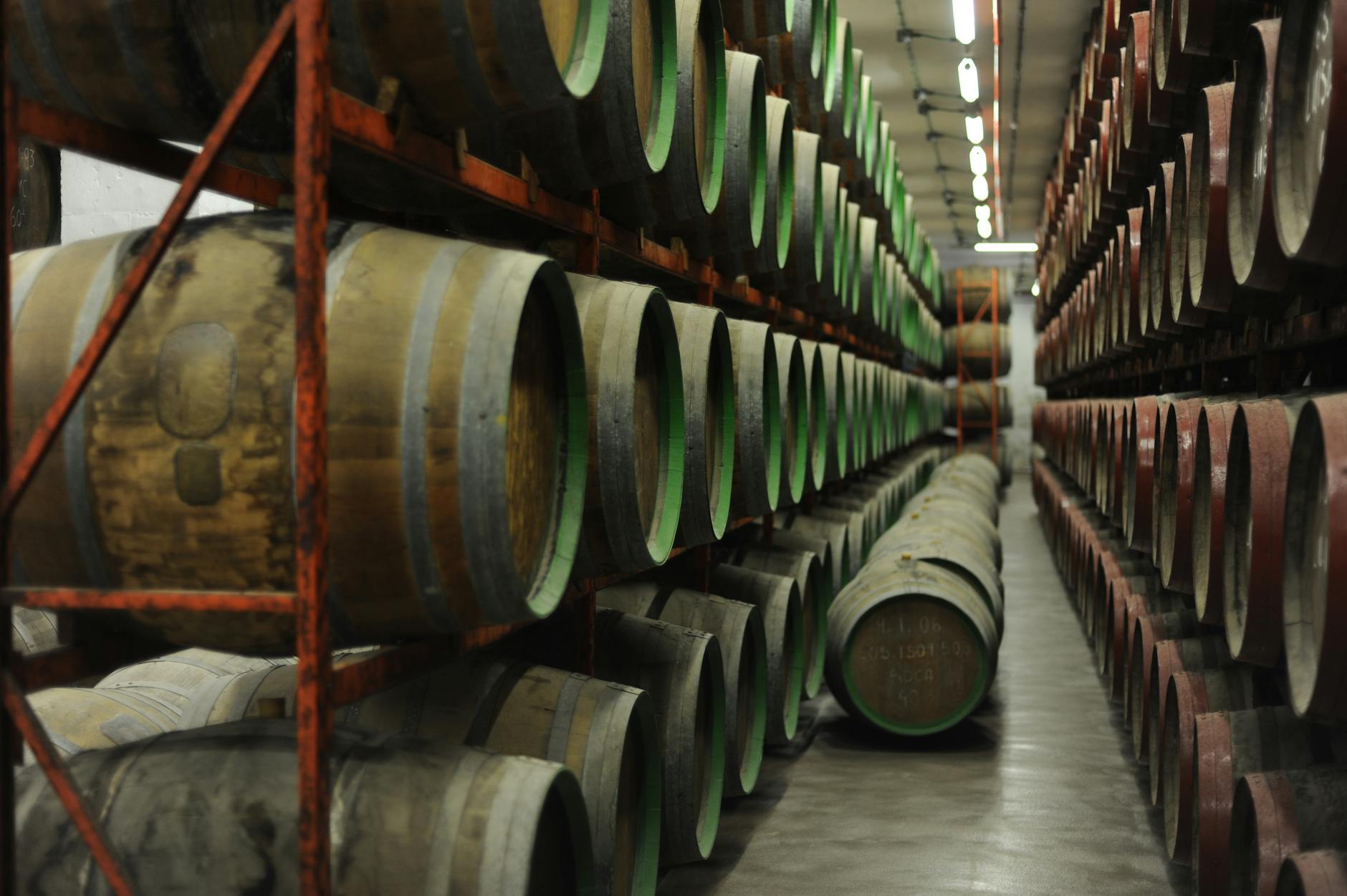
Heaven Hill Brands has filled the first barrel at its new $200 million Heaven Hill Springs Distillery in Bardstown. This major expansion returns large-scale production to Bardstown after the 1996 fire, betting on sustained long-term demand for premium bourbon.
The News
Heaven Hill Brands has filled its first barrel of bourbon at the company's new $200 million distillery in Bardstown, Kentucky, marking a significant milestone for the largest family-owned and operated spirits producer in the United States. The ceremony, held at the Heaven Hill Springs Distillery, signals the completion of a multi-year construction project that substantially expands the company's production footprint in the heart of bourbon country. The new facility sits on a sprawling campus that reinforces Bardstown's position as the undisputed centre of American whiskey manufacturing, adding considerable capacity at a time when bourbon demand — both domestically and in export markets — continues to run ahead of aged inventory.
The first barrelling is more than symbolic. It starts the clock on what will eventually become warehoused stock maturing under Heaven Hill's watch, stock that will not hit the market for years but that already represents a strategic bet on sustained long-term demand. For a company whose portfolio includes Evan Williams, Elijah Craig, Larceny, and the highly sought-after Parker's Heritage Collection, the investment underscores a conviction that premium and super-premium bourbon categories still have significant runway ahead of them. Heaven Hill's leadership reportedly framed the occasion as both a tribute to the company's eight decades of distilling heritage and a forward-looking commitment to meeting global appetite for Kentucky straight bourbon.
Trade Context
Heaven Hill has operated in Bardstown since its founding in 1935, making it one of the longest-standing bourbon producers in the region. The original distillery on Loretto Road was devastated by a catastrophic fire in 1996 that destroyed roughly 90,000 barrels of ageing whiskey in a single night — an event still etched into industry memory. Production was subsequently moved to the former Bernheim Distillery in Louisville, where the company distilled for nearly three decades. The new Heaven Hill Springs Distillery effectively brings large-scale production back to Bardstown for the first time since that disaster, closing a chapter that the Shapira family, now in its second and third generations of ownership, has long wanted to resolve.
- Producer / Distillery: Heaven Hill Brands — Heaven Hill Springs Distillery, Bardstown, Kentucky
- Category: Bourbon / American Whiskey
- Investment: Approximately $200 million across distillery construction and supporting infrastructure
- Market implication: A material increase in Heaven Hill's distilling capacity, positioning the company to compete more aggressively in premium bourbon segments and secure long-term aged inventory
The $200 million figure places this project among the largest single-site distillery investments in recent American whiskey history, comparable in scale to Beam Suntory's expansion at Booker Noe Distillery and Brown-Forman's ongoing investment at its Old Forester campus in Louisville. It also arrives at a moment when several major Kentucky producers are expanding simultaneously. Bardstown Bourbon Company, which operates a contract and proprietary distilling model nearby, has continued to grow its warehousing footprint. Meanwhile, Sazerac has poured hundreds of millions into expanding Buffalo Trace's capacity over the past several years. The cumulative effect is a bourbon production build-out not seen since the post-Prohibition era, raising questions about whether the industry is calibrating supply correctly for the next decade.
Why It Matters
For the whisky trade, the first fill at Heaven Hill Springs Distillery carries several implications worth watching. First, additional distilling capacity means more new-make spirit entering warehouses — spirit that will mature into products arriving on shelves between roughly 2030 and 2040, depending on age statements. In a market where aged bourbon remains chronically short, this is welcome news for retailers and on-trade buyers who have struggled with allocations for the better part of a decade. Heaven Hill's expanded output should, over time, ease some of the supply pressure on expressions like Elijah Craig Barrel Proof and the company's single barrel programmes, though relief will not be immediate.
Second, the investment reinforces the broader trend of family-owned American distillers reinvesting aggressively rather than selling to multinational drinks conglomerates. Heaven Hill has resisted acquisition overtures that have absorbed other heritage producers, and a $200 million capital commitment signals that the Shapira family sees no reason to change course. For cask investors and those tracking bourbon as a maturing asset class, the expansion adds future supply to the market — a factor that could moderate secondary-market premiums on Heaven Hill expressions over the long term, though scarcity of current aged stock will persist for years yet.
Third, the return of Heaven Hill's distilling operations to Bardstown cements the town's status as the gravitational centre of bourbon production. With Heaven Hill, Barton 1792, Bardstown Bourbon Company, Lux Row, and Willett all operating within a short radius, Bardstown now hosts a concentration of distilling capacity that rivals or exceeds any other location in Kentucky. For trade visitors, tourism operators, and the broader Kentucky bourbon ecosystem, the implications are substantial — and the first barrel filled at Heaven Hill Springs is the clearest signal yet that the industry's expansion cycle is far from over.
Frequently Asked Questions
Where is Heaven Hill's new distillery located?
The new Heaven Hill Springs Distillery is located in Bardstown, Kentucky, the heart of bourbon country.
How much did Heaven Hill invest in the new distillery?
Heaven Hill invested approximately $200 million in the construction of the new distillery and supporting infrastructure.
Why is this new distillery significant for Heaven Hill?
It brings large-scale bourbon production back to Bardstown for the first time since the 1996 fire and significantly increases the company's capacity for future aged inventory.
What does this expansion mean for the bourbon market?
It adds substantial new distilling capacity, with new spirit entering warehouses now to become aged bourbon hitting the market roughly between 2030 and 2040.