Ask a whisky connoisseur to define the classic Highland profile, and you may be met with a thoughtful pause. Unlike the peated smoke of Islay or the fruit-forward elegance of Speyside, Scotland’s largest whisky region is a magnificent, sprawling territory of contrasts. This diversity is the very soul of highland single malt scotch whisky, yet it can be a source of confusion for collectors and investors alike. Is it robust and coastal, or delicate and floral? The answer, satisfyingly, is all of the above.
This connoisseur’s guide is designed to bring clarity and confidence to your exploration. We will journey through the distinct sub-regions, from the rich, full-bodied drams of the North to the lighter, fruitier spirits of the South. You will discover the iconic distilleries that define the landscape and learn to identify their signature styles. More than just a tasting tour, we will also explore the provenance and investment potential that make these whiskies a cornerstone of any serious portfolio, a true liquid legacy.
Defining the Highlands: The Vast and Varied Heart of Scotch Whisky
The Highlands is, by a significant margin, the largest geographical whisky-producing region in Scotland. Its boundaries are legally defined by the historic ‘Highland Line,’ a demarcation that once separated the Gaelic-speaking Highlands from the Scots-speaking Lowlands, profoundly shaping the spirit’s heritage. This immense territory, stretching from the northern coast down to the central belt, is the very heartland of Scotch whisky craftsmanship. Unlike the focused, peat-forward profile of Islay or the fruit-and-floral character of Speyside, the sheer scale of the Highlands prevents a single, unifying style. Instead, it offers an unparalleled diversity of expression, making the exploration of highland single malt scotch whisky a deeply rewarding journey for any connoisseur or investor. The region is so vast that it even technically includes the Islands malts (from distilleries on Skye, Jura, Mull, and others), with the notable exception of Islay.
The Four Corners of the Highlands: Understanding the Sub-Regions
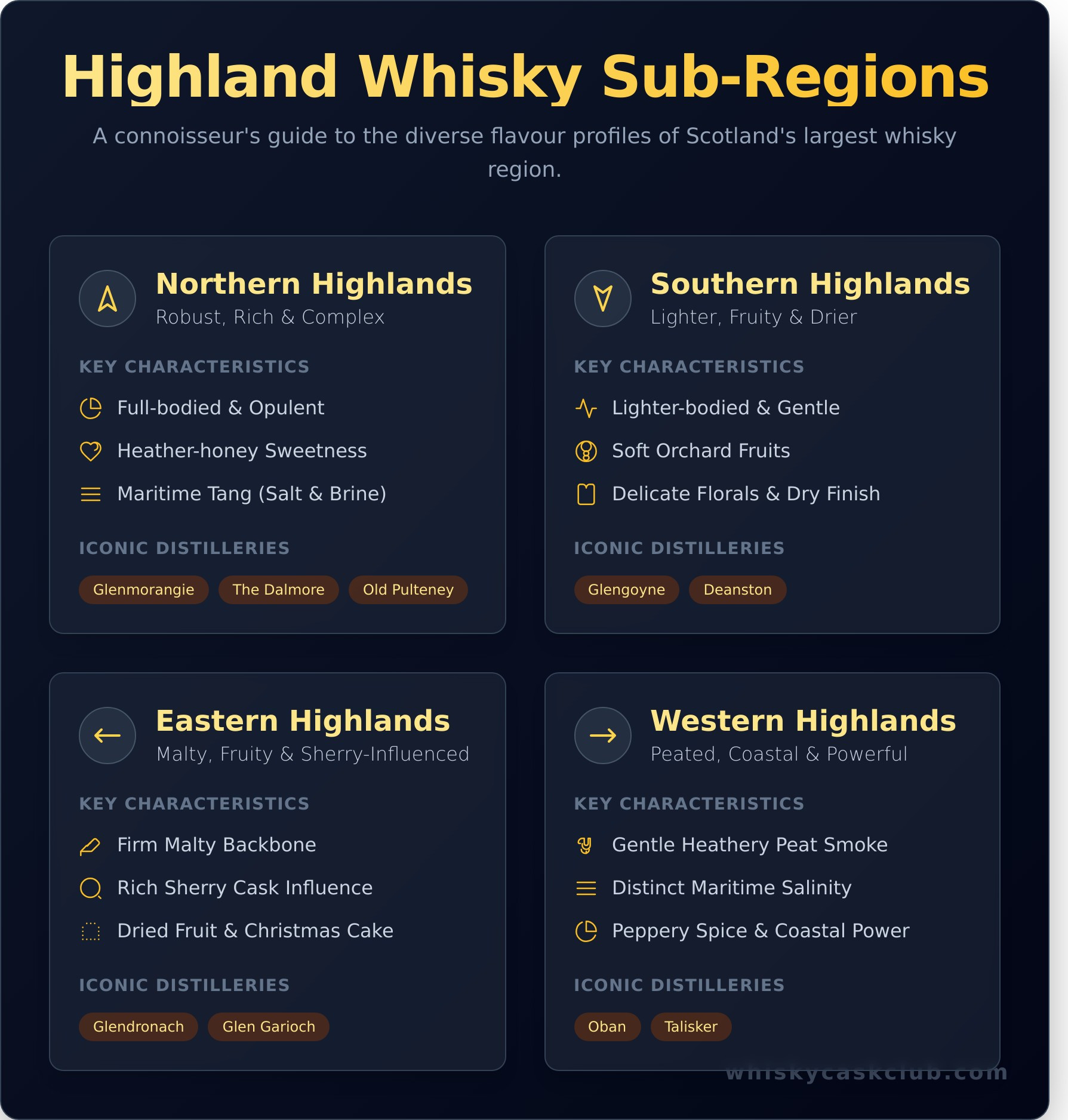
To truly appreciate the region’s complexity, experts and investors alike often divide it into four unofficial sub-regions. Each corner is shaped by its unique geography, which in turn dictates the exclusive character of its local spirit. This geographical provenance is fundamental to a cask’s value and future legacy.
- Northern Highlands: Often full-bodied and complex, with maritime, spicy, and sometimes waxy notes.
- Southern Highlands: Bordering the Lowlands, these whiskies are typically lighter, drier, and fruitier, offering a more accessible introduction to the regional style.
- Eastern Highlands: Home to fertile farmlands, this area produces rich, malty, and often sweet whiskies, sometimes with a whisper of smoke.
- Western Highlands: Characterised by the rugged coast, these malts are frequently peated, with a briny, maritime influence that echoes the nearby Islands.
Terroir and Its Influence on Highland Malts
The concept of terroir is paramount in understanding the nuances of the various Highland single malts. The water source, a critical component of a whisky’s DNA, can range from soft, peaty mountain burns to harder, mineral-rich springs, each imparting a foundational character. Furthermore, the local climate profoundly affects maturation in the cask. A whisky aging in a cool, salt-laced coastal warehouse will develop a distinctly different profile than one resting in a drier, inland dunnage warehouse with more stable temperatures. While not universally peated, some distilleries honour their heritage by using local peat, which often contributes a fragrant, heathery smoke far removed from the medicinal intensity of Islay peat.
The Spectrum of Flavour: A Journey Through Highland Styles
To truly appreciate the provenance of a fine highland single malt scotch whisky, one must journey through its distinct terroirs. The vast geography of the region is not a monolith; it is a mosaic of microclimates and traditions that give rise to a remarkable breadth of character. The sheer diversity of Highland single malt styles can be traced back to these unique geographical pockets, each imparting a signature character to its spirit. Understanding these sub-regions is the key to navigating this celebrated category with confidence.
Northern Highlands: Robust, Rich, and Complex
The spirit crafted in the far north is often full-bodied and opulent. Expect a complex interplay of rich sweetness, heather-honey, and warming spice. Distilleries here produce whiskies with substantial character and structure. For a classic example, look to the elegant fruit and floral notes of Glenmorangie or the rich, decadent profile of The Dalmore. Coastal distilleries like Old Pulteney add a fascinating maritime tang of salt and brine to this robust style.
Southern Highlands: Lighter, Fruity, and Often Drier
Bordering the Lowlands, this sub-region produces a more gentle and approachable style of whisky. The profile is typically lighter-bodied, clean, and dry, often showcasing notes of soft orchard fruits, delicate florals, and a gentle malt sweetness. These whiskies offer a superb introduction to the Highland character without overwhelming the palate. Exemplary distilleries include Glengoyne, with its unpeated, apple-forward spirit, and the soft, nutty character of Deanston.
Eastern Highlands: Malty, Fruity, and Often Sherry-Influenced
The East is renowned for its masterful use of sherry casks, which imparts a deep, fruity complexity. These whiskies are typically medium to full-bodied with a firm, malty backbone. The influence of sherry wood lends luxurious notes of dried fruit, Christmas cake, and rich spice. Glendronach is the quintessential example, celebrated for its sherry-matured expressions. Glen Garioch offers a robust, honeyed character that speaks to the heritage of the region.
Western Highlands & Islands: A Touch of Peat and Maritime Power
This sub-region delivers a powerful, coastal experience. Whiskies from the west coast and its islands often carry a distinct maritime salinity, a touch of peppery spice, and a whisper of peat smoke. It is crucial to distinguish this gentle, heathery smoke from the intense, medicinal peat of Islay. The perfectly balanced fruit and smoke of Oban, or the briny, peppery power of Talisker from the Isle of Skye, define this bold and evocative style.
Iconic Distilleries: The Pillars of Highland Provenance
The sheer diversity of the Highlands is best understood through its legendary distilleries. These institutions are not merely producers; they are the standard-bearers of regional character and the bedrock of provenance for collectors and investors. They represent the pinnacle of craftsmanship in highland single malt scotch whisky, each offering a unique narrative and a tangible connection to its specific locale.
The Global Icons: Glenmorangie and The Dalmore
In the Northern Highlands, Glenmorangie is celebrated for its towering stills, which produce an exceptionally elegant and floral spirit, and for its pioneering work in wood finishing. Its counterpart, The Dalmore, has cultivated an enduring reputation for absolute luxury, crafting rich, complex whiskies matured in the world’s finest sherry casks. These are blue-chip names, globally recognized for their impeccable quality and investment-grade status.
The Connoisseur’s Favourites: Glendronach and Clynelish
Deeper exploration reveals distilleries prized by aficionados for their unique and uncompromising character. Glendronach, an Eastern Highland jewel, is the undisputed master of sherry cask maturation, famed for its decadent and full-bodied ‘sherry bombs’. Meanwhile, the Northern Highland distillery Clynelish commands a devoted following for its signature waxy and honeyed profile-a complex and highly sought-after spirit that is a cornerstone of any serious collection.
The Coastal Sentinels: Oban and Old Pulteney
The profound influence of the sea is perfectly captured by the region’s coastal guardians. Oban’s unique ‘West Highland’ style offers a sophisticated balance of gentle maritime salt, rich orchard fruit, and a whisper of smoke. Further north, Old Pulteney stands as the definitive ‘Maritime Malt,’ with a distinctly briny and robust character that speaks directly of its windswept home in Wick, delivering an authentic taste of its coastal heritage.
Each of these distilleries offers a distinct profile, providing clear examples of the region’s stylistic breadth. For the discerning investor, understanding this provenance is the key to identifying casks with the greatest potential for building a legacy of both taste and value.
A Strategic View: Investing in Highland Single Malt Casks
Beyond the sensory pleasure of a dram lies a tangible opportunity: owning a piece of Scotland’s distilling heritage. For the discerning individual, a cask of Highland single malt is more than a collector’s item; it is a tangible asset class that blends passion with pragmatism. The journey from enthusiast to investor begins with understanding the unique financial landscape of this revered region.
Owning a cask is a direct investment in the craftsmanship and legacy of a distillery. As the spirit matures within the oak, its character deepens, and its market value appreciates. This unique asset offers a compelling alternative to traditional investments, grounded in centuries of history and a globally expanding demand for rare and premium spirits.
Why the Highlands Offer Portfolio Diversification
The sheer scale and variety of the Highlands make it an ideal region for building a balanced whisky portfolio. The investment potential of highland single malt scotch whisky casks is intrinsically linked to this diversity. An investor can strategically acquire casks from different sub-regions-balancing the robust, peated spirit of a coastal Northern distillery with the lighter, fruit-forward character of a Southern producer. This approach allows you to capture a wide spectrum of flavour profiles and maturation potentials, mitigating risk and maximising opportunity.
Key Factors for Investment: Distillery Reputation and Rarity
Not all casks are created equal. The future value of a highland single malt scotch whisky cask is determined by a confluence of critical factors that require expert assessment. A successful investment strategy is built upon understanding these key pillars:
- Distillery Brand Strength: Casks from iconic distilleries with global acclaim, such as Dalmore or Glenmorangie, often represent a stable, long-term investment with a proven track record of value appreciation.
- Rarity and Scarcity: Limited-edition releases, casks from silent (closed) distilleries, or single casks from small-batch producers are highly sought-after. Their finite nature creates powerful market demand.
- Cask Provenance: The age of the spirit, the type of wood (e.g., first-fill Oloroso sherry vs. American oak bourbon), and its history are paramount in defining a cask as truly investment-grade.
Navigating Your Highland Cask Journey
The complexity and nuance of the Highland market demand expert guidance. Identifying a cask with exceptional potential requires deep industry knowledge and access. A trusted partner is essential for sourcing casks with impeccable provenance, verifying their history, and managing the asset through its maturation journey. This ensures your investment is not only secure but also positioned for optimal growth.
Begin building your legacy with an expertly curated Highland cask.
From Connoisseur to Collector: The Highland Legacy Awaits
Our journey through the Highlands reveals a region of unparalleled diversity and profound heritage. From the robust, complex spirits of the north to the delicate, fruity malts of the south, the sheer spectrum of flavour is a testament to the mastery of its iconic distilleries. This exploration confirms that the enduring appeal of highland single malt scotch whisky lies not just in its taste, but in its rich provenance and proven potential as a tangible asset.
For those ready to deepen their connection to this legacy, the ultimate step is ownership. Transforming passion into a prudent investment requires both exclusive access and expert guidance. This is where your personal journey as a collector begins.
We invite you to discover exclusive Highland cask investment opportunities with the Whisky Cask Club. As a member, you gain privileged access to rare casks from iconic Highland distilleries, benefit from expert portfolio management, and rest assured with secure, fully insured storage in Scottish bonded warehouses. Your legacy in Scotch whisky is waiting.
Frequently Asked Questions
What is the main difference between Highland and Speyside single malt?
While Speyside is geographically within the Highlands, its dense concentration of distilleries has cultivated a distinct regional character. Speyside whiskies are celebrated for their elegant, fruity, and floral notes, often with hints of apple and honey. In contrast, the vast Highland region offers immense diversity. Here you will find everything from robust and rich malts to delicate, heathery drams and complex coastal expressions. The key difference lies in Speyside’s focused style versus the broad spectrum of Highland craftsmanship.
Are all Highland Scotch whiskies peated or smoky?
Contrary to a common misconception, not all Highland Scotch whiskies are peated. While select distilleries, such as Ardmore or Oban, masterfully incorporate peat to create a subtle smokiness, the majority of Highland producers do not. The region is renowned for its stylistic breadth, with many expressions celebrated for their rich, malty character, honeyed sweetness, or vibrant fruit notes. Peat is a deliberate stylistic choice, not a regional requirement, allowing for a wide portfolio of flavour profiles.
What are some good examples of Highland single malts for a beginner?
For those beginning their journey, we recommend exploring the cornerstones of the region. Glenmorangie ‘The Original’ 10 Year Old offers a quintessential introduction with its delicate floral and citrus notes. For a richer, more complex profile, The Dalmore 12 Year Old, with its signature sherry cask influence, provides notes of chocolate and orange. These expressions are not merely for beginners; they are revered classics that beautifully showcase the elegance and craftsmanship inherent to the Highlands.
How much does the type of cask (e.g., sherry, bourbon) influence the final flavour of a Highland whisky?
The cask’s influence is paramount, contributing up to 70% of a whisky’s final flavour and character. Ex-bourbon casks typically impart notes of vanilla, honey, and toasted oak, creating a lighter, sweeter spirit. In contrast, premium sherry casks bestow deep, rich flavours of dried fruits, spice, and chocolate. The selection of wood is the most critical decision in maturation, defining the ultimate profile of a premium highland single malt scotch whisky and its long-term provenance.
Why is a Highland whisky cask considered a strong alternative investment?
A Highland whisky cask is considered a strong alternative investment due to its status as a tangible, appreciating asset. Unlike financial instruments, a cask of maturing whisky has intrinsic value that grows as it ages, increasing in both rarity and quality. This asset class has shown remarkable resilience and consistent growth, insulated from the volatility of traditional markets. It represents a prudent strategy for portfolio diversification and a unique opportunity to build a tangible legacy with proven performance.
Which Highland distilleries are most sought-after by collectors and investors?
Discerning collectors and investors focus on distilleries with exceptional provenance and proven secondary market performance. Casks from The Dalmore are highly sought-after for their luxury positioning and mastery of sherry cask maturation. The legendary Brora, a revered ‘ghost’ distillery, commands premium prices due to its extreme rarity. Similarly, casks from Clynelish are prized for their unique character and cult following, representing a sophisticated choice for those building a world-class portfolio of fine spirits.