
The article warns that whisky investment scams persist, using 1990s frauds as examples. It advises investors to avoid high-pressure sales, verify companies via Companies House, and be wary of inflated prices due to a limited secondary market for private casks.
Whisky scams are still a problem and are much the same as they were 25 years ago. In Whisky Magazine Volume 1 Issue 2, Jim Budd covers the then-current frauds of the 1990s in an article.
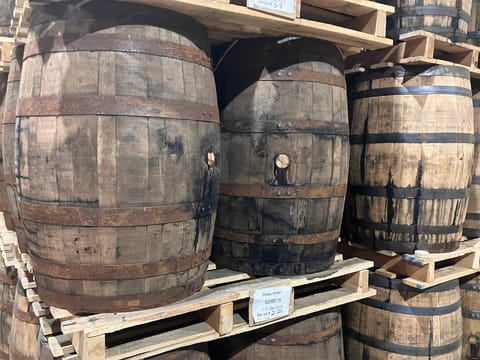
Inexplicably, they cite one instance of overpaying for a Macallan barrel. They spent £4,092 for a product that “Scotch Industry sources believe was worth between £600 and £650” That barrel of Macallan is likely worth more than £150,000 now, so whoever purchased it was not terribly harmed by the fraud.
The same cannot be said for customers of “Grandtully” whisky, which was really whisky from a somewhat less prominent Speyside distillery. Or anybody who “possessed” one of the unmet orders of mostly Isle of Arran barrels ordered from James Devereaux Ltd when it halted operations in 1996.
- The lessons to be learned about the purchase of barrels remain unchanged.
- Do not succumb to pressure from a smooth-talking salesman to make a purchase; instead, do your own research.
- Whenever feasible, get a second opinion; we provide free cask valuations, or you can use the cask calculator to obtain a per-bottle price for a cask that may be compared to current auction prices for bottles of comparable size.
- Use Companies House to verify the assertions made by businesses about their dates of operation and previous involvement in projects.
- If something seems too good to be true, it often is.
Investing in a new-fill cask of malt is enticing at first glance. What could be better than turning your favorite dram into cash? Sadly, it is not that straightforward. There is a relatively small secondary market for whisky barrels. Multinational corporations such as UDV have little interest in the occasional cask that a private person may own. In addition, most investment firms that emerged between 1993 and 1996 sold whisky barrels at exorbitantly inflated rates, often several times their actual worth.
Ended in 1996, the bubble broke. First James Devereaux Ltd, which had offices in London’s Mayfair and a store in London’s Burlington Arcade, suspended operations in November 1996 with estimated debts of £1.9 million, including unfilled client orders of £1.3 million. The firm has mostly sold Isle of Arran whisky barrels.”
“In mid-December 1996, the Department of Trade and Industry initiated the closure of several beverage investment enterprises ‘in the public interest.’ Others entered liquidation or discontinued operations. Now, none of these companies are headquartered in the United Kingdom. However, other enterprises are still functioning in other parts of the globe. Australia is one of the nations now catching the interest of whisky “investment” experts.
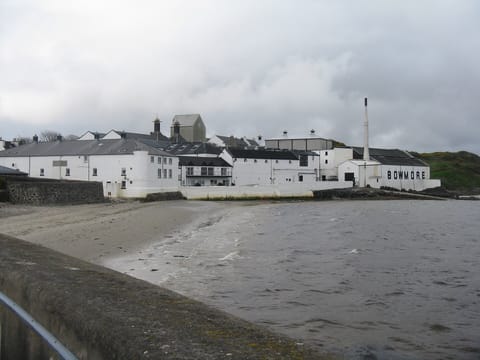
The Spirit Company, one of these new whisky investment companies, has just launched a sales campaign from its Adelaide headquarters. It provides a variety of barrels from renowned distilleries like Macallan (Millennium brand label), Ardbeg, Glen Grant, Springbank, Bowmore, and Talisker.
The Spirit Company’s headquarters are in Amsterdam, but its registration is in Gibraltar. It was incorporated on February 18, 1997, which is odd in light of a passage in its usual letter of introduction. Private investors currently account for over 35% of our company (compared to 3% in 1994), and there is no reason why this trend should not continue.
The single director of the corporation resides in Sark, Channel Islands, and was appointed on March 11, 1998. One investor just paid £4,092 for a hogshead of Macallan 1989. Sources inside the Scotch business believe this item is valued between £600 and £650.
Mondeley International Ltd, doing business in Sydney as Gleneagles Spirit Management, was registered in the Bahamas in March 1997. Two of its directors also reside in Sark. The Channel Islands In May 1997, Gleneagles offered new-fill barrels of Speyside Distillery Company’s Drumguish. A hogshead was priced at AU$3,450 (£1,627 equivalent) (55 gallons).
At the time, the retail price was around £400. In addition, a sherry butt (110 gallons) was available for AU$6,300 (£2,970). The estimated retail price ranged from £750 to £800. Prices to ‘investors’ increased to AU$4,995 (£1,921) for the hogshead and AU$8,995 (£3,460) for the butt by October 1998. Considering currency changes, it is impossible to explain this increase of 17% based on current global sales patterns.
Speyside distillery provides the malt for Gleneagles Spirit Management, an unusual origin. The Christie family owns the distillery and is located near the little hamlet of Kingussie on the banks of the River Tromie. The first distillation of a spirit occurred in January 1991. Speyside’s website offers a hogshead of Speyside for $1,400 (about £850) on a page labeled “Investment”; this is a better deal than purchasing via Gleneagles.
The price includes insurance and storage for five years. Potential bidders are informed that “nobody in the Scotch Whisky Industry is more exacting,” which is described as a “great chance.” George Christie and his family are committed to never disappointing their consumers. The whisky’s quality is a source of family pride. Likewise, outlet specifications are comparable. The company’s items are sold exclusively in the most famous retailers throughout the globe.
Frequently Asked QuestionsWhat are common signs of a whisky investment scam?
High-pressure sales tactics, prices significantly above market value, and companies with complex offshore registrations or short operating histories are major red flags.How can I verify a whisky cask investment company?
Use official registries like UK Companies House to check their date of incorporation, directors, and financial standing. Be skeptical of firms registered in tax havens.What happened in the 1990s whisky investment bubble?
Companies like James Devereaux Ltd sold casks at hugely inflated prices before collapsing in 1996, leaving investors with unmet orders and significant debts, highlighting the market's risks.Is there a reliable secondary market for private whisky casks?
No, the secondary market for privately owned casks is very small, and major distillers typically have no interest in buying them, making liquidation difficult.
Frequently Asked QuestionsWhat are the red flags for a whisky investment scam?
High-pressure sales tactics, prices inflated far above market value, and complex offshore company structures are major red flags.How can I verify a whisky investment company?
Use the UK's Companies House to check the company's registration date, operational history, and director details.Why is the secondary market for whisky casks a problem?
The secondary market for private casks is very limited, making it difficult to sell your investment, as large corporations aren't interested in single casks.What was a major whisky investment scam in the 1990s?
James Devereaux Ltd sold overpriced casks (often Isle of Arran) and collapsed in 1996 with £1.3 million in unfilled client orders.