
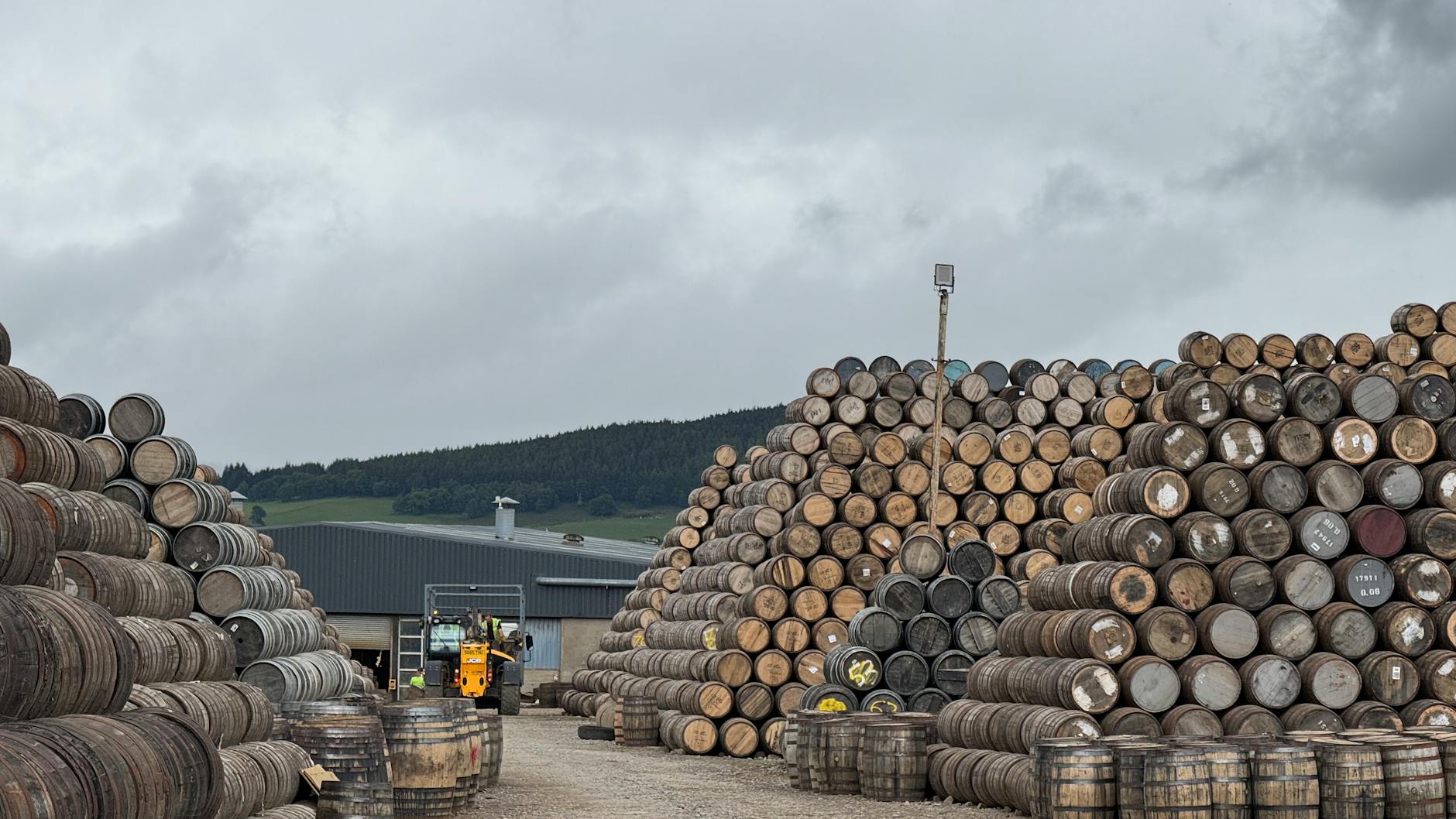
The Dram Good Whisky Festival returns to Arbikie Highland Estate in Angus in June 2026. Free to attend, it brings together distilleries and bottlers at one of Scotland's most distinctive single-estate producers, with implications for trade buyers and cask investors tracking emerging Scotch provenance.
Dram Good Whisky Festival Returns to Arbikie in June 2026
The Dram Good Whisky Festival is set to return to Arbikie Highland Estate in Angus, Scotland, this June 2026, bringing together an eclectic lineup of distilleries, independent bottlers, and spirits producers for what has become one of Scotland's more distinctive regional whisky events. The festival's return to Arbikie is notable not just as a calendar fixture but as a signal of growing appetite for experiential whisky events staged at working distilleries rather than city-centre convention halls. For trade visitors and serious collectors, the setting matters: Arbikie is not a passive host but an active participant with its own compelling production story, and that combination of venue and content gives this festival a sharper edge than most.
Arbikie's Production Story and Why It Commands Attention
Arbikie Highland Estate operates as one of Scotland's few genuinely field-to-bottle distilleries, growing its own grain on the same Angus farmland where its stills operate. The distillery has built a reputation for rigorous provenance, producing single-estate Scotch whisky alongside gin and vodka, all from crops it can trace row by row. That agricultural specificity has resonated with a trade increasingly focused on transparency and terroir-led storytelling, particularly as premium Scotch producers look for ways to differentiate in a crowded global market.
Arbikie is also home to what it claims is the world's first climate-positive spirit, a rye whisky produced using a carbon sequestration model that offsets more greenhouse gas than its production generates. Whether or not that claim withstands full lifecycle scrutiny, it has attracted significant press attention and positioned the distillery at the intersection of sustainability and premium spirits — a space that investors and major drinks groups are watching closely. The festival's association with that narrative gives it a platform that extends well beyond a standard tasting weekend.
What the Festival Lineup Signals for the Wider Market
Events like Dram Good serve a function that goes beyond consumer entertainment. They act as informal trade gatherings where independent bottlers, emerging distilleries, and established names share the same floor and the same conversation. For smaller producers, festival appearances are a cost-effective route to building wholesale relationships and collector interest without the overhead of major trade shows. For buyers and cask investors, they offer a concentrated opportunity to taste across a broad range of styles and production philosophies in a single afternoon.
The decision to anchor the festival at a working distillery rather than a neutral venue also reflects a broader shift in how producers are approaching direct-to-consumer engagement. Distillery-based events generate stronger brand association, allow for behind-the-scenes access that reinforces premium positioning, and create content that travels well on trade and consumer media channels. Arbikie's estate setting — with its visible grain fields and compact but serious production facility — provides exactly the kind of visual and narrative context that supports premium pricing conversations downstream.
Trade and Collector Implications
For cask investors and collectors tracking emerging Scottish distilleries, Arbikie represents an interesting case study. Its single-estate model limits production volume by design, and its sustainability credentials have attracted a demographic of buyer — younger, values-driven, internationally mobile — that the broader Scotch industry has struggled to engage consistently. Whisky released under a verifiable provenance and environmental framework is increasingly commanding attention at specialist auction, and Arbikie's positioning aligns well with that trend.
The June 2026 festival will also bring scrutiny to how the distillery's whisky range has matured since its early releases. Arbikie has been producing Scotch whisky long enough for some expressions to carry meaningful age, and festival settings often see limited or exclusive bottlings surface that don't appear in standard retail channels. Trade buyers and collectors attending with that in mind will want to arrive early and ask specific questions about cask availability and forthcoming releases. The festival is free to attend, which lowers the barrier for trade visitors and broadens the potential audience considerably — a smart move for a distillery still building national and international distribution.
Frequently Asked Questions
When and where is the Dram Good Whisky Festival 2026?
The Dram Good Whisky Festival returns to Arbikie Highland Estate in Angus, Scotland, in June 2026. Arbikie is a working single-estate distillery located on the Angus coast, roughly equidistant between Dundee and Montrose.
What makes Arbikie different from other Scottish distilleries?
Arbikie operates as a field-to-bottle distillery, growing its own grain on the estate where it distils. It also produces what it describes as the world's first climate-positive spirit, a rye whisky underpinned by a carbon sequestration model. This combination of agricultural provenance and sustainability credentials sets it apart from the majority of Scottish producers.
Is the Dram Good Whisky Festival relevant for trade buyers and cask investors?
Yes. The festival brings together independent bottlers, emerging distilleries, and established producers in a working distillery setting, making it a useful informal networking and tasting opportunity. Limited or exclusive bottlings sometimes surface at such events, and the format allows for direct conversations with producers about cask availability and future releases.
What is the admission cost for the festival?
The festival is free to attend, which significantly lowers the barrier for trade visitors, collectors, and casual enthusiasts alike. This approach broadens the audience and increases footfall, benefiting both exhibitors and the host distillery.
Why are distillery-based festivals growing in popularity compared to city venue events?
Distillery-based events offer a combination of brand immersion, production transparency, and narrative context that neutral venues cannot replicate. For producers, they reinforce premium positioning and generate stronger consumer and trade associations. For visitors, access to the actual production environment adds credibility and depth to the tasting experience that a hotel ballroom simply cannot provide.