Could the perceived freedom of a solo venture be the very thing that compromises your liquid legacy? While the allure of total control is strong, the bridge between a simple purchase and a high-yield alternative asset is often paved with regulatory complexities. Deciding on a DIY whisky investment vs using a broker isn’t merely a matter of saving on commissions. It’s about whether you’re prepared to manage the 40 plus hours of administrative labor required to navigate HMRC’s WOWGR regulations and secure private warehouse space independently.
You’ve likely spent years refining your investment strategy, and you rightly expect your capital to be protected by both provenance and expertise. We understand the hesitation to pay for services you might feel capable of handling yourself. This guide clarifies whether a hands-on approach or a professional brokerage aligns best with your goals for building a secure whisky cask portfolio. We will provide a framework to evaluate broker fees, explain the 2024 regulatory hurdles, and outline the secure path to long term capital appreciation through a clear, professional exit strategy.
Key Takeaways
- Discern whether the romantic independence of a DIY path or the sophisticated security of a managed brokerage better aligns with your long-term wealth goals.
- Uncover the regulatory realities of the Scottish “Walled Garden” and why essential certifications like WOWGR make professional oversight a practical necessity.
- Perform a direct value comparison of DIY whisky investment vs using a broker to understand how professional networks provide access to rare, high-tier distillery releases.
- Learn the “Gold Standard” for vetting brokers, focusing on transparency through Delivery Orders and physical warehouse presence to avoid industry pitfalls.
- Explore how a legacy-first approach transforms cask ownership from a simple transaction into a curated journey of prestige and multi-generational value.
The Allure of the Cask: DIY vs. Managed Whisky Investment
Ownership of a Scotch whisky cask is a profound statement of prestige and a commitment to a liquid legacy. It represents a tangible connection to heritage that few other assets can match. For the modern investor, the journey begins at a critical crossroads: the choice between DIY whisky investment vs using a broker. One path appeals to the independent spirit who seeks a direct relationship with a distillery. The other offers a sophisticated, managed experience through a boutique brokerage, which has become the institutional standard for those building serious portfolios.
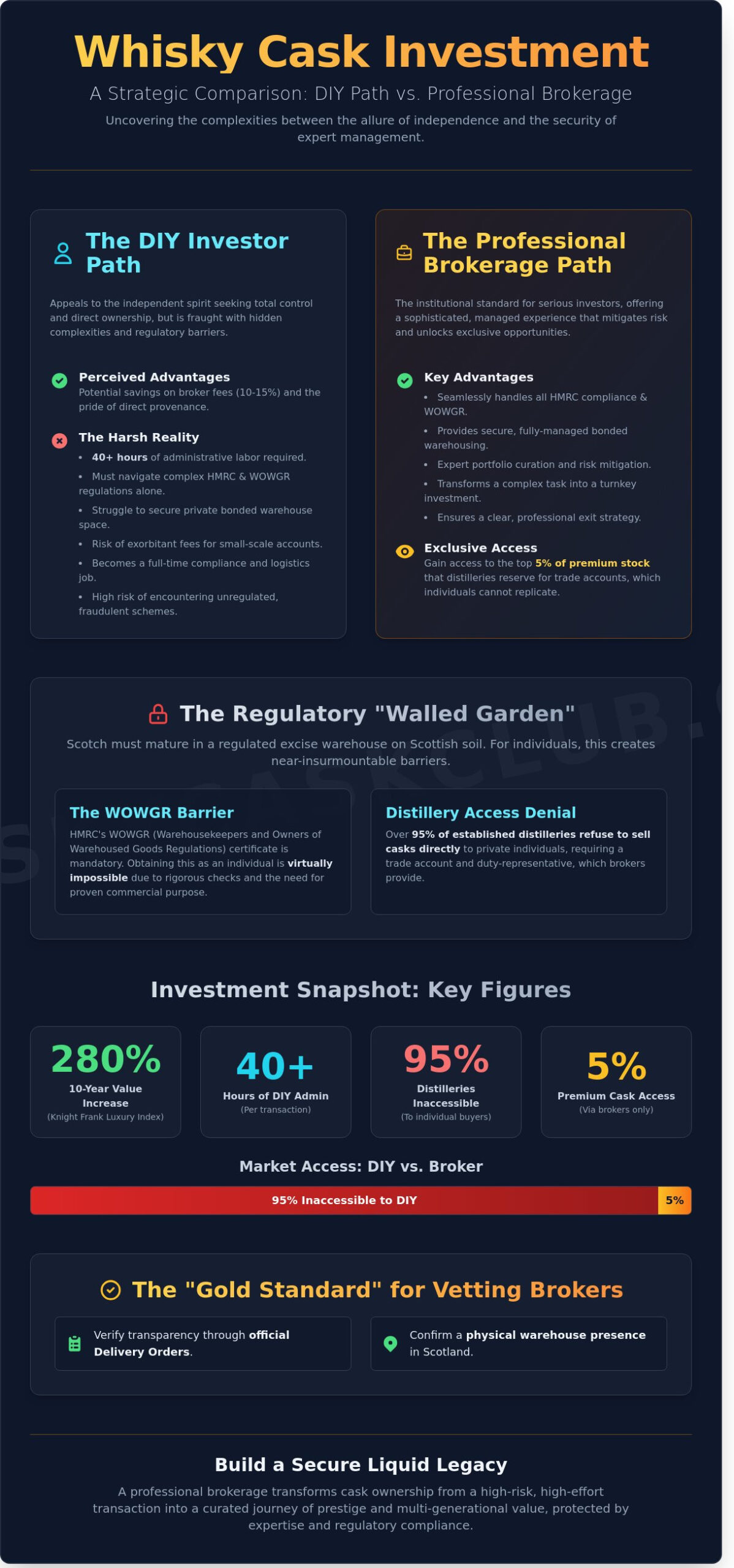
The romantic appeal of the DIY connoisseur approach is undeniable. It attracts individuals who value the hunt and the personal satisfaction of direct selection. However, the market has evolved significantly. According to the 2023 Knight Frank Luxury Investment Index, rare whisky has seen a 280% increase in value over the last ten years. This growth has brought increased scrutiny and complex legal frameworks. Before you commit capital to a decade of maturation, you must grasp the basics of whisky production and the strict regulations that govern its movement. The core question remains: does the broker’s fee, typically ranging from 10% to 15%, justify the mitigation of regulatory and market risk?
What is a Whisky Cask Broker?
A broker acts as a knowledgeable intermediary between historic distilleries and private investors. They possess sourcing power that individuals simply cannot replicate; they often secure access to the 5% of premium stock that distilleries don’t reserve for their own labels. A broker is a portfolio curator who manages the intricate details of HMRC compliance, WOWGR requirements, and secure bonded warehousing. They transform a complex logistical challenge into a seamless investment journey, ensuring your legacy is protected by expertise.
The Motivation for DIY Investing
Many investors are drawn to the DIY route by the prospect of lower entry prices. By removing the middleman, you might save on initial costs. There is also the undeniable allure of direct provenance and the pride of seeing your name on a cask head in a Speyside warehouse. Beginners often start here, but many eventually encounter a regulatory wall. Without a broker, navigating the 2013 Scotch Whisky Regulations or arranging the eventual bottling and exit strategy becomes a full-time occupation. The DIY path requires you to be your own compliance officer and logistics expert.
The DIY Reality Check: Regulatory Hurdles and HMRC
The dream of owning a rare Scotch often begins with a vision of a private cellar, yet the reality of UK tax law is far more restrictive. You can’t simply store a 200-litre cask in your garage or a personal basement. Under the Scotch Whisky Regulations 2009, any spirit destined to be called “Scotch” must mature in an excise warehouse on Scottish soil. This creates a “walled garden” where the liquid is protected but also heavily regulated. When evaluating the merits of DIY whisky investment vs using a broker, the administrative burden of this walled garden is the first major hurdle for the solo investor.
The WOWGR and Bonded Warehouse Barrier
Over 95% of established Scottish distilleries refuse to sell directly to private individuals because they require a trade account and a duty-representative. HMRC mandates that anyone holding spirit in duty-suspended storage must comply with strict certification standards. WOWGR is the primary legal framework governing cask ownership in Scotland. Obtaining a WOWGR certificate as an individual is a grueling process that involves rigorous background checks and a proven commercial need, making it nearly impossible for the casual collector.
Without these credentials, you’re forced to rely on third-party warehouse keepers who may charge exorbitant fees for small-scale accounts. This regulatory complexity is where the risks of fraudulent schemes often emerge; unregulated operators frequently promise to bypass these HMRC requirements, leaving investors with no legal title to their liquid. A professional partner ensures your whisky investment remains fully compliant and securely documented.
Hidden Costs of Going Solo
The financial friction of going solo can quickly erode potential gains. While a large-scale broker might pay a nominal weekly storage fee, an individual owner often faces “retail” rates that are 300% higher due to administrative surcharges for single-unit accounts. There’s also the matter of technical maintenance. The “Angel’s Share” accounts for a 2% annual loss of volume through evaporation, but it also impacts the alcohol by volume (ABV).
- Independent Regauging: A 2024 regauging session to check the health of your spirit can cost £150 or more when warehouse labor and documentation are factored in.
- Insurance Gaps: Securing “retail” insurance for a single cask is notoriously difficult; most standard providers won’t cover assets in commercial bonds, leaving your legacy exposed.
- Administrative Friction: Every transfer of ownership requires meticulous paperwork that distilleries often prioritize last for non-trade clients.
A cask is a living, breathing asset that requires constant vigilance. If you fail to monitor the ABV and it drops below 40%, your investment is no longer legally whisky. When comparing DIY whisky investment vs using a broker, the broker’s ability to manage these technicalities at scale provides a level of security that a solo investor simply can’t replicate. To ensure your journey into Scotch is as smooth as the spirit itself, you might consider how a curated approach to cask ownership can eliminate these regulatory headaches.
DIY vs. Brokerage: A Direct Comparison of Value
A DIY approach often hits a wall at the distillery gate. While an individual might secure a single cask of young spirit from a smaller producer, established whiskey clubs and professional brokers leverage decades of industry relationships to access stock that never reaches the public market. When evaluating a DIY whisky investment vs using a broker, you’re essentially choosing between limited retail options and an institutional-grade portfolio.
The broker’s commission, often ranging from 7% to 12% of the purchase price, represents more than just a finder’s fee. It covers the logistical burden of HMRC compliance, secure bonded warehousing, and insurance that protects your capital against fire or theft. Paying this markup secures a vetted asset with a clear path to maturity. It’s the difference between buying a random plot of land and investing in a managed estate with a guaranteed infrastructure.
The Network Effect and Liquidity
Brokers function as vital market makers for your asset. They maintain deep, active relationships with independent bottlers and global auction houses that the average individual cannot access. When you choose a DIY whisky investment vs using a broker, you’re responsible for your own exit strategy. Selling a private cask at auction often results in a 15% to 25% “hammer fee” loss. A broker provides the exit liquidity necessary to realize gains, often matching your cask with a buyer within their own network in a matter of weeks.
Provenance and Quality Control
The risk of “bad wood” is a silent killer of returns. An exhausted refill hogshead can result in a spirit that lacks character even after 18 years of aging. Brokers filter out these inferior casks through rigorous physical inspections and re-gauging reports. They also verify the authenticity of paperwork from prestigious scotch distilleries to ensure the liquid matches the label. Provenance is the single most important factor in a cask’s terminal value. Without a verified, unbroken chain of custody, the market will heavily discount your asset at the point of sale.
- Verification: Professional brokers confirm the Cask Receipt and Delivery Order paperwork is legitimate.
- Health Checks: They monitor the “Angels’ Share” to ensure evaporation rates aren’t signaling a leak.
- Access: Brokers often have “first right of refusal” on rare parcels from top-tier Highland and Islay producers.
How to Vet a Whisky Broker: Avoiding the “Cowboys”
The choice between DIY whisky investment vs using a broker defines the security and prestige of your portfolio. While the allure of the spirit is timeless, the secondary market has attracted “cowboy” operators who lack the necessary credentials. A sophisticated investor knows that a broker’s value lies in their transparency and their deep-rooted connections within the Scottish Highlands. Transparency isn’t just a buzzword; it’s the gold standard of this industry. You must demand to see the Delivery Order (DO) for any purchase. This document acts as the title deed in the Scotch Whisky Association (SWA) framework. Without a DO in your name, you don’t legally own the liquid.
A broker’s physical presence in Scotland is equally vital. A firm operating solely from a glass office in London or Dubai without regular warehouse visits is a significant risk. Reputable advisors visit maturation facilities at least three times a year to inspect casks and maintain relationships with warehouse managers. This hands-on approach ensures the provenance of your asset is never in question. When discussing DIY whisky investment vs using a broker, consider the fee structure as a litmus test for integrity. Standard management fees typically range from 1.5% to 2.5% annually. Performance fees, often set at 15% of the net profit, ensure the broker is incentivized to secure the highest possible valuation for your legacy.
The Red Flags of Cask Investment
Be skeptical of any firm promising guaranteed returns of 15% or more. The Knight Frank Luxury Investment Index 2023 showed that while rare whisky has seen a 280% increase over ten years, year-on-year growth can fluctuate. Guarantees are a hallmark of unregulated “cowboy” firms. Avoid brokers who use high-pressure tactics or claim a common 2023 refill hogshead is a “once-in-a-lifetime” opportunity. If they can’t provide a specific insurance certificate or the exact location of the bonded warehouse, it’s time to walk away.
Questions Every Investor Should Ask
Before committing capital, ask: “Can I visit my cask?” A legitimate broker will provide a qualified yes, usually requiring a 48-hour notice for warehouse safety protocols. Always verify if the insurance is held in your name or the company’s; your name provides the only true protection. Finally, demand a specific exit strategy for your highland single malt scotch whisky. A broker without a proven track record of liquidating assets through auctions or private bottlers isn’t a partner; they’re a middleman.
Ready to build a secure, tangible legacy with a trusted advisor? Explore exclusive cask opportunities with Whisky Cask Club today.
The Whisky Cask Club: A Legacy-First Approach
The choice between DIY whisky investment vs using a broker often hinges on whether you’re seeking a hobby or a heritage. At the Whisky Cask Club, we treat spirits as a sophisticated alternative asset class. Our methodology combines the deep-rooted passion of a connoisseur with the cold pragmatism of a wealth manager. We provide our members with exclusive entry points to rare casks from top-tier scotch distilleries, ensuring every purchase has a documented pedigree and clear provenance.
Our “Legacy” philosophy prioritizes long-term wealth preservation over short-term speculation. While many retail buyers chase market trends that may evaporate, we focus on the intrinsic value of the liquid. We manage the entire lifecycle of your asset through a full-service model. This includes:
- Secure storage in HMRC-regulated bonded warehouses across Scotland.
- Comprehensive insurance coverage at full replacement value.
- Bespoke exit strategies, including private sales, auctions, or bottling.
This managed approach eliminates the logistical hurdles that often derail independent investors. We handle the paperwork, the taxes, and the sampling, letting you focus on the growth of your portfolio.
Beyond Sourcing: Portfolio Strategy
We help you build a balanced portfolio by diversifying across Scotland’s iconic regions. This might involve pairing a vibrant Highland cask with a rare, smoke-infused Islay malt to hedge against shifting consumer palates. Our advisors focus on age-statement planning; for instance, holding a cask until it hits the 18-year or 25-year mark can unlock exponential demand from independent bottlers. This meticulous planning transforms a simple purchase into a durable, tangible asset for the next generation.
Your Journey Starts Here
Owning a cask is a deeply personal journey into the heart of Scottish craftsmanship. When comparing DIY whisky investment vs using a broker, the primary differentiator is the peace of mind provided by institutional-grade security and professional transparency. You’re joining an elite group of global investors who value rarity and heritage. It’s time to move beyond the transaction and begin building your liquid legacy. Speak with a Whisky Cask Club advisor today to explore our current private collections and secure your piece of history.
Secure Your Liquid Legacy
Choosing your path in the spirits market requires a balance of passion and pragmatism. While the DIY route offers a sense of total control, it often forces investors to navigate complex HMRC regulations and the logistical challenges of sourcing private storage alone. The debate of DIY whisky investment vs using a broker reveals that true value isn’t just in the liquid; it’s in the provenance and security provided by professional management. By partnering with experts, you gain direct access to investment-grade single malt Scotch resting in accredited bonded warehouses across Scotland. This ensures your asset matures under optimal conditions while maintaining its tax-advantaged status. Whether you’re based in our offices in Singapore, Hong Kong, or Melbourne, the goal remains the same. You’re building a heritage that transcends simple financial gain. You don’t have to navigate these complex markets without a map. It’s time to elevate your portfolio with a partner that understands the nuances of rare craftsmanship and global wealth management. Build your liquid legacy with the Whisky Cask Club today. Your journey toward owning a piece of Scottish history starts with a single, sophisticated choice.
Frequently Asked Questions
Can I buy a whisky cask directly from a distillery as a private individual?
You can purchase directly from certain distilleries, though your options are often limited to newer or smaller operations. Only about 15% of Scotland’s 140 active distilleries offer public cask programs. Established heritage brands like Macallan or Bowmore typically reserve their stock for internal blending or exclusive trade contracts, making them inaccessible to the average private buyer.
Choosing this route requires you to manage the entire legal process yourself. You’ll need to coordinate with the distillery’s warehouse manager and ensure all HMRC paperwork is filed correctly. It’s a hands-on approach that lacks the curated selection found through private investment clubs.
Is it cheaper to invest in whisky casks without a broker?
Initial purchase prices might seem lower, but the total cost of ownership often increases without a broker’s bulk-buying power. Brokers frequently secure storage and insurance rates that are 25% to 30% cheaper than what an individual can negotiate. When weighing DIY whisky investment vs using a broker, you must account for these recurring annual expenses that eat into your long-term margins.
Individual investors also face higher fees for regauging and sampling. A broker manages these logistics as part of a service package, often saving you hundreds of pounds over a ten-year maturation period. The premium you pay for expertise often pays for itself through these operational efficiencies.
What are the main risks of DIY whisky investment?
The greatest risks involve poor wood quality and the lack of a verified exit strategy. Without professional vetting, you might buy a cask with “tired” wood that fails to develop the complex flavor profiles required for a high-value resale. Industry data from 2023 suggests that 12% of private cask listings suffer from paperwork discrepancies that complicate legal transfers.
You also bear the full burden of finding a buyer when it’s time to liquidate. Unlike a managed service, a DIY investor doesn’t have immediate access to a global network of collectors or secondary market platforms. This can result in your capital being locked away longer than you originally planned.
How much does a whisky broker typically charge?
Most reputable brokers charge a commission ranging from 7% to 15% of the cask’s purchase price. This fee covers the sourcing of rare stock, the verification of provenance, and the legal transfer of the title deed. It’s a transparent cost for the security and expertise they bring to your portfolio.
Some firms also implement a flat annual management fee, usually between £50 and £100. This covers the essential costs of bonded storage and comprehensive insurance. These fees ensure your liquid asset is protected against fire, theft, or accidental damage while it matures in the warehouse.
How do I know if a whisky broker is legitimate?
A legitimate UK-based broker must hold a WOWGR or AWRS registration issued by HMRC. You should always ask for their specific registration number and verify it against the government’s regulatory database established in 1999. This certification proves they’re legally allowed to trade and store duty-suspended goods.
Check for physical office locations and a history of successful exits for their clients. A trustworthy partner will be transparent about their fee structure and provide clear, written contracts for every transaction. They’ll also use third-party escrow services for high-value purchases to protect your capital.
Can I store a whisky cask at home if I buy it myself?
You can’t store a cask in a private residence without triggering massive tax liabilities. To maintain the cask’s status as a tax-efficient alternative investment, it must stay in a licensed, government-bonded warehouse. Moving the cask to your home cellar would require the immediate payment of 20% VAT and an alcohol duty of £28.74 per litre of pure spirit.
Home storage also ruins the maturation process. Bonded warehouses are specifically designed to maintain the precise temperature and humidity levels needed for Scotch whisky to age gracefully. Storing a cask in a standard garage or basement could destroy the liquid’s value within a few seasons.
What happens if a whisky brokerage goes out of business?
Your investment remains secure as long as the cask’s title deed is registered in your name. Under the UK Sale of Goods Act 1979, the physical asset belongs to you, not the brokerage firm. If the company ceases operations, you simply appoint a new manager or deal directly with the bonded warehouse where the cask is housed.
The warehouse will have a record of the Delivery Order that proves your ownership. It’s vital to ensure you receive this document at the time of purchase. This legal separation between the broker’s assets and your cask provides a robust layer of protection for your legacy.
How do I sell my whisky cask if I bought it through a broker?
Selling is usually handled through the broker’s internal secondary market or their network of private collectors. Many brokers manage a database of thousands of active investors, often facilitating a sale within 30 to 60 days. This provides a much faster exit than trying to find a private buyer on your own.
Alternatively, you can move the cask to a specialist whisky auction house. While this offers a global stage, auctions typically charge a 15% seller’s commission and don’t guarantee a minimum price. Your broker can advise on the best timing and platform to maximize your return based on current market trends.