In a world of fluctuating markets and digital assets, the search for stability and tangible value has never been more critical. If your traditional portfolio feels increasingly volatile, you may be seeking an investment that is not only secure but also holds a story-a tangible asset you can truly own. This is where the art of diversifying your investment portfolio with whisky presents a compelling, time-honoured alternative. It represents a unique blend of heritage, craftsmanship, and pragmatic financial growth, moving beyond abstract numbers to something real and appreciating in character.
This strategic guide is designed to demystify the world of cask ownership. We will explore how premium whisky performs as a tangible asset class, offering a robust hedge against inflation and a source of stability. You will discover the principles for curating a rare collection, understand the clear process of buying, storing, and selling a cask, and ultimately, learn how to build a tangible legacy that matures in both value and character. Welcome to a more sophisticated approach to wealth preservation.
Key Takeaways
Discover how premium whisky casks offer a strategic hedge against market volatility, a key benefit when diversifying your investment portfolio with whisky.
This guide provides the essential framework for diversifying an investment portfolio with whisky, transforming a passion into a legacy-building tangible asset.
A successful whisky investment strategy involves diversifying within your cask holdings to balance risk and capture diverse growth opportunities.
Master the essential steps of cask acquisition, from sourcing with provenance to planning a secure and profitable exit strategy.
Why Whisky Casks: The Premier Diversification Tool for Modern Investors
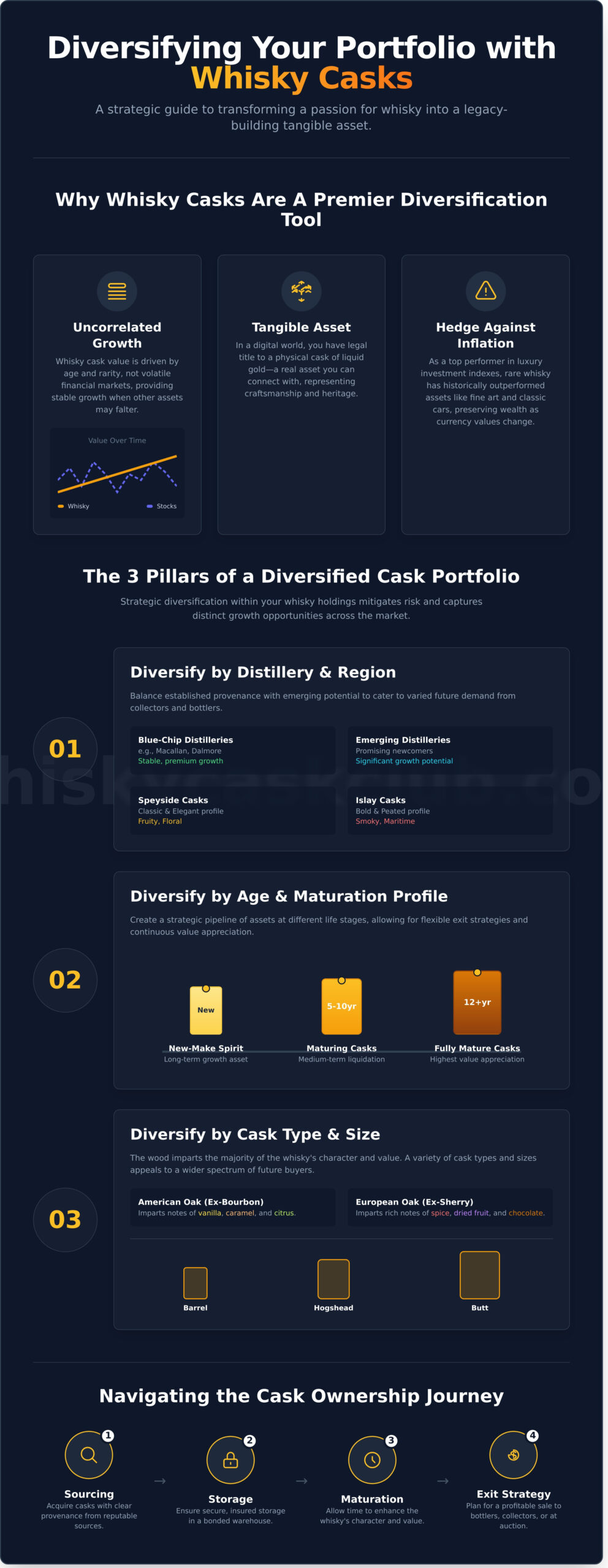
In an era of market volatility and digital abstraction, discerning investors are increasingly seeking assets that offer both stability and tangible value. Casks of premium Scotch whisky have emerged as a formidable alternative investment, providing a sophisticated method for diversifying an investment portfolio with whisky. Unlike stocks or bonds, a whisky cask is a physical, appreciating asset whose value is intrinsically tied to its age, rarity, and provenance-not the unpredictable whims of financial markets.
This asset class has demonstrated remarkable resilience and growth, historically showing a low correlation with traditional financial instruments. Its performance is a testament to its unique value drivers: scarcity and maturation. As the liquid ages within the oak, its character deepens and its value increases. This consistent appreciation has been recognized by prestigious market observers; for years, rare whisky has been a standout performer in the Knight Frank Luxury Investment Index, often outperforming other passion assets like fine art and classic cars. This makes it a powerful hedge against inflation, preserving wealth as currency values fluctuate.
Uncorrelated Growth in Volatile Times
The true power of diversifying an investment portfolio with whisky lies in its independence. A cask of single malt Scotch matures quietly in a bonded warehouse, indifferent to geopolitical events or stock market corrections. Its value is driven by an internal, predictable process: the passage of time. As the whisky ages towards its peak, it becomes rarer and more desirable. This provides a sanctuary of stable growth, protecting capital when other assets falter.
A Tangible Asset in a Digital World
In a world dominated by digital transactions, there is a profound security in owning a tangible asset. A whisky cask is not a line on a screen; it is a physical vessel of liquid gold, with legal ownership and title held in your name. The appeal extends beyond the balance sheet; it is the pride of owning a piece of genuine craftsmanship and heritage. To truly appreciate this, one can learn about the history of Scotch whisky and its centuries-old traditions. This is an investment you can connect with, a legacy built on the foundations of quality and time.
Principles of Building a Diversified Whisky Cask Portfolio
A sophisticated approach to diversifying investment portfolio with whisky extends beyond simply acquiring a single cask. True strategic advantage lies in applying the principles of diversification within your whisky holdings. Just as a traditional investor would not place all their capital into one stock, a discerning cask owner should curate a balanced collection. The goal is to mitigate risk while capturing distinct growth opportunities across the market. A well-structured portfolio is more resilient and offers greater flexibility than a single-cask investment.
This curated approach is built upon three foundational pillars:
Distillery & Region: Balancing established provenance with emerging potential.
Age & Maturation: Creating a pipeline of assets at different life stages.
Cask Type: Leveraging the influence of wood to create unique, desirable spirits.
Diversification by Distillery and Region
A robust portfolio balances iconic ‘blue-chip’ distilleries like Macallan or Dalmore, known for their stable, premium growth, with casks from promising emerging distilleries. These newcomers offer significant growth potential as their reputation builds. Furthermore, regional diversification is key. A classic, elegant Speyside cask offers a different market appeal than a bold, peated Islay cask, allowing you to cater to varied future demand from collectors and bottlers.
Diversification by Age and Maturation Profile
Holding casks at different stages of maturity creates a strategic pipeline for future exits. A portfolio containing new-make spirit (your long-term growth asset), maturing casks (5-10 years old), and fully mature casks (12+ years) provides options. This allows you to liquidate certain assets in the medium term while allowing others to continue their journey of appreciation, where value can increase dramatically with age.
Diversification by Cask Type
The cask itself is responsible for the majority of a whisky’s final character and, therefore, its value. A portfolio should include a variety of wood types, such as American oak ex-bourbon barrels, which impart notes of vanilla and caramel, alongside European oak ex-sherry butts, known for their rich, spicy, and dried fruit profiles. Varying cask sizes-from smaller barrels to larger hogsheads and butts-also affects maturation speed and final liquid volume, creating a diverse range of tangible assets appealing to a wider spectrum of future buyers.
Whisky Casks vs. Other Alternative Assets: A Comparative Analysis
The discerning investor understands that a truly resilient portfolio extends beyond traditional stocks and bonds. Alternative assets like fine wine, art, and precious metals are common considerations, yet premium Scotch whisky casks present a uniquely compelling proposition. For those seriously considering diversifying their investment portfolio with whisky, it is crucial to understand how this tangible asset distinguishes itself through a combination of predictable growth, clear ownership, and deep-rooted heritage.
Whisky vs. Fine Wine
The fundamental difference lies in maturation. Fine wine ages in the bottle, its development sealed upon release. Whisky, however, matures in the cask. This distinction grants the owner unparalleled control over the asset’s final character and value, allowing for strategic decisions on aging duration. Furthermore, the global demand for premium Scotch whisky is exceptionally broad and robust, offering a more stable and geographically diverse market than many region-specific fine wines.
Whisky vs. Art & Collectibles
While art offers cultural prestige, its value is often tethered to subjective taste, critical reception, and fluctuating trends. Whisky cask appreciation is far more objective. Its value is intrinsically linked to the measurable, predictable process of aging. The provenance of the distillery, the age of the spirit, and the type of cask provide clear, established metrics for valuation, removing the guesswork and volatility that can define the art market.
Whisky vs. Gold & Precious Metals
Gold is a timeless store of value-a hedge against economic uncertainty. A whisky cask, however, is a productive, appreciating asset. While gold preserves wealth, whisky grows it. The finite supply of aged spirit naturally depletes as it is bottled and consumed, constantly increasing the rarity and value of remaining mature casks. This dynamic of diminishing supply and increasing demand creates a powerful engine for capital appreciation, not just preservation.
Similarly, property investment offers another robust avenue for building wealth through tangible assets. For those exploring how different physical assets can secure financial freedom, it’s worth understanding the strategies involved. To see how this applies in the real estate sector, you can check out Elite Wealth Creators for insights on building property portfolios.
Ultimately, owning a whisky cask offers a unique synthesis of control, predictable appreciation, and a tangible connection to a legacy of craftsmanship. It transforms the act of diversifying an investment portfolio with whisky from a simple financial transaction into the creation of a rare and valuable asset. To explore our curated selection of premium casks, visit us at whiskycaskclub.com.
Navigating the Process: From Acquisition to Exit Strategy
Transforming a passion for fine spirits into a tangible asset requires a clear, secure, and well-managed process. For investors considering diversifying investment portfolio with whisky, understanding the lifecycle of a cask is paramount. Far from being a complex logistical challenge, the journey from acquisition to exit is a meticulously managed experience when guided by a trusted partner. This transparency builds the confidence needed to create a lasting legacy.
Sourcing and Due Diligence
The foundation of any sound cask investment is unimpeachable provenance. We ensure every cask has a clear title and documented history, verifying its authenticity and guaranteeing your legal ownership. Through our established relationships, we provide exclusive access to rare releases directly from premier distilleries-opportunities unavailable to the public. This curated sourcing process ensures you acquire only premium, investment-grade assets.
Secure Storage and Management
Your cask is more than an investment; it is a piece of living history. To protect it, your asset is stored in a government-regulated bonded warehouse. These highly secure facilities provide the perfect environment for maturation and are fully insured against theft and damage. Under the watchful eye of warehouse professionals, your whisky will mature gracefully, slowly losing a small amount to evaporation-the fabled ‘Angel’s Share’-a natural part of its journey to perfection.
Planning Your Exit
A successful investment strategy is defined by its exit. From day one, your advisor will help you map out your long-term goals. The most common and often most lucrative exit strategies include:
Many investors use the returns from such tangible assets to fund equally tangible life experiences. If planning for future adventures like cruises or all-inclusive vacations is part of your long-term vision, you can visit Crestwell Travel Services for specialized guidance.
Selling the cask in-bond to another investor, a private collector, or an independent bottler.
Bottling the whisky for a private collection, corporate gifting, or retail sale.
A well-defined exit is the final, critical step in the process. A forward-thinking plan ensures that when the time is right, you can realize the full potential of your asset with clarity and confidence.
Your Journey into Whisky Cask Investment Begins Here
As we’ve explored, whisky casks represent more than just a passion; they are a tangible, appreciating asset with a proven ability to hedge against market volatility. The strategic selection of casks and a clear exit plan are paramount to success. Ultimately, the art of diversifying investment portfolio with whisky lies in balancing the romance of the spirit with the pragmatism of a sound financial strategy. It is an investment in craftsmanship, heritage, and time itself.
At the Whisky Cask Club, we demystify this exclusive market. Our experts provide strategic advice and grant you access to rare casks from world-renowned distilleries, ensuring your investment is not only secure in government-bonded warehouses in Scotland but also expertly managed for optimal growth. This is your opportunity to move beyond traditional assets and build a lasting legacy.
Frequently Asked Questions: Investing in Whisky Casks
What is the typical holding period for a whisky cask investment?
A whisky cask is a long-term tangible asset. The recommended holding period typically ranges from 5 to 20 years, allowing the spirit to mature, develop complexity, and appreciate in value. Many investors target key age statements, such as 10, 12, or 18 years, as these are highly sought-after milestones in the premium whisky market. Patience is fundamental to realizing the full potential of your investment and building a true legacy asset.
Are returns from whisky cask investment guaranteed?
No investment offers guaranteed returns, and whisky casks are no exception. While fine whisky has demonstrated strong historical performance, its value is ultimately subject to market dynamics of supply and demand. The provenance of the distillery, the rarity of the spirit, and global economic trends all influence future value. Our role is to provide expert guidance to help you select casks with the highest potential for appreciation, based on deep market insight.
How is the value of a whisky cask determined over time?
A cask’s value is determined by a confluence of factors. Age is paramount; as the whisky matures, its flavour profile deepens and it becomes scarcer. The distillery’s reputation and heritage are also critical, as casks from iconic brands command a premium. Finally, rarity, cask type (e.g., sherry or bourbon wood), and the remaining alcohol by volume (ABV) all play a significant role. We provide regular valuations based on these key metrics.
What is the minimum investment required to start a whisky portfolio?
While building a substantial portfolio can involve significant capital, the entry point for cask ownership is more accessible than many assume. We can help clients begin their journey with a single, carefully sourced cask. Initial investments for a young cask from a premium distillery typically start from £4,000 to £7,000. This makes diversifying an investment portfolio with whisky an attainable goal for serious investors seeking a unique, tangible asset with long-term growth potential.
What are the primary risks associated with investing in whisky casks?
The principal risks include market fluctuations affecting exit prices and the inherent illiquidity of the asset. There is also a physical risk of cask damage or excessive evaporation, known as the “angel’s share.” These physical risks are mitigated through secure, government-bonded warehousing and comprehensive insurance, which we manage on your behalf. Acknowledging these factors is a key part of a pragmatic and successful investment strategy in this exclusive asset class.
How liquid is a whisky cask investment compared to stocks?
A whisky cask is significantly less liquid than traditional assets like stocks or bonds, which can be sold almost instantaneously. Selling a cask requires finding a suitable buyer through a network of brokers, auction houses, or private collectors-a process that can take weeks or months. For this reason, cask ownership should be viewed as a long-term strategy for wealth preservation and legacy-building, not for investors who may require immediate access to their capital.