The Asian Spirits Masters 2026 awarded medals to producers across Japan, Taiwan, India, and emerging nations. Results validate Asian whisky quality for importers and cask investors, reinforcing the category's growing commercial and critical credibility in global trade.
Asian Spirits Masters 2026: What the Results Mean for World Whisky
The Asian Spirits Masters 2026 has delivered its verdict, and the results carry real weight for anyone tracking the world whisky category. Producers from Japan, Taiwan, India, and a growing clutch of emerging Asian distilling nations collected medals across multiple categories, reinforcing what the trade has been watching closely for several years: Asia is no longer a peripheral whisky story. It is a central one, with distilleries producing spirits that are winning on technical merit in blind judging panels, not on novelty or geography alone.
The competition, which assesses spirits across a rigorous blind-tasting format using a Masters, Gold, Silver, and Bronze tier structure, saw standout performances from established names alongside newer entrants that signal the depth of distilling talent now operating across the continent. The results matter not just as a snapshot of quality, but as a calibration point for buyers, importers, and cask investors who are actively repositioning portfolios to account for Asian whisky's growing commercial and critical footprint.
Trade Context: Who Is Competing and What Categories Dominated
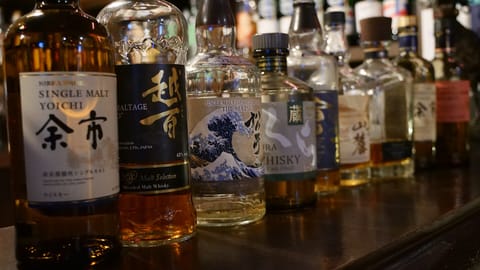
Japanese whisky continued to perform strongly in the premium single malt and blended categories, with several expressions from established Honshu and Hokkaido-based producers securing top-tier recognition. Taiwan's Kavalan, long the benchmark for Asian single malt quality, again featured prominently, reinforcing its position as the region's most export-ready brand and a reliable reference point for international buyers assessing Asian whisky credibility. Indian producers, led by distilleries operating in the Himalayan foothills and southern highlands, added further depth to the results, with single malts aged in a combination of ex-bourbon and virgin oak picking up significant recognition.
Beyond the established names, the 2026 results flagged emerging producers from South Korea, Vietnam, and the Philippines entering the competitive arena with credible first and second releases. These are distilleries working with local grain varieties, experimenting with indigenous wood maturation, and producing spirits that offer flavour profiles genuinely distinct from Scotch, Irish, or American benchmarks. That distinctiveness is increasingly a commercial asset rather than a barrier, particularly in markets where younger consumers are actively seeking alternatives to the canonical whisky categories.
- Key Regions Represented: Japan, Taiwan, India, South Korea, Vietnam, Philippines
- Category Strength: Single malt Asian whisky, blended Asian whisky, regional grain spirits
- Judging Format: Blind tasting, Masters / Gold / Silver / Bronze tier structure
- Market Implication: Medal results provide credible third-party validation for importers and on-trade buyers building Asian whisky ranges
Why It Matters for the Whisky Trade and Cask Investors
For the whisky trade, competition results like the Asian Spirits Masters function as more than marketing ammunition. They serve as a quality audit that helps buyers navigate a category where provenance claims are still being standardised and regulation remains uneven across jurisdictions. Japan, for instance, only introduced formal geographic indication rules for Japanese whisky in 2021, and enforcement and consumer awareness are still maturing. India's Geographical Indication framework for whisky is similarly evolving. In that context, independent medal recognition from a credible judging body provides a layer of assurance that pure brand marketing cannot replicate.
For cask investors, the picture is more nuanced but no less significant. The growing critical profile of Asian single malts is beginning to translate into secondary market activity, particularly for aged Japanese whisky casks and limited Taiwanese releases. Kavalan's older expressions have already demonstrated strong auction performance in European and Asian salerooms, and as Indian distilleries extend their age statements into the ten-year-plus range, comparable interest is likely to follow. The 2026 medal results add another data point to the argument that Asian whisky is not a speculative punt but a category with measurable, documented quality progression.
Importers and on-trade buyers in the UK, Europe, and North America should treat the 2026 results as a practical sourcing guide. The Masters and Gold recipients represent spirits that have passed scrutiny at the highest level of competitive blind tasting, and in a market where shelf space is contested and buyers are under pressure to justify range decisions, that external validation carries genuine commercial utility. The Asian whisky category is building the institutional infrastructure — regulation, competition recognition, age statement credibility — that transforms regional curiosity into a durable trade category.
Frequently Asked Questions
What is the Asian Spirits Masters competition?
The Asian Spirits Masters is a professional blind-tasting competition that evaluates spirits produced across Asia, awarding medals at Masters, Gold, Silver, and Bronze level based on quality assessed by an independent judging panel. It covers whisky, baijiu, shochu, and other regional spirit categories.
Which Asian whisky producers performed well at the 2026 awards?
Japanese and Taiwanese producers, including Kavalan, featured prominently alongside strong Indian single malt entries. Emerging producers from South Korea, Vietnam, and the Philippines also competed, signalling a broadening of the competitive field beyond the established Asian whisky nations.
How does Asian whisky differ from Scotch or American whisky in flavour?
Asian whiskies often feature lighter, more floral or tropical fruit profiles, influenced by faster maturation in warm climates, local grain varieties, and the use of indigenous or non-traditional cask types. Indian whiskies aged in Himalayan conditions can develop rich, spiced characters distinct from European or North American benchmarks.
Is Asian whisky a viable category for cask investment?
Aged Japanese whisky casks and premium Taiwanese expressions have already shown secondary market traction. As Indian and other Asian distilleries extend their age statements, the investment case strengthens, though regulatory inconsistency and provenance verification remain factors investors should assess carefully.
Why do competition results matter for whisky importers and buyers?
In categories where regulation and labelling standards are still developing, independent blind-tasting results provide third-party quality validation. For buyers building Asian whisky ranges, Masters and Gold medals offer defensible evidence of quality that supports ranging decisions and consumer-facing communication.