An overproof spirit is bottled above 50% ABV. The term originated from British naval gunpowder tests. Overproof overlaps with cask-strength bottlings and affects production yield, pricing, and brand strategy, often commanding auction premiums.
The News
The term "overproof" is appearing with increasing frequency on whisky labels, spirits menus, and auction catalogues — yet its precise meaning remains poorly understood across much of the trade. In straightforward terms, an overproof spirit is one bottled above the standard proof threshold, which in most markets means anything north of 50 percent alcohol by volume (ABV). The designation has deep historical roots in rum and navy traditions, but its relevance to the modern whisky market is growing as consumer demand for cask-strength and high-ABV bottlings continues to accelerate. For distillers, the decision to bottle overproof is not merely a stylistic choice; it carries significant implications for production economics, warehousing strategy, and brand positioning.
To understand overproof, one must first understand proof itself. The concept dates back to 18th-century Britain, where the Royal Navy tested spirit strength by dousing gunpowder with rum. If the gunpowder still ignited, the spirit was deemed "proof" — roughly 57.15 percent ABV on the British scale. Anything above that mark was overproof; anything below was underproof. The United States later adopted a simpler system where proof equals twice the ABV percentage, making 100 proof equivalent to 50 percent ABV. In American terms, overproof means anything bottled above 50 percent ABV, while the British definition sets the bar higher at 57.15 percent. Both definitions remain in active commercial use, which can create confusion when spirits cross international markets.
Trade Context
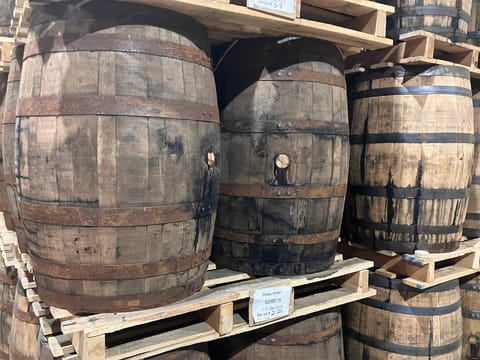
Within the whisky category specifically, overproof bottlings overlap heavily with what the trade calls "cask strength" — spirit drawn from the barrel and bottled without dilution, or with only minimal water added. Most single malt Scotch matures at somewhere between 55 and 65 percent ABV, depending on the age of the cask, warehouse conditions, and the original filling strength. Bourbon, which enters the barrel at a maximum of 62.5 percent ABV by law, can emerge at similar or slightly lower strengths after years of Kentucky humidity and temperature swings. The critical distinction is that "cask strength" describes a method — no significant dilution — while "overproof" describes a result: the final ABV exceeds the standard benchmark.
- Producer / Distillery: Multiple — including notable cask-strength specialists such as Springbank, Elijah Craig, Wray & Nephew, and Smith & Cross
- Category: Scotch / Bourbon / Rum / Spirits (cross-category relevance)
- Market implication: Rising demand for overproof and cask-strength bottlings is reshaping pricing, warehousing decisions, and brand portfolio strategy across the whisky trade
From a production standpoint, bottling overproof changes the arithmetic considerably. A distiller who would normally dilute a 60 percent ABV spirit down to 40 percent can extract roughly fifty percent more bottles from the same cask. Conversely, bottling at cask strength or overproof yields fewer bottles per cask but commands a significantly higher price per unit. Auction data from platforms such as Whisky Auctioneer and Rare Whisky 101 consistently shows that cask-strength editions outperform their standard-strength counterparts in secondary market value, often by margins of 20 to 40 percent for comparable age and provenance. This pricing dynamic has not gone unnoticed by independent bottlers, who increasingly favour overproof releases as a way to differentiate their offerings and justify premium positioning.
Regulation also plays a role. In the European Union, whisky must be bottled at a minimum of 40 percent ABV, but there is no upper ceiling imposed by statute. The same applies under the Scotch Whisky Regulations 2009 and U.S. federal standards of identity. However, certain markets impose additional excise duties on spirits above specific ABV thresholds, which can influence distribution strategy. Australian excise, for example, is calculated per litre of alcohol, making overproof bottlings proportionally more expensive at the wholesale level. Distillers targeting export markets must weigh these fiscal realities against the brand equity that high-strength releases can generate.
Why It Matters
For the whisky trade, the overproof trend reflects a broader shift in consumer sophistication. Serious collectors and cask investors increasingly view dilution as a compromise — a commercial concession that prioritises yield over character. Bottlings at natural strength are perceived as more authentic, offering an unfiltered window into the cask's influence on the spirit. This perception drives both primary market premiums and secondary market resilience. Distilleries that maintain a consistent line of cask-strength or overproof releases — Springbank's 12 Year Old Cask Strength being a textbook example — build dedicated followings that insulate their brands from broader market softness.
The practical takeaway for trade professionals is clear. Overproof is not a gimmick or a niche curiosity; it is a category signal that communicates quality intent, production transparency, and market confidence. As more distillers recognise the commercial and reputational advantages of bottling above standard strength, expect overproof releases to occupy an ever-larger share of premium whisky portfolios. For cask investors evaluating future bottling strategies, the maths favour strength: fewer bottles, higher margins, stronger secondary performance, and a consumer base that increasingly rewards authenticity over volume.
Frequently Asked Questions
What does 'overproof' mean for a spirit?
An overproof spirit is one bottled above the standard proof threshold, which is typically over 50% Alcohol by Volume (ABV) in most modern markets.
What is the difference between 'overproof' and 'cask strength'?
'Cask strength' describes a method—bottling without significant dilution—while 'overproof' describes a result where the final ABV exceeds a standard benchmark.
Why are overproof spirits becoming more popular?
Consumer demand for intense flavour and higher ABV is driving popularity, and these bottlings often command higher prices and secondary market value.
What is the historical origin of the term 'proof'?
It dates to 18th-century Britain, where the Royal Navy tested rum by seeing if gunpowder soaked in it would still ignite; if it did, the spirit was 'proof'.