What if the most profound expression of your success wasn’t a digital balance, but a physical legacy maturing in a seasoned oak barrel? You’ve invested in the heritage of Scotland, yet the final step of the journey remains the most daunting. Mastering how to bottle your own whisky cask requires more than just a discerning palate. It demands a grasp of the 1979 Management of Customs and Excise Act and the patience to account for the 2% annual evaporation known as the Angels Share. You’ve done the hard work of selecting a premium asset, and now you deserve a seamless transition from warehouse to glass.
We understand that navigating complex HMRC regulations and selecting a reliable bottling partner can feel overwhelming for even the most seasoned investor. This guide provides the clarity you need to transform your maturing spirit into a bespoke single cask collection. We’ll walk you through the roadmap from the bonded warehouse to your private cellar. You’ll discover the prestige of independent bottling and learn how to create a tangible legacy that reflects your unique story for your family or your business.
Key Takeaways
- Master the sophisticated process of how to bottle your own whisky cask, transforming a high-value investment into a bespoke private collection.
- Understand the science of maturation and the critical role of regular sampling to capture your spirit at its absolute peak.
- Navigate the complex legal landscape of bonded warehouses and HMRC requirements with professional confidence and precision.
- Learn to curate every aesthetic detail of your release, from selecting premium dry goods to partnering with expert independent bottlers.
- Discover the logistics of global distribution and how exclusive communities can help you share your liquid legacy with discerning connoisseurs.
Understanding the Transition from Cask Investment to Bottled Legacy
Owning a cask is a silent, patient endeavor. Years of maturation pass in a bonded warehouse while the oak works its magic on the spirit. Eventually, every investor faces a pivotal choice. You can sell the cask back to the industry or choose to bottle it. This transition defines the move from a passive asset holder to an independent bottler. Independent bottling is the act of releasing whisky under a private label rather than the distillery name. It turns a bulk commodity into a curated collection of individual stories.
Investors often choose this path to diversify their exit strategy. Instead of a single transaction for one cask, you gain hundreds of individual assets. Learning how to bottle your own whisky cask represents the final stage of a connoisseur’s journey. It’s the moment the liquid stops being a number on a ledger and becomes a tangible reality. The Whisky Cask Club facilitates this complex shift, managing the logistics from the warehouse to the glass so you can focus on the vision for your brand.
Why Bottle? Passion vs. Pragmatism
The decision to bottle is rarely based on numbers alone. There’s a profound emotional value in pouring a private vintage for family or peers. It’s a statement of taste. Pragmatically, the ROI of individual bottles can often outpace the sale of a whole cask in the secondary market. In an industry where roughly 90 percent of Scotch is consumed as part of a blend, a “Single Cask” release holds immense prestige. These bottles are snapshots in time. They offer a purity that mass-market releases can’t replicate. You aren’t just selling whisky; you’re sharing a rare, unrepeatable experience.
The Concept of a Liquid Legacy
Bottled whisky is a multi-generational asset that survives the test of time. Unlike other investments, it doesn’t expire or lose its physical form if stored correctly. Many owners use this opportunity to build a family crest or a bespoke brand through custom labeling. This creates a bridge between your financial success and your personal history. It’s about more than just profit. It’s about creating something that will be discussed at dinner tables decades from now. For a deeper look at the financial foundations of this path, explore our pillar on Whisky Investment: The Definitive Guide to Building a Liquid Legacy. Your cask is the start, but the bottle is the legacy.
Step 1: Sampling, Selection, and the Science of Maturation
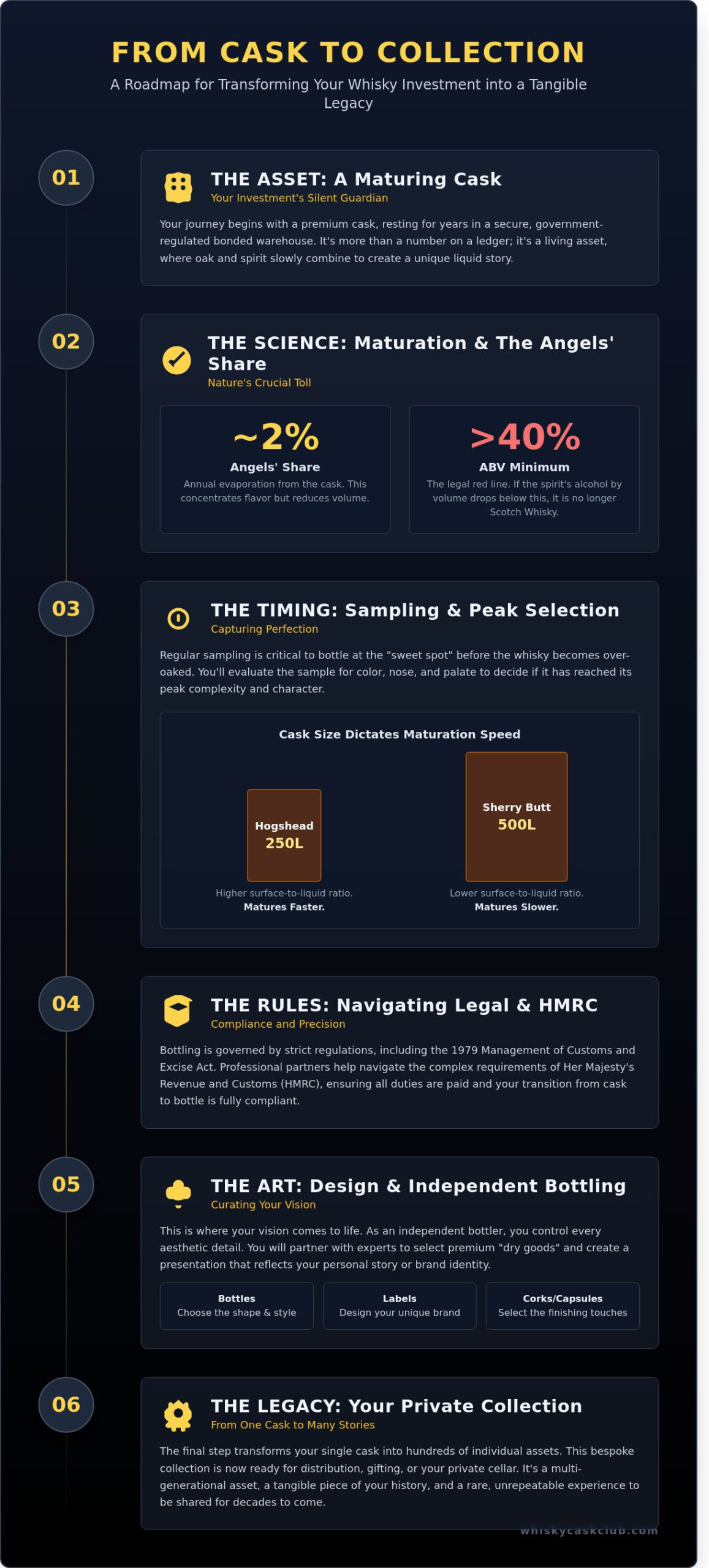
Owning a cask is a journey of patience and precision. When you begin to consider how to bottle your own whisky cask, you’re stepping into the role of a master blender. The spirit isn’t a static asset; it’s a living entity that breathes through the oak pores. Each year, roughly 2% of the liquid evaporates. This phenomenon, known as the Angels’ Share, reduces your final bottle count while concentrating the flavors. More importantly, it lowers the alcohol by volume (ABV). In the world of Scotch, the 40% ABV mark is a legal red line. If your spirit drops below this threshold, it’s no longer Scotch whisky. Monitoring this decline through consistent testing ensures your investment remains both legal and liquid.
The Sampling Process
The journey toward bottling starts with requesting a “draw” from your cask. This sample is extracted by warehouse professionals in a bonded facility and sent directly to you. Evaluating this liquid is a sensory ritual. You’ll observe the color, ranging from pale straw to deep mahogany, depending on the wood’s history. For casks laid down in the early 2010s, the year 2026 is a pivotal milestone. This 15-year mark often represents the transition from youthful vibrancy to mature complexity. You’re looking for a nose that’s expressive and a palate that carries the distillery’s signature character without being masked by the barrel.
Gauging the Sweet Spot
Finding the “peak” maturation point requires a balance between the spirit and the wood. The vessel size plays a decisive role here. A 250-liter Hogshead offers a higher surface-area-to-liquid ratio than a 500-liter Sherry Butt. Consequently, Hogsheads often reach their peak sooner. If you leave the spirit in the wood too long, it can become over-oaked and bitter. You can review our guide on maturation risks to better understand how to avoid these pitfalls.
Once you identify the peak, you must decide on the final presentation. You might choose “Cask Strength,” which preserves the raw intensity of the barrel. Alternatively, diluting the spirit to 46% or 43% ABV can unlock hidden aromatics and increase your total bottle yield. This decision is the final step in learning how to bottle your own whisky cask with the authority of a true connoisseur. If you’re ready to secure a spirit with impeccable provenance, you may view our current cask selections to find your next legacy project.
- Hogshead (250L): Faster maturation, ideal for 10 to 12-year cycles.
- Sherry Butt (500L): Slower interaction, perfect for long-term aging beyond 18 years.
- ABV Monitoring: Essential to prevent the spirit from falling below the 40% legal limit.
Navigating the Legal Landscape: Bonded Warehouses and HMRC
The transition from a maturing asset to a physical collection of bottles is a sophisticated process governed by rigorous UK legislation. Your cask resides within a bonded warehouse, a secure facility licensed by HM Revenue and Customs (HMRC) where spirits are stored without the immediate payment of excise duty. This “In Bond” status is essential for the whisky’s maturation, as it allows the spirit to develop its character while taxes remain deferred. To manage this asset, one must understand the Warehousekeepers and Owners of Warehoused Goods Regulations (WOWGR). This status is a mandatory requirement for anyone looking to move or trade goods under duty suspension. For most private owners, partnering with a specialist who holds these credentials is the most efficient path when learning how to bottle your own whisky cask without becoming entangled in administrative complexity.
Taxes and Duties Explained
Financial precision is the hallmark of a successful investment. When you decide to remove your whisky from the bonded warehouse, you trigger the requirement for Duty and VAT payment. UK Excise Duty is calculated based on the volume of pure alcohol (LPA) rather than the total liquid volume. According to the HMRC update from August 1, 2023, the duty rate is £28.74 per litre of pure alcohol. If your cask produces 250 bottles at a strength of 48% ABV, the duty is calculated only on the spirit’s pure alcohol content. Once this is settled, the whisky moves to “Duty Paid” status. You must also budget for VAT, which is currently 20% in the UK. This tax is applied to the original purchase price of the cask plus the excise duty already calculated, making it a significant final step in your legacy project.
Compliance and Labeling Laws
The Scotch Whisky Association (SWA) enforces strict guidelines to maintain the global reputation of the spirit. Every label serves as a legal document of provenance. To remain compliant, your labels must clearly display the following mandatory information:
- The Category: Such as “Single Malt Scotch Whisky.”
- The Volume: Usually 70cl or 75cl depending on the target market.
- Alcoholic Strength: The ABV percentage measured at the time of bottling.
- Distillery Name: This is only permitted if you have explicit consent from the trademark owner.
Many owners discover that while they own the liquid, the distillery’s trademarked logo remains protected. In these instances, you’ll act as an “Independent Bottler.” Your label will state that the whisky was distilled at a specific distillery but bottled for your private collection. This distinction is crucial for legal transparency. Ensuring these details are correct is a vital part of how to bottle your own whisky cask, as incorrect labeling can lead to the seizure of your stock by customs officials. Meticulous attention to these regulations ensures your liquid legacy is both prestigious and perfectly compliant.
The Art of Independent Bottling: Design and Execution
The transition from a maturing cask to a finished bottle represents the final stage of your investment journey. It is the moment your liquid asset becomes a physical legacy. Understanding how to bottle your own whisky cask requires a blend of logistical precision and creative vision. You aren’t just filling glass; you’re preserving a piece of history that reflects your personal taste and status.
Selecting Your Bottling Partner
Choosing the right facility is the most critical decision in this phase. High-volume industrial bottlers often lack the flexibility required for a single cask project. You should seek a partner that specializes in small-batch production. These specialists offer greater control over the technical specifications that define a premium spirit. For instance, you must decide between chill-filtration and natural presentation. Most connoisseurs prefer non-chill filtered whisky, bottled at 46% ABV or cask strength, to retain the natural oils and esters that provide a rich mouthfeel. A dedicated partner ensures the provenance remains intact, providing a seamless chain of custody from the bonded warehouse to the bottling line.
Design and Aesthetics
The visual presentation of your whisky dictates its reception in the secondary market. Premium glass is a necessity. Heavyweight bottles, often weighing between 700g and 900g, signal quality and rarity before the cork is even pulled. The “dry goods” selection, including the cork type, foil color, and outer packaging, should harmonize with the age and character of the liquid.
- Label Design: Incorporate heritage elements, such as family crests or distillery history, to build a narrative.
- Investment Branding: Use clean, minimalist typography to appeal to modern collectors and auction houses.
- Security: Consider holographic seals or unique numbering to guarantee authenticity for future buyers.
A well-executed design can significantly increase the perceived value of the spirit. It’s the difference between a simple bottle of scotch and a highly sought-after collector’s item.
The Journey to the Pallet
The timeline for bottling is a structured process that demands patience. Once you’ve finalized the design, the physical execution begins. First, the cask is “dumped” into a stainless steel vat. The liquid is then filtered to your specification and brought to the desired strength. This stage, including the procurement of custom dry goods, typically spans 8 to 12 weeks. After the bottles are filled, labeled, and polished, they’re palletized for secure transport. Every step is documented to maintain the tax-advantaged status of the spirit until it leaves the bonded environment.
Success in this venture relies on expert guidance and access to the finest resources in the industry. Learn how to curate your own private collection with the Whisky Cask Club.
Realizing Your Vision: Distribution and Private Collections
The transition from a wooden vessel in a Highland warehouse to a curated collection in your private cellar is the definitive moment of your journey. Once you understand how to bottle your own whisky cask, the focus shifts to the physical security and strategic distribution of your asset. This final stage transforms a theoretical investment into a tangible legacy that reflects your personal taste and status. It is the bridge between maturation and celebration.
Global Logistics and Shipping
Transporting hundreds of glass bottles across international borders involves complex regulatory frameworks. You must account for local import duties and excise taxes, which vary significantly by jurisdiction. Many sophisticated collectors choose to retain a portion of their stock within a UK “Duty Representative” warehouse. This strategic move defers tax payments and simplifies future reselling within the global secondary market. Every shipment should be protected by comprehensive marine cargo insurance; typically, this covers the full replacement value plus a 10% buffer to account for potential market appreciation during transit.
- Customs Clearance: Utilizing a specialized freight forwarder ensures that all certificates of origin and health certificates are filed correctly to avoid port delays.
- Inventory Management: Maintain a digital ledger of every bottle’s unique identifier to track provenance and ensure the integrity of the collection.
- Storage Conditions: Store bottles upright at a consistent 15 to 18 degrees Celsius to prevent cork degradation and oxidation of the spirit.
Sharing your release is often the most rewarding aspect of ownership. Joining a Whiskey Club provides a prestigious platform to showcase your private bottling to a community of like-minded connoisseurs. These releases serve as incomparable gifts for 50th birthdays, heritage celebrations, or corporate milestones where a standard retail bottle simply cannot convey the same level of prestige.
The Ultimate Reward
The experience of tasting the first pour from your own cask is a sensory realization of years of patience. It’s the culmination of a process that began with a single choice in a warehouse years ago. Documenting this journey through a dedicated tasting journal or a professional photographic archive ensures the story behind the liquid survives as long as the whisky itself. When you learn how to bottle your own whisky cask, you aren’t just creating a product; you are authoring a chapter in Scotch history that can be passed down through generations.
Secure Your Liquid Heritage
Owning a cask is a patient investment in timeless craftsmanship. You’ve explored the necessity of precise sampling to catch the spirit at its peak maturation. You now understand the rigorous legal framework required by HMRC and the Scotch Whisky Regulations 2009 for storage within secure, accredited Scottish bonded warehouses. Transitioning from a passive owner to an independent bottler represents the ultimate expression of prestige. Mastering how to bottle your own whisky cask allows you to curate a tangible asset that reflects your personal taste and financial foresight. It’s a journey that turns a raw spirit into a multi-generational story.
Whisky Cask Club provides the expert guidance needed to navigate complex exit strategies and intricate bottling logistics. Our members gain exclusive access to secure facilities across Scotland and join a global community of elite alternative asset investors. We bridge the gap between the pragmatism of a sound investment and the passion of a connoisseur. This isn’t just about the liquid in the glass; it’s about the heritage you choose to leave behind for those who follow.
Begin your journey into exclusive cask ownership with Whisky Cask Club and secure your place in the world of rare spirits. Your legacy is waiting to be poured.
Frequently Asked Questions
How many bottles do I get from a single whisky cask?
A standard 200-litre American Standard Barrel typically yields between 250 and 280 bottles of 70cl at 46% ABV. This volume varies based on the “Angels’ Share,” which accounts for a 2% evaporation loss annually in Scotland. Larger 250-litre Hogsheads often produce 330 to 380 bottles. Your final yield depends on the age of the spirit and your chosen bottling strength.
What is the average cost to bottle a whisky cask in 2026?
Bottling costs in 2026 depend on dry goods selection and the UK Spirits Duty rate, which stood at £28.74 per litre of pure alcohol in 2024. You’ll also encounter costs for glass, corks, and labels, which averaged £5 to £15 per bottle in recent industry reports. These figures exclude Value Added Tax at 20%. Planning for these variables is essential when learning how to bottle your own whisky cask to ensure the financial pragmatism of your investment.
Can I sell the bottles I create from my own cask?
You can sell your bottles, but you must comply with strict legal requirements such as obtaining a personal liquor license and registering with the Alcohol Wholesaler Registration Scheme. Most private owners choose to sell through established auction houses like Whisky Auctioneer, which handled over 100,000 lots in 2023. This path preserves the provenance of your rare asset while providing access to a global secondary market of connoisseurs.
How long does the bottling process take from start to finish?
The bottling process typically takes between 12 and 24 weeks from the initial request to the final delivery. This timeline includes 4 weeks for sample drawing and laboratory testing, followed by 8 to 12 weeks for label design approval and dry goods procurement. Choosing a bespoke bottling facility requires patience to ensure every detail reflects the premium nature of your legacy. It’s a measured process that can’t be rushed.
Do I have to pay taxes if I keep the bottles in a bonded warehouse?
You don’t pay Excise Duty or Value Added Tax while your cask remains in a government-bonded warehouse. These taxes only become due when the spirit is removed from bond for bottling and delivery. This tax-deferred status is a key reason why many investors view whisky as a sophisticated tangible asset. It allows your capital to remain fully invested in the liquid’s maturation for 10, 20, or 30 years.
Can I use the distillery name on my private label?
Use of the distillery name is subject to specific trademark agreements and isn’t always guaranteed for private labels. Many prestigious distilleries require you to use “Distilled at” rather than the brand’s primary logo to protect their intellectual property. We curate our sources to ensure you understand the naming rights of your specific cask. This transparency ensures your heritage remains authentic and legally compliant while building your exclusive collection.
What happens to the empty cask after bottling?
You own the physical timber, so you may choose to have the empty cask shipped to your home or sold to a third party. High-quality Sherry butts can fetch between £300 and £800 on the secondary market due to their scarcity. Alternatively, some owners repurpose the wood into bespoke furniture or display pieces. This final step completes your journey of building a legacy through tangible craftsmanship and rare materials.
Is it better to bottle at cask strength or standard strength?
Bottling at cask strength preserves the spirit’s natural intensity and is often preferred by serious collectors for its rarity. This method produces fewer bottles but maintains the unique provenance of the barrel. Standard strength, usually 40% to 46% ABV, involves adding demineralised water to increase the total bottle count. Deciding how to bottle your own whisky cask involves balancing this desire for volume against the pursuit of pure, undiluted excellence.