What if the elegant certificate you hold for your £30,000 Ardbeg cask is actually just a decorative piece of paper with no legal weight in the eyes of a Scottish court? You likely understand the prestige of owning a rare spirit, yet you’ve felt that nagging anxiety about whether your investment is truly yours if a broker disappears. It’s a common fear, especially since many newcomers don’t realize that a simple invoice provides no protection within a bonded warehouse. To protect your capital, you must understand what is a delivery order for whisky cask and why it’s the only document that matters for your legal security.
This guide explains how a Delivery Order functions as the ultimate deed of ownership, ensuring your name is recorded in the warehouse registers. We’ll show you exactly how this document guarantees your legal title and protects you from the risks of broker insolvency. From the intricacies of the 1979 Sale of Goods Act to the specific protocols of HM Revenue and Customs, we’ll examine the legal framework that transforms a simple purchase into a secure, tangible asset and a lasting legacy.
Key Takeaways
- Understand exactly what is a delivery order for whisky cask and why this formal instruction to the warehouse is the only legal way to secure your title.
- Learn to distinguish between internal broker certificates and the industry “Gold Standard” to ensure your investment remains protected regardless of a broker’s status.
- Discover the essential data points and unique identifiers required for a document to be accepted and recognized within the HMRC-bonded warehouse system.
- Master the step-by-step transfer process to confidently manage and grow your premium portfolio from anywhere in the world.
- Explore how a verified Delivery Order serves as the vital legal foundation for building a multi-generational legacy of rare and tangible luxury assets.
Defining the Delivery Order (DO) in Whisky Cask Investment
Acquiring a rare Scotch whisky cask is a sophisticated pursuit that blends a passion for heritage with the pragmatism of alternative asset ownership. To secure your position in this exclusive market, you must understand the primary document that validates your acquisition. Understanding what is a delivery order for whisky cask transactions is the first step in ensuring your investment is legally protected and recognized by the industry’s highest authorities.
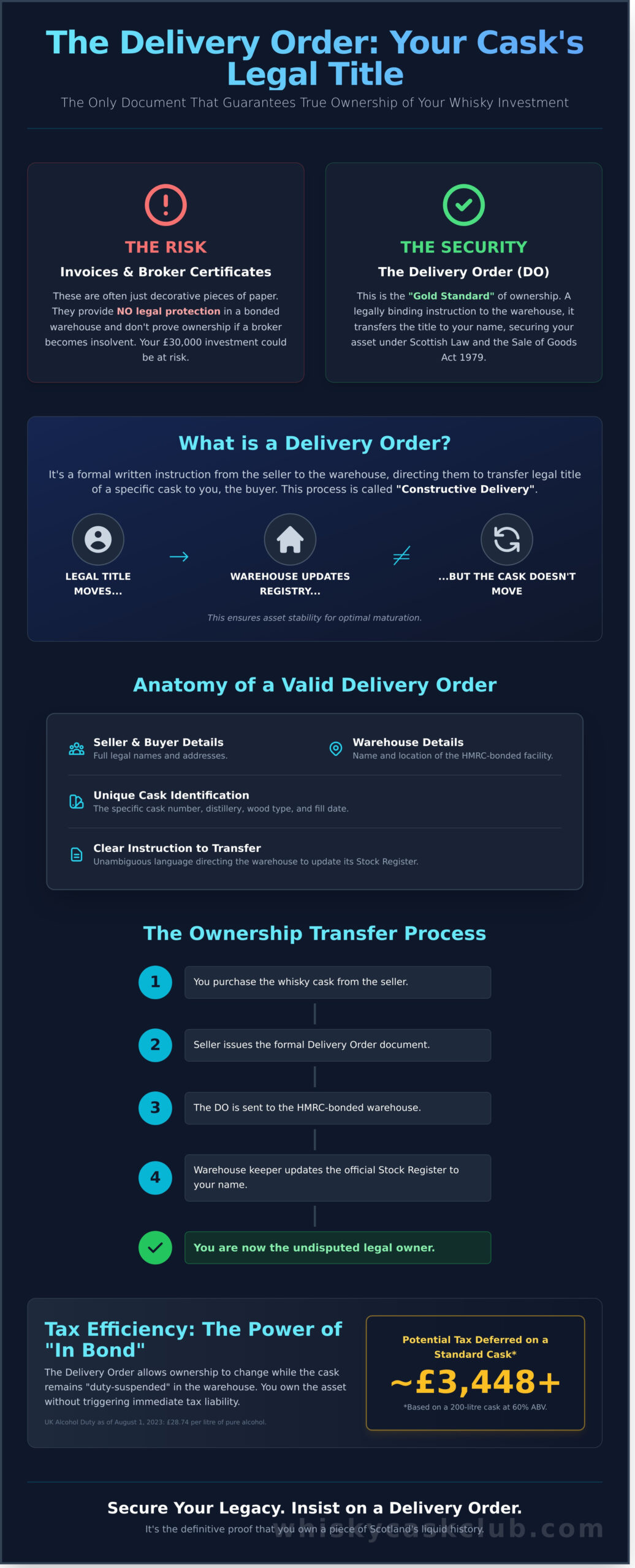
A Delivery Order is a formal written instruction issued by the seller to a warehousekeeper, directing them to transfer the title of a specific cask to the buyer. It’s the most critical piece of paper in your portfolio. Under traditional Scots Law and the Sale of Goods Act 1979, the DO represents “constructive delivery.” This means that while the heavy oak cask doesn’t physically move, the legal right to that asset shifts entirely to you. The warehousekeeper acts as a neutral custodian, maintaining a legal relationship of bailment that ensures your asset is protected while legal title shifts from seller to buyer. This legal framework provides the security required when managing assets that may mature for decades.
The Delivery Order is the industry-standard document that instructs an HMRC-bonded warehouse to update its registries with the new owner’s details.
The Concept of Duty-Suspension and the DO
Whisky investment is unique because the spirit matures in a “duty-suspended” state. This means the liquid is held in an HMRC-bonded facility where taxes aren’t yet due. As of August 1, 2023, the UK government increased alcohol duty to £28.74 per litre of pure alcohol. For a standard 200-litre barrel at 60% ABV, the immediate tax liability could exceed £3,400 if it were removed from the warehouse. The DO functions as the essential legal bridge that allows you to take ownership without triggering these massive tax bills. It moves the asset from the seller’s account to your own within the warehouse’s internal ledger, keeping the whisky “in bond” and your capital working efficiently.
Why ‘Delivery’ is a Misnomer for Investors
The term “delivery” often confuses new members of the club who expect a physical arrival. In the context of what is a delivery order for whisky cask ownership, the cask stays exactly where it is. Movement is the enemy of maturation. A cask of Macallan or Bowmore relies on the specific microclimate and steady temperature of its original dunnage warehouse to develop its character. Moving a 250kg hogshead costs between £50 and £150 in logistics alone, but the real cost is the potential disruption to the “Angels’ Share”-the 2% annual evaporation that defines the whisky’s profile. The DO facilitates a “Transfer in Bond,” changing the name on the ledger while the spirit continues its silent, undisturbed journey toward excellence.
- Legal Proof: The DO is your primary evidence of ownership for duty-suspended goods.
- Registry Update: It compels the warehouse to recognize you as the sole titleholder.
- Asset Stability: It ensures the cask remains in its optimal maturation environment.
- Tax Efficiency: It maintains the duty-suspended status, deferring VAT and excise costs.
By securing a DO, you aren’t just buying a barrel; you’re building a legacy. This document is the definitive proof that you own a piece of Scotland’s liquid history, managed with the same discretion and expertise as any high-value wealth portfolio.
Why a Delivery Order is the ‘Gold Standard’ of Ownership
Owning a piece of Scottish heritage is an exercise in both passion and pragmatism. While the liquid matures in the cool, damp air of a bonded warehouse, its value grows alongside its complexity. However, the physical cask remains under the care of a third party. This distance makes the legal paperwork the most vital component of your investment. Understanding what is a delivery order for whisky cask transactions is the difference between holding a genuine asset and holding a mere promise. The Delivery Order (DO) acts as the final, irrevocable proof that the title has moved from the seller to you.
A DO isn’t just a receipt; it’s a legal directive. It commands the warehouse keeper to update their internal ledger, known as the “Stock Register,” to reflect your name or your entity as the new owner. Without this specific document, you don’t truly own the spirit in the eyes of Scottish law. You’re simply a name on a broker’s spreadsheet. In an era where rare single malts have seen significant value increases over the last 10 years, ensuring your legal standing is paramount for protecting your legacy.
DO vs. Certificate of Ownership: The Critical Difference
Many first-time investors mistake a “Certificate of Ownership” for a legal title. In reality, approximately 90% of these certificates are simply marketing tools issued by brokers to look impressive in a portfolio binder. They’re internal documents that have no standing with the warehouse. A warehouse manager only recognizes the entity named on the most recent DO. If you rely solely on a broker’s certificate, you risk being caught in an unrecorded transfer. This leaves you vulnerable if the secondary market experiences a dispute or if the cask is accidentally sold twice. To truly prove you own your whisky cask, the warehouse must receive and acknowledge the DO, confirming you as the legal owner in their records.
The Protection Against Broker Insolvency
The true value of a DO becomes clear during times of financial instability. If a broker or intermediary faces liquidation, their creditors will look to seize any assets held on the company’s balance sheet. If your cask is still registered in the broker’s name, it’s legally theirs, regardless of how much you paid. Having your name on the warehouse register via a DO separates your asset from the broker’s liabilities. This creates a distinction between “beneficial ownership” and “legal title,” ensuring your investment remains secure even if the intermediary ceases to exist.
This level of security is why the Whisky Cask Club insists on transparent DO processes for every client. We believe that building a legacy requires a foundation of absolute legal certainty. By securing a direct link to the warehouse, you’re not just buying whisky; you’re securing a tangible asset that’s independent of any single company. If you’re ready to secure your own piece of history, you can explore our curated selection of casks that come with full legal protections.
Finally, the DO is the ultimate defense against “double-selling.” In 2021 and 2022, the industry saw a rise in fraudulent schemes where the same cask was sold to multiple unsuspecting buyers. A DO prevents this by creating a singular, verifiable chain of custody. Once the warehouse records the transfer to you, any subsequent attempt to sell that same cask by the previous owner will be immediately rejected by the warehouse staff. This operational safeguard is what makes the DO the gold standard for serious investors.
The Anatomy of a Valid Delivery Order: What to Look For
A delivery order is more than a receipt; it’s the definitive proof of your legacy. To be accepted by an HMRC-bonded warehouse, the document must adhere to a strict protocol of data points. If a single detail is omitted, the warehouse manager will reject the transfer, leaving your investment in legal limbo. Understanding what is a delivery order for whisky cask involves recognizing that this paper represents the physical handover of a tangible asset. It must be precise, authoritative, and beyond reproach.
The Cask Reference Number serves as the primary identifier for your acquisition. This unique alphanumeric code, such as 2023/042, ensures that you own a specific vessel of spirit rather than a generic share of a portfolio. Every valid document must also detail the spirit’s provenance. This includes the distillery of origin, the year of distillation, and the Original Litre of Alcohol (OLA) recorded at the time of filling. For instance, a 1995 Macallan cask with an OLA of 250 litres carries a different value and legal status than a 2015 entry-level malt. Finally, the document requires the wet or verified digital signature of the current registered owner. Without this authorization, the warehouse cannot legally move the asset to your account.
Essential Data Points for Investor Security
Security in the whisky market relies on granular detail. Your delivery order should clearly state the cask type, whether it’s a 250-litre Hogshead or a 500-litre Sherry Butt. These specifications dictate the maturation profile and future rarity of the liquid. The document must also list the specific Bond Code or the full postal address of the warehouse where the cask is held. This ensures the asset exists within the UK’s regulated system. The transfer date and the terms of the bailment are equally vital. Bailment defines the legal relationship where the warehouse holds the goods for you without taking ownership. These details provide the legal shield that protects your capital.
Verifying the Document’s Authenticity
Savvy investors never take a document at face value. You should always cross-reference a delivery order with a recent Warehouse Receipt or a Cask Sample report dated within the last 6 months. A critical metric to look for is the RLA (Registered Liquid Alcohol) measurement. Unlike the OLA, which is static, the RLA changes as the whisky matures and the “angel’s share” evaporates. The legal framework for these transactions is governed by HMRC’s Excise Notice 196, which ensures that every move within duty-suspension is recorded with absolute precision. When you ask what is a delivery order for whisky cask, you’re looking for a document that aligns perfectly with these government standards.
Watch for red flags that suggest a document is fraudulent or invalid. Common issues include:
- Missing or vague cask reference numbers that don’t match warehouse records.
- Absence of a physical warehouse address or a valid Bond Code.
- Signatures from intermediaries rather than the registered owner.
- Inconsistent OLA or RLA data that contradicts the age of the whisky.
If a delivery order looks unprofessional or lacks these 4 core pillars of data, it won’t stand up to scrutiny. A genuine document feels like a piece of history; it is your gateway to the exclusive world of cask ownership. It’s the bridge between a financial transaction and the physical possession of a rare, aging spirit. Treat this document with the same reverence you would the title deeds to a luxury estate.
The Transfer Process: How Ownership Moves from Seller to Buyer
Acquiring a rare asset requires more than a simple transaction; it demands a precise legal transition. Understanding what is a delivery order for whisky cask helps you grasp how your investment is secured within the Scottish bonded warehouse system. This process ensures that the provenance and heritage of your liquid gold remain untarnished during the change of hands. It isn’t just paperwork. It’s the moment your legacy is officially recorded in the annals of a distillery’s history.
The journey of a cask from one owner to another is a deliberate, multi-stage operation. It involves the seller, the buyer, and the warehousekeeper, who acts as the ultimate gatekeeper of the spirit. Because these casks are held in “bond,” meaning excise duty hasn’t been paid, the movement of ownership is strictly monitored to satisfy both legal and tax requirements. This rigor is exactly what gives the asset its security and prestige.
The Lifecycle of a Cask Transfer
Step 1: The process begins once the purchase agreement is signed and funds are cleared. The seller, or their broker, issues the Delivery Order (DO). This document is the formal instruction to the warehouse to change the name on the account. At this stage, you’re confirming what is a delivery order for whisky cask in a practical sense: it’s your proof of purchase and your claim to the specific barrel number listed.
Step 2: The DO is submitted to the bonded warehouse for verification. Warehousekeepers are meticulous. They cross-reference the cask’s unique identification number and the seller’s signature against their existing records. If there’s even a minor discrepancy in the paperwork, the transfer stops until it’s rectified. This high level of scrutiny protects you from fraudulent sales and ensures the chain of custody remains unbroken.
Step 3: Once verified, the warehouse updates its private ledger. This is the definitive record of ownership. The warehousekeeper then issues an “Acknowledgment of Transfer” to the new owner. This final document is your gold standard of proof. It confirms that the warehouse now holds the cask on your behalf and identifies you as the legal owner of the liquid and the wood.
Managing Scottish Assets from Overseas
Global investors in Singapore, Hong Kong, and Australia don’t need to be physically present in Scotland to manage their portfolios. The Whisky Cask Club acts as your local representative, liaising directly with Scottish warehousekeepers to ensure every DO is processed without friction. We handle the logistical heavy lifting so you can focus on the growth of your tangible asset. While the industry is moving toward a 95% digital documentation rate by January 2026, many warehouses still value the security of physical records.
The Scottish system is built on tradition and accuracy, which means the timeline isn’t instantaneous. You should expect the transfer process to take between 14 and 28 days. This duration allows the warehouse staff to perform their due diligence and update the tax records correctly. Patience is a requirement in the world of fine whisky, just as it’s required for the spirit to reach its peak maturity. This measured pace is a hallmark of an industry that values quality and legal certainty over haste.
When you receive your Acknowledgment of Transfer, you aren’t just holding a piece of paper. You’re holding the keys to a piece of Scottish history. It’s the final step in a journey that transforms a financial decision into a lasting legacy. If you’re ready to move from admirer to owner, we’re here to guide you through every legal nuance.
Ready to begin? You can secure your own legacy with our curated selection of premium casks today.
Securing Your Legacy with The Whisky Cask Club
Authentic ownership in the scotch whisky market isn’t defined by a handshake or a digital certificate; it’s defined by the physical movement of title within the Scottish warehouse system. At The Whisky Cask Club, we’ve built our reputation on the bedrock of transparent, legally-backed ownership. We ensure every member understands what is a delivery order for whisky cask investments because this document represents the only 100% verifiable proof of title recognized by HMRC under Notice 197. Without a correctly executed Delivery Order, you don’t own the liquid; you simply own a promise from a broker. We eliminate that risk by facilitating direct title transfer for every cask in our curated selection.
Building a multi-generational portfolio requires a vision that extends 20, 30, or even 50 years into the future. The Delivery Order serves as the foundation of this legacy. It’s a tangible asset that can be passed down to heirs, providing a stable alternative to volatile equity markets. When you hold the DO, you hold the power to decide the cask’s ultimate fate, whether that involves bottling for a private label or selling to an independent bottler at peak maturity. We treat every cask as a piece of liquid history. Our team manages the logistical burdens, from comprehensive insurance at replacement value to the meticulous monitoring of evaporation rates, often referred to as the Angel’s Share.
You’re not just buying a barrel; you’re joining an exclusive community of investors who value provenance and security. Our exit strategy advisory is tailored to your financial goals. We provide the data and market insights needed to time your sale perfectly. Understanding what is a delivery order for whisky cask ownership allows you to move through the secondary market with total confidence. You’ll have the paperwork required to prove the cask has been stored in tax-suspended movement since its distillation date, preserving its value and tax-efficient status.
The Whisky Cask Club Advantage
We maintain direct relationships with a network of over 15 HMRC-bonded warehouses across Scotland. This ensures your cask is stored in optimal conditions according to the 1992 Spirit Drinks Regulations. Our experts verify that every Delivery Order is correctly registered in your name on the warehouse’s internal stock ledger. We don’t just hand you a document; we provide a full orientation on how to interpret the specific warehouse codes and signatures that validate your investment’s heritage.
Your Next Steps in Cask Ownership
It’s time to audit your current holdings. Review your documentation for gaps; if you don’t have a countersigned Delivery Order from a warehouse manager, your ownership may be at risk. Starting a new journey with us is a streamlined, three-step process involving selection, legal transfer, and ongoing management. Secure your whisky legacy today, contact our expert advisors to begin building a portfolio that stands the test of time. Own the cask. Own the liquid. Own the legacy.
Secure Your Liquid Heritage Today
Owning a piece of Scotland’s history requires more than a simple handshake; it demands the absolute legal certainty that only a Delivery Order provides. By securing this document, you ensure your name is recorded in the official stock ledgers of HMRC-regulated bonded warehouses under Excise Notice 197. This process transforms a transaction into a tangible asset with a verified provenance that can span 50 years. Understanding what is a delivery order for whisky cask isn’t just a technicality; it’s the bedrock of your investment security.
The Whisky Cask Club provides expert brokerage with direct links to over 40 accredited Scottish warehouses. We manage the intricate transfer of title so you don’t have to navigate the bureaucracy alone. Our team designs bespoke exit strategies for portfolios exceeding £250,000, ensuring your path to liquidity is as refined as the spirit itself. You’ve mastered the mechanics of legal title. Now it’s time to apply that expertise to your own collection.
Build your whisky legacy with verified ownership; Join the Club. Your future as a distinguished cask owner begins here.
Frequently Asked Questions
Is a Delivery Order a legal requirement for whisky casks?
Yes, a Delivery Order is the essential legal instrument required to transfer ownership of a cask held in a bonded warehouse. Under HMRC Excise Notice 197, this document serves as the formal instruction from the seller to the warehouse manager to record the change of title. Without this verified document, the warehouse can’t legally recognize you as the owner of the tangible asset. It ensures the provenance of your investment remains undisputed within the UK excise system.
What happens if I lose my physical Delivery Order document?
You should contact the issuing broker or the warehouse immediately to request a certified duplicate if you lose the original paper document. While the physical paper is important, the warehouse’s internal ledger is the definitive record of ownership. Most modern facilities in Scotland now utilize digital systems to track these instructions. You’ll likely need to provide 2 forms of government identification to verify your identity before they’ll reissue the document or update your digital file.
Can a warehouse refuse to process a Delivery Order?
A warehouse can refuse to process the document if the recipient doesn’t meet specific compliance standards or if the paperwork is incomplete. Under the Warehousekeepers and Owners of Warehoused Goods Regulations 1999, warehouse keepers must ensure that owners are “fit and proper” persons. If the warehouse isn’t satisfied with your credentials or if there are outstanding storage fees from the previous owner, they’ll halt the transfer until the 100 percent compliance threshold is met.
How much does it cost to have a Delivery Order issued?
The administrative fee for issuing a Delivery Order typically ranges from £25 to £150 per cask. This cost covers the clerical work required by the warehouse to update their records and notify HMRC of the ownership change. When you’re calculating the total cost of what is a delivery order for whisky cask, remember that some premium brokers include this fee in the initial purchase price to simplify your entry into the market.
Does the Delivery Order mention the value or price of the cask?
No, the Delivery Order doesn’t state the purchase price or the current market value of the liquid. It’s a logistical and legal title document rather than an invoice. The document focuses on technical data such as the original distillery name, the unique cask number, and the 2024 Regauged Litres of Alcohol. This ensures your financial privacy is maintained while the warehouse focuses strictly on the physical security and provenance of the asset.
What is the difference between a Warehouse Receipt and a Delivery Order?
A Delivery Order is an instruction to transfer ownership, while a Warehouse Receipt is a statement confirming that the cask is currently held in storage. Think of the Delivery Order as the deed that moves the asset from person A to person B. In contrast, the receipt is a snapshot of the inventory at a specific date, like June 12, 2024. Both are vital for maintaining a transparent audit trail for your rare whisky portfolio.
Can I sell my cask without a Delivery Order?
You can’t legally complete the sale of a cask held in a bonded warehouse without a valid Delivery Order. This document is the only recognized way to satisfy the legal requirements of the warehouse keeper. Even if you’ve signed a private sales contract, the warehouse won’t update their records until they receive this specific instruction. Understanding what is a delivery order for whisky cask is crucial because it’s the final step that secures your exit strategy and potential profit.
How do I verify that the warehouse has actually received the Delivery Order?
You can verify the transfer by requesting a formal Letter of Confirmation or a Certificate of Storage directly from the warehouse manager. Once the warehouse processes the order, they’ll typically issue this confirmation within 7 to 14 business days. This secondary document acts as your proof that the warehouse has updated their internal ledger to reflect your name as the legal owner. It provides the ultimate peace of mind for any serious investor building a legacy.