For many, the world of cask whiskey investment seems shrouded in mystery-a privileged realm reserved for seasoned connoisseurs. The idea of owning an entire cask, a tangible piece of liquid history, can feel both alluring and intimidating, raising questions of authenticity, security, and what truly happens after the purchase. It’s a world that appears complex from the outside, but the reality is a far more accessible and rewarding journey.
This is where the profound difference between collecting bottles and owning a cask becomes clear. You are not merely buying a finished product; you are acquiring the very vessel of its creation-a living asset that matures in value and character over time. In this definitive guide, we demystify the entire process. You will discover how the barrel itself forges value, learn the secure steps to acquiring and managing your investment, and gain the confidence to build a legacy asset that is as unique and enduring as the spirit it holds.
What Exactly Is Cask Whiskey? Understanding the Asset Beyond the Bottle
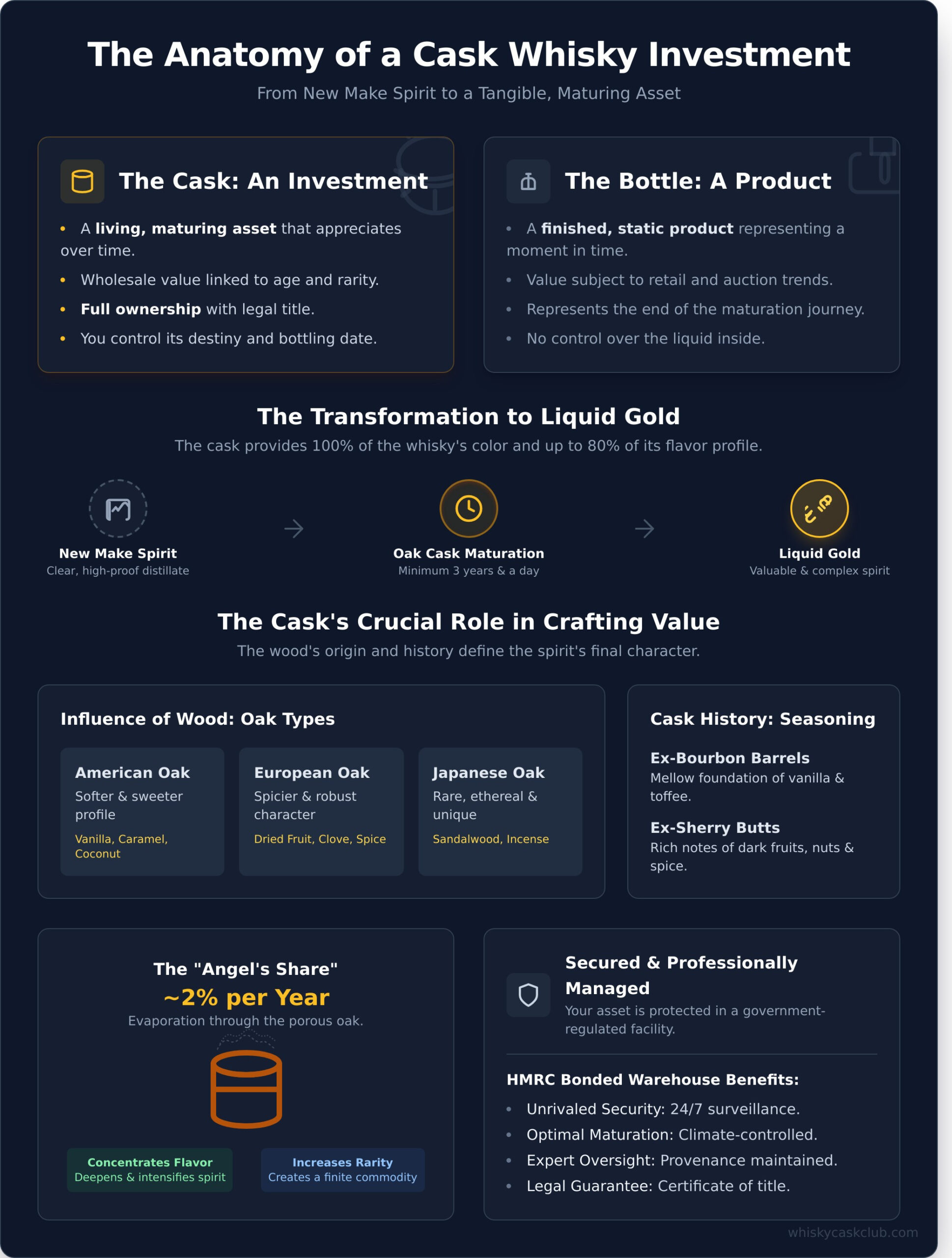
For the discerning investor, understanding the distinction between a bottle of fine whisky and an entire cask is paramount. Acquiring a bottle is purchasing a finished product, a snapshot in time. Owning cask whiskey means acquiring the vessel and the living, maturing spirit within it-a tangible asset with provenance, legal title, and a dynamic future. This is not simply collecting; it is an investment in craftsmanship and time itself, offering a unique opportunity to diversify a portfolio with an asset class that has a rich heritage and a compelling growth trajectory.
The Cask vs. The Bottle: A Fundamental Difference for Investors
A bottle of whisky represents the end of a journey; its value is largely static, subject to retail market fluctuations and auction trends. A cask, however, is the journey. As a wholesale asset, its value is intrinsically linked to its age and rarity, appreciating as the spirit matures. Ownership grants you complete control over the liquid’s destiny-you decide the precise moment of peak maturity for bottling, creating a truly bespoke and rare product. This fundamental control is where the true investment potential lies.
From New Make Spirit to Liquid Gold: The Transformation
Every cask begins its life filled with ‘new make spirit’-a clear, high-proof distillate direct from the still. Legally, this spirit cannot be called Scotch whisky until it has matured for a minimum of three years and one day in an oak cask in Scotland. It is during this patient maturation that the magic happens. The interaction between the spirit and the wood is where 100% of the whisky’s color and up to 80% of its complex flavor profile develops. Understanding the cask’s crucial role in crafting value is essential to appreciating why this is an asset defined by its transformation.
Why a Cask is a Unique, Tangible Asset
In a world of digital stocks and intangible bonds, a cask of whisky is a refreshingly physical commodity. You own it outright, with a legal certificate of title. Its intrinsic value resides in the liquid itself, which can be bottled and sold, traded to other investors, or passed down as part of a lasting legacy. For security and peace of mind, your asset is stored and insured in a government-regulated bonded warehouse, ensuring its protection and provenance are impeccably maintained throughout its maturation.
The Cask’s Crucial Role in Crafting Value and Flavor
To the uninitiated, a cask is merely a wooden container. To the connoisseur and the astute investor, it is the most critical active ingredient in whisky making. The oak barrel is where a raw, fiery spirit is transformed through years of patient maturation into a complex and valuable tangible asset. This slow, deliberate chemical interaction between wood and spirit is the very heart of the investment. This patient transformation, governed by strict legal frameworks such as the Official Storage and Management Regulations, is where the true alchemy of cask whiskey occurs, turning time itself into flavor, character, and appreciating value.
The Influence of Wood: Oak Types and Their Magic
The provenance of the oak itself imparts a foundational layer of character. Each species of oak possesses a unique cellular structure and chemical composition, bestowing a distinct personality upon the maturing spirit. The choice of wood is a distiller’s first major decision in shaping the whisky’s destiny.
- American Oak (Quercus Alba): Rich in vanillins, it imparts signature notes of vanilla, sweet caramel, and coconut, creating a softer, sweeter profile.
- European Oak (Quercus Robur): Higher in tannins, this wood provides a spicier, more robust character with notes of dried fruit, clove, and a firm structure.
- Japanese Oak (Mizunara): Exceptionally rare and porous, Mizunara offers ethereal and sought-after notes of sandalwood, incense, and a unique oriental spice.
A Cask’s History: The Importance of Seasoning
A cask’s previous life, or its ‘seasoning,’ contributes as much to the final flavor as the wood itself. The vast majority of Scotch whisky is matured in casks that have previously held other spirits or wines, inheriting their legacy and flavor profile.
- Ex-Bourbon Barrels: The most common choice, these American Oak barrels provide a mellow, sweet foundation of vanilla and toffee.
- Ex-Sherry Butts: Typically made from European Oak, these impart luxurious, rich notes of dark fruits, nuts, and spice.
- Other Casks: A world of flavor is unlocked by casks that once held Port, Sauternes, or fine red wines, each offering a unique and often rare finish.
Understanding the ‘Angel’s Share’: Evaporation as an Investment Factor
As a cask of whisky rests in the warehouse, a small portion of the spirit-approximately 2% per year-evaporates through the porous oak. This romantic phenomenon is known as the ‘Angel’s Share.’ Far from being a simple loss, this process is a critical factor in value creation. As water and alcohol evaporate, the remaining spirit becomes more concentrated, its flavors deepening and intensifying. This natural reduction not only enhances the quality of the liquid but also increases its rarity, making older casks a finite and increasingly precious commodity.
Securing Your Asset: Professional Storage and Management
Acquiring a cask of rare whisky is the first step in building a legacy. Protecting it is paramount. Unlike other tangible assets, a cask of maturing spirit cannot be stored at home; it demands a professional, highly regulated environment to ensure its security, provenance, and optimal maturation. This infrastructure is not merely a recommendation-it is a legal and practical necessity for every serious owner.
What is an HMRC Bonded Warehouse?
At the heart of this ecosystem is the HMRC Bonded Warehouse. This is a secure facility, licensed and regulated by the UK’s tax authority, where all Scotch whisky casks must legally be stored while they mature. These warehouses provide more than just storage; they offer a controlled environment with meticulous oversight. Key benefits include:
- Unrivaled Security: 24/7 surveillance and strict access controls to protect against theft.
- Optimal Maturation Conditions: Climate-controlled environments that ensure the spirit ages gracefully.
- Expert Oversight: Managed by industry professionals who understand the nuances of cask care.
The Critical Role of Insurance and Title
Your investment is protected from the moment of acquisition. While residing in the bonded warehouse, your cask is fully insured against unforeseen events like fire, theft, and accidental damage. Crucially, your ownership is cemented through legal documentation, typically a delivery order or a certificate of title. This document is your undisputed proof of ownership, granting you the sole legal title to the cask and the precious liquid maturing within it.
Why Professional Management is Non-Negotiable
The rationale for professional management extends beyond security and legal compliance. It is a fundamental component of maximizing your asset’s potential. Because each cask develops a unique character over time (a concept further explored in What is Cask Whiskey?), expert monitoring is essential. Professional management is non-negotiable for two primary reasons:
- Duty Deferment: UK VAT and Excise Duty are suspended while your cask remains ‘in bond’. These taxes are only payable when the cask is removed from the warehouse, typically for bottling, providing significant financial flexibility.
- Cask Health & Sampling: Our experts conduct regular health checks and can draw samples to monitor the maturation of your cask whiskey, ensuring it develops as expected and reaches its peak quality.
This meticulous, hands-on approach transforms a simple purchase into a carefully managed legacy investment. Learn how we safeguard your legacy asset.
The Lifecycle of a Cask Whiskey Investment
Embarking on a cask whiskey investment is not a speculative venture, but a structured and managed journey. Far from being complex, the lifecycle follows a clear and deliberate path from initial purchase to profitable exit. This roadmap demystifies the process, revealing a tangible asset class accessible to the discerning investor. With an expert partner, each stage is navigated with confidence and precision, ensuring your investment is cultivated to its full potential.
Step 1: Sourcing and Acquisition
The journey begins with securing a cask of exceptional promise. Provenance is paramount; we focus on sourcing new-make spirit from Scotland’s most reputable distilleries. Your personal investment goals, from budget to desired timeframe, dictate the selection. A trusted advisor provides exclusive access to casks that are simply not available on the open market, curating an opportunity that aligns perfectly with your ambition to build a lasting legacy.
Step 2: The Maturation Journey
Once acquired, your cask begins its quiet, transformative work. This is the ‘hold’ period, where the spirit interacts with the wood, developing complexity, character, and value. Investment horizons typically range from 5 to over 20 years, as the whisky’s rarity and quality appreciate over time. During this period, optional services like re-gauging and sampling can be arranged to monitor the angel’s share and track the liquid’s evolving profile.
Step 3: Realizing Your Investment: Key Exit Strategies
When your cask reaches its optimal maturity, or your financial goals are met, it is time to realize your return. The true value of this tangible asset is its flexibility, offering several distinct exit routes:
- Sell to another investor: The secondary market for mature casks is robust, allowing you to sell your asset to another private collector or investor.
- Sell to the industry: Independent bottlers and blending houses are constantly seeking high-quality, aged casks to use in their own premium expressions.
- Bottle your own whisky: For the ultimate personal touch, you can have your whisky bottled under a private label, creating a unique product for corporate gifting, personal enjoyment, or retail.
Navigating these options to maximize your return is the final, critical step. An experienced partner, such as the advisors at the Whisky Cask Club, provides invaluable market insight to guide your decision.
How to Begin Your Cask Whiskey Ownership Journey
Understanding the potential of cask ownership is the first step; taking action is what builds a legacy. The journey from enthusiast to owner is more direct and accessible than many believe, especially when guided by expert hands. This final section moves from the theoretical to the practical, outlining a clear and seamless path to acquiring your first tangible whisky asset.
Defining Your Investment Goals and Budget
A successful investment begins with a clear vision. Before you explore the market, it is crucial to define your personal objectives. Consider your timeline-are you planning for a 5, 10, or even 20-year maturation period? Your budget will naturally influence the age and rarity of the spirit you can acquire, with prices varying significantly. Finally, clarify your end goal: is it purely a financial return, the unique prestige of a personal bottling, or a sophisticated blend of both?
The Value of Partnering with an Expert Advisor
Navigating the world of cask whiskey investment requires specialist knowledge. An expert advisor is more than a broker; they are your advocate, providing exclusive access to distilleries, verifying provenance, and managing all essential paperwork. This partnership ensures you avoid common pitfalls and acquire an authentic, high-quality asset. From initial sourcing to devising the perfect exit strategy, their guidance is the cornerstone of a secure and prosperous investment.
Your Next Steps with The Whisky Cask Club
Embarking on your journey with us is a seamless and curated experience. We demystify the process, allowing you to focus on the profound rewards of ownership. Your path forward is simple:
- Initial Consultation: Begin with a no-obligation conversation with one of our portfolio managers to discuss your personal investment ambitions and goals.
- Curated Selection: Based on your criteria, we will present you with an exclusive portfolio of casks sourced from Scotland’s most prestigious distilleries.
- Seamless Acquisition & Management: From purchase and transfer of ownership to secure, fully-insured storage in a bonded warehouse, our team manages every detail with precision and care.
Ready to transform your passion for fine whisky into a tangible legacy? Contact The Whisky Cask Club today to schedule your private consultation and begin your ownership journey.
Your Legacy in the Making: The Future of Cask Ownership
Owning a cask of whisky is an investment in both passion and pragmatism. As we’ve explored, this tangible asset’s value is meticulously crafted over time, shaped by the wood’s character and the spirit’s slow maturation. It is an act of patience, a nod to heritage, and a forward-thinking financial decision. Understanding the lifecycle and the importance of professional management is the cornerstone of a successful journey into the world of cask whiskey.
The Whisky Cask Club demystifies this exclusive world, offering a curated path to ownership. We provide our members with exclusive access to rare casks from Scotland’s most revered distilleries, secured within government-regulated (HMRC) bonded warehouses. Our team offers expert portfolio management, guiding you through every step with multi-faceted exit strategies designed to realise your asset’s full potential.
Your journey from connoisseur to owner starts here. Begin your legacy. Enquire about cask ownership today. The most rewarding investments are those that mature with time.
Frequently Asked Questions
How much does a cask of whiskey cost?
The cost of a whiskey cask varies significantly based on its provenance, age, and the distillery’s prestige. A new-fill cask from a respected distillery might begin in the range of £4,000 to £7,000. Conversely, a cask from an iconic, blue-chip distillery can command a much higher premium, often starting at £25,000 and increasing substantially. Our experts curate options that align with your specific investment goals and portfolio strategy, ensuring a perfect fit for your legacy.
Can I taste my whiskey while it’s maturing in the cask?
Absolutely. Sampling your cask is an integral and rewarding part of the ownership journey. We can arrange for samples to be drawn from your cask at the bonded warehouse and delivered to you for a private tasting. This allows you to personally experience the spirit’s evolution and appreciate the craftsmanship at work. A small fee typically covers the service and the duty payable on the drawn sample, offering you a direct connection to your maturing asset.
What are the primary risks of investing in cask whiskey?
While investing in cask whiskey offers compelling returns, it is essential to acknowledge the risks. The primary risks include market fluctuations, which can affect future value, and the physical risk of cask leakage or damage, though this is rare in modern, well-managed warehouses. We mitigate these concerns by sourcing casks with strong provenance, ensuring comprehensive insurance is in place from day one, and providing expert guidance on the optimal time to exit your investment.
How long should I hold a whiskey cask to see a good return?
Patience is paramount in cask investment. While value appreciates annually, we typically advise a holding period of 8 to 12 years to realize significant returns. This timeframe allows the spirit to mature past key age statements-such as 10 or 12 years-which can dramatically increase its desirability and market value. The most substantial appreciation is a reward for those who view this as a long-term strategy for building a legacy asset, not a short-term trade.
Is my cask of whiskey insured while it’s in storage?
Yes, comprehensive insurance is a non-negotiable component of our service. From the moment you take ownership, your cask is fully insured at its replacement value. This policy protects your asset against events such as fire, theft, and accidental damage while it is stored in a secure, government-regulated bonded warehouse. We manage all the details, providing you with complete peace of mind and ensuring your tangible asset remains thoroughly protected throughout the maturation process.
What’s the difference between buying a Scotch cask versus a Bourbon cask?
The primary differences lie in regulation, maturation, and market dynamics. Scotch whisky must be aged in Scotland in oak casks for at least three years. Bourbon, an American whiskey, must be made with at least 51% corn and aged in new, charred oak containers. This “new oak” rule often imparts flavour more quickly. The Scotch market is generally more established for investment, offering a wider range of profiles from distilleries with centuries of heritage.
Do I have to pay taxes on my whiskey cask every year?
No, you do not typically pay annual taxes on the cask itself while it matures in a bonded warehouse. As a tangible asset, your cask is generally exempt from Capital Gains Tax in the UK. Taxes, such as VAT and Excise Duty, only become payable if you decide to have the whisky bottled for personal consumption within the UK. If you sell the cask “in bond” to another investor or company, these taxes are not triggered for you.