The world of rare whisky investment is both alluring and opaque. For every story of remarkable returns, there is a cautionary tale of uncertain provenance or a complex exit strategy that erodes value. This inherent complexity often deters discerning investors from exploring the market of whiskey casks for sale. Yet, with the right knowledge, this tangible asset class offers an unparalleled opportunity to diversify a portfolio and build a lasting legacy, transforming a passion for the spirit into a serious, appreciating asset.
This definitive guide is designed to provide that clarity and confidence. We will navigate the critical steps of sourcing and valuation, illuminate the nuances of secure ownership, storage, and insurance, and provide a clear framework for your future exit strategy. You will discover how to identify investment-grade casks with impeccable heritage and secure your own piece of distilling history. This is your essential resource for acquiring a premium tangible asset with complete peace of mind.
Investment Casks vs. Empty Barrels: A Crucial Distinction for Buyers
When discerning investors begin their search for whiskey casks for sale, they often encounter a marketplace of two vastly different products. It is essential to understand the distinction: are you acquiring a tangible, appreciating asset, or simply a wooden container? Many online listings feature used, empty barrels, perfect for garden decoration or aging home-brewed beer. While charming, these are not investments.
A true investment-grade cask is a complete entity. It is a carefully selected oak barrel filled with new-make spirit, sourced directly from a distillery of esteemed provenance. The value is not in the wood alone; it is in the silent, magical transformation of the liquid maturing within. The spirit, its heritage, and its potential for maturation are the true assets you are acquiring—a legacy in liquid form.
The Anatomy of a Cask Investment
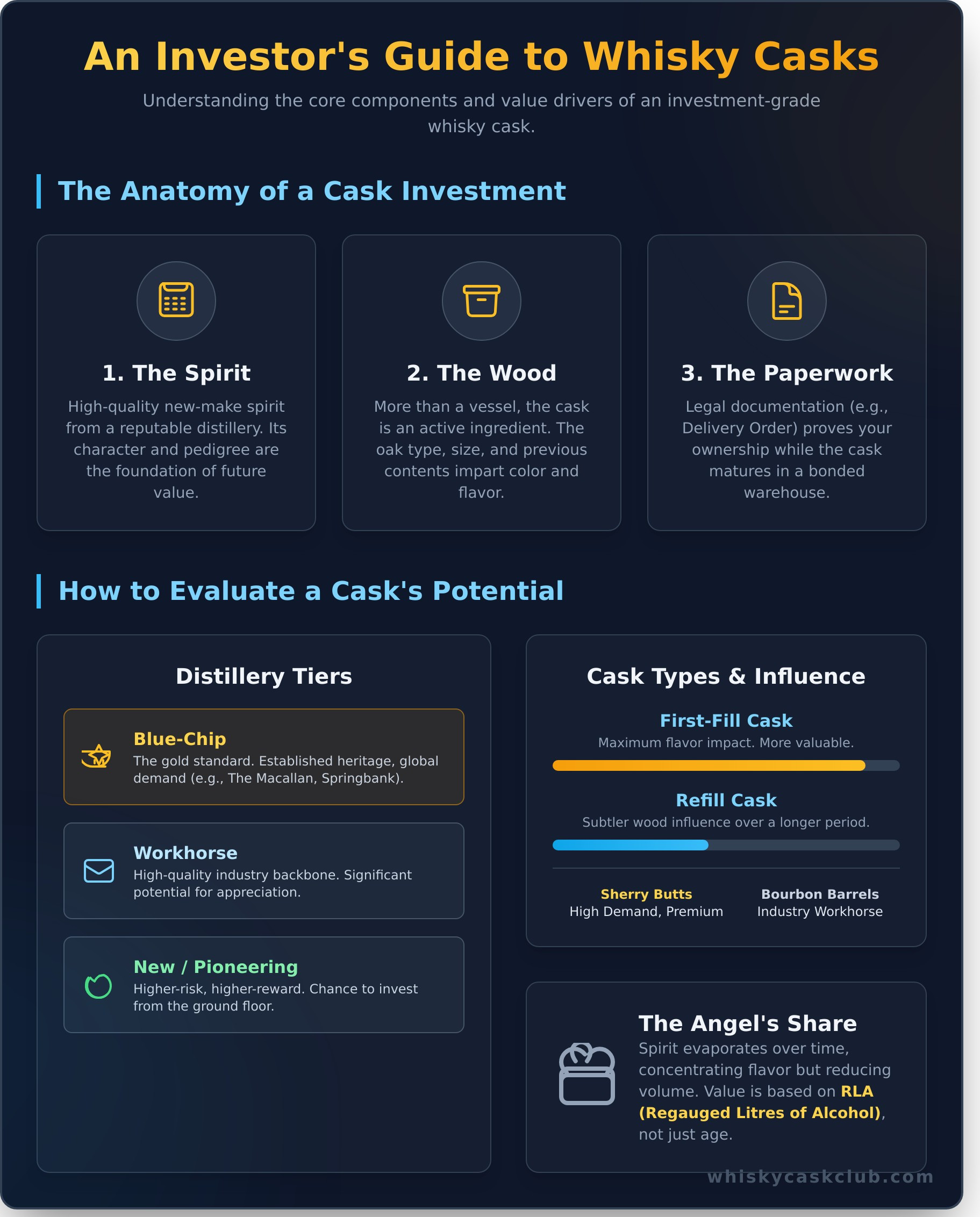
Understanding the components of your asset is fundamental to making a confident investment. An authentic cask investment is a curated package of three critical elements:
- The Spirit: The journey begins with high-quality new-make spirit from a reputable distillery. Its character and pedigree are the foundation of the cask’s future value and rarity.
- The Wood: The cask is far more than a vessel; it is an active ingredient. The type of oak, its size, and its previous contents (such as sherry or bourbon) will impart the majority of the whisky’s final color and flavor profile. This interaction is the heart of the whisky aging process.
- The Paperwork: Your ownership is secured not by physical possession, but by legal documentation. A Delivery Order or certificate of title serves as your proof of ownership while the cask matures securely in a government-regulated bonded warehouse.
Why You Don’t Buy Directly from a Barrel Cooper
A cooperage is a workshop of immense craftsmanship, but their business is wood, not whisky. Coopers construct and sell empty barrels. While essential to the industry, purchasing directly from them bypasses the most critical element of the investment: the spirit itself. The long-term value of whiskey casks for sale is inextricably linked to the distillery’s brand, the quality of its spirit, and the secure, regulated environment of the bonded warehouse ecosystem where the asset is professionally managed and stored for years, or even decades.
How to Evaluate Whiskey Casks for Sale: Key Value Drivers
Not all casks are created equal. For the discerning investor, understanding the intricate factors that determine a cask’s present and future value is paramount. The journey from a promising new-make spirit to a rare and valuable single malt is influenced by a handful of critical drivers. Mastering these elements transforms a simple purchase into a strategic acquisition, laying the foundation for a tangible legacy.
The single most important factor is the provenance of the spirit—the reputation and rarity of its distillery. This is the bedrock of your investment’s potential. Market trends and the specific style of whisky also play a significant role, as global demand for certain flavour profiles can elevate a cask’s desirability over time. When evaluating the finest whiskey casks for sale, these core principles will guide your selection process.
Decoding Distillery Tiers
A cask’s identity is inextricably linked to its origin. Distilleries are generally categorized into tiers that reflect their market standing and investment profile:
- Blue-Chip Distilleries: Names like The Macallan, Springbank, and Dalmore command immediate respect and a significant price premium. Their established heritage, consistent quality, and unwavering global demand make them the gold standard for secure, long-term growth.
- Workhorse Distilleries: These are the esteemed, high-quality producers that form the backbone of the Scotch whisky industry. While more accessible, they possess exceptional craftsmanship and offer significant potential for appreciation as their reputations grow.
- New Distilleries: Investing in a cask from a new or pioneering distillery is a higher-risk, higher-reward proposition. It offers the chance to secure a piece of history from the ground floor, potentially yielding extraordinary returns if the distillery achieves cult status.
Cask Types and Their Investment Potential
The vessel a whisky matures in is as crucial as the spirit itself. The type of wood, its size, and its previous contents profoundly shape the final product’s flavour profile and market value. A first-fill cask, having held another liquid like sherry or bourbon for the first time, will impart a much richer character and is typically more valuable than a refill cask. Sherry butts, particularly from respected bodegas, are in high demand for the deep, complex notes they bestow and carry a significant premium. In contrast, standard ex-bourbon barrels are the industry workhorse, consistently producing the classic flavours beloved by many and forming a solid foundation for any cask portfolio.
Age Statement vs. Maturation Time
While age is a key indicator of value, it is more nuanced than a simple number. A cask’s worth is determined by its maturation journey towards a peak of complexity and character—a point after which returns may diminish as the wood’s influence becomes overpowering. As the spirit ages, a small percentage evaporates annually in a process poetically known as the ‘Angel’s Share’. This concentrates the spirit but reduces volume. Therefore, investors must understand the Regauged Litres of Alcohol (RLA), which is the true measure of your asset. Verifying these figures is a critical component of due diligence, alongside understanding the legal aspects of cask ownership, to ensure your asset’s provenance and value are secure.
The Acquisition Process: A Step-by-Step Guide to Buying a Cask
Acquiring a cask of premium whisky is a deliberate and rewarding journey. To ensure transparency and security for our members, we have refined the process into five clear stages. This structured approach transforms a complex transaction into a seamless experience, guiding you from initial consideration to legal ownership of your tangible asset. It is the most secure way to navigate the market of whiskey casks for sale and build a lasting legacy.
The path to ownership follows these essential steps:
- Step 1: Partner with a Reputable Specialist. The first and most crucial step is aligning with a trusted broker or investment club. This partnership provides the foundation for a secure and successful investment, offering expert guidance and exclusive access.
- Step 2: Define Your Investment Strategy. We work with you to clarify your objectives. Whether for long-term appreciation, portfolio diversification, or future bottling, understanding your budget and timeline is paramount to selecting the perfect cask.
- Step 3: Review Curated Offerings. Based on your strategy, you will be presented with a curated selection of casks. We provide detailed information, including distillery heritage, wood type, and a regauge report. Sample analysis is often available to assess the spirit’s character and maturation potential.
- Step 4: Complete Due Diligence. Transparency is non-negotiable. We provide all necessary documentation to verify the cask’s history and provenance, confirming its location and status within an HMRC-bonded warehouse.
- Step 5: Secure Payment & Transfer of Ownership. Once you have made your selection, we facilitate a secure payment process. Upon completion, the cask’s legal ownership is officially transferred to you, a milestone confirmed by official documentation.
Why Work With a Specialist Broker?
A specialist broker offers more than just access; they provide a critical advantage. We unlock exclusive, off-market cask inventory from prestigious distilleries—opportunities unavailable to the public. Our experts offer invaluable guidance on market value and a distillery’s potential, ensuring your acquisition is sound. Most importantly, we manage all complex paperwork and legal transfers, allowing you to invest with confidence. Explore our curated selection of investment-grade casks.
Understanding Proof of Ownership
In the highly regulated UK bonded system, ownership is unequivocal. The key document is the Delivery Order (DO), which instructs the warehouse keeper to transfer title. Upon transfer, you receive a personal certificate of ownership detailing your name and the cask’s unique identification number. This number is used to track your asset within the bonded warehouse, providing a clear, verifiable chain of custody for your investment.
Beyond the Purchase: Cask Management, Storage, and Insurance
Acquiring a premium whisky cask is the first step in building a tangible legacy. However, the journey from new-make spirit to a rare, mature whisky is a patient one, demanding meticulous care and professional oversight. Proper management, secure storage, and comprehensive insurance are not optional extras; they are fundamental to protecting your asset and ensuring its potential for appreciation is fully realised.
What is a Bonded Warehouse?
A bonded warehouse is a secure facility, licensed and regulated by government customs authorities (like HMRC in the UK), where spirits can mature without the immediate payment of excise duty or VAT. This tax is deferred until the whisky is bottled or removed from bond. More importantly, these facilities provide the perfect, stable environment—controlling temperature and humidity—essential for consistent, high-quality maturation. Storing your cask at home is legally prohibited and would compromise the spirit’s provenance and quality.
As a cask owner, you should anticipate modest annual costs. These typically include a storage fee charged by the bonded warehouse and an insurance premium to safeguard your asset against unforeseen events. Throughout the maturation journey, your cask will undergo periodic re-gauging to measure its volume and alcohol by volume (ABV), accounting for the natural evaporation known as the “angel’s share.” You will also have the opportunity to request samples, allowing you to taste the evolving character of your unique spirit.
Full-Service Cask Management
For discerning investors looking at the market for whiskey casks for sale, a fully managed program offers complete peace of mind. This service handles all logistics, from storage arrangements to comprehensive insurance covering theft and damage. You receive regular updates and performance reports on your tangible asset, allowing you to track its journey without the administrative burden. It is the most secure and seamless way to own a piece of whisky history. Learn about our secure, fully managed cask ownership program.
Preparing Your Exit Strategy: How to Sell Your Whisky Cask
A successful investment is defined by a well-planned exit. The culmination of your whisky cask journey is realizing its value, a process that requires the same foresight and expertise as the initial purchase. While the ideal time to sell often falls between 8 and 20 years of maturation, the decision hinges on your personal financial goals and prevailing market conditions. As a cask owner, you have several sophisticated paths to liquidity, each with distinct advantages.
The most common and often most profitable routes for realizing your investment include:
- Selling to a Private Investor: Transferring ownership to another collector or investor through a brokered sale. This is a streamlined path for liquidating your tangible asset.
- Selling to the Industry: Offering your cask back to the original distillery or to a reputable independent bottler. Casks with excellent provenance from premium distilleries are always in high demand.
- Private Bottling: Transforming your liquid into a finished product for personal enjoyment, corporate gifting, or limited retail.
Maximizing Your Return on Investment
Securing the highest possible return depends on timing, quality, and expert navigation. Your broker is instrumental, leveraging an exclusive network to connect you with qualified buyers. Market demand for specific distilleries, age statements, and cask types heavily influences the final sale price. Ultimately, the most significant factor is the quality of the spirit itself—a testament to the importance of proper maturation and management of your curated asset throughout its life.
The Private Bottling Option
While bottling your own whisky is a deeply rewarding experience, it is a complex and capital-intensive endeavour. This path is best suited for the passion investor seeking to create a truly unique legacy. Be prepared for significant costs, including bottling fees, alcohol duties, VAT, and label design. For this reason, it is often less profitable than selling the cask outright to another party in the thriving market for premium whiskey casks for sale.
Navigating these options requires a deep understanding of the global whisky market. Partnering with a trusted advisor ensures your exit is as seamless and profitable as your ownership journey. To discuss the potential of your portfolio, we invite you to consult with our specialists and begin planning the next chapter of your legacy.
From Knowledge to Ownership: Your Cask Investment Awaits
Navigating the world of whisky cask investment requires more than passion; it demands knowledge. This guide has illuminated the path, from understanding the crucial value drivers of a cask to outlining a clear strategy for acquisition and exit. The distinction between a collector’s item and a high-performing tangible asset is now clear, empowering you to make informed decisions.
The next step is transforming this knowledge into a legacy. When considering whiskey casks for sale, partnering with a trusted advisor is paramount. The Whisky Cask Club provides a fully managed portfolio service, offering exclusive access to curated casks from Scotland’s most prestigious distilleries. Your investment is secured from acquisition to exit, resting safely in government-accredited bonded warehouses.
The opportunity to build a personal legacy through this remarkable asset class is now within reach. Request access to our current cask listings and begin your investment journey.
Frequently Asked Questions About Whisky Cask Investment
What is the minimum investment for a whiskey cask?
The entry point for acquiring a premium whisky cask typically begins around £7,000 to £10,000. This investment grants you outright ownership of a tangible asset from a distillery with excellent provenance. The exact cost depends on the distillery’s prestige, the age of the new-make spirit, and the cask type. Our advisors work to curate opportunities that align with your specific portfolio goals, ensuring a seamless entry into this exclusive market of alternative investments.
How do I avoid scams when looking for whiskey casks for sale?
Prudence is paramount when navigating the market for whiskey casks for sale. Always demand proof of ownership, such as a delivery order or certificate, in your name. Partner with a reputable advisor who offers transparency and operates with discretion. A trusted firm will only source casks with clear provenance from secure, government-bonded warehouses. Be wary of unsolicited offers and promises of guaranteed high returns, as these are often indicators of disreputable sellers in the market.
What are the average annual returns on whisky cask investment?
Historically, well-chosen whisky casks have demonstrated average annual returns between 8-12%. However, this is not a guarantee. Returns are influenced by the distillery’s reputation, the whisky’s age, and overall market demand for rare spirits. As a tangible asset, cask whisky offers a stable alternative to volatile financial markets, providing a sophisticated vehicle for capital appreciation. The key is a long-term strategy focused on provenance and quality, which our experts help you build.
Can I taste my whisky while it’s maturing in the cask?
Yes, as the owner, you have the privilege of monitoring your whisky’s journey. While you cannot visit the bonded warehouse and draw a sample yourself, we can arrange for an official sample to be drawn on your behalf. This allows you to experience the evolving character and complexity of your spirit as it matures. It is a rare opportunity to connect with the craftsmanship behind your investment and witness the creation of a truly unique legacy asset.
Is my whisky cask insured while in storage?
Absolutely. Your peace of mind is paramount. From the moment of acquisition, your cask is stored in a secure, government-regulated bonded warehouse. It is fully insured at its replacement value against risks such as fire and theft. This comprehensive coverage is an integral part of our managed service, ensuring your tangible asset is protected throughout its maturation journey. You receive annual valuation updates, and the insurance coverage is adjusted accordingly to reflect the cask’s growing value.
What are the main differences between investing in Scotch, Irish, or American whiskey casks?
Each region offers a unique investment profile. Scotch whisky is defined by strict production laws and unparalleled global prestige, offering a stable, blue-chip asset. Irish whiskey is the fastest-growing premium spirit category, presenting significant growth potential. American whiskey, particularly bourbon, has distinct aging rules using new charred oak, catering to a robust and different market dynamic. Our expertise allows us to advise on which heritage best aligns with your personal investment legacy and portfolio diversification.