Among the most revered and misunderstood spirits in the world, peated scotch can often feel like a barrier—a secret language of smoke, PPM, and maritime notes spoken only by seasoned connoisseurs. To believe all peated whisky tastes of a bonfire is to overlook a world of profound complexity and nuance, a spirit defined by its remarkable provenance and the land from which it came.
This iconic character is not a brute force of flavour, but a testament to centuries of Scottish heritage—a story of fire, earth, and masterful craftsmanship distilled into liquid form. It is the very soul of the landscape, captured in a glass, waiting to be understood.
In this definitive guide, we invite you to step beyond the smoke. We will demystify the art and heritage behind this exceptional spirit, from the rich bogs of Islay to the subtle, heathery drams of the Highlands. You will gain the confidence to navigate its diverse styles, understand its language, and select a bottle with the assurance of a true enthusiast. Prepare to explore an enduring legacy and discover the remarkable spirit that awaits.
What is Peated Scotch? Unearthing the Source of Smoke
At the heart of Scotland’s most evocative spirits lies a profound connection to the land. Peated Scotch is a style of whisky defined by a distinct smoky character, a flavour imparted not in the cask, but at the very beginning of its life. This unique profile comes from the ancient practice of using peat—dense, decomposed organic matter harvested from Scotland’s bogs—as a fuel source to dry malted barley. While modern distillers often use commercial heat sources, the use of peat is a revered nod to heritage and a deliberate act of craftsmanship that sets this category of Scotch whisky apart. This process imbues the grain with smoky, earthy, and often medicinal notes, creating a spirit with unparalleled depth and provenance.
From Bog to Barley: The Malting and Peating Process
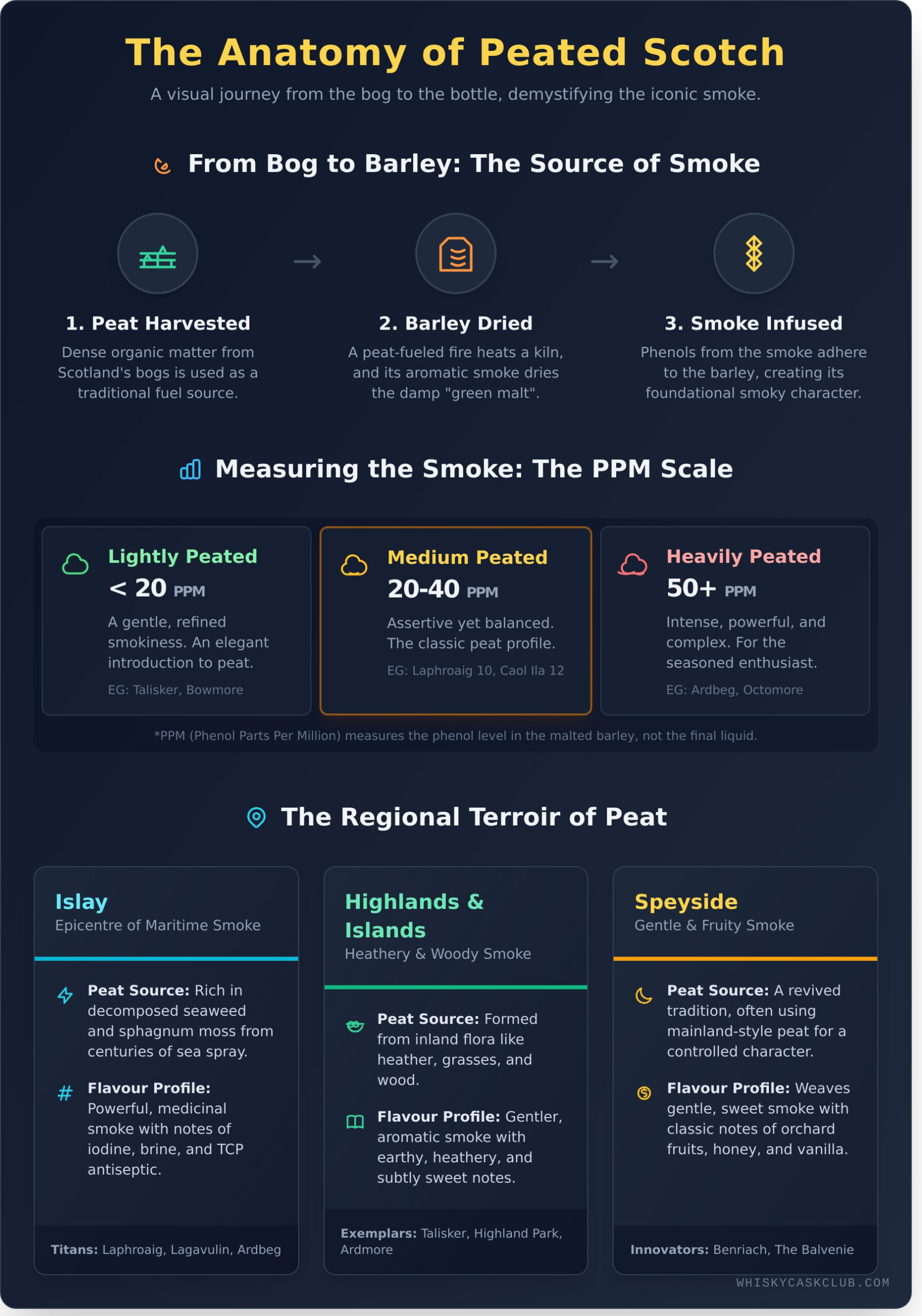
The journey begins with malting, where barley is steeped in water to encourage germination, converting starches into fermentable sugars. To halt this process at the precise moment, the damp “green malt” is dried in a kiln. For a peated scotch, the fire that heats the kiln is fueled by peat. As the thick, aromatic smoke rises, it infuses the barley with chemical compounds called phenols. The duration and intensity of this exposure are meticulously controlled by the maltster, as this single step dictates the foundational smoky character of the final spirit.
Measuring the Smoke: Understanding PPM (Phenol Parts Per Million)
The level of “peatiness” in a whisky is quantified by Phenol Parts Per Million (PPM). This measurement refers to the phenol level in the malted barley itself, not the final liquid in the bottle. While it serves as an excellent guideline, the final taste is also shaped by distillation cuts and maturation. Phenol levels are generally categorised as follows:
- Lightly Peated (<20 PPM): Expressions from distilleries like Talisker or Bowmore offer a gentle, refined smokiness.
- Medium Peated (20-40 PPM): Whiskies such as Laphroaig 10 or Caol Ila 12 present a more assertive but balanced peat profile.
- Heavily Peated (50+ PPM): The domain of Islay titans like Ardbeg and Bruichladdich’s Octomore, delivering an intense, powerful, and complex smoky experience.
Understanding PPM provides a valuable framework for navigating this celebrated whisky style, allowing connoisseurs to select a spirit that perfectly aligns with their palate.
The Regional Terroir of Peat: A Journey Beyond Islay
While Islay is the undisputed heartland of heavily peated scotch, the story of peat is a tale of regional terroir. Not all smoke is created equal. The very provenance of the peat—the unique combination of decomposed flora from a specific locale—imparts a distinctive aromatic signature to the whisky. In fact, a comprehensive peat composition study scientifically confirms that the chemical makeup of peat varies dramatically across Scotland, directly influencing the phenols released during kilning. This is the essence of terroir in whisky: the spirit as an expression of its origin.
Understanding these regional nuances is essential for any serious connoisseur or investor looking to appreciate the full spectrum of this revered spirit. Let us explore the key regions and their unique peated expressions.
Islay: The Epicentre of Maritime Smoke and Medicine
Islay peat, saturated by centuries of sea spray and storms, is rich in decomposed seaweed and sphagnum moss. This unique composition creates the island’s legendary flavour profile: a powerful, phenolic smoke intertwined with notes of iodine, brine, and TCP antiseptic. The distilleries of Laphroaig, Lagavulin, and Ardbeg are the titans of this style, while others like Bruichladdich and Bunnahabhain showcase their craftsmanship by producing both peated and unpeated expressions, offering a complete portrait of the island’s potential.
Highland and Island Peat: Heathery, Woody, and Subtle Smoke
Venture away from the coast, and the peat’s character transforms. Mainland Highland and Island peat is formed primarily from inland flora like heather, grasses, and wood. This results in a gentler, more aromatic smoke profile. Instead of medicinal brine, you will discover earthy, heathery, and subtly sweet notes. Key examples of this style include the peppery and coastal smoke of Talisker on the Isle of Skye, the rich, aromatic smoke of Highland Park in Orkney, and the distinctly woody, inland peat of Ardmore in the Highlands.
Speyside’s Gentle Giants: The Rise of Peated Speyside Malts
Though famous for its unpeated, fruit-forward whiskies, Speyside has a deep-rooted history of using peat. Today, a growing number of distilleries are reviving this tradition, creating a sophisticated and balanced style of peated scotch. These expressions masterfully weave a gentle, often sweeter smoke with the classic Speyside character of orchard fruits, honey, and vanilla. Distilleries like Benriach offer a dedicated range of peated malts, while The Balvenie’s celebrated ‘Week of Peat’ release demonstrates how a whisper of smoke can add profound complexity to a classic Speyside profile.
A Spectrum of Smoke: Navigating the Peated Flavour Profile
To describe a peated scotch as merely ‘smoky’ is to observe only a single facet of a masterfully cut gem. The character imparted by peat is a complex spectrum, ranging from gentle, fragrant wisps to a profound, medicinal intensity. True appreciation lies not in seeking the most powerful expression, but in discovering the balance and complexity that a master distiller achieves. Understanding this spectrum is the key to navigating the category with confidence and finding a profile that truly resonates with your palate.
Your journey through this celebrated style can be guided by three distinct tiers of peat character.
Lightly Peated: An Elegant Introduction
This is the ideal entry point into the world of peat. The smoke here is a mere whisper, reminiscent of distant bonfire embers and a gentle, mineral earthiness. It is a profile defined by subtlety and elegance, where the peat complements, rather than dominates, the underlying spirit. We recommend this style for those new to peated expressions or connoisseurs who appreciate nuanced craftsmanship. Representative Whiskies: Talisker 10, Bowmore 12.
Medium Peat: A Balanced and Complex Profile
Here, the peat’s influence is assertive yet impeccably balanced. The smoke is more pronounced, often weaving through complex notes of cured meats, maritime brine, and even sweet barbecue. These whiskies offer a rewarding depth for those who enjoy bold flavours but demand harmony and structure in their dram. It is a testament to the distiller’s skill in integrating powerful elements into a cohesive, compelling whole. Representative Whiskies: Caol Ila 12, Lagavulin 16.
Heavily Peated: The Bold ‘Peat Monsters’
For the experienced enthusiast, these are the unapologetic titans of Islay. The experience is profound and intense, delivering powerful notes of medicinal iodine, tar, TCP, and dense, rolling smoke. These ‘peat monsters’ are not for the faint of heart; they are a destination for those seeking an uncompromising and deeply memorable tasting experience. They represent the raw, untamed spirit of their island provenance. Representative Whiskies: Ardbeg 10, Laphroaig 10 Cask Strength.
Exploring this range is a fundamental part of any serious whisky education, from appreciating accessible bottlings to identifying the rare, investment-grade casks curated for our exclusive members.
Peated Scotch Casks: An Investor’s Perspective
For many connoisseurs, the allure of peated scotch transcends the glass. It represents a tangible piece of Scottish heritage, a story of time and place captured in liquid form. This profound connection is why discerning individuals are increasingly viewing these casks not just as a passion, but as a sophisticated alternative investment. Owning a cask is the ultimate way to engage with the spirit’s legacy, transforming personal appreciation into a tangible asset with significant growth potential.
Why Peated Casks are a Unique Asset Class
The investment appeal of peated casks is rooted in scarcity and provenance. Distilleries from Islay, the spiritual home of this style, have finite production capacity and a fiercely protected heritage. This creates inherent rarity. The global reputation of iconic brands like Laphroaig, Lagavulin, and Ardbeg drives consistent demand, underpinning cask value. Furthermore, rare peated runs from distilleries not typically known for smoke, or casks from ‘silent stills,’ represent an exclusive tier of assets sought after by top-tier collectors.
Maturation and Peat: How Flavour Evolves in the Cask
A young peated spirit is raw and powerful, but its true value is unlocked through maturation. Over years in oak, the intense phenolic compounds mellow, integrating with the wood to create extraordinary complexity. An ex-bourbon cask might soften the smoke with notes of vanilla and citrus, while an ex-sherry butt can weave in layers of rich fruit and spice. This patient evolution transforms the spirit from a simple distillate into a complex, highly sought-after single malt, with each year adding to its character and financial worth.
Sourcing Rare Peated Casks for Your Portfolio
Acquiring casks directly from the most revered peated distilleries is exceptionally difficult, often impossible for private individuals. These opportunities are typically reserved for industry insiders and established partners. Navigating this exclusive market requires expertise and trusted connections. At the Whisky Cask Club, we specialise in sourcing these rare assets, providing our members with curated access to casks that form the foundation of a powerful investment portfolio. Discover exclusive access to premium peated casks.
Embracing the Legacy of Peated Scotch
Our journey through the world of peated scotch reveals a spirit defined by more than just its signature smoke. We’ve uncovered how its character is born from the very land it comes from, showcasing a rich tapestry of regional terroir far beyond Islay. Understanding this spectrum of flavour, from medicinal to gently aromatic, is the first step for any true connoisseur. But the story doesn’t end in the glass; it extends to the cask itself, where the spirit’s heritage and craftsmanship mature into a tangible asset with remarkable potential.
For those who appreciate both the passion of this spirit and the pragmatism of a sound investment, the next chapter awaits. The Whisky Cask Club offers discerning individuals exclusive access to rare and premium casks, underpinned by expert portfolio management and advisory. Your investment is secured in Scottish bonded warehouses, ensuring its provenance and value for years to come. This is your opportunity to own a piece of this smoky legacy.
Begin your whisky cask ownership journey. Take the first step toward building a legacy that is as enduring as the spirit itself.
Frequently Asked Questions About Peated Scotch
Is all Scotch whisky peated?
No, the use of peat is a stylistic choice, not a universal requirement for Scotch. It is most characteristic of whiskies from the Islay region, where peat was historically the primary fuel for drying malted barley. Many distilleries, particularly in Speyside and the Lowlands, use unpeated malt to create expressions with entirely different profiles, focusing on fruity, floral, or malty notes. The presence of peat defines a specific, revered category within the broader world of Scotch.
What is the most heavily peated Scotch in the world?
The distinction for the most heavily peated Scotch belongs to the Octomore series from the Bruichladdich distillery. These sought-after releases are renowned for their exceptionally high phenol content, often measured in excess of 200 parts per million (PPM). For context, iconic Islay malts like Ardbeg or Laphroaig typically register between 40-55 PPM. Octomore represents a masterful exploration of the absolute limits of peat influence in fine single malt whisky.
Does peated whisky just taste like smoke and medicine?
While notes of campfire smoke and iodine are classic hallmarks, they form only part of a far more complex profile. A well-crafted peated whisky reveals a sophisticated tapestry of flavours that evolves in the glass. Beneath the initial smokiness, a discerning palate can uncover notes of sea salt, cured meats, dark chocolate, citrus peel, and even tropical fruit. The character is shaped by the peat’s origin, the distillation process, and the influence of the maturation cask.
How should a beginner start drinking peated Scotch?
To begin your journey, we advise starting with a more moderately peated expression to acclimate your palate. Whiskies such as Talisker 10 or Caol Ila 12 provide an elegant introduction, offering a beautiful balance of smoke, maritime brine, and underlying sweetness. These bottlings showcase the core characteristics of a quality peated scotch without being overwhelming, serving as a perfect gateway to the more robust styles from Islay’s south coast.
Does the smoky flavour of peated whisky fade over time in the cask?
Yes, the intensity of peat’s phenolic compounds does soften and integrate over long maturation periods. The aggressive smoky notes of a young spirit gradually mellow, allowing more subtle and complex flavours to emerge. Over decades in a cask, these primary peat notes evolve into more refined expressions of gentle woodsmoke, leather, and rich tobacco, creating a more nuanced and layered whisky where cask influence and distillery character achieve perfect harmony.
Can you invest in a cask of peated whisky?
Certainly. A cask of peated whisky from a prestigious distillery is a highly compelling tangible asset. The enduring global demand and finite supply of spirit from iconic producers, particularly those on Islay, underpin its strong potential as an alternative investment. Owning a cask is an opportunity to secure a piece of liquid history, stewarding its journey from new make spirit to a rare, mature, and valuable whisky while building a personal legacy.