The allure of owning a cask of American whiskey is undeniable-a tangible piece of liquid history, maturing into a legacy asset. Yet, for many aspiring investors, this ambition is met with a labyrinth of complexities. Questions surrounding legal ownership, the threat of fraudulent sellers, and the true, all-in cost can quickly turn a passionate pursuit into a daunting prospect. Navigating this exclusive market requires more than just capital; it demands a clear, trusted roadmap.
This is precisely why we have created this definitive investor’s guide. We will demystify the entire process to buy a cask of bourbon, illuminating the path from sourcing authentic casks with impeccable provenance to understanding the nuances of maturation and crafting a profitable exit strategy. Consider this your personal ledger, detailing every critical step to transform your passion for fine bourbon into a secure, appreciating, and deeply rewarding investment. You will gain the confidence to not just purchase an asset, but to curate a piece of your own heritage.
Understanding Bourbon Casks as a Tangible Asset
In the world of alternative investments, few assets combine heritage, craftsmanship, and significant growth potential like a cask of American bourbon. Moving beyond the connoisseur’s bottle on a shelf, cask ownership represents a direct stake in the spirit’s maturation-a tangible asset that appreciates as it ages. To truly grasp its value, one must first understand What is Bourbon Whiskey? from a legal and production standpoint. As a uniquely American spirit, its strict production standards are the very foundation of its investment-grade quality and global appeal.
Understanding the forces that drive a cask’s appreciation is paramount before you decide to buy a cask of bourbon. These are not arbitrary factors; they are the pillars upon which a sound investment is built.
The Core Value Drivers of Investment-Grade Bourbon
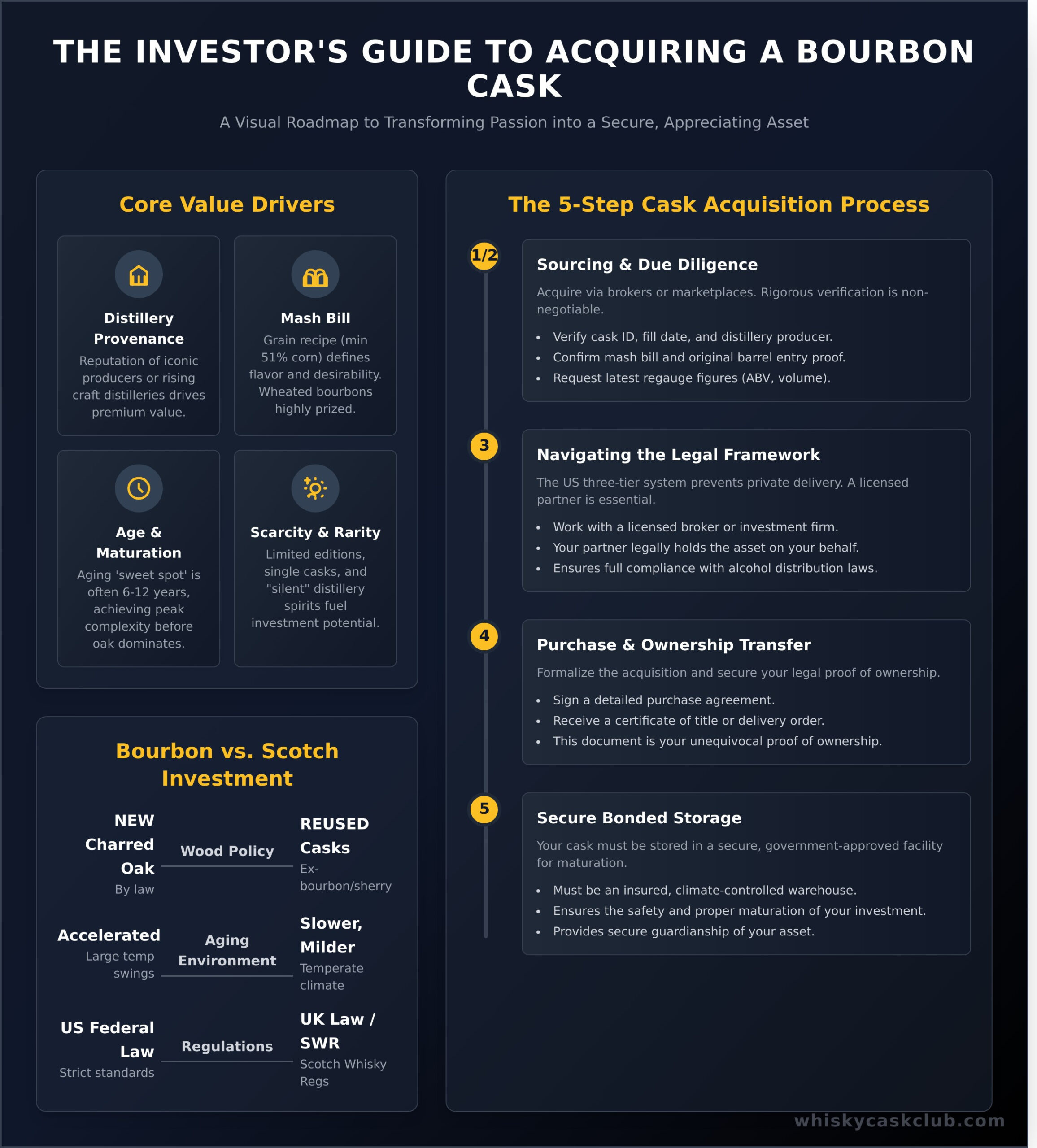
- Distillery Provenance: The reputation of the distillery is a primary driver of value. Casks from iconic producers with a history of award-winning and highly sought-after releases often command a premium. However, astute investors also watch for rising craft distilleries with exceptional quality and growing prestige.
- Mash Bill: The specific grain recipe-legally at least 51% corn, with the remainder typically rye, wheat, and malted barley-defines the bourbon’s flavor profile and future desirability. Wheated bourbons, for example, often develop a smoother, softer character that is highly prized by collectors.
- Age Statement & Maturation Potential: Unlike Scotch, bourbon’s aging ‘sweet spot’ is often found between 6 and 12 years. The goal is to achieve peak complexity before the potent influence of new charred oak overwhelms the spirit.
- Scarcity and Rarity: The principles of supply and demand are fundamental. Limited-edition releases, single-cask expressions, and spirits from “silent” (closed) distilleries naturally possess an intrinsic rarity that fuels their investment potential.
Bourbon vs. Scotch: Key Investment Distinctions
While both are prestigious whiskies, their investment profiles differ significantly. For those looking to buy a cask of bourbon, recognizing these distinctions is crucial for building a successful portfolio.
- Wood Policy: By law, bourbon must be aged in new, charred oak containers. This imparts deep, rich flavors of vanilla and caramel quickly. Scotch, conversely, is almost always aged in reused casks (such as ex-bourbon or ex-sherry barrels), creating a vastly different flavor profile and maturation journey.
- Aging Environment: Kentucky’s pronounced seasonal temperature swings force the whiskey to expand and contract into the wood at a much more aggressive rate than in Scotland’s temperate climate. This accelerates maturation, meaning a 10-year-old bourbon is often considered far more mature than a 10-year-old Scotch.
- Regulatory Landscape: Bourbon is a “distinctive product of the United States,” protected by federal regulations that dictate every aspect of its production. This creates a consistent standard of quality, whereas Scotch investment is governed by UK law and the Scotch Whisky Regulations.
The 5-Step Process to Acquiring a Bourbon Cask
Embarking on the journey to buy a cask of bourbon is a significant step toward building a tangible legacy. This is not a simple transaction but a carefully managed acquisition of a rare asset. A methodical, five-step approach ensures your investment is secure, legitimate, and poised for exceptional growth. The key lies in meticulous due diligence and understanding the critical paperwork that underpins your ownership.
Steps 1 & 2: Sourcing Your Cask and Performing Due Diligence
Your journey begins with sourcing. Casks can be acquired directly from select distilleries, though this is rare and often reserved for established clients. More accessible routes are through specialist brokers who offer curated portfolios or dedicated cask marketplaces. Regardless of the source, rigorous due diligence is non-negotiable. Before committing, an investor must ask critical questions to verify the asset’s quality and provenance:
- What is the cask’s unique identification number and history?
- Which distillery produced the new-make spirit and on what date was it filled?
- What are the specifics of the mash bill and the original barrel entry proof?
- Where is the cask currently stored, and under what conditions?
- What are the most recent regauge figures, including current ABV and volume?
Step 3: Navigating the Legal Framework in the US
Understanding the American three-tier system of alcohol distribution is paramount. This framework legally separates producers, distributors, and retailers, and it places significant restrictions on private individuals holding large quantities of spirits. You cannot simply have a cask delivered to your home. This legal structure necessitates working with a licensed partner, such as a broker or investment firm, who can legally hold the asset on your behalf. This partnership ensures compliance and underscores the unique nature of investing in Bourbon as a Tangible Asset; unlike stocks, it requires specialized, licensed management to navigate the regulatory landscape.
Steps 4 & 5: Purchase, Ownership Transfer, and Secure Storage
Once you have selected a cask and verified its details, the final steps involve formalizing the purchase and arranging its secure maturation. You will sign a purchase agreement detailing all terms, including price, payment schedule, and any ongoing fees. Upon completion, your legal ownership is solidified by a certificate of title or a delivery order-your unequivocal proof of ownership. Finally, your cask must be stored in an insured, climate-controlled, government-bonded warehouse. This is not merely storage; it is the secure guardianship of your investment as it matures into a truly remarkable spirit.
Financial Planning for Your Bourbon Cask Investment
Embarking on the journey to buy a cask of bourbon is not merely a transaction; it is the acquisition of a tangible, appreciating asset. A sophisticated financial strategy is paramount to realizing its full potential, transforming a passion for fine spirits into a legacy investment. Understanding the complete financial landscape-from initial acquisition to the final sale-ensures your journey is both rewarding and profitable.
The True Cost of Ownership: Beyond the Initial Price
The initial purchase price is only the beginning. A prudent investor must account for the full spectrum of costs to protect and nurture this premium asset. A comprehensive budget should include:
- Initial Purchase Price: The cost is dictated by the distillery’s provenance, the age of the spirit, and the type of wood. A new-fill cask from a renowned Kentucky distillery can range from $3,000 to $7,000, while a more mature, rare cask commands a significantly higher premium.
- Annual Costs: Secure, climate-controlled storage in a bonded warehouse and comprehensive insurance are non-negotiable. Budget approximately $200-$400 per year for these essential services, which safeguard your asset against loss and ensure its integrity.
- Ancillary Fees: Over time, you may require expert services such as re-gauging (to measure volume and ABV) and sampling to assess the spirit’s maturation. These, along with eventual bottling and labeling costs, are critical components of your long-term financial plan.
Valuation, Growth, and Tax Considerations
Your cask’s value is dynamic, influenced by market demand, rarity, and quality. We determine its worth by meticulously analyzing recent auction results and private sales of comparable casks. Regular, expert-led sampling is also vital, as it provides empirical data on the spirit’s developing character, which directly informs its current valuation and future potential. This meticulous financial planning is what distinguishes a simple purchase from a strategic decision to buy a cask of bourbon as a cornerstone of a diversified portfolio.
Finally, it is imperative to consider the tax implications. Profits from the sale of your cask may be subject to capital gains tax. As regulations are complex and vary by jurisdiction, we strongly advise consulting with a qualified tax professional to ensure your investment strategy is fully compliant and optimized for financial success.
Maturation & Exit Strategies: Realizing Your Investment’s Potential
Acquiring a premium cask is the first step in a rewarding journey. The true potential of your tangible asset is unlocked over time, through the alchemy of maturation and a meticulously planned exit strategy. This is where the patient craft of aging meets the pragmatic science of investment, transforming fine spirit into a valuable legacy.
The Maturation Journey and the ‘Angel’s Share’
Bourbon’s aging process is a dynamic dialogue between spirit and wood, heavily influenced by its environment. Unlike the cool, stable climes of Scotland, Kentucky’s dramatic temperature swings force the whiskey to expand deep into the charred oak in summer and contract in winter. This aggressive interaction accelerates the development of rich flavors and deep color. However, this process comes at a cost: the ‘Angel’s Share.’ This evaporative loss can be 3-5% annually, a critical financial factor to consider when you buy a cask of bourbon, as it directly reduces your final liquid volume. Regular, expert sampling is essential to determine the precise moment of peak maturity, ensuring the bourbon is bottled at its apex of quality and value.
Your Primary Exit Routes: From Cask to Cash
A successful investment requires a clear path to liquidation. From the day of purchase, your exit strategy should be a core component of your plan. The most common routes each offer a distinct balance of risk, reward, and complexity.
- Secondary Market Sale: Selling your cask to another private investor or collector. This can yield the highest returns, especially for casks with exceptional provenance or age, but requires finding a qualified buyer and navigating the private market.
- Sale to a Bottler or Distillery: A more direct route is selling back to the distillery of origin or to an independent bottler. This often provides a more predictable, straightforward transaction, though the offered price may be less than what the open market could command.
- Private Bottling: The most complex option involves bottling the cask’s contents yourself for private sale or distribution. While this can maximize profit per bottle, it is a highly regulated and costly endeavor involving federal permits, bottling facilities, and distribution logistics.
When you decide to buy a cask of bourbon, your exit strategy should be as clear as your acquisition plan. A well-defined exit is the final, crucial step in building your legacy through cask ownership. Our team of experts provides the guidance necessary to navigate this landscape, ensuring your journey from acquisition to liquidation is both seamless and profitable.
A Comparative Analysis: Bourbon vs. Scotch Cask Investment
While the prospect to buy a cask of bourbon presents an exciting opportunity within a growing market, a discerning investor must weigh it against established alternatives. For those seeking a tangible asset with global recognition and a clear path to liquidity, Scotch whisky offers a compelling and mature counterpart. Understanding the practical differences between these two esteemed spirits is crucial to building a resilient and valuable portfolio.
Ease of Ownership and Global Accessibility
The most significant distinction lies in the regulatory framework. Scotch whisky casks are held ‘in bond’ within government-regulated warehouses in the UK. Ownership is straightforward and can be transferred globally with a simple document, a system overseen by HMRC’s WOWGR regulations. Conversely, the US three-tier system makes direct cask ownership for international investors exceptionally complex, creating legal and logistical hurdles that don’t exist in the streamlined UK market.
Market Maturity and Liquidity
With centuries of heritage, the Scotch cask market is highly mature and transparent. It is supported by a robust global secondary market, including dedicated auction houses and an extensive network of brokers. This established infrastructure provides clear performance data and, crucially, greater liquidity for investors. While the market to buy a cask of bourbon is developing, it currently lacks this level of structure, making both valuation and eventual sale a less predictable endeavour.
Building a Legacy with a Globally Recognised Asset
Scotch whisky is not merely a spirit; it is a premier alternative investment class, understood and coveted by collectors and investors worldwide. Its provenance and long history as a luxury good provide a foundation of stability and prestige. Adding a premium Scotch cask to your portfolio is an act of diversification with an asset class renowned for its craftsmanship and long-term value appreciation. It is an investment in a tangible legacy. Explore the established world of Scotch cask investment.
Embark on Your Cask Investment Legacy
Your journey into the world of alternative assets has begun. As we’ve explored, the decision to buy a cask of bourbon is a significant one, blending the passion of a connoisseur with the sharp foresight of an investor. Understanding the acquisition process, financial commitments, and long-term exit strategies are the cornerstones of a successful venture, allowing you to own a piece of true craftsmanship.
This knowledge provides the perfect foundation for building a truly exceptional portfolio. We empower our members with exclusive access to rare Scotch whisky casks, secure, insured storage in Scottish bonded warehouses, and expert portfolio management to guide your exit strategy. While bourbon offers exciting opportunities, the Scotch cask market provides an established, globally accessible path to building your legacy. Discover our curated portfolio of premium Scotch casks. The time to secure your heritage is now.
Frequently Asked Questions
How much does a full cask of bourbon typically cost for an investor?
The entry point for a new-fill bourbon cask from a reputable distillery typically ranges from $3,000 to $7,000. The final price is influenced by the distillery’s provenance, the specific mash bill, and the type of cask used. This initial investment secures a tangible asset with significant potential for appreciation. Our experts curate opportunities from distilleries with a strong heritage, ensuring the quality and legacy potential of your acquisition from day one.
Can I legally own a cask of bourbon as a private individual in the US?
In the United States, regulations prevent private individuals from taking physical possession of a cask due to the strict three-tier system for alcohol distribution. However, you can legally own the cask as an asset while it remains stored “in bond” at a federally licensed warehouse or distillery. This is the standard, secure method for investment, and we manage this entire process seamlessly for our clients, ensuring full compliance and peace of mind for your portfolio.
What is the ‘Angel’s Share’ and how does it affect the final volume and value?
The ‘Angel’s Share’ is the poetic term for the small amount of spirit that evaporates from the cask during maturation. In Kentucky’s warmer climate, this can be 3-5% per year. While this reduces the final volume, it concentrates the remaining bourbon, intensifying its flavors and often increasing its proof. This natural part of the aging craftsmanship enhances the rarity and character of the liquid, which can substantially increase the value per bottle upon exit.
What are the biggest risks involved with investing in a cask of bourbon?
Like any alternative investment, cask ownership carries risks. These include market fluctuations that can affect exit values and the rare possibility of a cask leaking. This tangible asset is also illiquid, requiring a long-term strategy. We mitigate these risks by sourcing casks only from distilleries with exceptional provenance, providing secure, fully-insured storage, and offering expert guidance on the optimal time to exit your investment, protecting and nurturing the legacy you are building.
How long should a bourbon cask be aged to maximize its investment potential?
While there is no single answer, the optimal aging period for maximizing a bourbon cask’s investment potential is typically between 6 and 12 years. This window is where the spirit often reaches peak maturity, developing complex character without becoming overly dominated by oak. Our role is to provide expert, data-driven advice on the maturation progress of your asset, helping you identify the precise moment when its profile and market value are at their zenith.
Is it easier for an international investor to buy a cask of Scotch or Bourbon?
For an international investor, it is generally more straightforward to invest in a cask of Scotch. The Scottish whisky industry has a long-established, globally-facing framework for cask ownership that is very accommodating to overseas clients. While it is certainly possible to buy a cask of bourbon, the process can be more complex due to US regulations. Our expertise lies in navigating both markets, providing exclusive access and a seamless acquisition process regardless of your location.